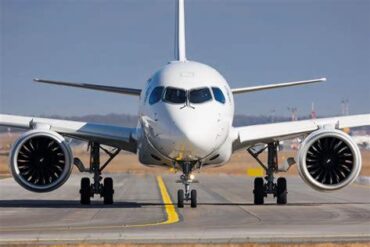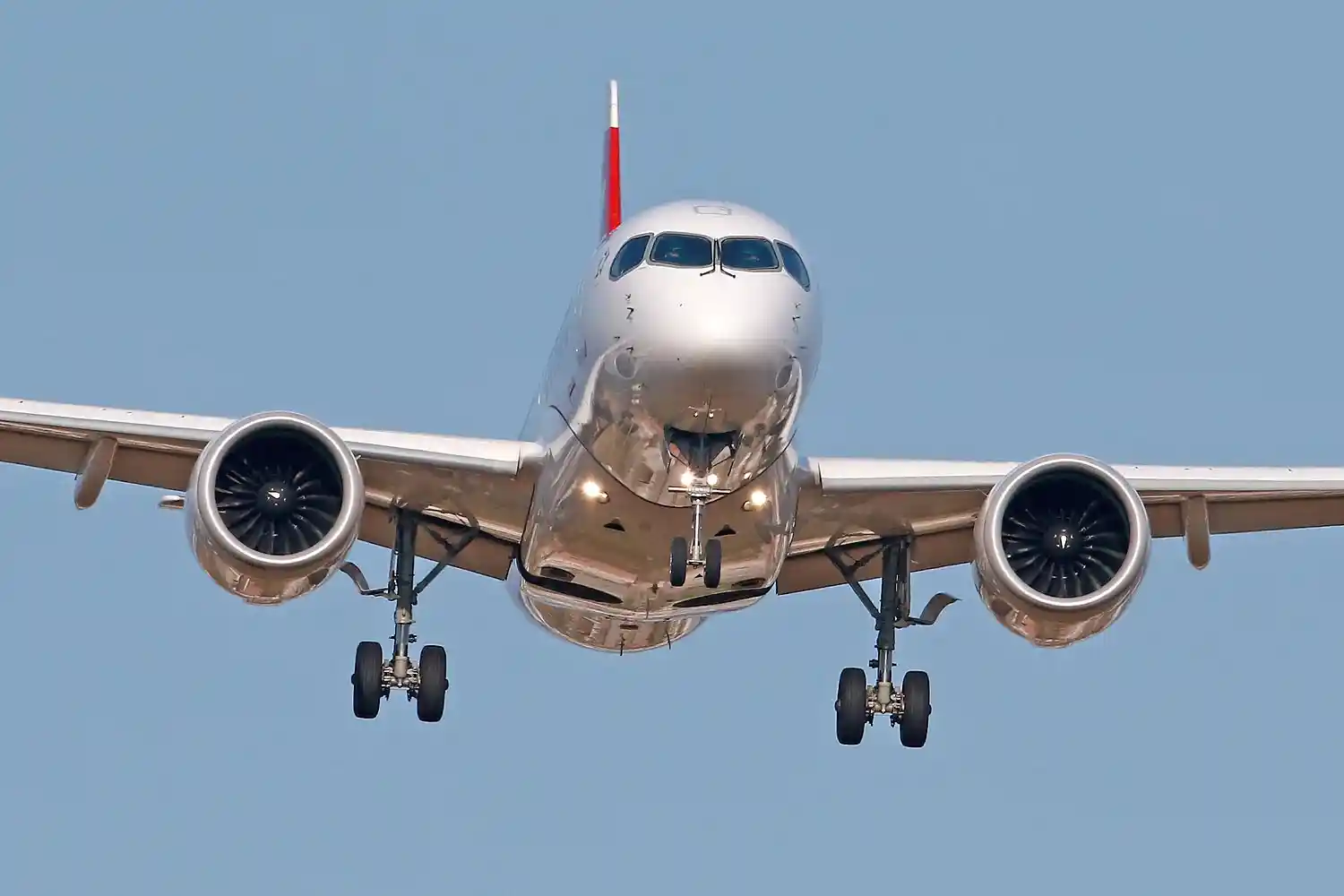
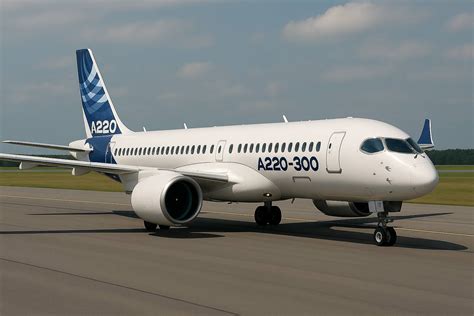
For months, the aviation world has speculated on the next evolution of Airbus’ A220 family—a potential stretched variant commonly referred to as the A220-500. Promising seating for approximately 175-180 passengers, this aircraft is envisioned as a bridge between the current A220-300 and the lower end of the A320neo lineup. Industry analysts have long considered this extension a logical progression, offering airlines the opportunity to expand capacity while maintaining the fuel efficiency and operational flexibility that have defined the A220’s appeal. However, despite growing anticipation, Airbus has signaled a measured approach, holding off on a firm launch timetable while carefully weighing market, production, and operational factors.
Airbus’ hesitation emerges amid significant milestones for the A220 program. With more than 500 deliveries completed worldwide and over 900 firm orders secured from airlines and leasing companies, the aircraft has established itself as a mainstay in the 100-150 seat segment. Yet, the company continues to grapple with challenges that influence any decision to launch a new variant, including ongoing supply-chain constraints, engine availability, and the need to enhance production efficiency. While the concept of the A220-500 is enticing, Airbus appears determined to consolidate gains within the existing program before committing to additional development risks.
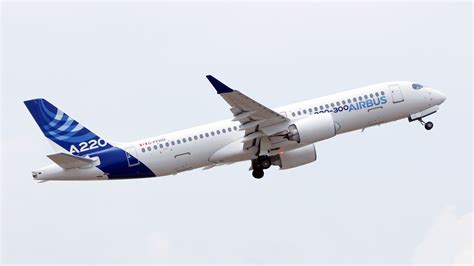
The primary allure of the A220-500 lies in its potential for increased passenger capacity. Airlines could carry roughly 15-20% more travelers per flight, offering a substantial reduction in operating costs per seat—estimated at around 10%. For carriers operating busy short and medium-haul routes, such efficiency gains translate into meaningful revenue enhancement and more competitive fare structures. Yet, the calculus extends beyond seat count alone. Airlines are meticulously assessing whether a larger A220 could maintain the range, maneuverability, and flexibility that have allowed the existing A220 models to operate profitably across diverse networks. Performance limitations could restrict route options, undermining the aircraft’s utility even if per-seat economics are attractive.
Credit: Delta Air Lines
A further consideration is the A220-500’s positioning within Airbus’ broader lineup. The proposed capacity approaches the lower end of the A320neo family, raising questions about potential overlap and market cannibalization. Leasing firms, which often hold substantial portfolios of A320 aircraft, remain cautious; a new A220 variant could influence residual values, complicating asset management strategies. As aviation analyst Rob Morris summarized, airlines may be drawn to the economic potential of a stretched A220, yet remain hesitant regarding operational performance—underscoring the delicate balance Airbus must navigate between growth and prudence.
Airbus’ own financial trajectory adds another layer of complexity. Since assuming control of the A220 program from Bombardier in 2018, the manufacturer has invested heavily in production improvements, supplier negotiations, and cost-reduction initiatives. Although the A220 has emerged as one of the most sought-after aircraft in its category, it has yet to fully achieve the financial margins Airbus envisioned. Ambitious production targets—originally set at 14 aircraft per month—have been adjusted downward to approximately 12, reflecting supplier limitations and broader industry pressures, including global engine and component shortages. These constraints underline the need for careful resource allocation before undertaking a major program expansion like the A220-500.
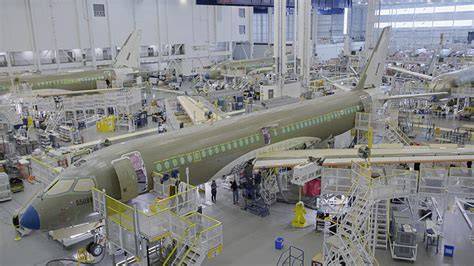
Despite these operational hurdles, demand for a larger A220 remains robust. Airbus has engaged extensively with airlines and leasing companies to gauge interest and secure potential commitments, signaling confidence that a stretched variant could generate meaningful commercial uptake. AirAsia exemplifies this enthusiasm, placing a firm order for 150 A220s and reserving options for an additional 150 A220-500s, with the airline prepared to act as the launch customer should Airbus proceed. Such endorsements underscore the concept’s viability, highlighting strong market appetite even as the company navigates internal and external constraints.
Industry observers note that Airbus’ challenge is no longer convincing airlines of the A220-500’s appeal, but rather determining whether current market conditions justify immediate investment. With a commercial backlog stretching over a decade and continuing strong demand for efficient narrowbody jets, the case for eventual development remains persuasive. Insiders indicate that Airbus is exploring more incremental approaches, such as a simplified cabin stretch, which could introduce some performance compromises but allow the company to meet incremental market demand without overextending its production and development capacities.
From a strategic perspective, postponing the A220-500 launch reflects Airbus’ broader philosophy of measured expansion. By focusing on stabilizing existing programs and addressing supply-chain bottlenecks, the manufacturer aims to safeguard long-term profitability and maintain production reliability. The decision also mitigates the risk of internal competition with the A320neo series, protecting the value of Airbus’ established narrowbody offerings. Analysts suggest that the delay should not be interpreted as abandonment; rather, it represents a deliberate recalibration designed to align product development with sustainable growth and operational realities.
The A220 program has already demonstrated remarkable adaptability and market resonance. Its efficiency advantages, coupled with operational versatility, have enabled airlines to optimize fleet deployment across both dense domestic corridors and thinner international routes. Expanding the family to include the A220-500 would further enhance network flexibility, potentially allowing carriers to reduce reliance on larger narrowbodies for lower-demand sectors. Such expansion could also create additional opportunities for leasing firms seeking high-utilization assets capable of delivering consistent returns across diverse markets.
In summary, Airbus’ decision to defer formal A220-500 launch plans reflects a careful weighing of strategic, operational, and financial factors. Market interest remains strong, with airlines and leasing companies demonstrating readiness to embrace the larger model. However, supply-chain constraints, production efficiency challenges, and potential product overlap with the A320neo series necessitate a cautious approach. By prioritizing stabilization and incremental improvement of the existing A220 line, Airbus positions itself to capitalize on future opportunities while mitigating development risk. The stretched A220-500 is likely to remain a key component of Airbus’ long-term vision, poised for eventual introduction when the timing and market conditions are optimal.
With this strategy, Airbus reinforces its commitment to balancing innovation with operational pragmatism, ensuring that when the A220-500 does eventually enter the skies, it will do so as a fully optimized and highly competitive member of the world’s narrowbody fleet.