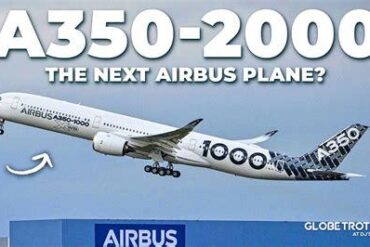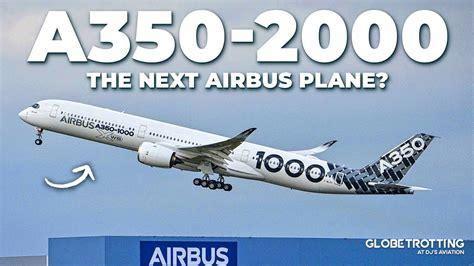
The modern long-haul aircraft market is shaped by a relentless pursuit of efficiency, range, and passenger capacity. Airlines want aircraft that can carry more people farther while burning less fuel per seat. Airbus achieved a major milestone in this arena with the A350 family, a composite-rich twin-engine jet that has become one of the most successful widebody programs of the 21st century. Yet aviation rarely sits still. Rumors and industry discussions have increasingly focused on a potential A350-2000, a larger stretch of the A350-1000 designed to compete directly with Boeing’s 777-9.
The concept is not officially launched, but it has captured the attention of airlines, analysts, and aircraft designers alike. The reason is simple: the Boeing 777-9 sits in a capacity segment that Airbus does not currently cover. With airlines gradually preparing to replace aging Boeing 777-300ER fleets, Airbus faces a strategic question—should it stretch the A350 even further to seize a slice of that market?
Understanding the feasibility of such an aircraft requires examining engineering limits, market demand, and the broader evolution of widebody aviation.
By exploring these factors, the hypothetical Airbus A350-2000 transforms from a rumor into a fascinating case study in modern aircraft development.
The Airbus A350 Family and Its Strategic Role
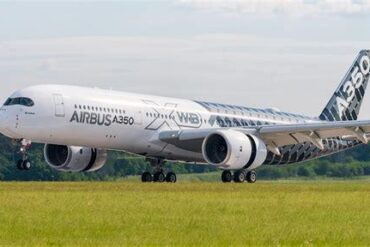
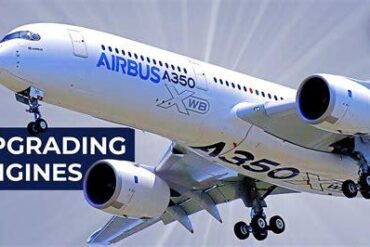
The Airbus A350 program was designed to compete directly with Boeing’s 787 Dreamliner and 777 families. Built with advanced carbon-fiber composite structures and powered by the highly efficient Rolls-Royce Trent XWB engines, the aircraft delivers excellent fuel efficiency and lower operating costs compared with earlier widebody jets.
Currently, the A350 family includes three major variants:
- A350-900 – the baseline model competing with the Boeing 787-10 and 777-200 series
- A350-1000 – the larger version designed to rival the Boeing 777-300ER
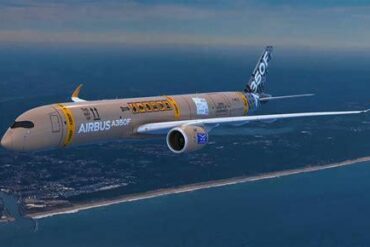
- A350F – a dedicated cargo aircraft derived from the passenger platform
The A350-1000, the largest passenger variant in service today, typically carries 300 to 340 passengers in a standard three-class configuration. Its maximum takeoff weight and structural improvements allow it to perform ultra-long-haul missions, including routes exceeding 16 hours.
However, despite its impressive capabilities, the aircraft still sits below the size of the upcoming Boeing 777-9, which pushes the boundaries of twin-engine widebody capacity.
This gap is precisely where the proposed A350-2000 would fit.
Why Airlines Want a Larger A350
The aviation industry periodically experiences demand for aircraft that combine high passenger capacity with twin-engine efficiency. The retirement of four-engine giants like the Airbus A380 and Boeing 747 has shifted that demand toward large twinjets.
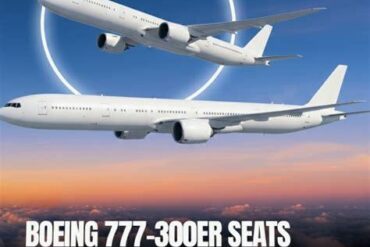
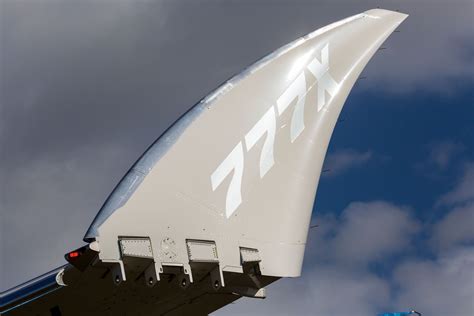
The Boeing 777-9, part of the 777X program, has already attracted hundreds of orders. With a length approaching 77 meters and seating capacity often exceeding 400 passengers, it offers airlines an opportunity to move large numbers of travelers on major intercontinental routes.
The A350-1000, while efficient, cannot quite match that scale.
Airlines operating busy long-haul routes—from Asia to Europe or North America to the Middle East—frequently seek aircraft that can maximize passenger numbers while minimizing operating cost per seat. For them, a slightly larger A350 could unlock significant economic advantages.
Former Airbus Commercial Aircraft CEO Christian Scherer has acknowledged that Airbus has studied such a stretch. The proposed idea is relatively straightforward: extend the fuselage of the A350-1000 by four to five rows, potentially adding around 45 additional seats.
This modification would create a widebody capable of carrying close to 400 passengers in higher-density configurations—directly challenging Boeing’s largest twinjet.
Engineering the Hypothetical A350-2000
Aircraft stretches are common in commercial aviation. Manufacturers often extend a successful model’s fuselage to increase capacity while maintaining as much of the original design as possible.
However, stretching a widebody aircraft is never simply about adding metal tubes in the middle.
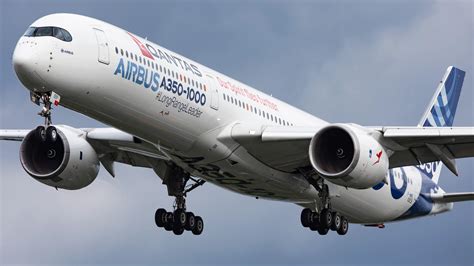
The A350-1000 itself already represents a heavily upgraded evolution of the A350-900. Airbus introduced several structural changes when creating the larger model:
- A strengthened fuselage and wing structure
- A higher maximum takeoff weight
- A larger wing with modified trailing edges
- More powerful Rolls-Royce Trent XWB-97 engines
- A redesigned six-wheel main landing gear
These changes ensure the A350-1000 can carry more passengers and cargo without compromising safety or performance.
The proposed A350-2000, however, would likely follow a different path. Instead of a major redesign, Airbus has suggested a simple stretch approach. In this scenario, the aircraft would retain the existing wing, engines, and landing gear of the A350-1000 while extending the fuselage.
This strategy significantly reduces development cost and risk.
The Engine Limitation Challenge
Every aircraft stretch runs into the same fundamental engineering limit: engine power.
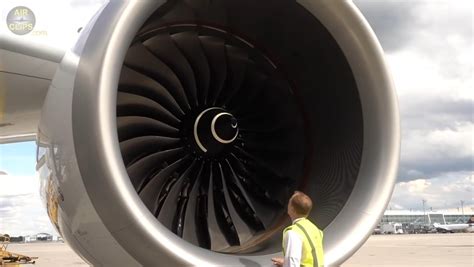
The Rolls-Royce Trent XWB-97, currently used on the A350-1000, already represents the most powerful version of the Trent XWB family. It produces around 97,000 pounds of thrust, pushing the limits of what the engine architecture can safely deliver.
Developing a significantly more powerful engine would require major investment and years of engineering work.
Because of this limitation, Airbus appears inclined toward a design that keeps the same engines while accepting certain trade-offs.
One of those trade-offs is reduced range.
A stretched aircraft with identical engines and wings inevitably becomes heavier and generates more drag. As a result, the hypothetical A350-2000 would likely see its maximum range drop to approximately 7,500 nautical miles.
That number might sound like a downgrade, but it still covers most major long-haul routes worldwide.
For perspective, many high-capacity routes—such as London to Singapore or Los Angeles to Tokyo—fall comfortably within that range.
Performance Expectations of an A350-2000
If Airbus proceeded with the concept, the A350-2000 would likely emerge as one of the largest twin-engine aircraft ever built.
Its potential specifications could include:
- Passenger capacity: around 380–410 passengers
- Range: approximately 7,500 nautical miles
- Fuselage length: possibly exceeding 76 meters
- Engines: Rolls-Royce Trent XWB-97
- Wings: identical to the A350-1000
These characteristics place the aircraft squarely in competition with the Boeing 777-9, which offers similar capacity and range.
The two jets would effectively occupy the same market niche: high-capacity long-haul routes between major global hubs.
Airlines That Could Launch the Program
Airbus rarely launches a new aircraft variant without strong commitments from airlines. Development costs—even for a relatively modest stretch—can reach billions of dollars.
Several airlines stand out as potential early customers.
Air France operates a large fleet of Boeing 777-300ER aircraft and will eventually need replacements. A larger A350 variant could provide the additional capacity needed on high-demand routes such as Paris to New York or Paris to Tokyo.
EVA Air, based in Taiwan, also operates dozens of 777-300ER jets. The airline has already ordered A350-1000 aircraft, suggesting strong confidence in Airbus’ flagship widebody.
Air Canada presents another interesting case. Its network includes numerous ultra-long-haul routes connecting North America with Asia, Europe, and the Middle East. A larger A350 could offer the airline a more efficient replacement for high-density 777 operations.
Airlines in the Asia-Pacific region are particularly important. Rapid passenger growth and high traffic volumes between Asian megacities create strong demand for aircraft capable of carrying hundreds of travelers per flight.
The Emirates Factor
In the world of widebody aviation, one airline can shape entire aircraft programs.
That airline is Emirates.
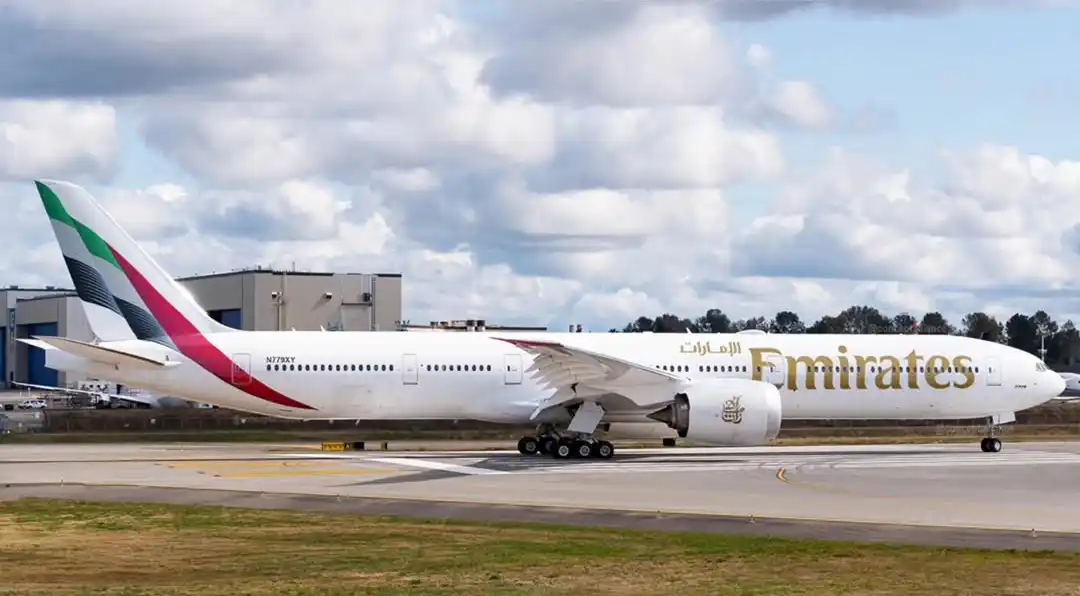
The Dubai-based carrier operates the largest fleet of Airbus A380 superjumbos and has historically been one of Boeing’s most important customers for the 777 family.
Many industry observers believed Emirates might become the launch customer for the A350-2000.
Instead, the airline doubled down on Boeing.
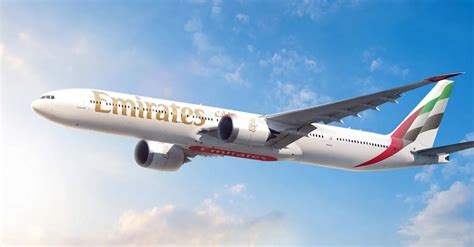
At the Dubai Airshow, Emirates placed a massive order for 65 additional Boeing 777-9 aircraft, reinforcing its long-term commitment to the 777X platform.
This decision significantly complicated the business case for Airbus.
Market Competition with the Boeing 777X
Aircraft programs are rarely judged solely by engineering brilliance. Economics often determines whether they succeed or fail.
The Boeing 777X program already enjoys substantial market momentum. Airlines such as Lufthansa, Singapore Airlines, British Airways, Qatar Airways, and Air India have placed orders.
By the mid-2020s, Boeing had accumulated more than 500 orders for the 777-9 alone.
This creates a powerful network effect. Airlines tend to stick with aircraft families they already operate, because pilot training, spare parts, and maintenance infrastructure are already in place.
For Airbus, launching the A350-2000 would mean entering a market where Boeing has already secured many of the biggest customers.
That does not make the idea impossible—but it does make the business case more delicate.
The Emerging Boeing 777-10 Threat
Just as Airbus studies stretching the A350, Boeing has been exploring the possibility of stretching the 777X even further.
The proposed Boeing 777-10 would push the aircraft to around 80 meters in length, making it one of the longest passenger aircraft ever built.
Its maximum takeoff weight could reach roughly 365 tons, allowing it to maintain long-range capabilities despite the larger size.
This aircraft would target a very specific role: replacing the Airbus A380 on extremely high-capacity routes.
Emirates, which operates over 100 A380s, has shown strong interest in such a concept.
If Boeing launches the 777-10, the competitive landscape becomes even more complicated for Airbus. Instead of facing one rival aircraft, the A350-2000 could find itself squeezed between two members of the 777X family.
Would the A350-2000 Actually Happen?
Aviation history is filled with aircraft concepts that never progressed beyond the study phase.
The Airbus A380neo, for instance, was examined for years but ultimately abandoned because airlines preferred smaller twinjets.
The A350-2000 could follow a similar path.
On paper, the concept makes sense. The development cost would be relatively low compared with designing an entirely new aircraft. Airbus already possesses the necessary wing, engines, and structural platform.
But aircraft programs are ultimately launched only when airlines place firm orders.
If a handful of major carriers—perhaps Air France, Singapore Airlines, or Qantas—collectively commit to dozens of aircraft, the project could become reality.
Without those commitments, the concept will remain an intriguing “what if” in the evolution of widebody aviation.
The Strategic Stakes for Airbus
The potential A350-2000 highlights a broader strategic challenge facing Airbus.
The company dominates the single-aisle market with the A320neo family and holds a strong position in mid-size widebodies with the A350-900.
However, Boeing still maintains influence in the largest twin-engine aircraft category, largely thanks to the enduring success of the 777 series.
A stretched A350 would represent Airbus’ attempt to reclaim that territory.
If executed correctly, it could offer airlines a highly efficient alternative to the 777-9, potentially reshaping competition in the largest segment of the twin-engine widebody market.
If Airbus decides not to pursue the idea, the Boeing 777X family may dominate this category for the next two decades.
The future of the A350-2000 therefore hinges on a single question that echoes throughout the aerospace industry: Will airlines demand an aircraft that large—and will enough of them commit to buying it?