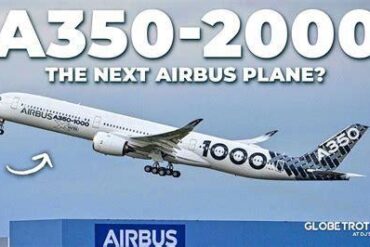
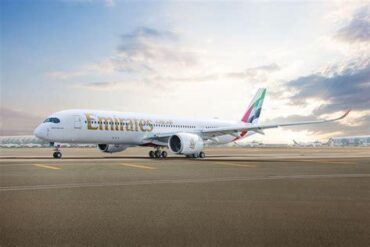
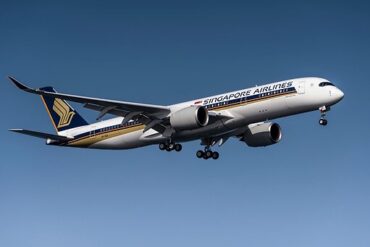
Airbus is preparing to once again redefine the widebody market with its upcoming A350-2000, a stretched and significantly upgraded version of the A350-1000. The announcement, made in the lead-up to the Paris Air Show 2025, underscores Airbus’s ambition to directly challenge Boeing’s 777X and capitalize on growing global demand for high-capacity, ultra-long-range aircraft. With whispers of design overhauls and substantial capacity increases, the A350-2000 is poised to become the new flagship of Airbus’s widebody lineup.
The A350-1000, currently seating up to 369 passengers, is already recognized for its fuel efficiency, advanced aerodynamics, and passenger comfort. However, Airbus is clearly signaling that it is not content to rest on its laurels. The A350-2000 will bring a notable increase in length, likely achieved through fuselage plugs strategically inserted fore and aft of the wing. This design modification could boost total passenger capacity to approximately 400–410 seats, putting it head-to-head with Boeing’s 777-9, which is also targeting the same range.
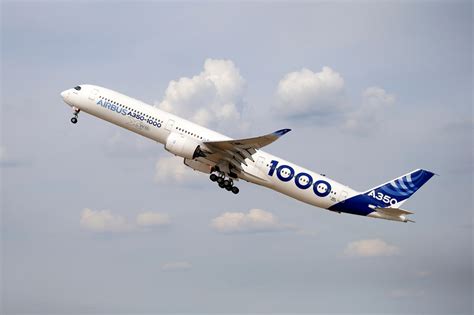
The Stretch: From A350-1000 to A350-2000
The core transformation of the A350-2000 lies in physical extension and performance optimization. The aircraft will be longer, with Airbus reportedly exploring the addition of around two fuselage plugs to increase the total length. While the A350-1000 measures roughly 73.79 meters, industry estimates suggest that the A350-2000 could push past the 76-meter mark, making it the longest Airbus aircraft ever built.
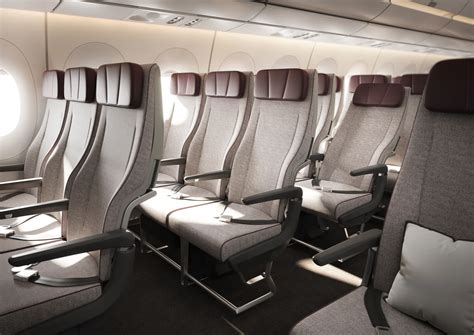
This added length is expected to accommodate 40 more seats, thereby aligning capacity more closely with what the ultra-long-haul sector is increasingly demanding. The additional seating does not merely address capacity but also supports better seat-mile economics, which are essential in competitive long-range routes where operational margins are often tight.
Engineering Enhancements and Design Upgrades
Beyond size, the A350-2000 will benefit from a series of technical upgrades that go beyond a simple stretch. Airbus is expected to revise several components:
- Wing Modifications: Minor but strategic aerodynamic refinements could improve lift-to-drag ratios and optimize fuel burn.
- Stronger Landing Gear: Accommodating increased maximum take-off weight (MTOW) will require reinforced landing gear and airframe components.
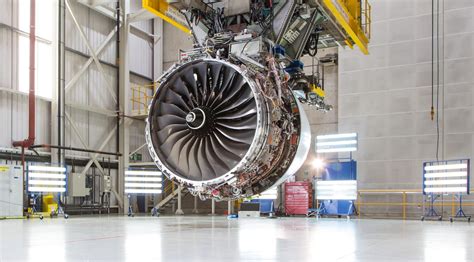
- New or Upgraded Engines: The current Rolls-Royce Trent XWB-97, which powers the A350-1000, may see performance enhancements or be replaced by a more powerful, next-generation version.
- Type C Emergency Exit: With a higher seat count, regulatory compliance will demand an additional Type C exit to meet evacuation standards.
These upgrades reflect not just an intention to add capacity, but also a dedication to maintaining performance, safety, and efficiency.
Fuel Efficiency and Performance Outlook
Efficiency remains a critical selling point in today’s long-haul market. Despite the A350-2000’s increase in size, Airbus is expected to retain and improve the carbon-fiber-reinforced polymer (CFRP) construction, already used extensively in the A350-1000. This material significantly reduces structural weight and increases corrosion resistance.
Even with the increased MTOW, Airbus aims to keep the fuel burn per seat highly competitive. Combined with possible engine upgrades and refined wing structures, the A350-2000 could very well surpass the 777X in real-world efficiency metrics, depending on route profiles and operational practices.
Market Positioning Against Boeing’s 777X
Airbus’s move is strategically timed as Boeing continues to push back deliveries of the 777X. Originally planned for service entry in 2020, the 777X program has faced repeated delays and now targets entry into service no earlier than 2025 or 2026. The A350-2000 may hit the market at a crucial moment, giving Airbus the first-mover advantage in delivering a new-generation high-capacity aircraft.
Airbus’s key target markets for the A350-2000 include:
- Middle Eastern carriers like Emirates and Qatar Airways, both of which operate large numbers of widebodies.
- Asian giants such as Singapore Airlines, ANA, and Cathay Pacific, with high demand for ultra-long-haul flights.
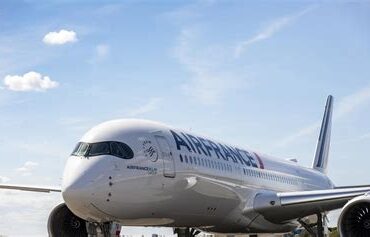
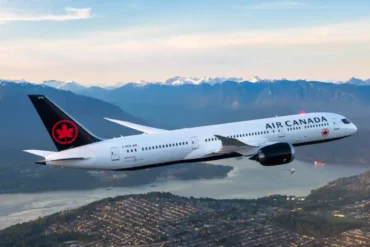
- European and North American legacy carriers seeking replacements for aging Boeing 747s and Airbus A340s.
Operational Use Cases and Route Potential
The A350-2000’s increased range and payload open up possibilities for longer, nonstop flights between city pairs that previously required stopovers. This is particularly attractive in today’s travel environment, where premium passengers value point-to-point connectivity over traditional hub-and-spoke models.
Example routes where the A350-2000 could prove transformative include:
- Singapore – New York
- Sydney – London
- Los Angeles – Dubai
- Hong Kong – Toronto
These routes are high-volume and high-yield, but demand aircraft with the range, capacity, and fuel efficiency to make them economically viable.
Airbus’s Renewed Confidence in the Segment
Notably, the concept of a stretched A350 was initially floated in 2016, only to be shelved amid concerns about market demand and program complexity. The fact that Airbus is now revisiting the A350-2000 shows renewed confidence in the aircraft’s commercial viability and strategic fit.
Statements from Airbus executives highlight this optimism:
“The new A350 variant would provide even greater range and capacity, which is becoming more important in an increasingly crowded aviation market.”
This aligns with Airbus’s broader corporate strategy of fleet commonality. Carriers operating the A350-900 or A350-1000 will find the A350-2000 easier to integrate into their fleets, allowing for training, maintenance, and operations synergies.
Challenges Ahead: Engineering and Regulatory Hurdles
Despite the optimism, Airbus faces several significant challenges. Firstly, stretching an aircraft affects center of gravity, weight distribution, and aerodynamic behavior. These will need to be addressed without compromising the platform’s inherent strengths.
Additionally, the integration of a more powerful engine or upgrades to the existing Trent XWB could demand extensive certification and testing. The regulatory pathway may be simplified by leveraging the existing A350 Type Certificate, but any significant modification, especially those affecting MTOW or emergency egress, will necessitate new testing and approvals.
Strategic Importance for Airbus’s Widebody Portfolio
The A350-2000 will anchor Airbus’s widebody lineup alongside the A330neo and existing A350 variants. It creates a graduated product ladder allowing Airbus to serve markets from medium-haul to ultra-long-haul with a high degree of fleet flexibility.
More importantly, it reflects a strategic shift: rather than developing a brand-new aircraft family, Airbus is maximizing value from its existing platforms, a move that reduces R&D costs and accelerates time to market.
If successful, the A350-2000 could become the cornerstone of next-generation hub-to-hub operations, replacing older quad-engine aircraft and potentially cannibalizing parts of Boeing’s 777X customer base.
Conclusion: A New Era of High-Capacity Efficiency
The unveiling of the A350-2000 is more than just a technical upgrade—it is a strategic masterstroke aimed at reshaping the competitive landscape in the long-haul aviation sector. With its increased capacity, potential for greater range, and promise of superior economics, the aircraft is poised to become the new benchmark in its category.
Whether it eclipses the Boeing 777X in performance and sales remains to be seen. But one thing is clear: Airbus is not merely stretching an airframe—it’s stretching its ambition to new heights. As the aviation industry looks to recover and redefine itself in a post-pandemic world, the A350-2000 could emerge as the aircraft that airlines didn’t know they needed, but soon won’t be able to operate without.