The Unmatched Reach of the Airbus A350 Family
When discussing the pinnacle of ultra-long-range commercial aviation, the Airbus A350 stands alone as a technological and operational marvel. This widebody aircraft, developed to reshape global connectivity, is not only a benchmark for fuel efficiency and range but also a leading force in redefining how far, and how comfortably, passengers can travel nonstop.
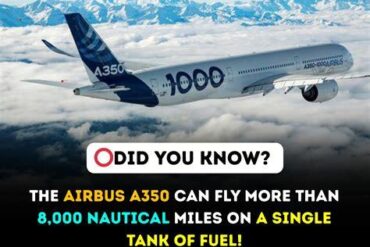
Airbus offers several variants within the A350 family, each with formidable capabilities. However, it’s the A350-900ULR and upcoming A350-1000ULR that truly capture the imagination. Capable of flying up to 9,700 nautical miles, the -900ULR is already a workhorse for record-breaking flights, while the -1000ULR is expected to remain airborne for 22 uninterrupted hours—a feat never before achieved in commercial aviation.
Airbus A350 Variant Ranges: Engineering Excellence in Miles
The remarkable range of the A350 variants results from a finely balanced equation of aerodynamic design, material science, and powerplant efficiency. Here’s how the different versions stack up:
- A350-900: 8,500 nautical miles (15,742 km)
- A350-1000: 9,000 nautical miles (16,668 km)
- A350-900ULR: 9,700 nautical miles (17,964 km), up to 20 hours
- A350-1000ULR: Range not officially published, but capable of 22 hours
The A350-900ULR’s range is enabled by a significant increase in fuel capacity without the need for auxiliary tanks, simply by redesigning the fuel system. A maximum takeoff weight (MTOW) of 322 tons—shared with the A350-1000—supports this massive fuel load. Its ability to fly for nearly 20 hours is not just an engineering milestone but a leap in passenger expectations for direct, intercontinental travel.
Singapore Airlines and the Birth of the ULR Era
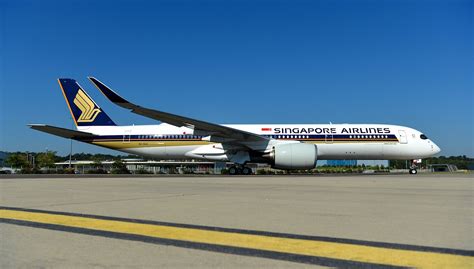
The world took note of the A350-900ULR’s power in October 2018, when Singapore Airlines launched the longest commercial flight from Singapore to Newark, spanning approximately 9,000 nautical miles and nearly 19 hours in the air.
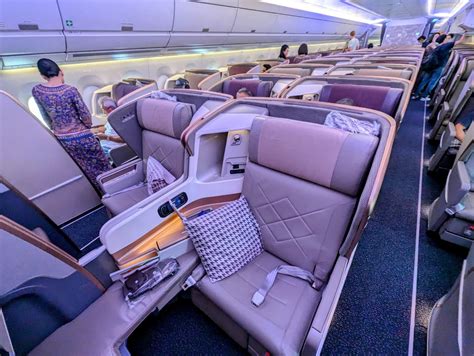
This wasn’t just a logistical achievement. It was a bold reimagination of what premium, nonstop service could look like. Featuring a configuration with no economy class, only premium economy and business, the flight prioritized comfort, privacy, and wellness—three factors critical to the success of ultra-long-haul journeys.
The CEO of Singapore Airlines, Goh Choon Phong, encapsulated the moment by stating:
“Singapore Airlines has always taken pride in pushing the boundaries to provide the best possible travel convenience for our customers… These new non-stop flights… will help boost connectivity to and through the Singapore hub.”
Today, Singapore Airlines uses its exclusive fleet of A350-900ULRs for additional ultra-long-haul routes, including New York JFK and Los Angeles, cementing the aircraft’s role in maintaining the carrier’s edge in international aviation.
The A350-1000ULR: Project Sunrise and the Next Frontier
Qantas is on the verge of launching a revolution in global air travel with its ambitious Project Sunrise, which hinges on the capabilities of the A350-1000ULR. Under this initiative, nonstop flights from Sydney and Melbourne to London and New York—routes exceeding 10,000 miles—are expected to commence by 2027.
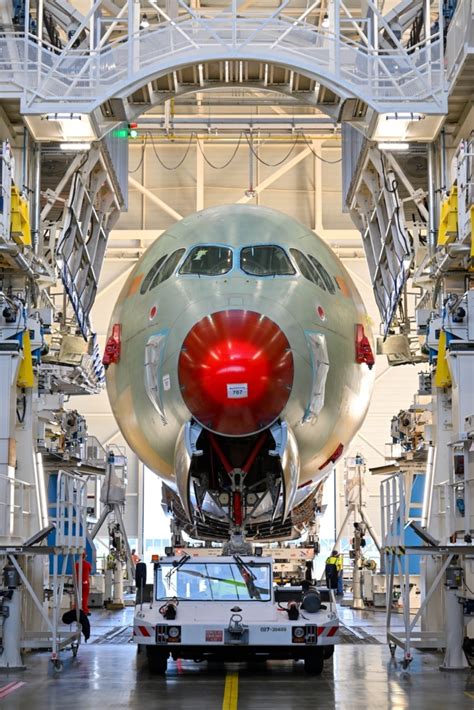
The first A350-1000ULR is already being assembled in Toulouse, where Airbus has completed integration of major structural components and is preparing for an extensive testing regime. These jets will include 20,000-liter rear center tanks and a reduced seat count of 238 to maximize fuel and minimize weight, giving Qantas the ability to redefine what global access means from Australia.
According to Vanessa Hudson, Qantas CEO:
“Project Sunrise will not only overcome the tyranny of distance… These flights will cut up to four hours off the journey and transform how people experience ultra-long-haul travel, through science-backed design to minimize jetlag and maximize wellbeing.”
Engineering for the Skies: Why the A350 Flies So Far
What makes the Airbus A350 fly farther than its predecessors and competitors? It’s the culmination of engineering choices, each focused on pushing limits without sacrificing efficiency or passenger experience.
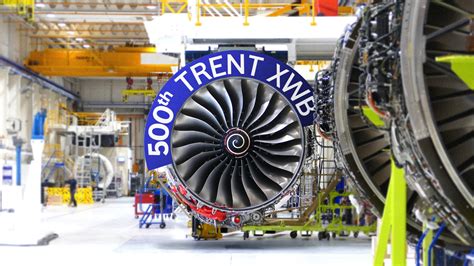
At its core are the Rolls-Royce Trent XWB engines, renowned for their power and fuel efficiency. The Trent XWB-97, used on the -1000 variants, delivers an astounding 97,000 lbf of thrust, enabling the aircraft to lift unprecedented fuel loads while maintaining fuel burn efficiency.
Key Trent XWB Engine Specs:
- Takeoff thrust: 97,000 lbf (431 kN)
- Bypass ratio: 9.6:1
- Pressure ratio: 50:1
- Thrust-to-weight ratio: 5.82
The A350’s fuselage and wings are built using carbon-fiber-reinforced polymer, which makes up over 50% of the structure. This drastically reduces weight without compromising strength. In addition, high-aspect-ratio wings and modern winglets enhance aerodynamic performance by reducing drag and increasing lift efficiency—essential traits for ultra-long-range flying.
New Customers and Expanding Global Reach
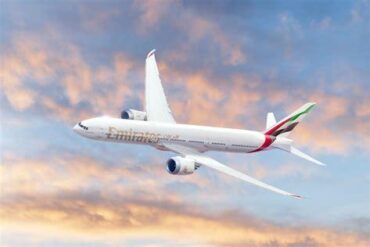
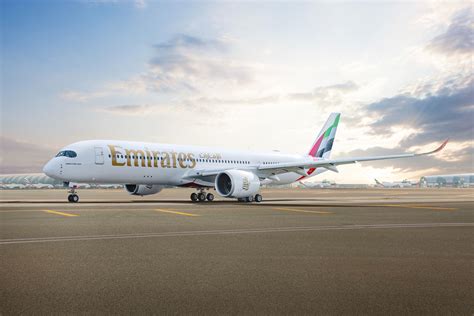
The ultra-long-range capability of the A350 hasn’t gone unnoticed. Airlines worldwide are joining the A350 movement, with Emirates being a recent and high-profile adopter. The Dubai-based carrier received its first A350-900 in late 2024, powered partly by sustainable aviation fuel—a nod to the industry’s environmental future.
As of November 2025, Emirates operates 13 A350-900s in a three-class layout of 312 seats, with plans to introduce variants configured for longer missions featuring just 298 seats and more premium economy rows. Emirates expects these aircraft to open up new long-haul markets while enhancing customer experience and improving operational efficiency.
Adnan Kazim, Emirates CCO, emphasized the strategic impact:
“The Emirates A350 builds on our long-standing commitment of investing in the very best customer experience in the sky.”
These aircraft have already launched new routes from Dubai to cities like Edinburgh, with more destinations in the pipeline, further validating the A350’s strategic relevance in the modern airline fleet.
Silence in the Skies: The A350’s Acoustic Advantage
While it is easy to focus on range and fuel efficiency, the A350’s noise reduction technologies deserve equal attention. In fact, Airbus reports that the A350 is five decibels quieter than its competitors and has a 50% lower noise footprint than the A330.
Noise in front cabin areas is reduced by up to nine decibels, thanks to:
- Engine design with lower fan tip speed and acoustic liners.
- Optimized nacelle airflow for smoother engine integration.
- High-efficiency aerodynamics that reduce turbulent airflow.
- Cabin soundproofing that muffles exterior noise.

This translates to enhanced passenger comfort, especially critical on flights exceeding 10 to 20 hours. It also allows airlines to better utilize restricted airport slots, especially those with strict night curfews, further unlocking operational flexibility and route profitability.
A Glimpse Into the Future of Ultra-Long-Haul Aviation
With the Airbus A350-900ULR already proving its mettle in operational service and the A350-1000ULR poised to push commercial aviation boundaries even further, we are witnessing a pivotal shift in how people move across the globe. These aircraft are more than just transportation—they are technological platforms that:
- Defy geographical limitations
- Elevate passenger experience
- Reduce environmental impact
- Expand airline route networks
The blend of range, efficiency, and comfort places the Airbus A350 family at the forefront of the next generation of air travel. Whether it’s linking Southeast Asia with North America or turning Australia into a nonstop hub to Europe, the ultra-long-range A350s are changing what’s possible in flight—one mile at a time.