Helicopters have long captivated the imagination with their ability to lift off vertically, hover mid-air, and land almost anywhere. Yet while their maneuverability is legendary, the question remains: which helicopter has the longest range, and how far can a rotary-wing aircraft actually travel before needing to refuel? The answer, as it turns out, is layered with engineering breakthroughs, aviation records, and battlefield innovations.
Understanding Helicopter Range: More Than Just Fuel Capacity
Before diving into specific models, it’s essential to understand what defines a helicopter’s range. Range isn’t merely a function of how large the fuel tanks are; it also reflects factors such as airframe weight, engine efficiency, payload, weather, and mission profile. A light helicopter stripped down for a record attempt will fly farther than a heavily armed one headed into combat.
The complexity of rotary flight also adds another limitation: rotors consume a great deal of energy to maintain lift. Unlike airplanes, which rely on fixed wings to glide and conserve fuel, helicopters must generate continuous lift through rotor movement. This constant energy expenditure significantly reduces how far they can fly.
The Legendary Record: Hughes YOH-6A’s 2,213-Mile Marathon
The current record-holder for the longest helicopter flight without refueling belongs to the Hughes YOH-6A, an experimental light observation helicopter that was part of the U.S. Army’s arsenal in the 1960s. On April 6, 1966, test pilot Robert Ferry flew this aircraft from Culver City, California to Orlando, Florida — an astonishing 2,213.1 miles. This feat was only possible because the helicopter was significantly modified for the attempt, stripped of unnecessary weight, and equipped with a massive internal fuel tank.
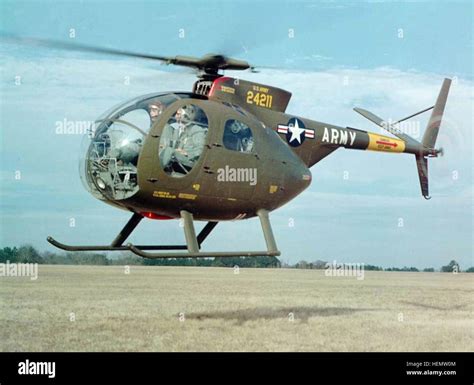
This flight remains unmatched, and it underscores how much potential range can vary depending on purpose and configuration. The Hughes YOH-6A was light, agile, and optimized purely for endurance in that flight. It’s not a typical representation of modern helicopters’ real-world capabilities — but it demonstrates what’s possible under ideal conditions.
The Longest-Range Production Helicopter: Airbus H225
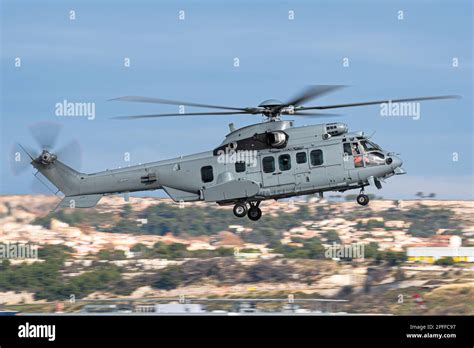
When considering civilian helicopters currently in production, the Airbus H225 (formerly Eurocopter EC225 Super Puma) stands out as a leader in operational range. This twin-engine heavy-lift helicopter was designed with offshore oil and gas transport in mind, where long over-water flights are essential.
The Airbus H225 boasts a maximum range of 610 nautical miles (701.9 miles) under optimal conditions. That range can be stretched further with ferry tanks and reduced load but represents an extraordinary capability for a civilian helicopter. Its impressive range is matched by its robust safety systems, advanced autopilot, and multi-role versatility, allowing it to serve in VIP transport, search-and-rescue, and utility missions.
Military Muscle: Leonardo AW101 and the Tiltrotor Osprey
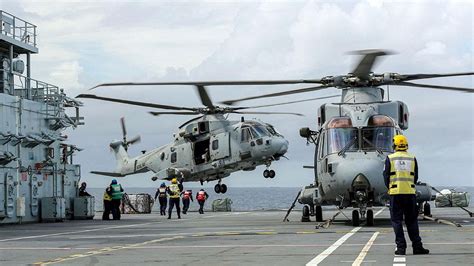
Military helicopters, built for extended endurance, mission flexibility, and often equipped with aerial refueling capabilities, push the range envelope even further. Among the top contenders is the Leonardo AW101, also known as the Merlin. This three-engine medium-lift helicopter is used by several NATO nations for anti-submarine warfare, search-and-rescue, and transport operations.
The AW101 has an impressive range of up to 810 nautical miles (932 miles). It can cruise for nearly 7 hours and 40 minutes in the air, depending on configuration and payload. Thanks to advanced design features like composite rotor blades, fly-by-wire controls, and optimized fuel efficiency, the AW101 blends reach with ruggedness.
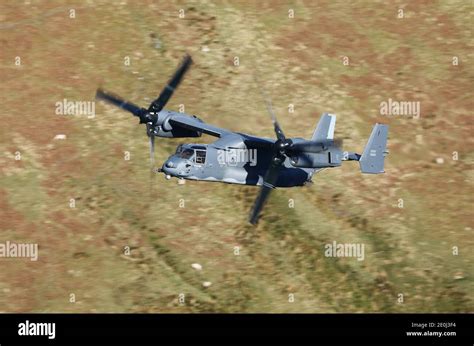
Even more formidable in concept, though technically not a helicopter in the purest sense, is the Bell-Boeing CV-22 Osprey. As a tiltrotor aircraft, it can take off and land like a helicopter but flies like a turboprop airplane at cruising altitudes. The Osprey has a combat radius of around 500 nautical miles (575 miles) but can reach over 1,100 miles with auxiliary fuel tanks and no payload.
Why Helicopters Can’t Match Airplanes in Distance
Despite these engineering marvels, helicopters are inherently limited in range compared to fixed-wing aircraft. Several reasons contribute to this:
- Constant Rotor Load: Helicopters must use continuous engine power to keep their rotors spinning, draining fuel more rapidly.
- Airframe Design: Helicopters have more drag and less aerodynamic efficiency than planes.
- Lower Altitudes: Helicopters operate at lower altitudes where the air is denser, increasing fuel consumption.
- Pilot Fatigue: Helicopter controls require near-constant input, adding to fatigue and limiting practical range for solo flights.
Fixed-wing aircraft, by contrast, can cruise at high altitudes with lower air resistance, use lift from wings instead of rotors, and fly farther with less effort.
Environmental and Mission Constraints
Helicopter range isn’t fixed. Several environmental and operational factors can either extend or limit a rotorcraft’s maximum distance. Key variables include:
- Weight and Payload: Heavier loads reduce range dramatically. Carrying troops, cargo, or specialized mission gear often slashes available flight time.
- Weather Conditions: Flying into headwinds, turbulence, or hot and humid climates affects both performance and fuel burn.
- Speed vs Efficiency: The faster a helicopter flies, the more fuel it uses. Pilots often adjust cruise speeds to maximize fuel efficiency.
- Fuel Tank Configuration: Some helicopters are designed to accommodate auxiliary tanks, especially for ferry flights.
Atlantic Crossing: A Helicopter’s Ultimate Endurance Test
While helicopters are rarely used for transoceanic flights, it has been done. In 1952, a Sikorsky H-19 made the first crossing of the Atlantic by a helicopter — though it involved multiple stops and logistical support. Later on, in 2013, a pair of Russian Mi-8 helicopters made the transatlantic trip from Iceland to Greenland and on to Canada. These flights often rely on midway refueling points, careful route planning, and backup aircraft in case of emergency.
These crossings demonstrate that, under the right conditions, helicopters can achieve incredible endurance, but they do not represent typical mission parameters. Unlike fixed-wing aircraft, helicopters require support infrastructure or mid-air refueling to complete such feats, and they remain far more limited by nature.
Future Outlook: Next-Generation Helicopter Range
Advancements in aerodynamics, materials science, and engine efficiency are helping to push the boundaries of what helicopters can do. Aircraft like the Sikorsky-Boeing SB>1 Defiant and Bell V-280 Valor — both entries into the U.S. Army’s Future Vertical Lift (FVL) program — aim to redefine rotary-wing flight. These next-gen aircraft promise faster speeds, longer ranges, and better endurance, blurring the lines between helicopters and airplanes.
Hybrid propulsion systems and electric vertical takeoff and landing (eVTOL) concepts may also extend the capabilities of future rotorcraft. However, current battery technology limits endurance, and fuel-efficient turbine engines remain the core of long-range helicopter design.
Conclusion: The Helicopter With the Longest True Operational Range
When measuring true operational range — factoring in real-world conditions, loadouts, and production models — the Leonardo AW101 currently holds the crown among conventional helicopters, with a maximum range near 932 miles. Civilian operators seeking distance will look to the Airbus H225, which delivers around 701.9 miles of range in its optimal configuration.
Still, no conversation on rotary endurance is complete without honoring Robert Ferry’s legendary 2,213-mile flight in the Hughes YOH-6A — a record unlikely to be broken unless purpose-built rotorcraft are specifically engineered for maximum range.
The future holds promise, but for now, these helicopters sit atop the list of longest-flying rotorcraft in the skies.