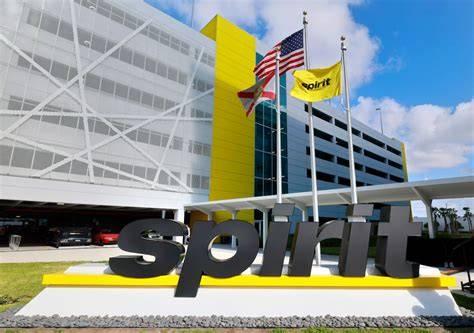
Nearly 15 weeks after Spirit Airlines ceased operations, another major piece of the carrier’s former infrastructure has found a new owner. The Spirit Airlines headquarters in Dania Beach, Florida, has reportedly been sold for $93.25 million, marking another significant step in the dismantling of the airline’s physical footprint following its shutdown.
The transaction is particularly notable because the winning bidder, Hill City Capital, did not submit the highest offer. Boston-based Hill City Capital secured the sprawling campus after offering more favorable financial terms for Spirit’s bankruptcy estate than a competing $97 million proposal. The unusual outcome highlights how bankruptcy asset sales are determined by more than the headline purchase price.
According to reports from the Miami Herald and South Florida Sun Sentinel, Hill City Capital initially offered $88 million for the property before increasing its bid to $93.25 million. REM Acquisitions LLC subsequently submitted a higher $97 million offer, but that proposal was ultimately considered less beneficial after accounting for contractual obligations and expenses connected with Hill City Capital’s position as the stalking horse bidder.
Why Spirit’s Former Headquarters Was Worth $93 Million
The former Spirit headquarters sits at 1731 Radiant Drive in Dania Beach, occupying approximately 8.3 acres in a strategically positioned part of South Florida. The property’s location gives it considerable commercial value independent of its former connection to the airline, particularly because it sits between Fort Lauderdale and Hollywood and close to Fort Lauderdale–Hollywood International Airport (FLL).
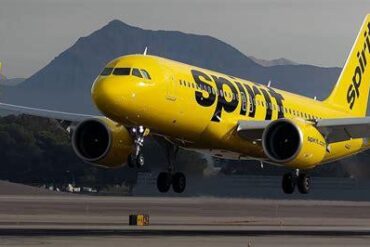
For Spirit, that proximity was especially significant. FLL was the airline’s largest operating base during its final full year of scheduled operations, making the Dania Beach headquarters a logical location for corporate personnel and operational functions. The campus also became visually associated with Spirit through its distinctive yellow design elements, echoing the bright livery that became one of the most recognizable features of the ultra-low-cost carrier’s fleet.
Historical scheduling data from Cirium illustrates just how important Fort Lauderdale was to Spirit’s network. In 2025, the airline scheduled 29,023 one-way flights from FLL, representing approximately 5.81 million seats. Orlando International Airport ranked second with 20,479 scheduled services and roughly 3.92 million seats, while Las Vegas followed with approximately 16,138 flights.
The concentration of operations in Florida meant the headquarters was positioned near two of Spirit’s most important markets. Fort Lauderdale and Orlando together accounted for nearly one-quarter of the airline’s scheduled departures, reinforcing the strategic importance of South Florida even as Spirit’s broader network stretched across the United States, the Caribbean and Latin America.
Why the $97 Million Bid Did Not Win
The most intriguing part of the headquarters sale is the difference between the highest bid and the winning bid. REM Acquisitions offered $97 million, which was $3.75 million more than Hill City Capital’s final proposal. Under normal circumstances, a higher offer might appear to be the obvious choice.
Bankruptcy proceedings, however, can involve additional financial considerations. Hill City Capital had already established itself as the stalking horse bidder, meaning its offer served as the initial benchmark for competing buyers. The bankruptcy estate could therefore be required to compensate the stalking horse bidder for certain costs or obligations if another offer was accepted.
A court filing reportedly concluded that accepting REM Acquisitions’ $97 million proposal would have generated lower net proceeds for Spirit’s debtors’ estates after accounting for the amount payable to Hill City Capital and other associated expenses. In other words, the $97 million headline price did not necessarily translate into the most money available to creditors.
That distinction is crucial. The winning bankruptcy bid is not always the highest gross offer; it can be the proposal that produces the strongest overall financial outcome after contractual costs and transaction expenses are considered.
A Symbolic Sale After Spirit’s Shutdown
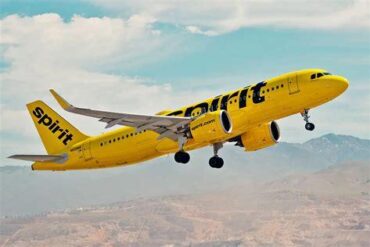
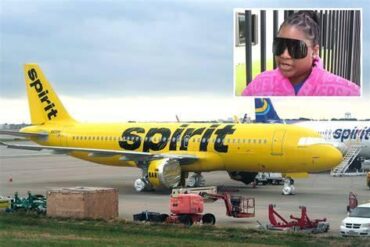
The headquarters sale represents another chapter in the breakup of Spirit Airlines’ former operating structure. The carrier officially ceased operations in the early hours of May 2, ending an era defined by ultra-low fares, bright-yellow aircraft and an aggressive approach to stimulating demand across the U.S. leisure market.
Since the shutdown, attention has increasingly shifted toward the assets Spirit left behind. Aircraft, airport slots, employees and other operational resources have been absorbed or redeployed by competitors, while valuable real estate is now following the same path.
Spirit’s former airport positions have already attracted substantial interest. JetBlue, for example, reportedly paid $58.5 million for 22 former Spirit slots at New York LaGuardia Airport, demonstrating the strategic value that individual pieces of the airline’s network can retain even after the carrier itself disappears.
Meanwhile, JetBlue has also been expanding at Fort Lauderdale, where it has sought to capture demand left behind by Spirit while hiring former Spirit employees and targeting approximately 150 daily flights at FLL.
What Happens to the Spirit Headquarters Next?
The $93.25 million transaction still requires approval from the New York bankruptcy court overseeing Spirit’s case before the sale can be finalized. Once approved, ownership of the Dania Beach campus will formally move to Hill City Capital, ending the property’s direct connection with Spirit Airlines.
For aviation observers, the sale is more than a commercial real-estate transaction. The headquarters was once a physical center of a rapidly expanding airline that transformed the U.S. low-cost market. Its sale now provides a tangible reminder of how quickly an airline’s infrastructure can be redistributed after operations end.
The most revealing detail may ultimately be the losing $97 million bid. Spirit’s former headquarters did not sell to the buyer offering the most money on paper. It sold to the bidder whose proposal was judged capable of delivering the better financial result for the bankrupt airline’s estate. That unusual outcome captures the complicated economics of Spirit’s final chapter.