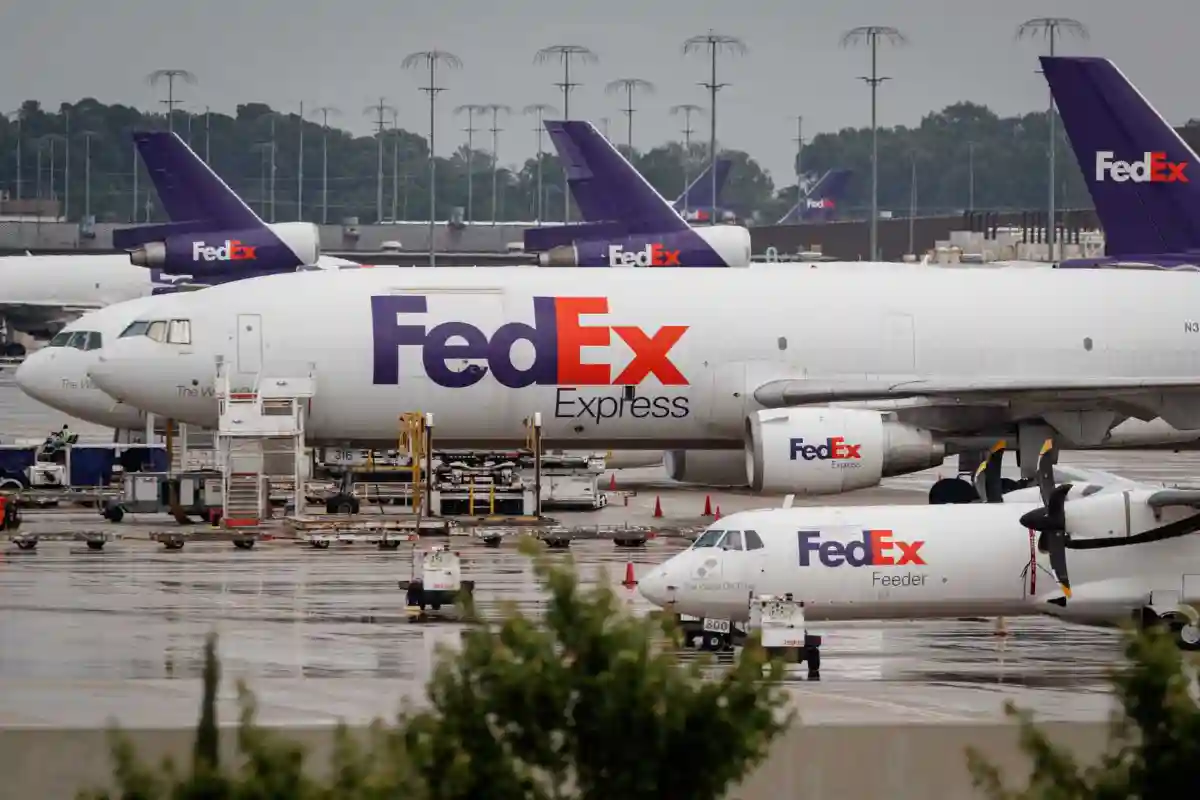
Global air cargo is no longer the quiet sibling of passenger aviation. Airports Council International’s latest world traffic rankings put worldwide freight volumes at close to 130 million metric tons in 2025, a figure driven upward by resurgent international trade, cross-border e-commerce, and supply chains that now treat a two-day delivery window as an entitlement rather than a premium. Within that vast network, a remarkably small group of airports does a disproportionate share of the heavy lifting. The five busiest cargo airports on Earth handled roughly 20 million metric tons between them last year — about one of every six tons moved by air anywhere in the world. Their dominance is not accidental. Each of the five sits at the intersection of a carrier’s network architecture, a manufacturing region’s export appetite, and a geography that makes it the natural pivot between production and consumption. Understanding them means understanding how a smartphone, an oncology drug, or a laptop battery actually reaches a customer.
How the 2025 Air Cargo Rankings Were Reshaped
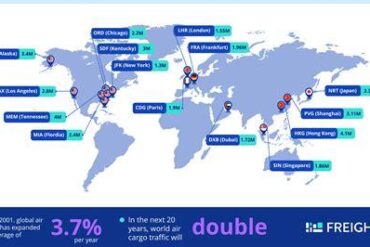
The 2025 table reads as a story of Asian export strength meeting American express logistics. Hong Kong International Airport retained the crown and widened its lead. Shanghai Pudong International Airport overtook Memphis International Airport for second place, nudging the Tennessee giant into third. Anchorage held fourth, and Louisville displaced its nearest rival to claim fifth with the strongest growth rate in the top tier. Every airport in this group grew, and several grew at double-digit rates that would have seemed implausible a decade ago.
What unites them is that none is merely a local airport with a cargo side business. Each functions as infrastructure for an entire continent’s trade patterns, whether that means Cathay Pacific Cargo’s freighter network radiating from the Pearl River Delta, FedEx Express’s overnight sortation in Memphis, UPS Airlines’ Worldport in Louisville, Shanghai’s manufacturing hinterland, or Anchorage’s role as the world’s most valuable fuel stop. The tensions between them are equally revealing: Shanghai’s rise reflects the gravitational pull of Chinese manufacturing, while Anchorage’s persistence reflects the simple physics of transpacific flying, where payload capacity must be traded for fuel unless an aircraft lands somewhere in the middle.
5. Louisville Muhammad Ali International Airport (SDF): UPS Worldport and the Anatomy of Overnight Delivery
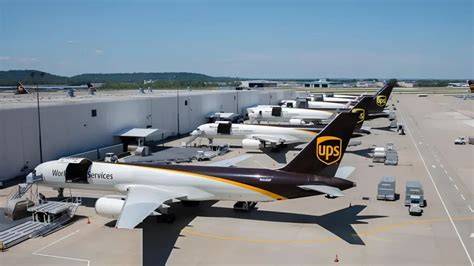
Louisville Muhammad Ali International Airport handled more than 3.15 million metric tons of freight in 2025, a performance that lifted it one place in the global rankings and delivered year-on-year growth exceeding 15% — among the fastest of any major cargo hub. That growth is inseparable from a single tenant. Louisville is the global hub of UPS Airlines, and the carrier’s Worldport sorting facility is the centerpiece of one of the largest package delivery networks ever built. The airport’s identity is defined less by who flies there than by what happens there between 11 p.m. and 4 a.m., when hundreds of aircraft arrive in coordinated waves, disgorge their containers, and depart again carrying freight sorted to within an inch of its destination.
The scale of Worldport defies casual comprehension. During peak periods, the facility sorts hundreds of thousands of packages per hour, routing them across a matrix of conveyors, chutes, and scanner arrays before reloading them onto outbound aircraft. Louisville’s geography underwrites the whole operation. Sitting near the center of the eastern United States, the airport allows UPS Airlines to reach a substantial share of the country’s population within a short flight time — a decisive advantage when the product being sold is a guaranteed delivery hour rather than a seat. Over decades, sustained investment in dedicated cargo ramps, advanced sortation technology, and extensive warehousing has allowed Louisville to absorb rising volumes without collapsing under its own complexity.
What makes Louisville instructive is how far its cargo importance diverges from its passenger profile. The airport remains a modest player in commercial passenger aviation compared with the mega-hubs that dominate travel headlines, yet within global logistics it punches at a weight class far above its size. That inversion is a useful corrective to the assumption that airport significance is measured in terminals and duty-free concourses. In Louisville’s case, significance is measured in the number of packages that must physically be in a delivery truck by 8 a.m., and in the tolerance for error of a network that treats a two-hour delay as a network-wide event.
4. Ted Stevens Anchorage International Airport (ANC): Geography as a Business Model
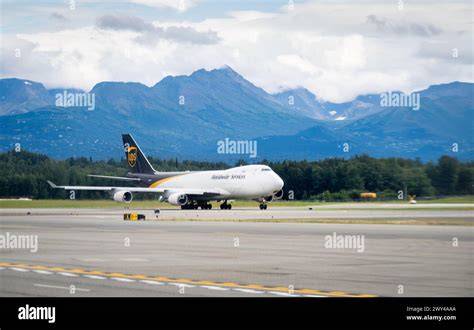
Ted Stevens Anchorage International Airport retained fourth place with approximately 3.7 million metric tons of cargo, and its presence on this list is the most counterintuitive of the five. Anchorage is not the gateway to a densely populated region, nor does it sit at the heart of a manufacturing belt with millions of consumers waiting on the other side. Its success derives almost entirely from strategic geographic location. Positioned between Asia and North America on the great circle routes that connect them, Anchorage is the natural stopping point for freighter aircraft operating transpacific services, and it has converted that accident of latitude into a business model.
Cargo airlines use the airport for refueling, crew changes, maintenance activity, and cargo transfers before continuing to destinations across the United States, Canada, Asia, and beyond. The stop matters because of a hard operational reality: a fully loaded freighter departing Shanghai or Hong Kong for Chicago cannot carry maximum payload and maximum fuel simultaneously. Landing at Anchorage allows an aircraft to burn less fuel in the air, take on cheaper uplift at a lower-cost station, and swap crew in a jurisdiction with straightforward immigration processing. Anchorage has built an entire economy of ground handling around that calculus, and its remote location — far from any large metropolitan market — has become an asset rather than a liability.
The airport is a major base for both UPS Airlines and FedEx Express, with carriers linking it to destinations including Seoul Incheon International Airport (ICN) and Singapore Changi Airport (SIN). Its appeal rests on operational flexibility that congested hubs cannot match: around-the-clock operations without curfew pressure, relatively low congestion levels, and infrastructure purpose-built for high cargo volumes. Those characteristics let airlines minimise delays and maximise aircraft utilisation, the two variables that determine whether a freighter route is profitable. Anchorage also functions as a geopolitical pressure valve. As carriers have adjusted to airspace restrictions and shifting trade flows, the airport has repeatedly reasserted itself as a reliable intermediate point, and its ability to handle the largest freighter types in service ensures it remains structurally difficult to bypass.
3. Memphis International Airport (MEM): The FedEx SuperHub and the World’s Most Consequential Sortation Floor
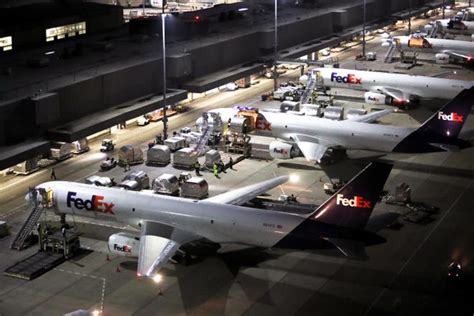
Memphis International Airport processed approximately 3.75 million metric tons in 2025, slipping from second to third only because Shanghai’s growth outpaced its own. For decades Memphis has been synonymous with air freight, and its influence has never depended on ranking position. The airport’s cargo dominance flows from FedEx Express, which operates its global SuperHub in Memphis — the central node of a network connecting thousands of communities across more than 200 countries and territories. Each night, aircraft arrive from North America, Europe, Asia, Latin America and elsewhere, and their contents are sorted before being dispatched to final destinations.
The overnight operation is a choreography of arrival banks and departure banks, with hundreds of aircraft moving through carefully sequenced windows designed to compress transit time to its theoretical minimum. Memphis’s cargo estate comprises extensive sorting centres, aircraft parking positions, warehousing space, and support infrastructure developed specifically for express freight rather than adapted from passenger operations. Crucially, Memphis is more than an airport: the city offers access to major interstate highways, rail networks, and inland waterways, producing a genuinely integrated logistics environment in which air, road, rail and barge modes reinforce one another. That multimodal depth is why Memphis has endured as a distribution capital even as rankings have shifted around it.
Shanghai Pudong International Airport (PVG) may have edged ahead in the latest standings, but Memphis remains a cornerstone of global express delivery. The reliability and speed of the FedEx network still depend on the airport’s capacity to process enormous volumes every single day, and the network’s design — a single dominant hub feeding a continental and intercontinental web — means that Memphis’s operational performance is effectively a global variable. When Memphis works, the world’s overnight parcel industry works. That dependency is a form of strategic importance no ranking can fully capture.
2. Shanghai Pudong International Airport (PVG): The Export Engine of the Yangtze River Delta
Shanghai Pudong International Airport climbed to second place in 2025 with approximately 3.78 million metric tons of freight, recording growth of close to 10% year on year. The gain reflects two reinforcing forces: the sheer weight of China’s export sector and Shanghai’s standing as one of the world’s leading commercial centres. As the primary international gateway serving China’s largest city, Pudong connects manufacturers and businesses with markets on every continent, and its cargo mix spans electronics, automotive components, pharmaceuticals, industrial equipment, and consumer products — the full spectrum of high-value, time-sensitive freight that justifies the cost of flying.
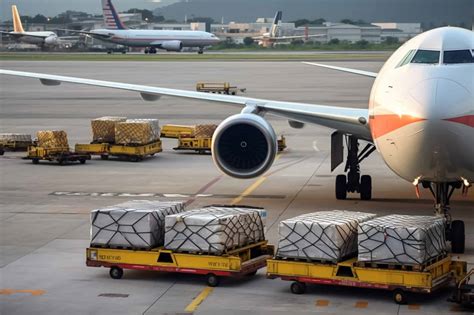
Much of that traffic originates in the densely industrialised Yangtze River Delta, one of the most productive manufacturing regions on the planet. The airport’s cargo infrastructure supports a dense ecosystem of international and domestic airlines, freight forwarders, and logistics providers, while specialised handling facilities allow it to process temperature-controlled pharmaceutical shipments, dangerous goods, and outsized industrial cargo with equal fluency. Strong surface connections to surrounding transport networks complete the picture, moving goods rapidly between factories, distribution centres, and export markets in a loop tight enough to support just-in-time production.
Pudong’s ascent tracks the broader shift of global trade and manufacturing toward Asia. E-commerce has reshaped demand in particular: cross-border platforms now require air cargo capacity that moves parcels from Chinese production clusters to consumers in Europe and North America within days, and Pudong has absorbed a large share of that demand. Because the airport sits at the junction of manufacturing supply and consumer demand, its growth is less a reflection of airline strategy than of structural trade geography — which makes its position among the world’s leading freight hubs unusually durable.
1. Hong Kong International Airport (HKG): The Undisputed Leader in Global Air Freight
Hong Kong International Airport secured the title of world’s busiest cargo airport once again in 2025, handling approximately 4.94 million metric tons of freight and recording growth of more than 14% — a rate that outperformed many competing hubs and widened its lead at the top. The result extends an extraordinary record: Hong Kong has occupied the number-one position numerous times over the past two decades, and its cargo leadership has survived pandemics, trade disputes, and the reordering of global supply chains. The reasons are structural rather than cyclical, rooted in the airport’s dual identity as a gateway between mainland China and international markets and as a mature global trade and logistics centre in its own right.
That combination has attracted a vast network of cargo airlines, freight forwarders, and logistics companies that depend on the airport’s infrastructure and connectivity. The largest cargo operator is Cathay Pacific Cargo, the freighter arm of the oneworld carrier, whose network gives Hong Kong reach across every major trading region. Cargo operations at the airport are exceptionally diverse, spanning consumer electronics, e-commerce shipments, pharmaceuticals, perishables, luxury goods, and industrial equipment. Dedicated cargo terminals and specialised handling facilities allow operators to process that variety efficiently while meeting stringent requirements for temperature control, security screening, and documentation — capabilities that matter enormously for high-value pharmaceutical and perishable flows.
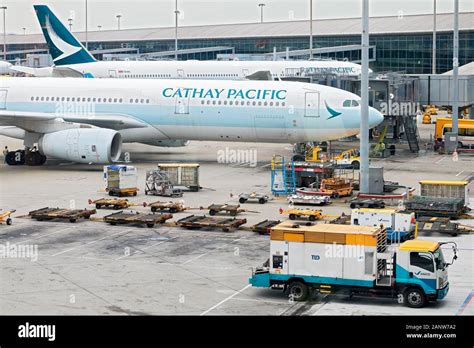
Hong Kong has also invested continuously in capacity. The introduction of the three-runway system has enhanced aircraft movement capabilities at a time when slot availability elsewhere in the region is tight, while additional cargo facilities have expanded the airport’s ability to accommodate future growth. Those investments are well timed. International trade volumes and e-commerce demand continue to climb, and the airports that will capture that growth are the ones with runway capacity, cold-chain capability, and customs processes fast enough to keep high-value freight moving. With nearly five million metric tons passing through its facilities in a single year, Hong Kong International Airport remains the undisputed leader in global air freight and one of the most strategically important logistics assets in the aviation industry.
What the Top Five Reveal About the Future of Air Cargo
Read together, the five largest air cargo hubs describe three distinct paths to global significance. Louisville and Memphis built their positions around a single express carrier’s network design, converting hub geography into an operational monopoly on overnight delivery. Shanghai and Hong Kong derive their scale from manufacturing hinterlands that produce goods the world buys, with cargo capacity following export demand rather than leading it. Anchorage occupies a category of its own, monetising the immutable distances between continents and the payload penalties that come with them. That no two of the five compete on the same terms is the clearest evidence that air cargo dominance is not a single achievement but several different ones.
The next few years will test each model. E-commerce growth continues to pull dedicated freighter capacity into new lanes, while the freighter fleets themselves are in transition as older trijets retire and newer, more efficient types take over their roles. Trade policy, airspace access, and the pace of nearshoring will determine whether Asian export volumes keep climbing at the rates seen in 2025 or plateau. What seems certain is that the concentration of freight among a handful of airports will persist, because the economics of air cargo reward scale, specialisation, and geography — three advantages that cannot be replicated quickly. The roughly 20 million metric tons moving through these five gateways each year is not merely a statistic about airports. It is a measure of how tightly the modern world has bound itself to the speed of a freighter aircraft.