Compass Cargo Airlines, officially branded as Compass Air Cargo, has rapidly evolved into a prominent figure within Europe’s freight aviation sector. Founded in 2021 and headquartered in Sofia, Bulgaria, this ambitious airline has charted a path of strategic growth by focusing on modern cargo aircraft, optimized logistics, and highly responsive freight solutions that cater to a growing global demand. Within just a few years, Compass Cargo has not only marked its footprint in European skies but also extended its reach across global freight corridors.
The Birth of a Cargo Specialist in a Competitive Landscape
The foundation of Compass Cargo Airlines coincided with a pivotal moment in global aviation history. As the world emerged from the COVID-19 pandemic, the need for reliable cargo services surged—largely fueled by disrupted supply chains and skyrocketing e-commerce. Into this gap stepped Compass Cargo, capitalizing on opportunity and necessity. Unlike traditional passenger carriers diversifying into cargo, Compass was born as a pure cargo operator, thereby structuring its business and operational model with singular focus and precision.
Backed by a team of aviation professionals and logistics strategists, the airline quickly obtained its AOC #BG34, a crucial certification allowing for commercial air operations under Bulgaria’s civil aviation authority. The startup model of Compass was lean, with a clear emphasis on operational efficiency, modern aircraft, and technological agility. Its first aircraft, a Boeing 737-800SF, took flight under Compass livery the same year, marking the operational commencement of a company that had been quietly laying the groundwork for competitive excellence.
Fleet Strategy: A Blend of Efficiency and Capacity
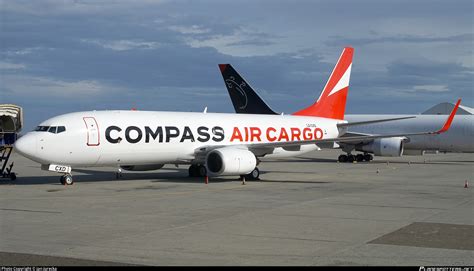
One of Compass Cargo’s most distinguishing features is its fleet composition, purposefully designed to balance regional flexibility with intercontinental capacity. As of January 2025, the airline operates a fleet of seven aircraft, including:
- 4 Boeing 737-800BCF (Boeing Converted Freighter)
- 1 Boeing 747-400F
- 2 Boeing 747-400ERF (Extended Range Freighter)
An additional 737-800BCF is on order, signaling ongoing fleet expansion. The 737-800BCFs serve short-to-medium haul operations with optimal fuel efficiency and payload capabilities, while the 747-400 series handle high-volume, long-haul cargo, enabling the airline to cover expansive freight routes between Europe, Asia, and North America.
The choice of aircraft reflects Compass’s strategic foresight. The 737-800BCF, with its lower operating costs and rapid loading capability, is ideal for frequent intra-European routes, catering to industries requiring fast turnaround and time-sensitive delivery. Meanwhile, the 747-400ERFs, among the giants of the sky, accommodate heavy-duty logistics needs like automotive parts, industrial machinery, and e-commerce mega-shipments.
Operational Reach and Market Integration
From its hub in Sofia, Compass Cargo Airlines has meticulously expanded its operational network, integrating seamlessly into the European logistics framework. While its footprint remains primarily focused on European and Eurasian routes, there are ongoing indications of deeper global partnerships forming, especially in high-growth cargo corridors such as China–Europe and US–Europe trade lanes.
The airline leverages Vilnius, Leipzig, and Liège as secondary hubs and stopover points, reinforcing its east-west logistical agility. Thanks to its fleet diversity, Compass can service both low-density regional cargo and bulk intercontinental freight with equal efficiency.
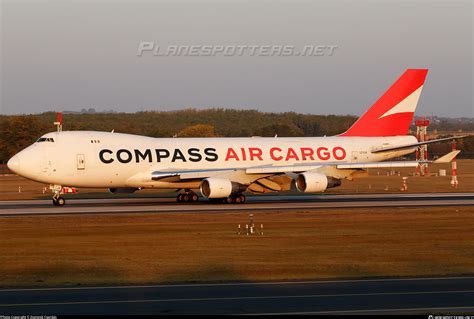
Brand Identity and Technological Edge
Compass Cargo Airlines markets itself under the simplified and dynamic branding of Compass Air Cargo—a name that emphasizes direction, precision, and global ambition. The airline has invested significantly in digital cargo tracking, automated cargo loading technologies, and AI-driven scheduling systems, aiming to deliver faster and more transparent service to freight forwarders and logistics firms.
The company’s website, compasscargo.eu, serves as a streamlined digital portal, offering real-time tracking, route maps, and booking interfaces, backed by a responsive support team. This degree of transparency is vital in an industry where clients expect both speed and accountability. Moreover, Compass’s early adoption of SaaS-based logistics platforms and predictive cargo analytics places it at the forefront of digitally enabled aviation logistics providers.
Economic Impact and Industry Positioning
Bulgaria has historically played a modest role in European aviation, often overshadowed by larger neighbors like Germany, France, or Poland. However, Compass Cargo Airlines has contributed significantly to the modernization and internationalization of Bulgarian civil aviation. As one of only a handful of active Bulgarian cargo airlines—alongside Cargoair—Compass has emerged as a beacon of innovation, job creation, and international collaboration.
The economic ripple effect is tangible: with new employment opportunities for pilots, ground handlers, logistics coordinators, and maintenance technicians, the airline injects both direct and indirect value into the Bulgarian economy. Its expansion also enhances the visibility of Sofia Airport as a viable logistics hub, increasing freight throughput and improving connectivity to global markets.

Challenges and Competitor Landscape
Despite its success, Compass Cargo Airlines operates in an industry marked by volatility and intense competition. Freight rates are influenced by fuel costs, global trade policy, economic cycles, and seasonal demand. Competitors such as DHL Aviation, Cargolux, and Turkish Cargo possess massive fleets, longstanding customer bases, and extensive infrastructure.
However, Compass’s smaller size is also its strength. It can pivot rapidly, offer bespoke solutions, and enter niche markets that larger operators might find unprofitable. This agility enables it to operate on thin margins without sacrificing quality. The key to long-term success will be continued investment in fleet modernization, route optimization, and customer integration, as well as forging interline partnerships and codeshare agreements with global carriers.
Future Outlook and Strategic Roadmap
Compass Cargo Airlines is clearly positioning itself for sustained long-term growth. The pending delivery of its fifth 737-800BCF indicates a commitment to route densification in Europe. Meanwhile, management has hinted at potential expansion into Middle Eastern and African routes, supported by their high-capacity 747 freighters.
As geopolitical tensions reshape global supply chains and e-commerce continues its upward trajectory, the need for specialized, tech-forward cargo operators will grow. Compass has already begun integrating sustainability practices, including reduced-emission flight planning, digital documentation to minimize paper use, and exploring sustainable aviation fuel (SAF) options for future compliance and environmental stewardship.
Further down the line, the airline may explore options such as:
- Fleet expansion into wide-body next-gen freighters like the Boeing 777F or Airbus A350F
- Establishment of dedicated cargo terminals in Bulgaria and neighboring logistics hotspots
- Strategic alliances with rail and road logistics companies to create multimodal freight chains
Conclusion: A Rising Star in Global Freight Aviation
In just a short span of time, Compass Cargo Airlines has transitioned from a startup in a small Eastern European market to a trusted logistics partner for a wide range of industries and freight forwarders. Its focused approach—grounded in fleet efficiency, technological innovation, and agile operations—has allowed it to outpace many older, more established carriers in adaptability and customer responsiveness.
With an eye firmly fixed on the future and a clear vision for scalable growth, Compass Cargo Airlines represents the next generation of air freight carriers—lean, smart, and strategically disruptive. If its current trajectory holds, this Bulgarian-born airline could soon find itself listed among the top-tier cargo players shaping the future of global logistics.