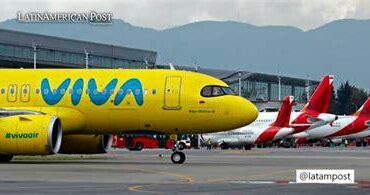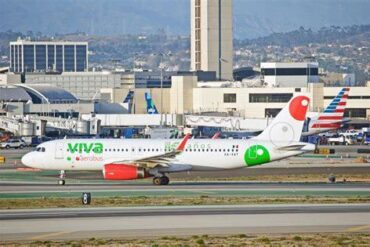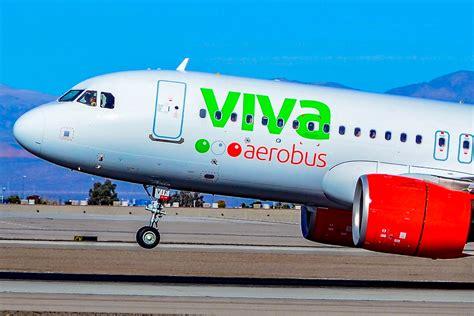
Viva, formerly known as Viva Aerobus, has emerged as one of Mexico’s most dynamic low-cost airlines, rapidly transforming from a niche domestic player into a key actor in North American and Latin American aviation. Anchored at Monterrey International Airport, Viva’s expansive reach, competitive pricing, and strategic alliances have helped it become the third-largest airline in Mexico and the eleventh-largest in North America by passenger volume.
The airline’s hybrid model—blending point-to-point efficiency with the operational strength of a hub-and-spoke system—has allowed it to serve over 160 routes across 60 destinations, spanning not only Mexico and the United States but also extending its network to Central and South America.
Founded with strategic foresight and fueled by bus conglomerate IAMSA and the aviation-savvy minds at Irelandia Aviation, Viva represents a textbook example of how to scale a low-cost carrier efficiently in a region historically underserved by budget airlines.
Strategic Origins and Bold Beginnings
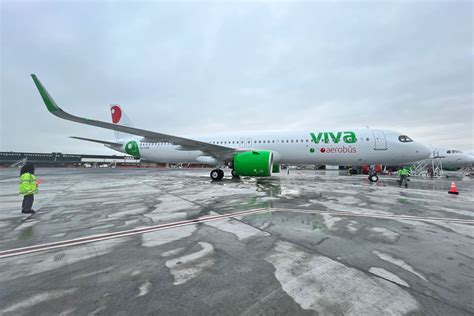
The seeds of Viva’s trajectory were planted on 30 November 2006, with a modest yet visionary $50 million investment. Starting operations with just two Boeing 737-300 aircraft, Viva was launched under a 51% ownership by IAMSA and 49% by Irelandia Aviation, the same group behind Ryanair and other global LCC successes. The airline’s headquarters were strategically positioned in Monterrey, offering connectivity with bus networks to drive intermodal integration.
The airline’s domestic expansion came quickly. New internal routes flowed out of Monterrey, complemented by a brief but symbolic foray into Austin, Texas in May 2008. Although the Austin base shuttered a year later, this early attempt set the tone for Viva’s bold cross-border ambitions. By summer 2009, the carrier had introduced service to Las Vegas, laying the groundwork for a more sustained international push.
Evolution of Hubs and Network Complexity
Between 2009 and 2022, Viva demonstrated a methodical hub development strategy, fortifying its national coverage and unlocking more regional market share.
- In 2009, Guadalajara became its second base.
- By October 2010, Mexico City entered the picture, first as a focus city, and by April 2011, it earned hub status.
- Cancún (2013), Los Cabos (2015), and Mérida (2022) followed, diversifying Viva’s footprint and granting leverage against competitors like Volaris and Aeroméxico.
These base expansions allowed Viva to scale efficiently, deploying aircraft to high-demand tourism and business corridors while retaining control over cost structures.
Fleet Modernization: From Legacy Boeing to All-Airbus
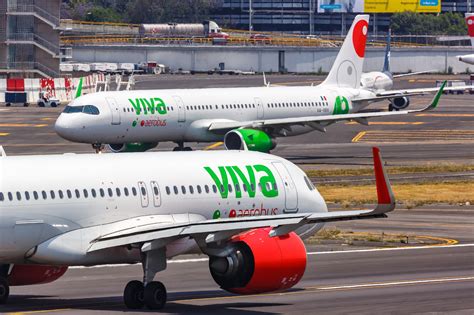
One of Viva’s most transformative decisions came in October 2013 with a $5.1 billion Airbus order for 52 A320 family aircraft. By the end of 2016, the airline had transitioned to an all-Airbus fleet, abandoning the aging 737s in favor of the fuel-efficient A320 and A321neo series. The move underscored Viva’s long-term commitment to low unit costs, lower emissions, and scalable growth.
Today, Viva operates a fleet of 115 Airbus aircraft:
- 44 Airbus A320-200s (180 seats)
- 30 Airbus A320neos (186 seats)
- 10 Airbus A321-200s (220 seats)
- 31 Airbus A321neos (240 seats), with 15 more on order
This transition empowered Viva to increase load capacity while improving fuel economics across its busiest routes.
Market Penetration into the United States and Beyond
From 2010 onward, Viva pursued a strategic incursion into the United States market:
- Houston IAH became the airline’s first regular U.S. gateway in 2010.
- Services to Los Angeles (2017), New York (2018), and Chicago O’Hare (2019) signaled its growing appetite for major diaspora-heavy corridors.
These routes were carefully selected, catering to Mexico’s sizeable U.S.-based population and leveraging Mexico-U.S. bilateral air service liberalization under the 2016 Open Skies Agreement.
By 2024, Viva was no longer merely a domestic player—it was a legitimate international operator in the Western Hemisphere.
Corporate Performance and Aggressive Growth
Financially, Viva has experienced a meteoric rise. Between 2016 and 2024, its key metrics expanded exponentially:
- Revenue: From US$271 million to US$2.565 billion
- Passengers: From 6.3 million to 27.6 million annually
- Fleet Size: From 21 to 90 aircraft, and growing
- Load Factor: An impressive 87%, reflecting operational efficiency and market demand
These results are not merely reflective of macroeconomic growth in Mexico—they are a testament to Viva’s disciplined expansion, strong fare unbundling strategy, and route optimization across underutilized regional corridors.
Strategic Alliances and Codeshare Integration
Viva’s global outlook has led to multiple alliances and codeshare agreements, broadening its reach without overextending its fleet:
- Codeshare with Aerus and Iberia
- Interline agreements with Air Canada, Avianca, and Emirates
- Planned 2023 alliance with Allegiant, strengthening U.S. regional cooperation
These partnerships enhance Viva’s international connectivity while allowing legacy carriers to access the Mexican domestic network more efficiently.
Rebranding and Customer Flexibility Policies
In October 2024, Viva dropped “Aerobus” from its name and unveiled a streamlined brand identity—simply, Viva. This change was accompanied by the introduction of the Flex-Sí-bilidad policy, which gives customers more leeway for flight changes, cancellations, and rebookings without significantly inflating fares.
The rebrand also included a new visual identity and livery, aligning more closely with contemporary low-cost airline aesthetics and signaling the airline’s maturity.
In-Flight Services and Multimodal Ground Access
True to low-cost roots, Viva continues to operate with a buy-on-board service model since 2009. However, the airline has added nuanced touches like shuttle connections between U.S. border towns (e.g., El Paso–Juárez) and major bus terminals in Mexico.
While historical services to Austin and San Antonio included bundled ground-air travel, these were later retired as air services expanded.
Accident and Safety Record
On 18 March 2021, Flight 4343 suffered a nose gear collapse during the takeoff roll at Puerto Vallarta. Although the Airbus A320-232 was ultimately written off, all 133 passengers and crew were evacuated safely. The incident drew praise for crew professionalism and reinforced Viva’s focus on operational safety.
Sponsorships and Brand Presence
Viva has cultivated visibility through an extensive sports sponsorship portfolio. It is the official airline sponsor of:
- Liga MX football clubs: Atlas, Tigres UANL, Club América
- Baseball teams: Tomateros de Culiacán and Sultanes de Monterrey
- NBA’s San Antonio Spurs and NFL’s Las Vegas Raiders
These partnerships amplify Viva’s brand across sports arenas in both Mexico and the United States, aligning the airline with cultural identity and community pride.

The Viva Fan Loyalty Program
Viva Fan, the airline’s frequent-flyer program, offers tiered membership benefits, advanced boarding, discounted fare access, and member-only promotions. While simpler than legacy carrier programs, Viva Fan is well-calibrated for the budget-conscious traveler seeking value over luxury.
With ongoing digital integrations and personalized app interfaces, Viva is positioning the program as a mobile-first loyalty platform.
Looking Ahead: A Rising Continental Force
Viva’s formula—cost discipline, calculated expansion, digital transformation, and brand assertiveness—has established it as one of Latin America’s most compelling aviation success stories. Its trajectory suggests a long-term strategic vision, one rooted in efficiency but not devoid of innovation.
With 115 aircraft in service, ongoing fleet expansion, a growing international network, and an evolving loyalty ecosystem, Viva is poised to challenge not only regional competitors but also legacy carriers entrenched across the Americas.
As the airline pushes forward, balancing low fares with increasingly refined service expectations, its name—Viva—embodies the very spirit of modern travel: affordable, adaptive, and alive with potential.