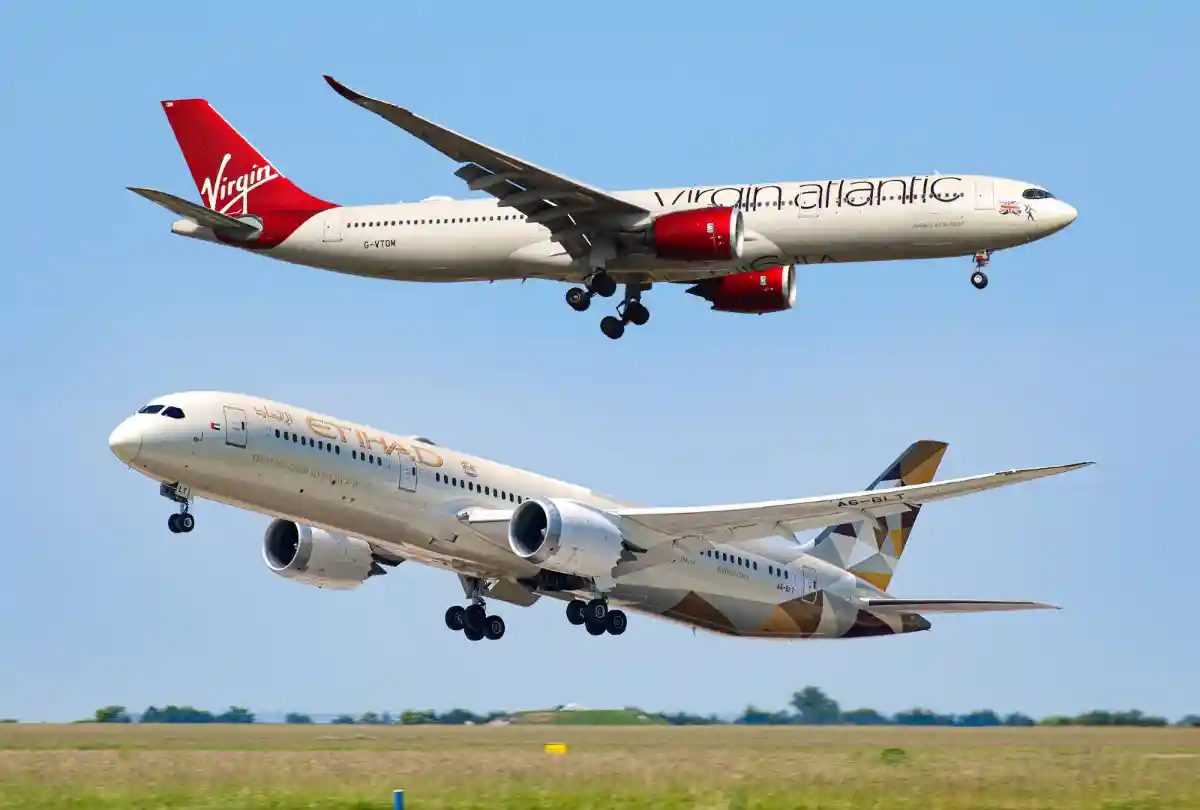
The Airbus A330neo and Boeing 787-9 Dreamliner represent two different answers to the same aviation challenge: how to make long-haul aircraft more efficient, economical, and capable in an increasingly competitive market. Both aircraft were designed to connect distant cities with lower fuel consumption and improved passenger comfort, yet their engineering philosophies could hardly be more different.
The Boeing 787-9 was developed as part of a completely new aircraft family, allowing Boeing engineers to rethink nearly every element of the airframe. The Airbus A330neo, meanwhile, was created as an advanced evolution of the proven A330 platform, combining decades of operational experience with modern engines, updated systems, and aerodynamic improvements.
Among all the differences between these aircraft, their wings reveal the clearest contrast. The wing is where engineers balance lift, drag, structural weight, fuel efficiency, airport limitations, and long-range performance. Although both aircraft achieve impressive efficiency, Airbus and Boeing reached their goals through very different approaches.
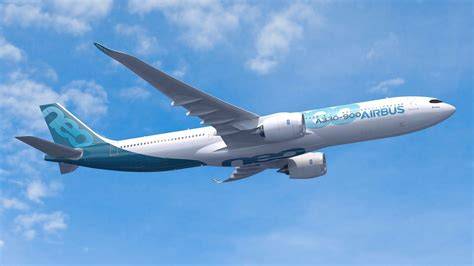
A330neo and 787-9 Wings Reflect Two Different Engineering Philosophies
The first major difference between the Airbus A330neo and Boeing 787-9 wings comes from their development backgrounds. Boeing had the opportunity to design the 787 from a clean sheet of paper. Airbus, on the other hand, needed to modernize an aircraft platform that originally entered service in the 1990s.
The A330 family was already highly successful, becoming one of the world’s most widely used widebody aircraft. However, its original wing was created during an era when fuel prices, materials technology, and aerodynamic priorities were different. The A330 shared a basic wing design with the four-engine A340, meaning the structure was influenced by requirements beyond the twin-engine A330 itself.
When Airbus launched the A330neo program in 2014, engineers focused on improving the aircraft without completely redesigning the entire airframe. The goal was to preserve the advantages of the existing A330 while bringing it closer to the efficiency levels of newer aircraft such as the 787.
The 787-9 followed a completely different path. Boeing designed the Dreamliner around advanced composite materials, new manufacturing techniques, and a highly optimized aerodynamic structure. The result was an aircraft where the wing was not simply an improved version of an older design but a fundamental part of a new-generation platform.
This difference explains why the two aircraft have unique wing characteristics. The A330neo represents evolution, while the 787-9 represents a technological reset.
1. Composite Materials: Lightweight Innovation vs Strategic Improvement
One of the biggest differences between the two aircraft wings is the use of composite materials. Boeing made composites a central feature of the 787 program. Approximately 80% of the aircraft by volume uses composite materials, making the Dreamliner the first commercial airliner built primarily around carbon-fiber-reinforced structures.
This extensive use of composites allowed Boeing engineers to create a lighter and more flexible wing. Carbon fiber provides high strength while reducing weight compared with traditional aluminum structures. It also offers improved resistance against fatigue and corrosion, two major concerns for aircraft operating thousands of flight cycles.
The 787-9’s composite wing can flex significantly during flight. This flexibility helps the aircraft respond more efficiently to aerodynamic forces, reducing structural loads and improving overall efficiency during cruise.
Airbus also introduced composite materials into the A330neo wing, but the approach was more selective. The manufacturer used carbon-fiber-reinforced plastics (CFRP) in areas such as the outer wing sections and sharklets while retaining much of the traditional aluminum wing structure.
This decision reflected Airbus’ strategy. Instead of creating a completely new aircraft, the company optimized an existing platform while controlling development costs and production risks. The A330neo’s wing is therefore a modernized structure rather than a fully composite replacement.
The difference demonstrates two philosophies: Boeing used composites as the foundation of the aircraft, while Airbus used them as a targeted improvement tool.
2. Wingspan and Aspect Ratio: How Engineers Chase Aerodynamic Efficiency
The second major difference is the physical size and shape of the wings. The A330neo received a significant wing redesign, increasing its wingspan from approximately 197.8 feet (60.3 meters) on earlier A330 models to about 210 feet (64 meters).
This extended wingspan gives the A330neo a much higher aspect ratio, reaching approximately 11, one of the highest among current commercial aircraft. Aspect ratio measures the relationship between wing length and wing width. A higher aspect ratio generally improves aerodynamic efficiency because it reduces induced drag during flight.
For long-distance aircraft, reducing drag is essential. Every reduction in aerodynamic resistance can translate into lower fuel consumption and greater range. The longer A330neo wing improves lift distribution, reduces wasted energy at the wingtips, and helps the aircraft climb more efficiently.
The Boeing 787-9 also features a high-efficiency wing, but its dimensions are different. The aircraft has a wingspan of approximately 197 feet (60 meters) and an aspect ratio of around 9.59.
Although the 787-9 wing is smaller in span, its efficiency comes from a combination of factors, including composite construction, advanced aerodynamics, and flexible wing behavior. Boeing did not simply pursue maximum wingspan; instead, engineers optimized the entire aircraft system.
Airport compatibility also influenced both designs. A larger wingspan can improve efficiency, but it can also create operational challenges because airports classify aircraft by wingspan categories. Both Airbus and Boeing needed to balance aerodynamic advantages with global airport access.
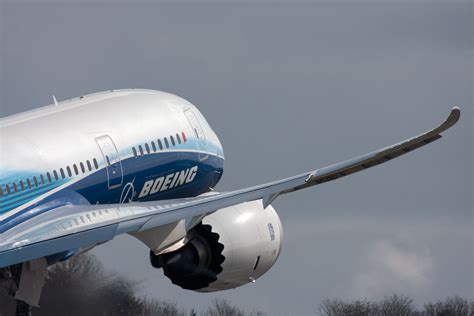
3. Sharklets vs Raked Wingtips: Two Solutions to Reduce Wingtip Drag
The third major difference appears at the ends of the wings. Both aircraft use specialized designs to reduce wingtip vortices, but Airbus and Boeing selected different solutions.
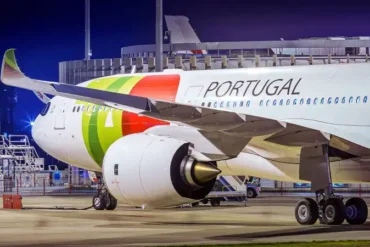
The Airbus A330neo uses blended sharklets, large curved structures extending upward from the wingtip. These sharklets are similar in concept to those used on Airbus’ A320neo family and A350 aircraft.
During flight, pressure differences between the upper and lower surfaces of a wing create rotating air patterns called wingtip vortices. These vortices increase drag and reduce efficiency. Sharklets reduce the strength of these vortices, improving aerodynamic performance.
Airbus engineers designed the A330neo sharklets to provide efficiency improvements without pushing the aircraft beyond common airport gate limits. The sharklets add approximately 3.7 meters to the wingspan while maintaining operational flexibility.
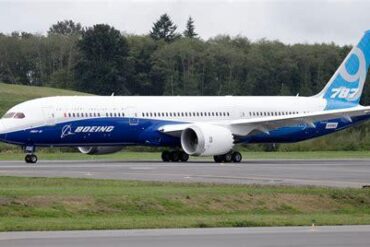
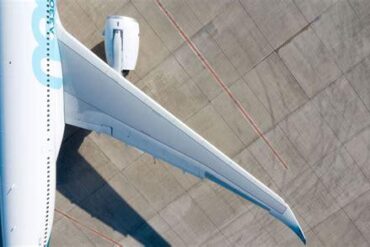
The Boeing 787-9 uses a different approach: raked wingtips. Instead of adding a separate vertical structure, Boeing extended and swept the wingtip backward. These elongated wingtips perform a similar aerodynamic function by reducing vortex strength.
The raked design is integrated into the wing itself, creating a smooth transition between the main wing and the tip section. Boeing previously applied similar concepts to military aircraft and later adapted the technology for commercial aviation.
Neither solution is universally superior. Sharklets provide an effective upgrade for an existing aircraft design, while raked wingtips fit naturally into Boeing’s clean-sheet composite wing architecture.
The difference highlights how engineers solve the same aerodynamic problem through different methods.