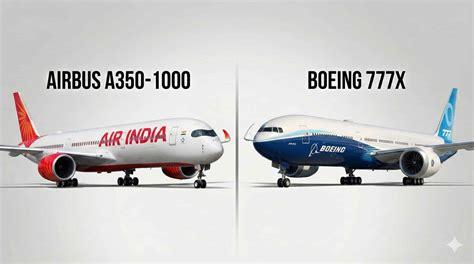
The comparison sounds almost absurd at first glance: Boeing reportedly spent around $2 billion developing the composite wing for the 777X, while Airbus spent roughly the same amount launching the entire A330neo program. Yet the deeper one looks into the economics and engineering of modern aviation, the more this claim reveals a profound divide in philosophy between the world’s two largest aircraft manufacturers.
One company pursued radical innovation through carbon-fiber structures, folding wingtips, and unprecedented aerodynamic ambition. The other chose calculated evolution, squeezing extraordinary efficiency from an already proven airframe while avoiding catastrophic development risk. The result is one of the most fascinating financial and technological contrasts in commercial aerospace history.
What makes the debate especially compelling is that both strategies were rational. Boeing believed the future of long-haul aviation demanded a revolutionary wing capable of delivering unmatched fuel efficiency for ultra-high-capacity routes. Airbus believed airlines increasingly valued lower acquisition costs, predictable maintenance, and operational flexibility more than dramatic leaps in technology.
The numbers behind the two programs transformed this philosophical disagreement into an industry-defining case study.
After all, when a single aircraft component carries the same development price tag as an entire competing airliner, questions inevitably follow.
Was Boeing visionary, reckless, or both?
And did Airbus quietly build the smarter airplane business model?
Why The Boeing 777X Wing Became A $2 Billion Engineering Project
The Boeing 777X wing was never intended to be an ordinary aircraft structure. It was designed as the centerpiece of Boeing’s next-generation long-haul strategy, intended to push aerodynamic efficiency far beyond what traditional aluminum wings could achieve.
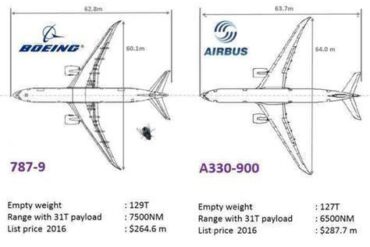
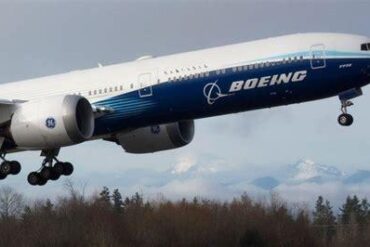
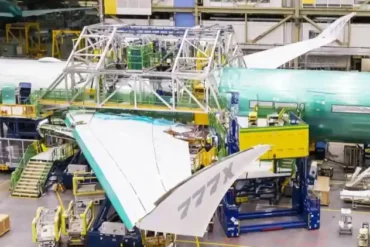
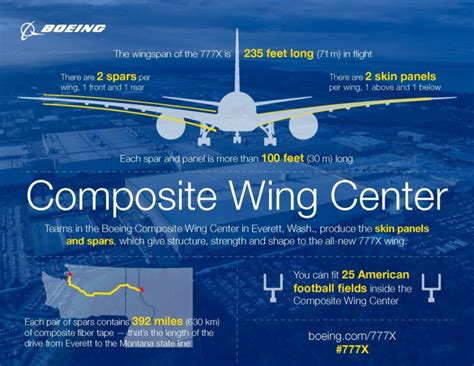
At 235.4 feet (71.75 meters), the wing is the largest composite wing ever fitted to a commercial airliner. Its sheer size forced Boeing to rethink manufacturing, transportation, airport compatibility, and structural engineering simultaneously. The company effectively created a “program within a program,” constructing the Everett Composite Wing Center specifically to build these enormous structures.
Unlike earlier 777 variants, which used conventional aluminum wing architecture, the 777X adopted a clean-sheet carbon-fiber design. Composite materials allowed engineers to create a thinner and more aerodynamically efficient airfoil while maintaining the strength required for an aircraft capable of carrying more than 400 passengers across ultra-long-haul routes.
That efficiency came at a staggering cost.
The wing required entirely new tooling systems, robotic assembly techniques, curing processes, and inspection technologies. Boeing was not merely designing a wing; it was building an industrial ecosystem capable of manufacturing the largest composite commercial wings ever attempted.
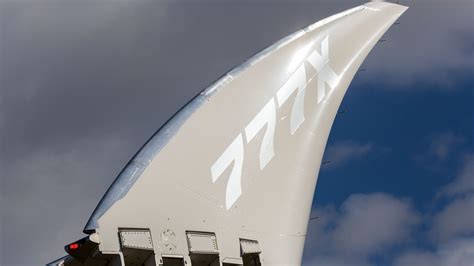
The most visually distinctive feature—the folding wingtip system—further multiplied the complexity.
Without folding tips, the 777X would have exceeded standard airport gate limitations. Boeing needed the aircraft to fit within existing Code E airport infrastructure while still benefiting from a much larger wingspan during flight. Engineers therefore designed a hinge mechanism allowing the outer sections of the wing to fold upward on the ground.
It sounds simple conceptually. In reality, certifying movable wingtips on a commercial airliner introduced massive engineering and regulatory challenges. Every hinge, actuator, locking system, and backup redundancy had to meet extraordinary safety standards.
A failure was unthinkable.
This single innovation alone reportedly consumed hundreds of millions of dollars in engineering, testing, and certification expenses.
The result is arguably the most technologically advanced wing ever placed on a passenger aircraft. But technological brilliance does not automatically guarantee financial success.
How Airbus Developed The A330neo For Roughly The Same Cost
Airbus approached the A330neo from the opposite direction.
Instead of reinventing the aircraft, Airbus carefully modernized one of the most successful widebody platforms ever built. The A330 had already proven itself globally as a reliable, versatile, and relatively affordable twin-engine aircraft. Airlines trusted it. Maintenance systems already existed. Pilot commonality reduced training costs. Supply chains were mature.
Rather than discard those advantages, Airbus refined them.
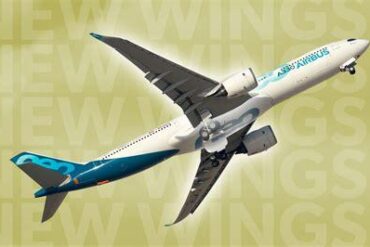
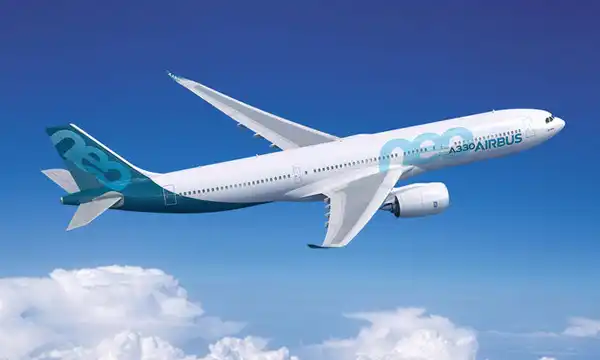
The A330neo retained the basic fuselage and structural architecture of the earlier A330 family while introducing aerodynamic improvements, updated systems, and new-generation Rolls-Royce Trent 7000 engines. This dramatically reduced development costs compared to a clean-sheet aircraft.
Most importantly, Airbus avoided the financial burden of designing a completely new wing box or manufacturing ecosystem.
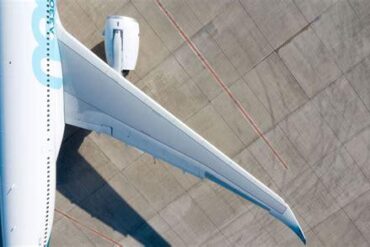
The company extended the aluminum wing from 197.8 feet to 210 feet and added advanced composite Sharklets to improve efficiency. Through computational fluid dynamics and 3D aerodynamic optimization, Airbus achieved an aspect ratio of approximately 11—one of the highest among commercial aircraft in production.
That mattered enormously.
A higher aspect ratio generally reduces induced drag and improves fuel efficiency during cruise flight. Airbus managed to achieve meaningful aerodynamic gains without embracing the enormous costs associated with all-composite structures.
The A330neo therefore became a masterclass in pragmatic aerospace engineering.
Instead of chasing perfection at unlimited expense, Airbus targeted the operational sweet spot airlines actually wanted: lower acquisition costs, solid fuel efficiency, and minimal transition headaches.
The strategy worked.
While Boeing’s 777X program accumulated years of delays and billions in additional charges, the A330neo entered service in 2018 and rapidly established itself as a commercially viable widebody for carriers prioritizing balanced economics over maximum capacity.
The Real Difference Between Composite And Aluminum Wing Philosophy
At the center of this debate lies a deeper engineering question: how much efficiency improvement is worth the additional complexity?
Boeing’s composite wing undeniably offers significant aerodynamic advantages. Carbon-fiber structures allow engineers to create thinner wings with smoother aerodynamic contours and lower structural weight. The material also resists fatigue and corrosion differently than aluminum, potentially extending operational life and reducing maintenance in some areas.
However, composites are extraordinarily expensive to design and manufacture at large scale.
Every stage of production becomes more demanding. Repair procedures differ from traditional metal structures. Manufacturing defects can be harder to detect. Tooling costs rise dramatically. Certification becomes more complex because regulators require extensive validation of entirely new structural behaviors.
Airbus recognized these realities and chose evolutionary refinement instead.
The A330neo demonstrates that aluminum remains highly competitive when paired with modern aerodynamic optimization. By carefully reshaping the wing and integrating composite extensions rather than replacing the entire structure, Airbus achieved measurable efficiency gains at a fraction of the risk.
Industry analysts often frame this contrast as “revolution versus iteration.”
Boeing pursued maximum theoretical performance. Airbus pursued maximum practical profitability.
Neither philosophy is inherently wrong. The outcome depends entirely on market conditions, airline economics, fuel prices, and program execution.
Unfortunately for Boeing, execution became the defining problem.
How The 777X Program Ballooned Beyond Its Original Vision
The wing’s $2 billion development cost eventually became only a small piece of a much larger financial story.
Boeing’s accumulated 777X program charges have reportedly exceeded $15 billion, including an enormous $4.9 billion hit during a single quarter tied largely to certification delays and testing complications.
Those losses reveal the hidden danger of ultra-ambitious aerospace programs.
Every technological leap introduces unknown variables. Certification standards evolve during development. Manufacturing targets slip. Supply chains encounter disruptions. Minor technical issues compound into major schedule delays.
The folding wingtip system became symbolic of this challenge.
Although the innovation solved airport compatibility limitations, it also introduced a unique certification burden never before encountered at this scale in commercial aviation. Regulators demanded exhaustive testing and verification to ensure the mechanism could never create a catastrophic failure scenario.
Meanwhile, airlines waiting for deliveries faced uncertainty.
Aircraft programs succeed not only through engineering excellence but through timing. Delays increase financing costs, disrupt fleet planning, and weaken customer confidence. The longer a program slips, the harder it becomes to recover financially.
Airbus largely avoided this spiral because the A330neo relied on mature systems and existing infrastructure. The program entered service years earlier and achieved profitability while Boeing’s 777X remained trapped in prolonged development cycles.
That contrast intensified criticism surrounding Boeing’s aggressive technological ambitions.
For many observers, the core issue stopped being whether the 777X wing was impressive.
Nobody seriously disputes that.
The real question became whether the performance gains justified the financial consequences.
Does The 777X Wing Actually Deliver Better Efficiency?
Technically, yes.
The 777X wing is expected to provide substantial fuel-burn improvements compared to previous-generation large widebody aircraft. Boeing designed the aircraft to deliver lower per-seat operating costs despite its enormous size.
The extended composite wing generates higher lift efficiency during cruise while reducing drag. Combined with advanced GE9X engines, the aircraft promises impressive economics for airlines operating dense international routes.
In theory, this creates a powerful advantage for major hub carriers.
Airlines such as Emirates, Qatar Airways, and Lufthansa depend heavily on high-capacity long-haul operations where slot constraints limit flight frequencies. In these environments, carrying more passengers per departure can dramatically improve profitability.
For such airlines, Boeing’s expensive wing may ultimately prove worthwhile.
The challenge is that aviation economics rarely reward theoretical performance alone.
A modest efficiency improvement achieved cheaply often generates better financial returns than a dramatic improvement achieved expensively. This is precisely where Airbus positioned the A330neo.
The aircraft delivers lower ownership costs, easier integration, and reduced financial exposure for airlines unwilling to gamble on ultra-expensive next-generation programs.
Leasing companies particularly appreciate this logic.
Lower development costs generally translate into more attractive pricing structures, lower depreciation risk, and broader market appeal. A330neos can operate profitably on a wider variety of routes without requiring the passenger density needed to maximize the economics of a giant aircraft like the 777-9.
That flexibility matters tremendously in a post-pandemic aviation market where airlines increasingly value adaptability over sheer scale.
Why Airlines View The A330neo As The Safer Investment
The A330neo succeeded because it aligned closely with what many airlines actually needed rather than what engineers dreamed possible.
Modern carriers operate in an environment dominated by volatile fuel prices, labor shortages, financing pressures, and uncertain passenger demand. Under those conditions, predictable economics often outweigh cutting-edge innovation.
The A330neo offers precisely that balance.
Its commonality with earlier A330 variants simplifies pilot training and maintenance transitions. Spare parts networks already exist globally. Ground crews understand the aircraft. Reliability data is extensive. Financing institutions perceive lower risk because the platform has decades of operational history.
The 777X, by contrast, represents concentrated technological and financial exposure.
Its immense size limits route flexibility. Delays complicate fleet planning. Production uncertainty affects residual value projections. And the aircraft’s extraordinary sophistication may increase maintenance complexity over time.
None of this means the 777X will fail commercially.
In fact, once fully operational, it will likely become the flagship aircraft for several major global airlines. Its passenger capacity, range, and efficiency remain extremely attractive for specific network models.
But Airbus recognized something critical earlier than Boeing: most airlines no longer want revolutionary aircraft programs carrying revolutionary financial risks.
They want reliable profits.
The Broader Industry Lesson Hidden Inside This Wing Debate
The comparison between the 777X wing and the A330neo program reflects a broader transformation occurring across aerospace manufacturing.
For decades, aviation rewarded dramatic leaps in engineering ambition. Manufacturers competed through radical new materials, revolutionary aerodynamics, and increasingly complex technologies.
Today, financial discipline increasingly shapes aircraft development decisions.
The A330neo demonstrates that evolutionary improvement can generate strong commercial outcomes without exposing manufacturers to existential financial pressure. Airbus achieved meaningful efficiency gains while maintaining profitability and schedule stability.
Boeing pursued technological dominance but encountered the brutal reality of modern aerospace economics: every incremental gain becomes exponentially more expensive.
This phenomenon is known as diminishing returns.
Achieving the first major improvements in efficiency is relatively straightforward. Achieving the next few percentage points requires vastly greater complexity, investment, and risk.
The 777X wing embodies this principle perfectly.
It may ultimately become one of the greatest commercial aircraft wings ever built. Yet its extraordinary cost illustrates how difficult it has become to justify clean-sheet innovation financially unless the market opportunity is enormous and execution flawless.
At present, Airbus appears to have chosen the more sustainable path.
So, Is The Claim Actually True?
In broad terms, yes.
Available industry estimates strongly support the claim that Boeing spent approximately $2 billion developing the 777X composite wing, while Airbus spent roughly the same amount developing the entire A330neo program.
That comparison is not merely a sensational headline. It reveals a genuine and remarkable contrast in aerospace strategy.
One company invested billions into a single revolutionary structure designed to redefine long-haul efficiency. The other leveraged decades of existing infrastructure to create a profitable next-generation aircraft with far lower risk.
The irony is that both aircraft may eventually succeed in their intended roles.
The 777X could dominate high-capacity intercontinental routes once it finally enters widespread service. The A330neo may continue thriving as the dependable and financially sensible widebody airlines increasingly prefer.
But today, one reality remains impossible to ignore.
The A330neo is already flying passengers around the world profitably.
The 777X is still proving that its magnificent wing was worth the wait.