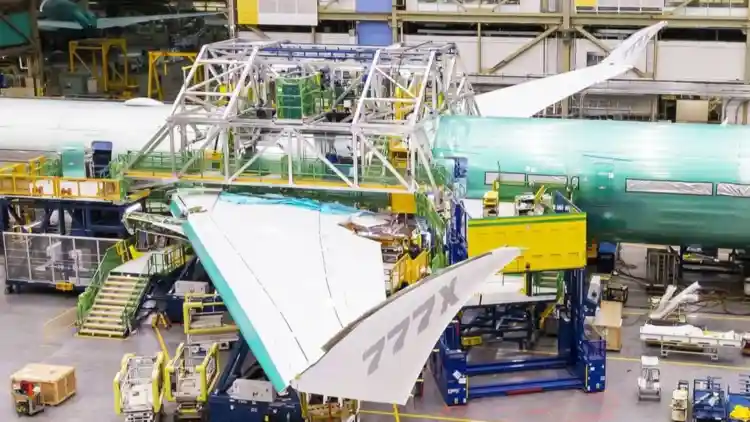
Boeing has officially reached a significant engineering and manufacturing milestone in the evolution of its next-generation freighter aircraft. On July 8, 2025, the aerospace giant began production of the wings for its new 777-8 Freighter (777-8F) variant at the Composite Wing Center in Everett, Washington. This development not only signals the physical birth of the aircraft but also cements the 777-8F’s trajectory as the leading replacement for the aging 747-400F fleet.
The 777X family, already known for its advanced aerodynamics and fuel efficiency, is now seeing its freighter version take shape. The wings, central to the performance of this aircraft, are being built using automated fiber placement (AFP) techniques — a hallmark of cutting-edge composite manufacturing. These 100-foot-long composite spars are the primary load-bearing elements of the wing and are layered with carbon-fiber plies for maximum strength and minimal weight.
The AFP process is not only more precise but also significantly more efficient than traditional wing-building methods. It enables Boeing to create complex structures with a high strength-to-weight ratio, which directly translates into better fuel economy and lower emissions. Alongside the spars, the company is fabricating wing skin panels and stringers, both crucial in maintaining the structural integrity and aerodynamic profile of the wing. These components work together to form a seamless, resilient airfoil tailored for long-haul cargo operations.
Global Collaboration and Technological Prowess
The 777-8F’s development represents a truly international effort. Japanese aerospace powerhouses — Mitsubishi Heavy Industries, Kawasaki Heavy Industries, and Subaru Corporation — are deeply involved in supplying major wing and fuselage assemblies. This level of international coordination underscores Boeing’s deeply integrated global supply chain, which is engineered to meet the demands of building large, complex aircraft at scale.
Beyond mere component production, over 80% of the detailed engineering drawings that define the 777-8F’s final configuration have already been completed. This fast-tracked design progress runs in tandem with manufacturing — a strategy that ensures fewer delays and better risk management. Meanwhile, Boeing engineers are rigorously testing subsystems in laboratory settings, validating designs before full aircraft integration.
This concurrent engineering approach is vital to maintaining Boeing’s timeline, with the first delivery of the 777-8F expected in 2028. According to Defense Star, Boeing remains on track, further highlighting the maturity and discipline of its 777X program.
Advanced Capabilities: Efficiency Meets Performance
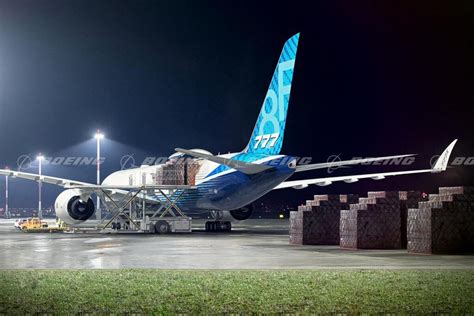
The Boeing 777-8F has been engineered not just as a successor to the 747-400F, but as a significant step forward in terms of operational performance. The freighter combines nearly equal payload capacity with substantial improvements in efficiency, environmental compliance, and cost-effectiveness.
Among its most impactful advantages:
- 30% reduction in fuel burn and CO₂ emissions compared to previous-generation freighters.
- 25% lower operating cost per tonne, giving airlines and cargo operators substantial savings.
- 60% smaller noise footprint, allowing it to comply with increasingly strict airport noise regulations.
These features aren’t just engineering achievements — they directly address the logistical and environmental priorities of modern cargo carriers. In an industry where every kilogram and decibel matters, the 777-8F offers a solution that aligns with global trends toward sustainability, fleet modernization, and regulatory compliance.
Replacing a Legend: The 747-400F Transition
For decades, the Boeing 747-400F reigned supreme in long-haul cargo, valued for its high payload capacity and range. But aging airframes, rising fuel costs, and evolving environmental standards are accelerating the need for a modern successor.
The 777-8F offers a twin-engine alternative with a similar payload profile but vastly superior performance metrics. Thanks to GE9X engines, composite materials, and optimized wing design, the aircraft brings 21st-century efficiency to a sector still dependent on legacy jets.
Ben Linder, chief project engineer for the 777 and 777-8F, remarked that “Boeing freighters currently serve 90% of the global cargo market,” a statistic that underscores the company’s vital role in shaping air logistics. The 777-8F isn’t just another airplane; it’s the future of widebody cargo transport.
Engineering Depth: The Power of Composite Wings
At the heart of the 777-8F’s advancement lies its composite wing technology, pioneered in the 787 Dreamliner and further refined for the 777X. The wings are longer, stronger, and more flexible, thanks to the use of carbon-fiber-reinforced polymers.
This engineering leap allows for:
- Increased lift with lower drag, improving range and reducing fuel consumption.
- Improved structural fatigue resistance, extending the lifespan of the aircraft.
- Flexible wing tips, which help reduce stress during turbulence and offer better control.
The Composite Wing Center in Everett is a marvel in itself. Housing automated tape-laying robots, curing ovens, and a highly skilled workforce, it represents the pinnacle of aerospace manufacturing sophistication.
Order Book and Market Outlook
Since its formal introduction in 2022, the 777-8 Freighter has already secured 59 confirmed orders from major cargo operators around the globe. These early commitments reflect confidence in Boeing’s design and market timing.
The 2025 Boeing Current Market Outlook (CMO) projects that the global freighter fleet will expand by 65% by 2044, requiring at least 885 new large widebody freighters. The 777-8F is poised to claim a large portion of this market due to its unmatched blend of capacity, efficiency, and reliability.
Cargo carriers are increasingly seeking to modernize fleets to meet ICAO carbon offset requirements, adapt to e-commerce growth, and reduce unit cost per tonne-kilometer. The 777-8F checks every box, making it a cornerstone of future air freight operations.
A Strategic Investment in the Future of Air Cargo
The significance of the 777-8F program extends far beyond engineering triumphs. It represents a strategic investment in the future of air logistics — one that offers flexibility, scalability, and sustainability. Boeing’s decision to build its wings with such advanced composite technologies ensures not only better performance, but also greater adaptability in a market where operational agility is key.
From global supply chain integration to advanced system validations, Boeing is orchestrating a multi-layered development that is both methodical and aggressive. As aircraft complexity increases, so does the need for rigor — and the 777-8F development is a testament to Boeing’s ability to navigate this landscape with precision.
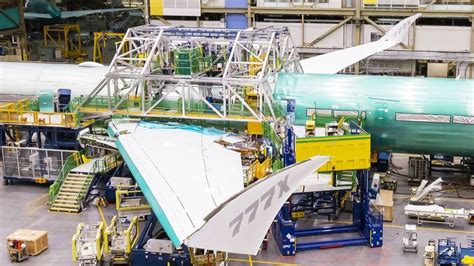
With deliveries scheduled to begin in 2028, and a growing backlog of orders, the 777-8 Freighter is on a clear path to redefine the global cargo fleet. And as wings continue to roll out of Everett’s Composite Wing Center, Boeing’s commitment to innovation and performance remains quite literally airborne.