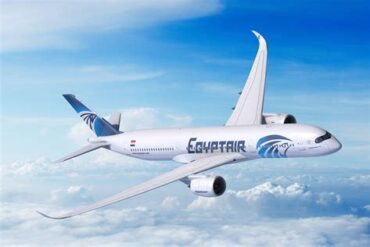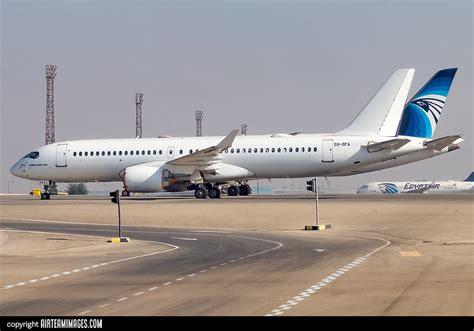
EgyptAir’s Airbus A220-300, registered as SU-GFA, has entered aviation history as the first aircraft of its type to be dismantled for spare parts, signifying a turning point not only for Egypt’s flag carrier but for the global aircraft fleet sustainability agenda. Delivered in October 2019, SU-GFA was introduced during a period of rapid fleet modernization. Despite being in service for just over four years, its retirement represents the complex lifecycle management that modern aviation demands.
The Rise and Legacy of the Airbus A220-300
The Airbus A220 series, born out of the Bombardier CSeries and formally taken over by Airbus in 2018, was hailed as a breakthrough in fuel-efficient, medium-haul aviation. The A220-300 variant, in particular, was designed with advanced aerodynamics, Pratt & Whitney PW1500G engines, and a lightweight composite structure, making it a cornerstone in eco-friendly fleet planning. Capable of covering 3,400 nautical miles (6,300 km), the A220-300 opened doors for cost-effective regional connectivity with lower carbon footprints.
SU-GFA served as a flagship for EgyptAir’s transition to new-generation aircraft, promising superior passenger comfort, 20% lower fuel burn, and significantly reduced noise emissions. The short operational lifespan of SU-GFA, however, introduces a surprising precedent: even cutting-edge aircraft, when subject to operational demands or strategic fleet changes, may meet early retirement.
A Pivotal Moment in Aircraft Lifecycle Strategy
Aircraft traditionally serve anywhere from 20 to 30 years before being decommissioned. Yet SU-GFA’s early dismantling challenges conventional lifecycle expectations, urging airlines to reconsider how operational efficiency, maintenance economics, and technological obsolescence can all contribute to accelerated transitions.
In EgyptAir’s case, the decision likely ties into fleet harmonization, balancing operating cost per seat, future maintenance overheads, and spare parts availability across the broader A220 fleet. In turn, this reflects a more dynamic aircraft lifecycle model, where value extraction doesn’t necessarily require decades of operation, but can instead be reallocated through intelligent parting and recycling.
Inside the Dismantling Process: Engineering Meets Environmentalism
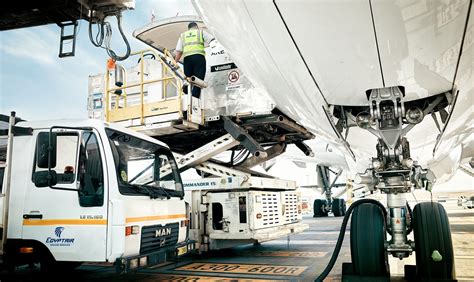
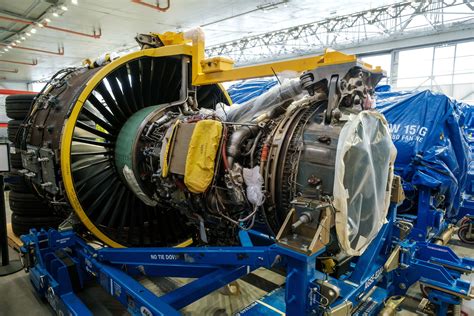
Dismantling a next-generation aircraft like the A220-300 is no ordinary feat. It begins with de-fueling, disconnection of all electrical systems, and hazardous material handling. Afterward, the process transitions into part extraction:
- Engines are removed first, often the most valuable components, to be either reused or reconditioned.
- Avionics and electrical systems, including flight control modules, cockpit instrumentation, and navigational gear, are carefully cataloged.
- Landing gear, auxiliary power units (APUs), and hydraulic systems follow.
All salvageable parts undergo inspection and testing, ready to be re-certified for future use in other A220 aircraft worldwide. Components that cannot be salvaged are recycled, often melted down for their titanium, aluminum, or composite value.
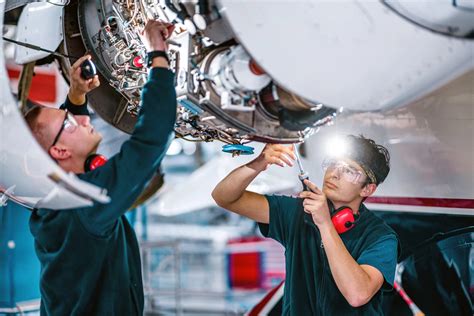
This process supports a growing sector of aviation aftermarket services (AMSS), valued at billions of dollars, and aligns with the global push for circular economy models in aviation—where waste is minimized and reuse maximized.
EgyptAir’s Fleet Evolution and Strategic Positioning
As EgyptAir modernizes its fleet, it walks a tightrope of operational efficiency and environmental responsibility. The A220 series had originally been chosen to replace older Embraer and smaller Airbus aircraft on regional and medium-haul routes. While SU-GFA is now grounded and dismantled, its counterparts continue to serve regional routes between Egypt and cities across the Middle East and Europe.
However, SU-GFA’s early departure could indicate broader considerations:
- Post-pandemic route rationalization: Reduced demand on certain sectors might make smaller aircraft less viable.
- Maintenance economics: The total cost of maintaining a low-usage or damaged frame may exceed part-out value.
- Spare parts ecosystem: EgyptAir or its maintenance partners may find greater value in SU-GFA’s components than its airframe.
With the global aviation industry turning more frequently to hybrid fleet compositions and fuel-efficient widebodies, EgyptAir’s move may foreshadow accelerated transitions across airlines globally.
The Broader Implications for the Aviation Industry
The scrapping of SU-GFA sends a resonant message: modern aircraft are not immune to early retirement, especially in a sector now hyper-focused on cost optimization, sustainability, and fleet adaptability. This event introduces a new benchmark in how airlines may:
- Evaluate aircraft asset life not by age but by utility
- Utilize dismantled components to reduce CAPEX in maintenance and new builds
- Contribute to the circular economy of aviation
Moreover, aircraft recycling has gained traction as a climate-conscious alternative to storage or abandonment. Aircraft parting reduces waste and reduces the need for newly manufactured parts, thereby conserving raw materials and reducing associated emissions. The more recyclable the aircraft, the more appealing it becomes not just in operation, but at end-of-life.
Innovation in Aviation Recycling: What the Future Holds
Aircraft dismantling is no longer a scrapyard afterthought. It’s a technologically intensive operation, often carried out by specialized firms using robotics, AI-driven diagnostics, and component-tracking systems. These allow operators to:
- Track parts through global inventory networks
- Ensure compliance with international airworthiness standards
- Maximize reuse value across aircraft families
This segment is expected to grow exponentially as airlines push for sustainable end-of-life strategies. SU-GFA’s dismantling sets a new precedent—especially considering the A220 is still a relatively young platform.
Environmental and Strategic Relevance
Sustainability has evolved from a buzzword to a compliance imperative for global airlines. Regulations from ICAO, EASA, and national aviation authorities are pushing airlines toward greener operations, not only in fuel use but in total lifecycle management.
SU-GFA’s dismantling, while notable for its timing, is emblematic of this shift. By actively dismantling a relatively new aircraft and salvaging its parts, EgyptAir is fulfilling its role in this systemic change—reducing waste, saving costs, and accelerating the circulation of high-value aircraft components.
The strategy also allows for faster integration of newer technologies, such as next-gen A220 airframes, with updated avionics, lower maintenance cycles, and improved cabin efficiencies. In effect, EgyptAir is not just retiring an aircraft—it is reinvesting its value into a more modern, efficient fleet.
Conclusion: A Symbolic End, a Strategic Rebirth
The story of SU-GFA is no tale of obsolescence, but of smart reinvestment. In dismantling this Airbus A220-300, EgyptAir isn’t discarding an asset—it’s unlocking its full residual value. The move aligns with rising trends in fleet flexibility, green aviation, and asset maximization. While passengers may no longer board SU-GFA, its components will continue to fly—within engines, cockpits, and systems of other aircraft across continents.
This approach not only strengthens EgyptAir’s sustainability credentials but also helps usher in a new era where aircraft lifecycle planning is adaptive, data-driven, and deeply aligned with both environmental imperatives and economic foresight. The airline industry is changing—and the dismantling of SU-GFA may well be remembered as an early signpost of that transformation.