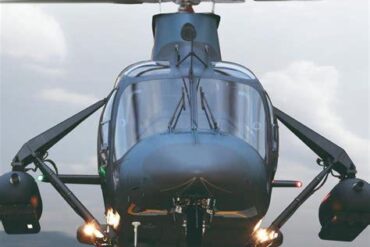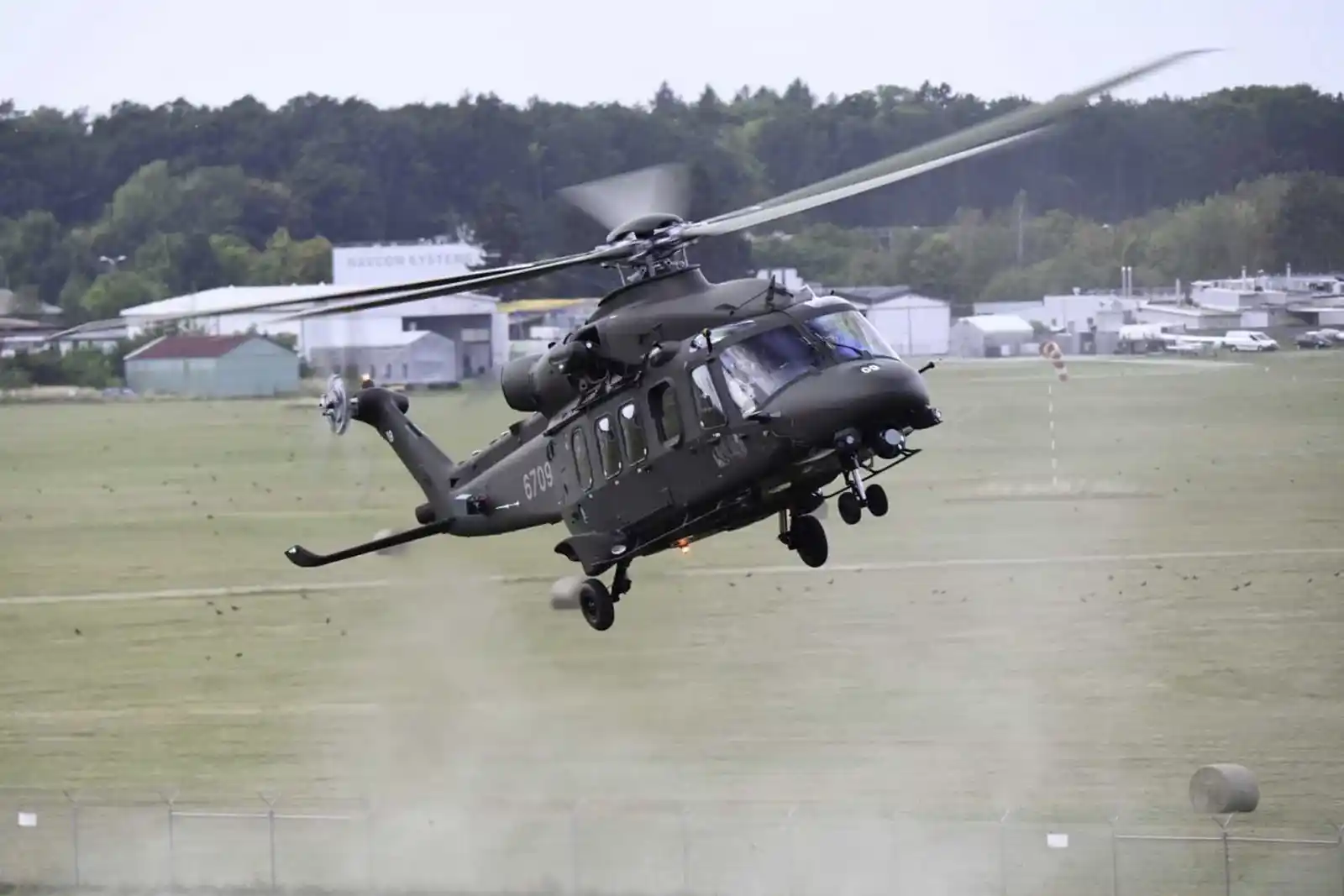
The formal handover of the first Polish-built Leonardo AW149 helicopter to the 25th Air Cavalry Brigade on November 27, 2025 stands as one of the most consequential milestones in Poland’s modern defense expansion. More than a routine delivery, the event signals the maturation of a domestic aerospace capability that Warsaw has sought for decades. Built at PZL-Świdnik, the helicopter is the eleventh AW149 delivered under the country’s 32-unit procurement program, but crucially the first to emerge entirely from the Polish production line launched in 2024.
The ceremony at Nowy Glinnik, attended by Deputy Prime Minister and Minister of National Defense Władysław Kosiniak-Kamysz, also served as a public reaffirmation of Poland’s ongoing military industrialization. The delivery forms part of a broader modernization package that has recently included new F-35 armaments, submarine program selections, and rapid development under the SAFE initiative. Each acquisition reinforces a national strategy aimed at building self-reliance, expanding long-term sustainment, and upgrading legacy systems across all branches of the armed forces.
The new production line itself is the product of intensive cooperation between Polish and Italian teams, with personnel trained at Leonardo facilities to support integration, testing, and armament fitting. The first locally assembled airframe rolled out in early 2025 and completed its maiden flight on April 14, 2025, confirming PZL-Świdnik’s readiness to transition toward full-sequence production.
The 2022 contract valued at roughly 8.25 billion złoty envisioned not only aircraft deliveries but a long-term ecosystem for maintenance, modernization, and technology transfer inside Poland. The first ten AW149s were built in Italy to meet urgent operational needs, while the remaining airframes, including the one delivered in November 2025, are now produced in Świdnik. This shift elevates Poland from a customer to a strategic manufacturing and sustainment hub for one of Europe’s most advanced medium multirole helicopters.
PZL-Świdnik’s expanding portfolio includes integration work for AW149 and naval AW101 helicopters, providing a consolidated foundation for rotary-wing modernization. Engineers have begun preparations for advanced testing, mission module development, and lifecycle support that will extend well into the 2030s and 2040s. Over time, the site is positioned to serve as a regional service center for NATO partners and future export customers.
Replacing Poland’s Aging Rotary Fleet
Poland is phasing out long-serving platforms such as the Mi-8, Mi-17, Mi-24, Mi-2, W-3 Sokół, and SH-2G, many of which have exceeded three decades in service. Previous modernization attempts—including the cancelled 2015 Airbus H225M Caracal deal and the limited acquisition of S-70i Black Hawks—left capability gaps that the AW149 program is now structured to close fully.
By consolidating procurement and establishing domestic production, Poland avoids the fragmentation that plagued earlier efforts. The AW149’s multirole profile enables the country to unify missions previously spread across several ageing fleets, improving logistics, interoperability, and mission readiness.
Technical Features of the AW149: Performance and Survivability
Derived from the AW139 but engineered for demanding military environments, the AW149 incorporates mission flexibility with robust survivability features. Its 17.57-meter fuselage, 8,600-kg maximum takeoff weight, and 11.2-m³ cabin volume allow for numerous configurations, ranging from troop transport to command-and-control operations. Crew layout typically includes two pilots, twelve soldiers, and two gunners, although the aircraft can transport up to 19 lightly equipped passengers.
The helicopter reaches speeds of 310–313 km/h, cruises at 278–290 km/h, and offers a mission range of 844–1,009 km, depending on configuration. Power options include GE CT7-2E1 or Safran Aneto-1K engines equipped with FADEC and anti-ice capabilities. Crashworthy fuel tanks, reinforced composite structures, dual hydraulic and electrical systems, and energy-absorbing landing gear round out the survivability suite.
Mission systems include a weather and navigation radar, an electro-optical turret, encrypted communications, night-vision-compatible avionics, and NATO-standard data links. Optional maritime gear enables operations in sea states up to level six, expanding the helicopter’s utility for naval missions.
Precision Strike Restored: Hellfire Integration for Polish AW149s
A defining component of Poland’s AW149 configuration is its AGM-114R2 Hellfire II integration—a capability absent from the Polish Armed Forces since the depletion of Mi-24 stocks. PZL-Świdnik and Polish Army teams conducted exhaustive firing trials, including cross-deck engagement tests in which a missile launched from the right-side pylon successfully struck a target located far to the left.
The aircraft carries both unguided and laser-guided 70 mm rockets, with extensive validation of multiple launcher geometries. Door-mounted 7.62 mm or 12.7 mm machine guns, external gun pods, and flexible weapon stations enable mission-dependent armament blends. Poland has acquired 800 Hellfire missiles to support the fleet, positioning the AW149 as a precision-strike enabler that bridges the gap between utility and attack platforms.
International Operators and Poland’s Emerging Role
While Egypt, Thailand, Malaysia, and North Macedonia already operate the AW149 in various configurations, Poland’s approach—combining full-spectrum mission customization with domestic manufacturing—distinguishes it from other users. The United Kingdom is evaluating the AW149 for its New Medium Helicopter program, and Poland’s growing expertise could strengthen the model’s attractiveness across Europe.
The Świdnik facility’s trajectory suggests it will soon support not only assembly and sustainment but also modernization packages for export clients, integrating avionics, mission modules, and weapons systems customized for regional needs.
A Turning Point for Poland’s Aviation Industry
The Polish-built AW149 delivered in November 2025 represents more than a single aircraft entering service. It marks Poland’s emergence as a technologically capable, internationally networked aerospace producer with the industrial depth to support NATO operations and domestic strategic autonomy.
With full-rate production accelerating, hundreds of new jobs secured, and a domestic supply chain expanding under long-term programs, the AW149 initiative links present defense realities to future industrial strength. The aircraft’s arrival to the 25th Air Cavalry Brigade is therefore both an operational enhancement and a symbolic affirmation of Poland’s evolving role in Europe’s defense landscape.