Poland has taken a decisive step to harden its airspace against the accelerating threat of unmanned aerial systems by signing a $1.5 billion defense contract with Norway’s Kongsberg Defence and Aerospace for the delivery of 18 Counter-Unmanned Aerial Systems (CUAS) batteries. The agreement, valued at approximately NOK 16 billion, falls under Poland’s ambitious SAN (Systemy AntyDronowe) program and reflects a sharp reassessment of battlefield realities shaped by drone-heavy conflicts across Europe.
The contract was concluded with Poland’s Armaments Agency in close cooperation with the state-owned defense conglomerate Polska Grupa Zbrojeniowa (PGZ). It underscores Warsaw’s strategic urgency to deploy a layered, mobile, and networked defense capable of detecting, tracking, and destroying hostile drones before they can inflict damage on military units or critical infrastructure. The scale of the purchase places Poland among Europe’s most serious investors in counter-drone warfare.
The timing is not accidental. The war in Ukraine has demonstrated how inexpensive drones can neutralize armored formations, disrupt logistics, and penetrate traditional air defenses. Poland’s leadership has clearly internalized these lessons, choosing to invest in purpose-built CUAS architectures rather than improvised add-ons to legacy systems.
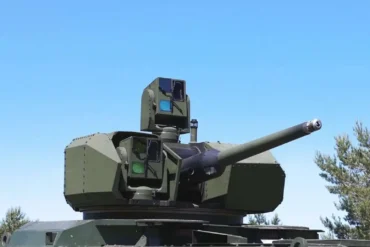
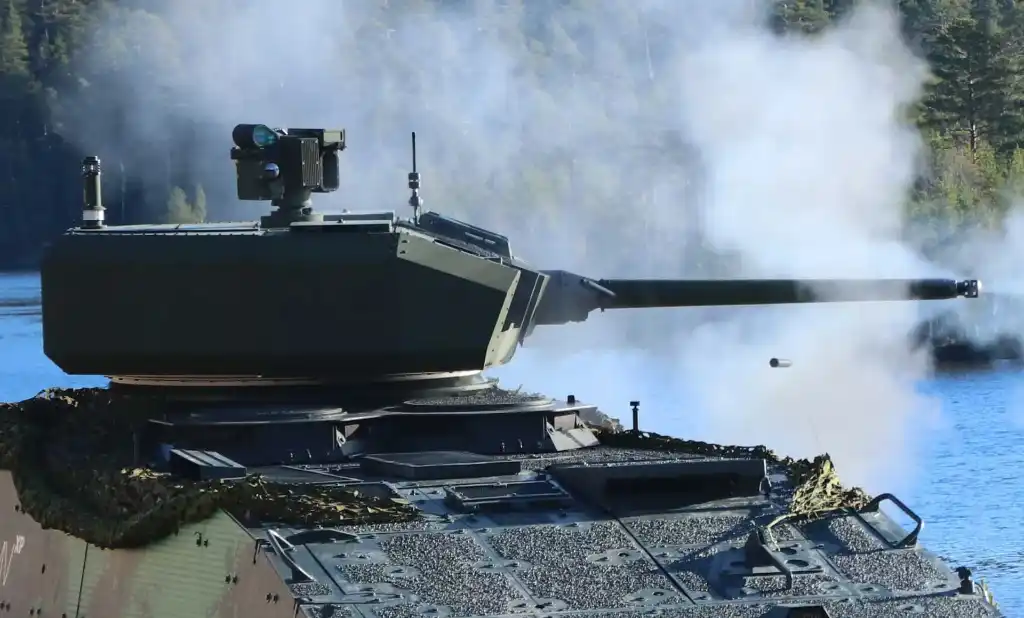
At the core of the SAN batteries is Kongsberg’s PROTECTOR family of remotely operated weapon systems, adapted specifically for counter-drone missions. Originally designed to provide precision firepower from armored vehicles and static positions, PROTECTOR systems have evolved into a flexible CUAS platform through the integration of advanced sensors, digital fire control, and multi-effectors. This evolution reflects a broader shift in air defense thinking, where speed, modularity, and sensor fusion matter more than sheer missile range.
The SAN configuration will employ a mix of Medium Caliber Turrets, including the MCT30, and various Remote Weapon Stations (RWS). These unmanned systems are optimized for high-rate tracking and engagement of small, fast, and low-signature aerial targets. Their fully digitized architecture allows operators to switch seamlessly between sensors and weapons, a critical advantage when confronting unpredictable drone flight paths and swarm tactics.
Effectors within the SAN CUAS batteries are deliberately diversified to create a layered engagement envelope. Automatic cannons in the 30 mm and 35 mm class provide kinetic reach against larger drones and loitering munitions, while 12.7 mm heavy machine guns offer a cost-effective solution for closer engagements. A standout feature is the integration of 70 mm guided missiles, which serve as the primary CUAS effector for many RWS modules, enabling precise engagements at extended ranges without relying on expensive air-defense interceptors.
This multi-caliber approach reflects a sober economic logic. Modern drone warfare is a contest of attrition as much as technology, and firing million-dollar missiles at low-cost drones is strategically unsustainable. Poland’s SAN batteries are designed to match weapon cost to target value, preserving high-end interceptors for threats that truly require them.
Beyond firepower, the SAN program’s defining strength lies in integration and command-and-control. The CUAS batteries will function as distributed nodes within Poland’s broader air-defense network, linked through Advanced Protection Systems (APS) architecture. This enables real-time fusion of radar, electro-optical, and acoustic sensors, providing persistent 360-degree situational awareness across both mobile formations and fixed sites.
Such integration allows for coordinated engagements where one sensor can cue multiple shooters, reducing reaction times and minimizing the risk of saturation. In practical terms, a drone detected by a forward sensor can be engaged by a rear-positioned effector without manual handoff, a capability increasingly vital as adversaries experiment with coordinated drone swarms.
Strategically, SAN is not a single weapon system but a national counter-drone ecosystem. It is designed to protect maneuver units, air bases, logistics hubs, and critical infrastructure, adapting its configuration to mission requirements. This flexibility aligns with Poland’s broader defense modernization, which emphasizes resilience, dispersion, and rapid redeployment in the face of high-intensity conflict.
The industrial dimension of the deal is equally significant. Kongsberg has committed to expanding local production and sustainment activities in Poland, reinforcing Warsaw’s objective of defense-industrial sovereignty. This includes support for maintenance, training, and future upgrades, ensuring that SAN batteries can evolve alongside emerging drone technologies rather than becoming obsolete.
Kongsberg enters the partnership with substantial credibility. With over 20,000 PROTECTOR systems delivered globally and operational experience across more than 30 countries, the company brings a mature and combat-proven foundation to the SAN program. Poland’s choice signals confidence not just in the hardware, but in Kongsberg’s ability to iterate rapidly as drone threats grow more autonomous, faster, and more sophisticated.
In strategic terms, the acquisition marks a clear recognition that airspace denial is no longer the exclusive domain of high-altitude missiles and fighter aircraft. Control of the low-altitude battlespace has become a prerequisite for ground force survivability. By investing heavily in counter-drone batteries, Poland is positioning itself to blunt one of the most disruptive military technologies of the 21st century.
As drones continue to reshape modern warfare, Poland’s SAN program stands out as a comprehensive, forward-looking response. The $1.5 billion Kongsberg deal is not merely a procurement milestone; it is a statement of intent. Poland is preparing for a battlefield where unmanned systems are ubiquitous, and where victory belongs to those who can see, decide, and strike faster than the machines in the sky.