Poland has taken a decisive step to harden NATO’s eastern flank by committing to the large-scale deployment of 18 SAN counter-uncrewed aerial system (C-UAS) batteries, a move shaped directly by the realities of modern warfare and the relentless evolution of drone threats. The program reflects Warsaw’s recognition that air defense is no longer defined solely by high-altitude aircraft or ballistic missiles, but by persistent, low-cost, and highly adaptable unmanned systems operating in swarms and at very low altitudes.
Announced at the end of January 2026, the SAN acquisition is valued at approximately USD 1.6 billion, marking one of the most substantial counter-drone investments in Europe to date. Contracted from Kongsberg Defence & Aerospace in partnership with Poland’s state-owned Polska Grupa Zbrojeniowa (PGZ), the program is structured not as a single weapon purchase but as a fully integrated, battery-level air defense capability. Its purpose is unambiguous: deny hostile drones and loitering munitions the freedom to observe, target, and strike Polish and allied forces.
The strategic context matters. Poland sits on NATO’s most exposed frontier, bordering both the Russian exclave of Kaliningrad and Belarus. Since the outbreak of high-intensity conflict in Ukraine, drone operations have shifted from niche enablers to central instruments of battlefield power. Surveillance quadcopters, one-way attack drones, and coordinated swarms now shape outcomes at every echelon. Warsaw’s response has been to design a defensive system that can survive saturation attacks, maintain shot discipline, and remain mobile under fire.
A Battery-Level Answer to Drone Warfare at Scale
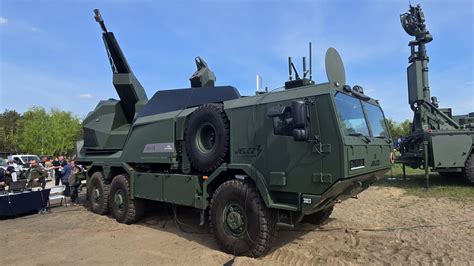
SAN is explicitly designed as a system-of-systems, integrating sensors, command elements, and layered effectors into a coherent defensive construct. Each battery is organized around three fire platoons and one support platoon, a structure that emphasizes autonomy and dispersal. Fire platoons can detect, track, identify, and engage threats independently, allowing them to protect maneuver routes, logistics hubs, airfields, or critical infrastructure without relying on constant higher-level control.
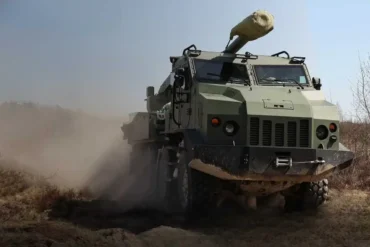
Across the full program, Poland will field 18 batteries and 52 fire platoons, supported by more than 700 vehicles. The majority of these platforms will be domestically produced Jelcz and Legwan vehicles, ensuring mobility across varied terrain and reinforcing national industrial participation. This scale is deliberate: SAN is meant to provide persistent coverage across wide areas, not isolated point defense.
Sensor Fusion Shaped by Lessons From Ukraine
At the heart of SAN lies a dense sensor architecture optimized for the hardest targets to detect: small, low-flying drones with minimal radar signatures. Fire platoons employ specialized counter-small UAS radars operating in the X-band, tuned to pick up micro-UAVs at tactically relevant distances. These are paired with dedicated tracking radars that shorten the sensor-to-shooter loop, a critical factor when seconds determine whether a drone releases its payload.
The support platoon expands this picture through longer-range 3D surveillance radars with full 360-degree coverage and integrated identification-friend-or-foe capabilities. This layer provides early warning against loitering munitions and one-way attack drones before they reach defended zones, while also reducing the risk of wasting ammunition on false tracks. In sustained drone campaigns, avoiding misidentification is as important as interception.
Layered Effectors and the Economics of Defense
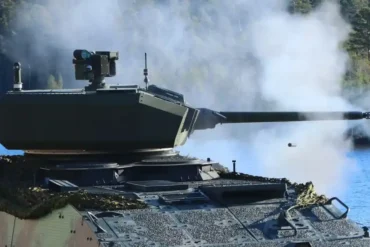
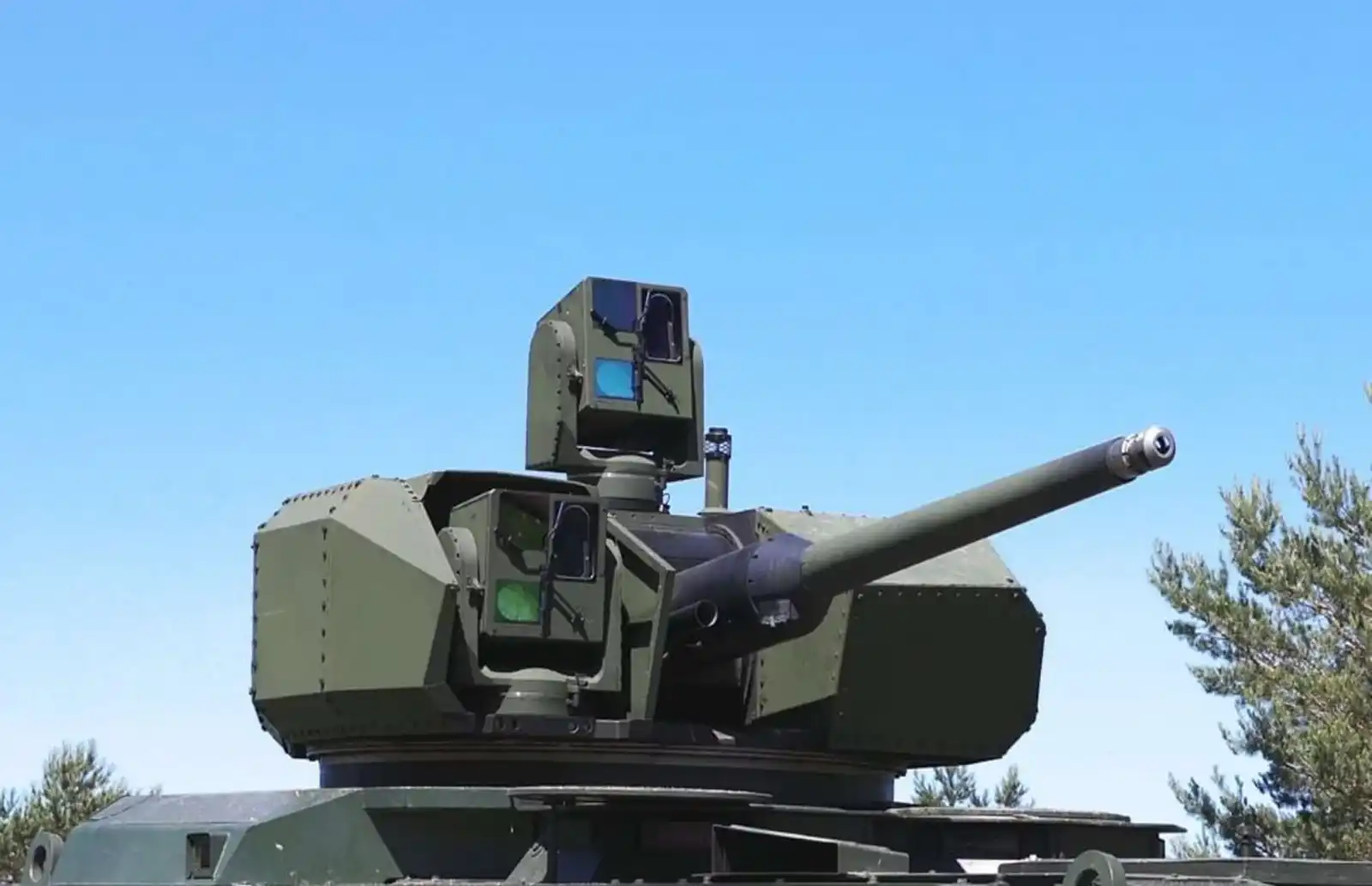
SAN’s effector mix reflects a clear understanding of battlefield economics. Rather than relying solely on expensive missiles, the system combines medium-caliber guns, programmable airburst ammunition, and guided rockets to match response cost to threat value. Kongsberg contributes elements of its PROTECTOR family, including unmanned turrets and remote weapon stations designed for continuous operation without exposing crews.
A key Polish contribution comes from PIT-RADWAR’s 35 mm anti-aircraft gun systems, optimized for counter-swarm engagements. Using airburst ammunition, these guns create lethal fragmentation clouds capable of defeating multiple drones simultaneously. This approach preserves higher-value interceptors for aircraft or cruise missiles while maintaining the volume of fire needed against massed UAV attacks. The inclusion of 70 mm guided rockets adds a precision option at extended ranges, bridging the gap between guns and larger missile systems.
Defending the Eastern Flank and NATO’s Reinforcement Routes
Poland’s Ministry of National Defence has been explicit that SAN’s first operational priority is the protection of NATO’s eastern flank. That mission extends beyond frontline units to include logistics corridors, reinforcement routes, and rear-area infrastructure essential for allied operations. In a conflict defined by persistent aerial surveillance and strike, even rear areas are no longer sanctuaries.
The program also carries broader alliance implications. By fielding a dense, mobile counter-UAS network, Poland strengthens collective deterrence and reduces the burden on allied air forces tasked with defensive counter-air missions. It sends a clear signal that low-cost drone harassment and saturation attacks will not find easy success along NATO’s eastern edge.
Industrial Partnership and Rapid Fielding Timeline
SAN is equally notable for its industrial structure. PGZ leads a consortium responsible for roughly 60 percent domestic content, ensuring technology transfer, local production, and sustainment capacity within Poland. Deliveries are scheduled to begin in 2026, with the majority of batteries fielded in 2027 and full completion planned within two years of contract signature. Kongsberg has indicated plans to expand manufacturing capacity in Poland, embedding the program within Europe’s broader air defense industrial base.
In committing to SAN, Poland is not merely buying hardware. It is investing in a doctrinal shift that treats counter-drone defense as a core component of national and allied security. The message is precise and unmistakable: on NATO’s eastern flank, the sky will no longer be an unguarded avenue of approach.