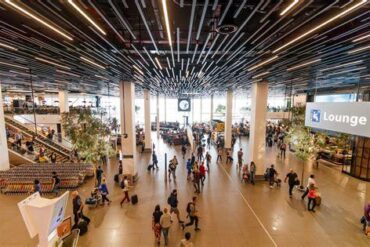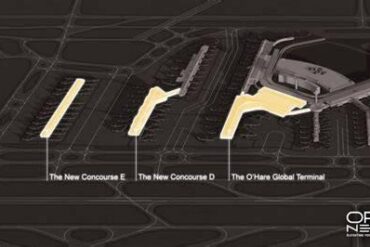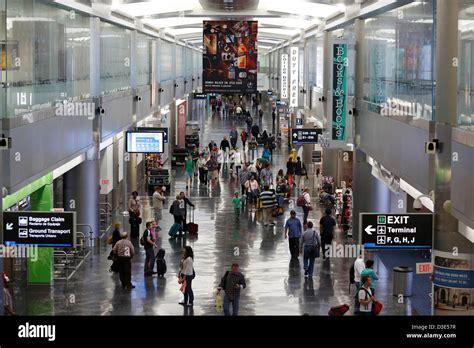
American Airlines is doubling down on Miami International Airport with a $1 billion investment that reshapes Concourse D into a modern, high-capacity gateway built for the next era of international travel. The project sits within MIA’s broader $9 billion modernization program, a sweeping reinvention of one of the United States’ most consequential international hubs. The scale of the commitment signals more than infrastructure spending; it reflects a strategic bet on Miami as the airline’s primary bridge to Latin America, the Caribbean, and long-haul global markets, where premium demand has rebounded faster than capacity in the post-pandemic travel economy.
The redevelopment centers on the long-overdue conversion of the D60 zone, an area historically constrained by ground-level boarding and limited aircraft compatibility. For travelers, the change will be tangible: smoother boarding, climate-controlled gate areas, faster connections, and amenities that finally match the hub’s global stature. For operations teams, the shift promises tighter schedules, quicker turnarounds, and fewer weather-driven disruptions, an operational tax Miami has paid for decades due to exposed boarding procedures.
By committing capital now, American is synchronizing its own growth arc with the airport’s multi-decade evolution. The airline’s presence at MIA traces back to 1989, when it absorbed key Latin American routes from Eastern Air Lines, setting in motion a partnership that turned Miami into the airline’s most powerful international engine. That long memory matters in aviation, where durable hub economics are built across generations of terminals, aircraft fleets, and route networks.
Concourse D Expansion Redefines Gate Capacity and Passenger Flow
The centerpiece of the investment is the Gate D60 expansion, scheduled to break ground in 2027 and reach completion by 2030. The existing space, once optimized for smaller regional aircraft and outdoor boarding, will be reborn as a three-level concourse with 17 new gates capable of handling larger regional jets and single-aisle aircraft. The redesign eliminates outdoor boarding entirely, a seemingly mundane upgrade that quietly transforms reliability, passenger comfort, and on-time performance in Miami’s heat and summer storms.
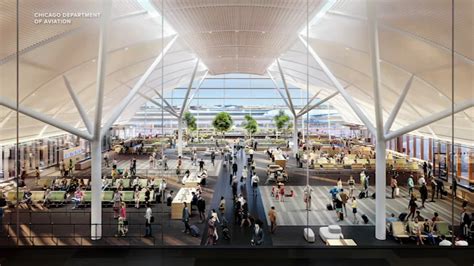
A new baggage handling system and direct third-level access to U.S. Customs and Border Protection will compress connection times for international arrivals, a competitive advantage in a hub where tight transfer windows are routine. These design choices reduce friction at precisely the moments travelers feel it most: arrival bottlenecks, missed connections, and long walks between fragmented facilities. The result is a terminal that behaves like a modern hub should—fluid, legible, and resilient under peak demand.
Operationally, the upgrade gives American room to grow without amplifying delay risk. Miami’s existing layout has constrained gate availability during weather events and seasonal peaks. Converting ground-level positions into jet-bridge-equipped gates increases aircraft compatibility, allowing the network to flex during disruptions and enabling tighter scheduling density without cascading failures.
Premium Lounges Signal a Competitive Play for High-Value Travelers
American’s Miami blueprint is not just about gates and baggage belts; it is about owning the premium traveler experience at the airline’s largest international gateway. New Flagship Lounges and Admirals Clubs are designed to capture a lucrative slice of transcontinental and intercontinental flyers who weigh lounge quality as part of their airline choice. In Miami, that competition is particularly intense as global travelers compare offerings across alliances and carriers.
The premium build-out dovetails with a structural shift in demand. Long-haul international travel and higher-yield cabin products have recovered strongly, and Miami’s role as a leisure-and-business hybrid hub makes it fertile ground for premium upsell. Lounges are no longer peripheral amenities; they function as brand theaters where reliability, hospitality, and status recognition are staged before and after long journeys.
Network Growth Anchors Miami as the Largest International Gateway
During peak summer 2026, American expects to operate more than 380 daily flights from Miami, spanning 155 destinations in 45 countries. The scale cements MIA as the airline’s largest international gateway, a position reinforced by targeted route expansions that lean into demand where Miami’s geography delivers natural advantage.
Year-round service to Milan launches in March 2026 aboard the Boeing 787 Dreamliner, creating the only nonstop link between Miami and Milan and complementing existing service to Rome Fiumicino. New nonstop service to Bimini in the Bahamas positions American as the sole U.S. carrier on the route, while expanded frequencies to Buenos Aires Ezeiza align with surging travel interest tied to major sporting events and tourism cycles. These moves are not scattershot; they are network stitches that tighten Miami’s connective tissue to Europe, the Caribbean, and South America.
Cargo Operations Quietly Power the Hub’s Economic Gravity
Miami’s transformation is incomplete without acknowledging cargo, the economic ballast beneath the passenger spectacle. American operates its largest cargo hub at MIA, moving nearly 3.5 million tons annually through belly cargo in passenger aircraft. The flow of perishables, pharmaceuticals, and biotech materials between the United States and Latin America depends on predictable schedules and rapid ground handling, precisely the efficiencies the Concourse D overhaul improves.
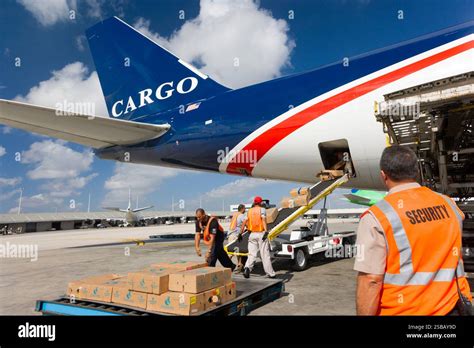
As the terminal modernizes, cargo reliability improves by proxy. Faster turnarounds and reduced gate congestion stabilize departure windows, protecting time-sensitive supply chains that treat minutes as money. In a global economy that runs on just-in-time logistics, this quiet synergy between passenger comfort and cargo velocity is where infrastructure spending pays compounding dividends.
American’s $1 billion wager on Concourse D is, at heart, a bet on Miami’s enduring role as a hinge between continents. The investment aligns steel, software, and service into a coherent strategy: move more people and goods, more comfortably, with fewer surprises. Airports are cities in miniature, and this one is being rebuilt to handle the traffic of a more connected, more demanding world.