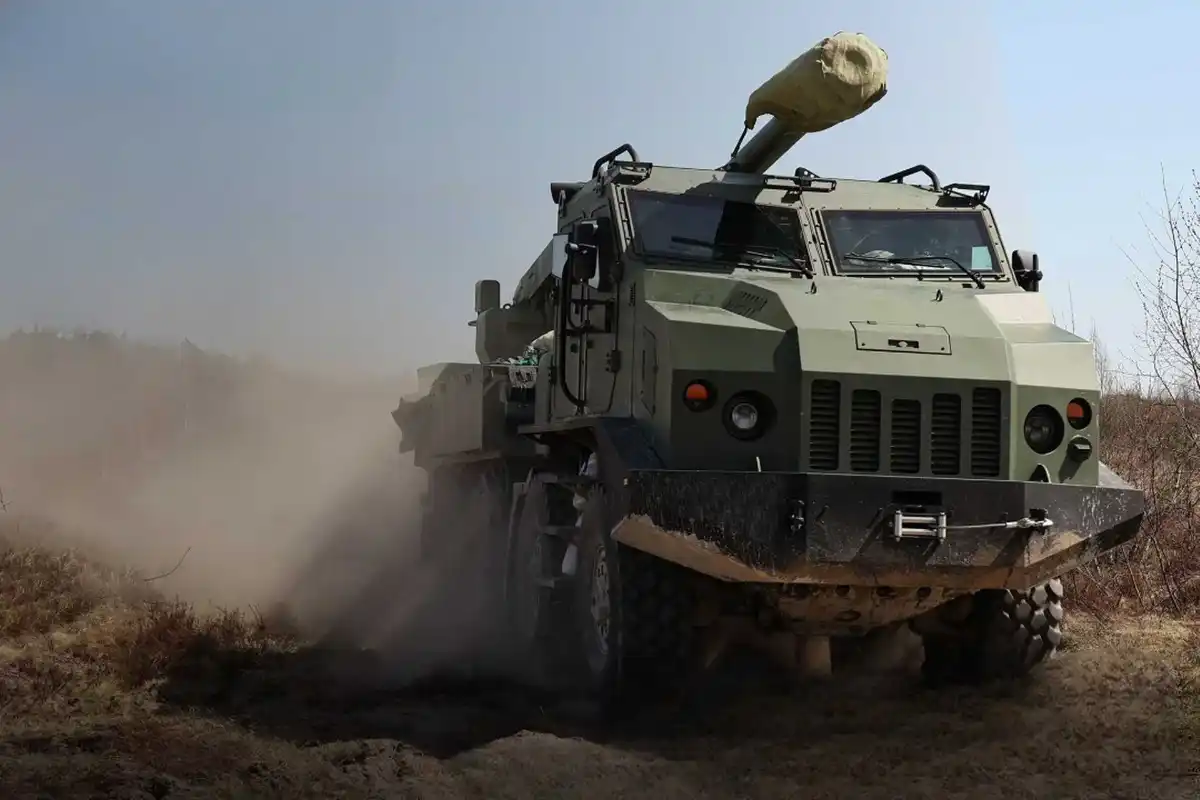
Europe’s defense landscape is undergoing a rapid transformation, and artillery has re-emerged as the decisive backbone of modern land warfare. In a major step reflecting this shift, Poland and Ukraine are preparing to launch joint production of the combat-proven Bohdana 155mm self-propelled howitzer on Polish soil. The initiative represents not only a deepening of defense-industrial cooperation between the two countries, but also a strategic move to reinforce NATO’s eastern flank with modern, NATO-standard artillery systems.
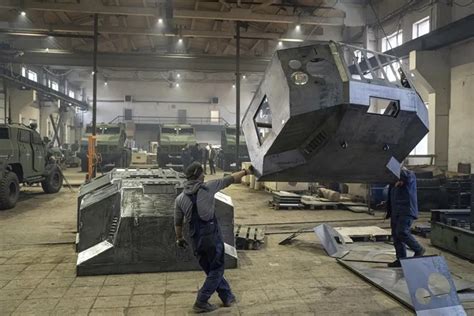
The production effort will be carried out by PK MIL SA, a newly established Polish-Ukrainian joint venture created by Ponar Wadowice and the Kramatorsk Heavy Machine Tool Plant (KZVV). With Ponar Wadowice holding a 51 percent majority stake, the enterprise aims to build a manufacturing pipeline capable of delivering large numbers of the Bohdana 155mm howitzer to Poland, Ukraine, and allied states across Eastern Europe.
For NATO, the significance is clear. The war in Ukraine has demonstrated that long-range precision artillery remains one of the most decisive tools on the battlefield, and the ability to produce such systems at scale inside NATO territory dramatically increases strategic resilience.
A Polish-Ukrainian Defense Industry Alliance Takes Shape
The formation of PK MIL SA in October 2025 marked the beginning of one of the most ambitious defense-industrial collaborations between Poland and Ukraine since the start of the Russian invasion in 2022. The partnership merges Ukrainian battlefield experience with Poland’s established defense manufacturing capabilities.
The immediate objective is straightforward but strategically powerful: build the Ukrainian-designed Bohdana howitzer in Poland, allowing the system to be exported and distributed across NATO without the logistical complications of wartime production inside Ukraine.
Manufacturing on Polish territory removes several critical obstacles. Wartime production facilities in Ukraine operate under constant security risk and export limitations, whereas Poland offers stable industrial infrastructure, secure logistics networks, and full access to NATO supply chains.
Ponar Wadowice will lead production activities, focusing on key components, hydraulic systems, and final assembly, leveraging experience gained from participation in major Polish defense programs such as the Krab self-propelled howitzer and the Borsuk infantry fighting vehicle.
Why the Bohdana Howitzer Matters for NATO’s Artillery Strategy
The 2S22 Bohdana represents Ukraine’s transition away from Soviet-era artillery calibers toward NATO-standard 155mm ammunition. This shift has major logistical advantages, allowing Ukraine and allied forces to share ammunition supplies across multiple weapon systems.
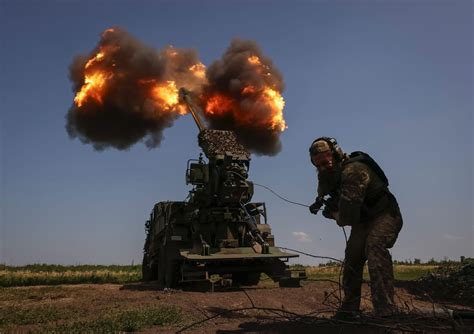
Technically, the Bohdana is a wheeled self-propelled artillery system designed for mobility, long-range precision, and rapid deployment. Weighing roughly 28 tonnes, the system operates with a crew of five protected inside an armored cabin capable of resisting 7.62mm armor-piercing rounds and artillery fragments.
The vehicle is powered by a 380–420 horsepower diesel engine, enabling road speeds up to 80 km/h and an operational range reaching 800 kilometers on roads. This level of mobility allows artillery units to rapidly reposition, a crucial capability in modern high-intensity warfare where counter-battery radar can locate firing positions within minutes.
Its primary weapon is a 155mm L/52 artillery gun, capable of firing five rounds per minute while carrying 20 shells onboard. Maximum engagement ranges depend on ammunition type:
- 42 kilometers with standard high-explosive shells
- Up to 60 kilometers using rocket-assisted projectiles
Such reach places the Bohdana firmly within the class of long-range NATO artillery systems, capable of striking deep logistical targets and command nodes.
NATO-Compatible Firepower and Advanced Ammunition
One of the defining strengths of the Bohdana system is its compatibility with the full spectrum of NATO 155mm artillery ammunition. This compatibility dramatically expands its operational flexibility and allows allied countries to integrate the system without creating new supply chains.
Among the ammunition types supported by the Bohdana are:
- M107 high-explosive shells
- M795 modern high-explosive projectiles
- M549A1 rocket-assisted rounds
- BONUS top-attack anti-armor submunition shells
- M982 Excalibur GPS-guided precision projectiles
The inclusion of precision-guided Excalibur rounds significantly expands the system’s tactical value. These projectiles allow artillery units to destroy high-value targets such as command posts, air-defense systems, and ammunition depots with extreme accuracy at long range.
This capability transforms artillery from an area-suppression weapon into a precision strike platform, reducing ammunition consumption while increasing battlefield impact.
From Prototype to Battlefield Weapon
The story of the Bohdana howitzer reflects the intense pressures of wartime innovation. Development began in 2016, when Ukraine recognized the need to shift away from Soviet artillery standards following the first phase of conflict in eastern Ukraine.
The first prototype, known as Bohdana 1.0, was built in early 2018 using a KrAZ-6322 6×6 truck chassis. The system conducted its first live firing test on August 7, 2018, before appearing publicly at Ukraine’s Independence Day military parade later that month.
Initial development was not smooth. The project encountered funding interruptions, legal disputes, and shortages of 155mm ammunition, which slowed testing and refinement.
By December 2019, however, state trials were underway, focusing on improving recoil management and integrating a redesigned muzzle brake. Between December 2021 and January 2022, the prototype fired 450 rounds during intensive testing, successfully achieving a maximum firing range of 42 kilometers.
Then history intervened.
When Russia launched its full-scale invasion in February 2022, Ukrainian authorities feared the prototype might fall into enemy hands. Orders were initially issued to destroy the system. Instead, engineers dismantled it, transported the components to a safer location, and later reassembled the weapon.
That decision would soon prove critical.
Combat Debut During the Battle for Snake Island
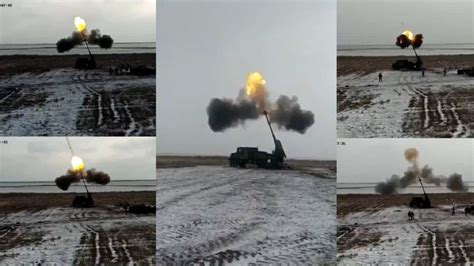
The Bohdana’s first real test came during Ukraine’s campaign to retake Snake Island in June 2022, a strategic location in the Black Sea.
From positions on the Ukrainian mainland, Bohdana artillery units fired at Russian positions on the island located roughly 35 kilometers away. Combined with other Ukrainian firepower and drone strikes, the bombardment played a key role in forcing Russian forces to withdraw from Snake Island on June 30, 2022.
Following this success, additional Bohdana units were deployed across the front lines, including combat zones around Kherson and Bakhmut.
The system’s battlefield performance ultimately led to its official adoption by the Ukrainian Armed Forces on July 21, 2023.
Rapid Wartime Production Expansion
Once combat effectiveness was proven, Ukraine moved quickly to expand production.
Serial manufacturing began in 2023, initially producing approximately six artillery systems per month. By 2024, output had increased dramatically, reaching 10 to 20 units monthly, with further expansion pushing potential production capacity to around 40 systems per month.
Ukraine’s defense industry produced 154 artillery systems in 2024, with Bohdana units forming a significant share of that output.
Estimates of total production vary. Some sources suggest more than 600 units have been built since 2023, while other calculations place the number at approximately 598 systems produced, with around 543 remaining in Ukrainian service after battlefield losses.
What is beyond dispute is the system’s enormous operational use. Reports indicate Bohdana variants have fired more than 800,000 artillery rounds during the war, demonstrating both reliability and battlefield relevance.
Evolution of the Bohdana Family of Artillery Systems
The Bohdana program did not remain static. Instead, it evolved into a growing family of artillery variants, each incorporating improvements in mobility, automation, and survivability.
Major versions include:
- Bohdana 1.0 – initial prototype mounted on KrAZ-6322 6×6 chassis
- Bohdana 2.0 – early production model using MAZ-6317 6×6 truck
- Bohdana 3.0 – mounted on Czech Tatra 815-7 8×8 chassis with armored cab
- Bohdana 4.0 – built on Tatra Phoenix 8×8, featuring semi-automatic loading
- Bohdana 5.0 – latest variant using Tatra Force 8×8 chassis with mechanical loading arm and anti-drone protection net
Unit costs vary between $2.5 million and $3 million, depending on configuration and equipment.
A future Bohdana 6.0 variant is already planned. This model may use German MAN or Mercedes-Benz Zetros military truck chassis, with Germany financing 200 systems for delivery to Ukraine beginning in 2026.
A Lower-Cost Alternative: The Bohdana-B Towed Artillery
In addition to the self-propelled versions, Ukraine introduced a towed artillery variant known as the Bohdana-B.
This version uses the same 155mm L/52 barrel but mounts it on a modified carriage derived from the Soviet 2A36 Giatsint-B 152mm howitzer.
First publicly displayed in October 2024, the system offers a lower-cost option for expanding artillery numbers. Estimated prices range from $1.5 million to $2 million per unit, significantly cheaper than self-propelled systems.
Although mobility is reduced, the towed variant allows armies to increase artillery density without requiring large numbers of heavy military trucks.

Strategic Implications for NATO’s Eastern Flank
Poland’s decision to manufacture the Bohdana represents more than a simple industrial arrangement. It reflects a broader shift in European defense strategy, where nations on NATO’s eastern frontier are rapidly strengthening their artillery forces.
Poland already maintains one of the largest artillery modernization programs in Europe, including the Krab howitzer, South Korean K9 Thunder systems, and HIMARS rocket artillery.
Adding domestically produced Bohdana systems introduces a mobile, combat-proven 155mm platform that can complement these capabilities while supporting allied forces across the region.
For NATO members bordering Russia and Belarus, the message is unmistakable: artillery mass, long-range precision, and industrial resilience are becoming central pillars of deterrence.
The Bohdana program—born under the pressure of war—has evolved into a multinational artillery project shaping the future of European land warfare.