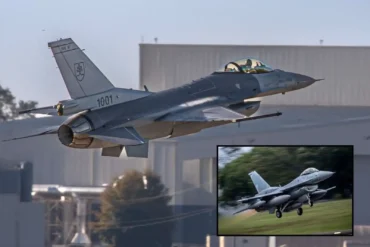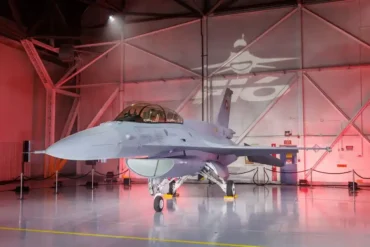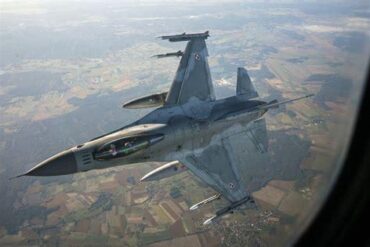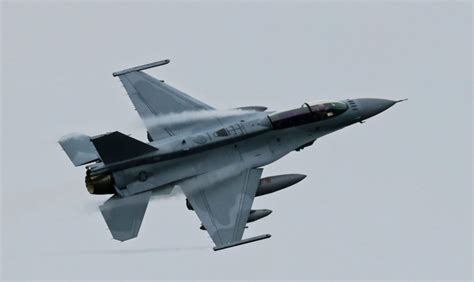
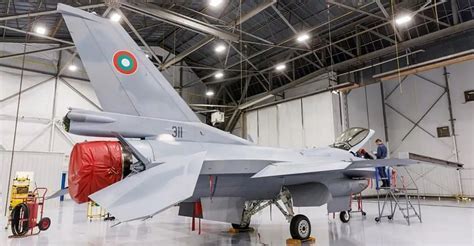
On June 8, 2025, the Bulgarian Air Force took a significant leap forward in modernizing its defense capabilities with the arrival of its second F-16 Block 70 fighter jet, delivered by Lockheed Martin. The advanced single-seat combat aircraft touched down at 15:26 local time at Graf Ignatievo Third Air Base, marking another milestone in Bulgaria’s strategic air force upgrade.
Bulgaria’s F-16 Block 70 Acquisition: A Transformational Milestone
The newly delivered F-16 Block 70, bearing the tail number 313, represents more than just a modern warplane. It is a symbol of Bulgaria’s evolving commitment to NATO interoperability, airspace defense, and regional security. The second arrival follows the successful delivery of the first F-16 Block 70—a two-seat trainer variant—in April 2025, indicating the nation’s methodical adherence to the timeline of its 2019 procurement agreement.
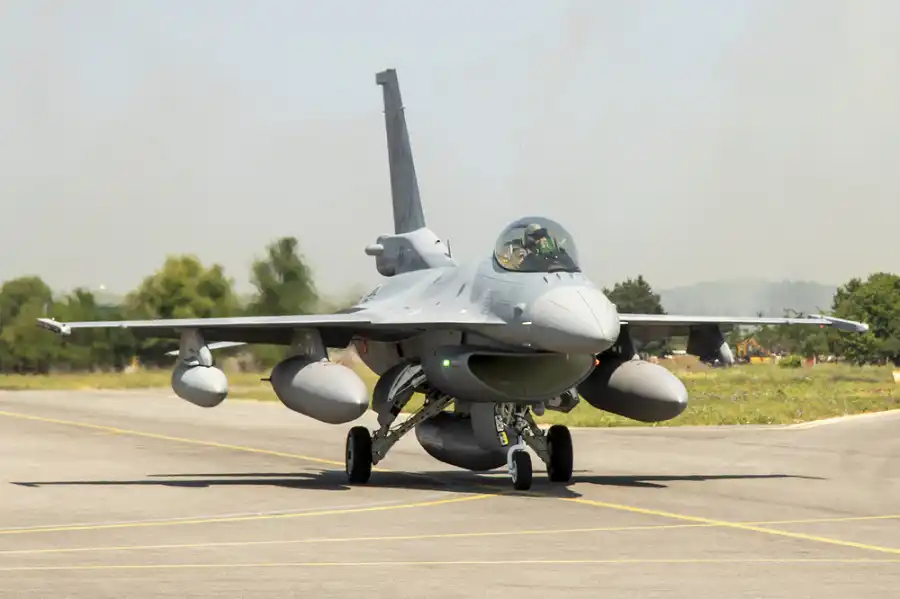
The event was marked by a ceremonial welcome, attended by Chief of Defence Admiral Emil Eftimov, Air Force Commander Major General Nikolay Rusev, and Colonel Metodi Orlov, commander of the host air base. The presence of these top military figures underscored the strategic significance of the F-16’s introduction into Bulgaria’s air fleet.
The Technical Acceptance Process and Operational Integration
Following the aircraft’s landing, the Bulgarian Ministry of Defence confirmed that technical and flight acceptance procedures are now underway. This crucial phase ensures the aircraft meets all operational specifications before being fully inducted into active service. It includes rigorous ground checks, flight performance assessments, and systems integration testing. These procedures are not only technical formalities—they are vital steps in the certification and mission readiness of a modern air superiority platform.
Strategic Implications for NATO and Regional Security
The incorporation of the F-16 Block 70 series into the Bulgarian Air Force strengthens the eastern defenses of the North Atlantic Treaty Organization (NATO). Bulgaria’s strategic geographic position, bordering the Black Sea and near volatile regions, makes it a pivotal location for NATO’s southern and eastern security planning.
With the war in Ukraine continuing to reshape Eastern Europe’s defense dynamics, the F-16s bolster Bulgaria’s deterrent capabilities. These aircraft are not just new additions—they bring with them advanced radar systems, enhanced combat range, and interoperability features that make them force multipliers in regional operations and NATO joint missions.
A Closer Look at the F-16 Block 70 Capabilities
The F-16 Block 70 is the most advanced version of the F-16 ever produced. Designed by Lockheed Martin, it integrates state-of-the-art systems that make it a 4.5-generation fighter, bridging the gap between legacy jets and fifth-generation stealth platforms like the F-35.
Key features of the F-16 Block 70 include:
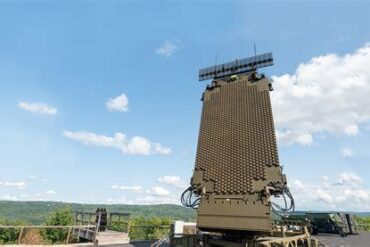
- AN/APG-83 AESA Radar: This radar provides enhanced situational awareness, greater targeting range, and superior tracking of multiple targets.
- Advanced Electronic Warfare Suite: Includes robust countermeasures for missile evasion and jamming capabilities.
- Modernized Cockpit: Featuring high-resolution displays, advanced mission systems, and helmet-mounted cueing systems.
- Structural Life of 12,000 Flight Hours: Significantly longer than earlier F-16 variants.
- Integrated Communications and Data Link Systems: For seamless coordination with NATO forces.
These enhancements allow the Block 70 to engage in a variety of missions, from air-to-air superiority and ground strike roles, to reconnaissance and close air support.
Bulgaria’s Air Force Transformation Plan: From Soviet-Era to NATO-Ready
For decades, Bulgaria relied on aging MiG-29 fighters inherited from the Soviet era. These jets, though once formidable, no longer meet the demands of 21st-century warfare or NATO interoperability standards. The acquisition of 16 F-16 Block 70s represents a wholesale transformation of the Bulgarian Air Force.
Admiral Eftimov commented during the aircraft’s arrival: “The process of integrating the new F-16 Block 70 platform into our Air Force and the Bulgarian Army continues successfully.” He also reaffirmed Bulgaria’s unwavering focus on achieving initial operational capability (IOC) within the planned timeframe.
Delivery Timeline and Contractual Commitments
Under the 2019 Foreign Military Sales (FMS) agreement, Bulgaria committed to purchasing eight F-16 Block 70 aircraft, with delivery set for completion by the end of 2025. This first batch includes both single-seat fighters and two-seat trainers, essential for pilot transition and mission-specific training.
In a major follow-up, Bulgaria signed a second contract that ensures the delivery of an additional eight jets by the end of 2027, culminating in a complete 16-aircraft squadron. The procurement of these fighters not only enhances Bulgaria’s national defense but also demonstrates the government’s dedication to long-term strategic planning and defense modernization.

Achieving Full Operational Capability: Challenges and Progress
The path to achieving Full Operational Capability (FOC) involves more than just aircraft deliveries. It encompasses the full spectrum of integration: pilot training, maintenance infrastructure, logistics support, weapons system alignment, and command and control integration.
As of late May 2025, Bulgaria had completed the technical acceptance of its first F-16, tail number 301, and initiated flight acceptance protocols. These steps are methodically monitored by both Lockheed Martin experts and Bulgarian defense personnel to ensure adherence to stringent military standards.
Progress in these areas has been steady. Bulgarian pilots and technicians have undergone extensive training in the United States and at partner NATO bases, preparing them to operate and sustain the F-16 Block 70 over its expected multi-decade service life.
Broader Geopolitical Context and NATO Readiness
Bulgaria’s investment in F-16s is a reflection of broader geopolitical realities. As tensions simmer in Eastern Europe, especially following Russia’s aggression in Ukraine, NATO’s southeastern flank has become a critical area of focus. The Black Sea region is a flashpoint for intelligence operations, air patrols, and maritime surveillance.
The presence of F-16s in Bulgaria enhances rapid response capabilities. These jets can be deployed quickly for air policing, border defense, and multinational exercises, such as NATO’s Air Defender and Thracian Star, which are vital for fostering coalition readiness.
Strategic Industrial Benefits and Defense Sector Growth
Beyond defense, the F-16 program offers Bulgaria avenues for industrial cooperation. As part of offset agreements, Bulgaria is exploring ways to involve local companies in maintenance, component supply, and pilot training programs, fostering economic and technological benefits.
This could also pave the way for future participation in NATO-wide aerospace and defense initiatives, elevating Bulgaria’s profile as a regional hub for aviation technology and logistics support.
Conclusion: A New Chapter in Bulgarian Air Power
The delivery of the second F-16 Block 70 marks a pivotal moment in Bulgaria’s military evolution. These aircraft are not just new hardware—they are enablers of doctrine transformation, strategic defense recalibration, and deeper integration within NATO’s collective security framework.
With more deliveries on the horizon and operational capability progressing steadily, Bulgaria is on track to establish a next-generation air force, capable of meeting the challenges of modern warfare and contributing meaningfully to regional stability.
As the second jet undergoes its acceptance tests, and pilots prepare for a new era of air superiority, Bulgaria reaffirms its position as a reliable, capable, and forward-looking NATO ally.