Lockheed Martin (NYSE: LMT) is once again in the spotlight as former President Donald Trump proposes a dramatic revival of U.S. air superiority—hinting at two potentially multibillion-dollar defense contracts. With Boeing recently capturing a surprise $20 billion F-47 stealth fighter deal, Trump’s recent remarks may represent a calculated counterbalance aimed at Lockheed. The mention of a next-gen F-55 twin-engine stealth fighter and a resurrected F-22 Raptor Super has already started to reverberate across markets, investors, and geopolitical analysts.
The implications of these remarks, particularly in the current defense and political landscape, could be monumental. They carry enormous potential not only for Lockheed Martin’s bottom line but also for the future structure of the U.S. defense industrial base.
Trump’s Fighter Jet Gambit: F-55 and the F-22 Super
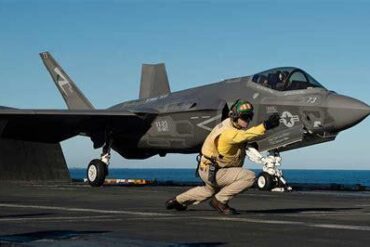
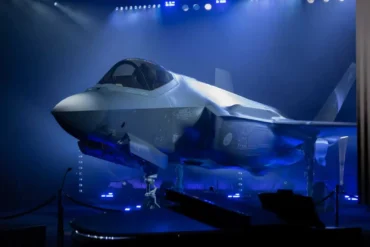
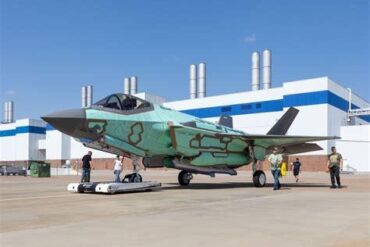
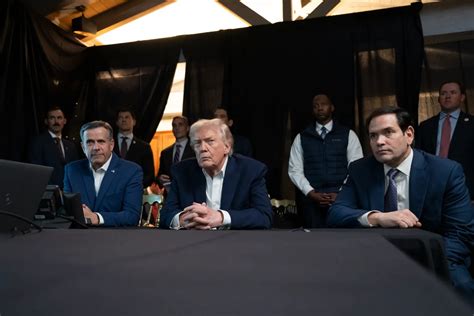
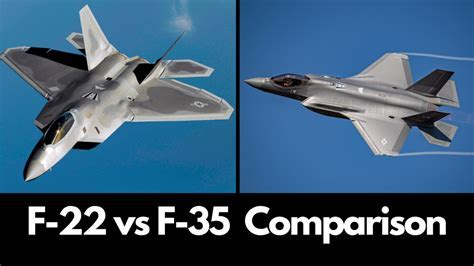
In a headline-grabbing appearance at a business and aerospace summit in Doha, Trump announced the U.S. could soon pursue two advanced stealth fighter programs. The F-55, a proposed evolution of the single-engine F-35 Lightning II, would feature two engines and upgraded avionics, a design aimed at extending range, speed, and redundancy. Trump described it as “a super upgrade on the F-35,” signaling a leap forward in fifth-generation capabilities.
The second, even more surprising suggestion: restart production of the F-22 Raptor, widely regarded as the most dominant air superiority fighter ever built. Production was terminated over a decade ago due to costs and shifting defense priorities, but Trump’s “F-22 Super” variant aims to modernize the aircraft with new sensors, materials, and software. The original F-22 cost approximately $400 million per unit, making this proposal both ambitious and controversial.
Strategic Rebalancing After the F-47 Loss
Lockheed’s enthusiasm for these potential contracts is understandable. Just months ago, the Pentagon dealt it a major blow by awarding the lucrative F-47 sixth-generation stealth fighter contract to Boeing. It was a stunning development, not just because of the scale—$20 billion—but also because Lockheed had long been seen as the frontrunner for next-gen airframes.
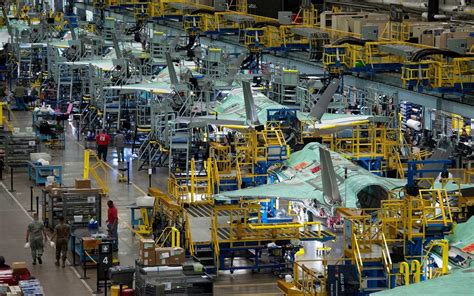
If the F-47 represents the Air Force’s future, losing that contract risks putting Lockheed a generation behind. Trump’s proposal may be an intentional effort to mitigate that risk by ensuring Lockheed stays relevant in the ultra-competitive arena of aerial dominance. Both the F-55 and F-22 Super would be classified as fifth-generation plus fighters, allowing Lockheed to maintain its technological edge even without direct participation in sixth-gen development.
The Feasibility and Skepticism Around the F-55
Despite the excitement, some defense analysts remain skeptical. Experts at 19fortyfive.com question whether transforming the F-35’s single-engine platform into a twin-engine aircraft is even mechanically feasible. The F-35 was engineered from the ground up with its propulsion configuration deeply integrated into the airframe, so radical redesigns may undermine its stealth, aerodynamics, or operational utility.
Nevertheless, the possibility of an F-55 fighter that marries the best features of the F-35 and F-22—particularly sensor fusion, electronic warfare systems, and supermaneuverability—would be hard for the Pentagon to ignore. Trump’s use of language like “we’re going to be going with it pretty quickly” underscores a desire to move fast, regardless of technical challenges.
Lockheed’s Tactical Advantage Despite Setbacks
What makes Lockheed Martin especially intriguing to investors right now is that the company may not even need to win these contracts to outperform its peers. On virtually every financial metric that matters, Lockheed currently leads the pack:
- Price-to-Earnings Ratio (P/E): 20, slightly higher than Northrop Grumman’s 19
- Price-to-Free-Cash-Flow Ratio (P/FCF): 22, much better than Northrop’s 38
- Dividend Yield: 2.8%, outpacing both Boeing and Northrop
- Projected Earnings Growth: 13%, double Northrop’s estimated rate
In contrast, Boeing continues to struggle with cash burn and delays across multiple divisions, including its commercial aircraft arm. Northrop Grumman, while still profitable, is significantly more expensive on a cash flow basis. Thus, even in the absence of new fighter jet contracts, Lockheed remains the best-positioned defense contractor from a shareholder value perspective.
The Political Chessboard: Keeping Contractors Competitive
Trump’s maneuvering may also reflect a deeper geopolitical and fiscal strategy. Since the end of the Cold War, the U.S. defense industry has consolidated into five major players—Lockheed Martin, Boeing, Northrop Grumman, General Dynamics, and RTX. Ensuring these titans remain both solvent and competitive is not only a matter of national security but also fiscal discipline.
By splitting contracts across companies—F-47 to Boeing, F-55 and F-22 Super to Lockheed—the government can prevent monopolistic stagnation. It’s also a way to pressure defense firms into providing better pricing and faster delivery. This strategic balance might even influence future deals, such as the Navy’s upcoming F/A-XX fighter program, which is being contested by Boeing and Northrop.
A Bigger Question: Can the F-22 Really Make a Comeback?
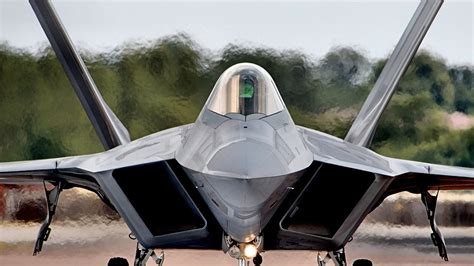
Restarting the F-22 line is not as straightforward as it sounds. Many of the original production tools have been scrapped, and the workforce has moved on. However, Lockheed has already secured a $1 billion contract from the Air Force to upgrade the existing F-22 fleet, including sensor enhancements and avionics modernization. CEO Jim Taiclet has referred to these upgraded Raptors as “fifth-generation plus” jets with dramatically extended reach.
The logic may be: if you’re already enhancing the legacy fleet, why not go all in and reinitiate production with modern improvements? The economies of scale alone could reduce unit costs over time, and the platform’s superior performance would continue to deter near-peer adversaries like China and Russia.
Investor Takeaway: Lockheed Martin Looks Undervalued
Whether or not these contracts come to fruition, Lockheed Martin stock appears undervalued relative to its prospects. The defense industry rarely moves in straight lines, but with a $113 billion market cap, solid dividend, and rising international demand for U.S.-made fighter aircraft, Lockheed is uniquely poised for upside.
More importantly, in an environment where military modernization is accelerating globally, Lockheed remains a cornerstone of American airpower. From the F-16 and F-35 to potentially the F-22 Super and F-55, Lockheed is well-positioned to anchor the U.S. arsenal for another generation.
As Trump stirs the pot, Lockheed may reap the benefits. Even if the proposed jets never leave the drawing board, the political momentum and fiscal rationale behind them suggest the defense giant is about to enter another era of relevance—and potentially, explosive stock growth.
Final Word: Betting on Innovation and Influence
The aerospace sector thrives on cycles of disruption, innovation, and strategic necessity. Trump’s advocacy for new fighter jets—whether to assert air dominance, compete with China, or reinvigorate the defense supply chain—could become the catalyst that lifts Lockheed Martin stock to new heights. For investors, the opportunity is both a bet on policy direction and a long-term wager on the enduring need for air superiority.
Whether through the birth of the F-55 or the resurrection of the F-22, Lockheed Martin’s story is one of strategic resilience. And right now, it looks more powerful than ever.