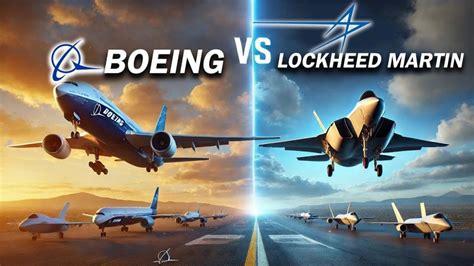
Boeing and Lockheed Martin sit at the summit of the global defense-industrial ecosystem, two colossal engineering empires whose aircraft have shaped how wars are fought, deterrence is enforced, and airpower is projected across the planet. Their rivalry is not a Hollywood-style corporate feud but a decades-long contest of design philosophies, procurement victories, geopolitical strategy, and industrial capacity. The question of which manufacturer produces more fighter jets today is not merely trivia—it is a window into how modern airpower is structured and which companies define the tempo of military aviation.
The answer is not subtle, but the story behind it is layered with mergers, procurement politics, stealth revolutions, and shifting doctrines of warfare. Production numbers reflect more than factory throughput; they reveal strategic priorities of governments, the maturation of technologies, and the changing economics of combat aircraft. To understand why one manufacturer leads in fighter jet production, it is essential to trace how both companies arrived at their current positions and what their aircraft portfolios reveal about the future of aerial combat.
The contest begins with history but ends with industrial reality. Fighter jets today are not just fast airplanes—they are networked battle nodes, software-driven platforms, and national symbols backed by decades of investment. Production volume, therefore, becomes a proxy for trust, capability, and geopolitical alignment.
The Modern Fighter Jet Production Landscape
In the present era, Lockheed Martin produces far more fighter jets than Boeing. This dominance is driven primarily by the F-35 Lightning II, the world’s only fifth-generation multirole fighter in large-scale production for the United States and a coalition of allied nations. Annual output measured in the hundreds places the F-35 in a class of its own, dwarfing production rates of any other modern fighter program.
Boeing remains a significant fighter manufacturer, producing the F/A-18E/F Super Hornet, the EA-18G Growler, and the F-15EX Eagle II. These aircraft are technologically formidable and operationally indispensable, but they are built in comparatively modest numbers. They serve targeted mission requirements rather than global multirole replacement programs, which naturally limits their production scale.
The asymmetry in output reflects procurement strategy rather than engineering competence. Modern defense procurement increasingly favors fewer, highly capable, software-upgradable platforms produced at scale. Lockheed Martin captured this paradigm shift with the F-35, while Boeing’s portfolio evolved more conservatively through upgrades and derivatives.
Boeing’s Century-Long Military Aviation Legacy
Boeing’s military aviation lineage stretches back to the dawn of powered flight. During World War I, the company began producing military aircraft, establishing its role in American defense manufacturing. Its reputation exploded during World War II, when aircraft such as the B-17 Flying Fortress and B-29 Superfortress became industrial icons of Allied airpower.
Boeing’s Cold War era cemented its status as a strategic aviation powerhouse. The B-52 Stratofortress, still operational more than seven decades after its first flight, symbolizes Boeing’s expertise in heavy, long-range military platforms. The company also dominated aerial refueling with aircraft like the KC-135 Stratotanker and later the KC-46 Pegasus, critical force multipliers in modern warfare.
The pivotal moment for Boeing’s fighter portfolio came in 1997, when Boeing merged with McDonnell Douglas. This merger transferred iconic fighter programs into Boeing’s stewardship, including the F-15 Eagle and the F/A-18 Hornet family. Boeing inherited not just aircraft designs but a global supply chain, export relationships, and engineering talent that defined fourth-generation fighter aviation.
Despite this legacy, Boeing’s fighter development strategy leaned heavily toward modernization of existing platforms rather than clean-sheet designs. The Super Hornet and Growler are evolutions of earlier concepts, optimized for carrier operations and electronic warfare. The F-15EX modernizes a legendary airframe with digital architecture, new sensors, and modern weapons integration. These aircraft are powerful, but they do not represent a generational leap comparable to stealth-centric platforms.
Lockheed Martin’s Fighter Jet Heritage and Strategic Evolution
Lockheed Martin’s fighter heritage follows a different trajectory, rooted in aggressive technological leaps and stealth leadership. The Lockheed Aircraft Corporation delivered the P-38 Lightning during World War II, a twin-engine fighter that proved decisive across multiple theaters. Early jet-age innovations followed with the F-80 Shooting Star, America’s first operational jet fighter, and the F-104 Starfighter, a high-speed interceptor adopted across NATO.
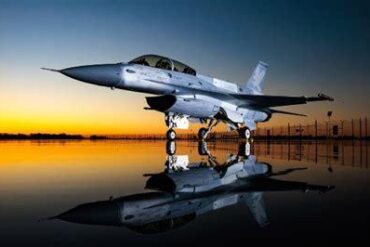
A transformative milestone arrived in 1993, when Lockheed acquired General Dynamics’ Fort Worth fighter division, inheriting the F-16 Fighting Falcon program. The F-16 became one of the most successful fighters ever built, with more than 4,600 units produced and a vast global operator base. This acquisition gave Lockheed unmatched export reach and production infrastructure.
The 1995 merger between Lockheed Corporation and Martin Marietta created Lockheed Martin, combining stealth expertise, missile technology, avionics leadership, and Pentagon relationships. This corporate fusion positioned the company to win the most consequential fighter contract of the 21st century: the Joint Strike Fighter (JSF) program.
The F-35 Lightning II and the Production Revolution
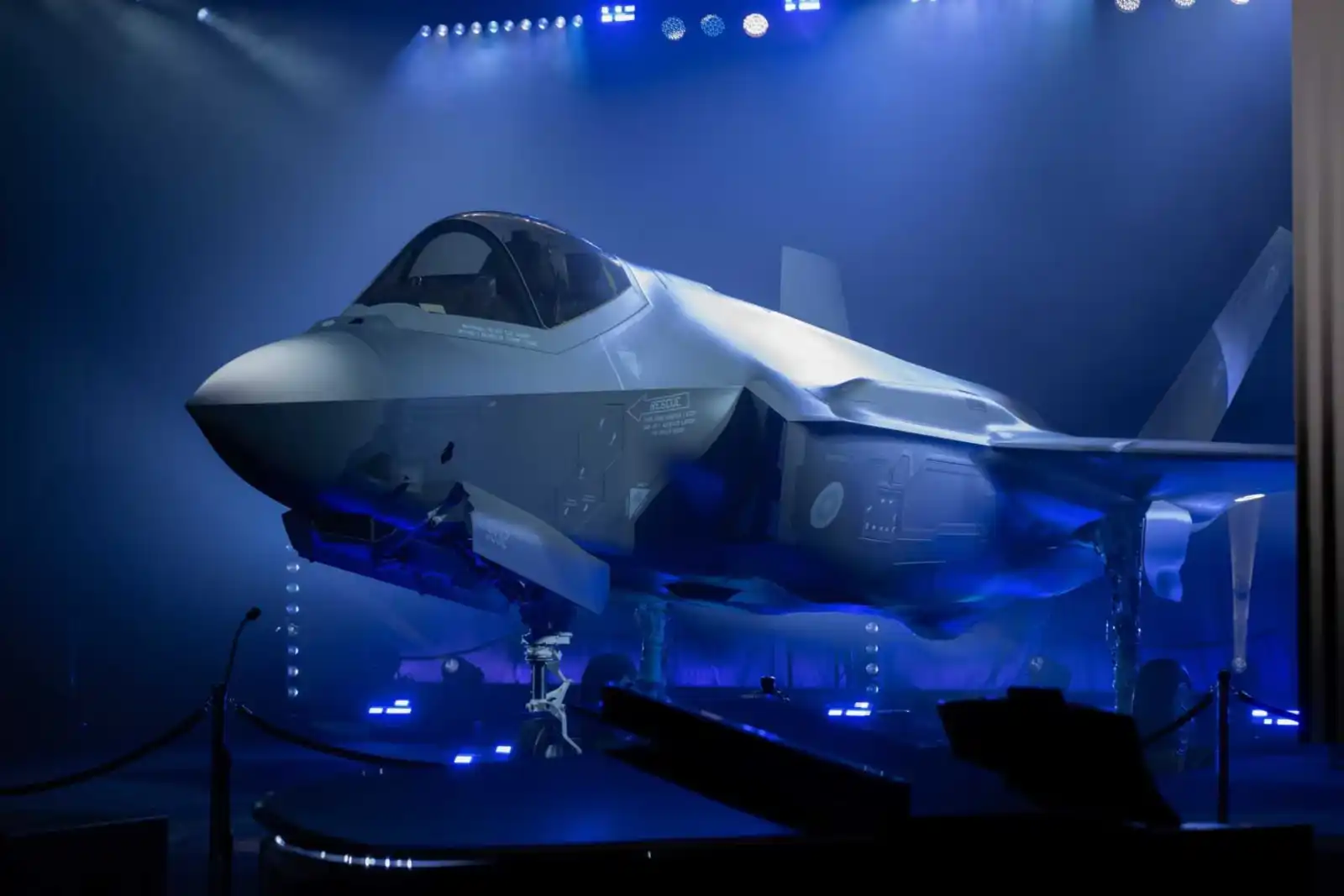
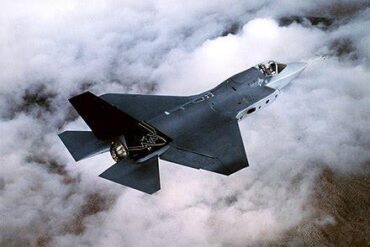
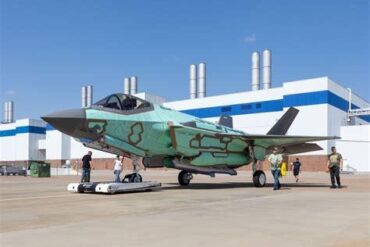
The F-35 Lightning II is not merely an aircraft; it is an industrial ecosystem. Designed as a fifth-generation stealth multirole fighter, it integrates sensor fusion, low observable shaping, electronic warfare, and networked battle management into a single platform. Its three variants—F-35A, F-35B, and F-35C—serve the US Air Force, Marine Corps, Navy, and allied nations.
Production occurs primarily in Fort Worth, Texas, with additional assembly lines in Italy and Japan. This multinational production structure reflects its role as a coalition aircraft, with dozens of partner nations participating in procurement and sustainment.
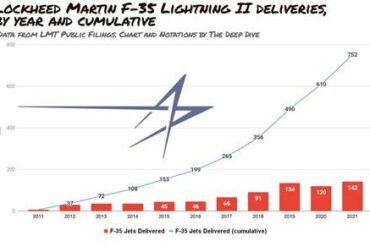
By the mid-2020s, annual production reached around 150 to 190 aircraft per year, with 191 delivered in 2025 alone. More than 1,300 aircraft are in service globally, and the fleet continues to grow. Each production lot incorporates software and hardware upgrades, making later jets significantly more capable than early models.
The F-35’s scale is unprecedented for a modern stealth fighter. It replaced multiple aircraft types across allied fleets, including F-16s, F/A-18s, Harriers, and legacy strike platforms. This consolidation strategy is the core reason Lockheed Martin dominates fighter production today.
Boeing’s Current Fighter Production Portfolio
Boeing’s fighter manufacturing today focuses on three main platforms, each serving specialized operational niches.
The F/A-18E/F Super Hornet is the US Navy’s primary carrier-based strike fighter. It offers multirole capability, rugged carrier suitability, and mature systems integration. The EA-18G Growler, derived from the Super Hornet, is the world’s premier airborne electronic attack platform, capable of jamming enemy radars and communications.
The F-15EX Eagle II represents a modernized heavy fighter optimized for air superiority and long-range strike. With advanced avionics, digital architecture, and enormous payload capacity, it complements stealth aircraft by carrying large missile loads and operating in contested environments where stealth platforms may prioritize sensor and command roles.
However, annual production rates for these aircraft are modest:
- Super Hornet production runs roughly 12 to 24 aircraft per year
- Growler production typically ranges 6 to 12 aircraft per year
- F-15EX procurement is around 18 to 24 aircraft per year in defined batches
Even combined, Boeing’s fighter output remains far below the F-35 alone. The difference reflects procurement demand, not manufacturing weakness. Boeing’s aircraft fill specific doctrinal roles, while the F-35 is a universal fleet replacement platform.
Fourth-Generation Production Still Matters: The F-16 Factor
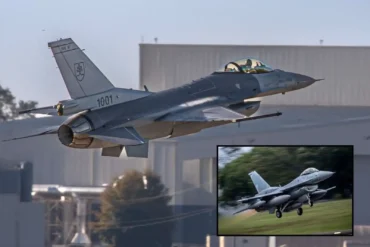
Lockheed Martin also continues producing the F-16 Block 70/72 for export customers. This advanced fourth-generation variant incorporates AESA radar, modern avionics, and structural upgrades. Annual production estimates range from 12 to 24 aircraft, primarily for international buyers.
While the F-16 is not a stealth fighter, it remains cost-effective and widely adopted, extending Lockheed’s production footprint beyond the F-35. Combined, the F-35 and F-16 lines further widen the production gap between Lockheed Martin and Boeing.
Why Production Volume Became the Deciding Metric
Modern fighter procurement prioritizes networked capability, lifecycle upgrades, and coalition interoperability. Governments increasingly choose platforms that integrate seamlessly into multinational command structures. The F-35 was designed from the outset to be a shared platform across NATO and allied forces, driving enormous procurement volumes.
Boeing’s fighters, while technologically advanced, were not positioned as universal replacements for multiple fleets. The Super Hornet is optimized for carrier operations, the Growler for electronic warfare, and the F-15EX for heavy air dominance. Each program addresses a specific requirement rather than a global standardization strategy.
This difference in procurement philosophy explains why Lockheed Martin’s production numbers dwarf Boeing’s today.
Industrial Strategy and the Economics of Scale
The F-35 program benefits from economies of scale unmatched in modern military aviation. Large production runs reduce per-unit costs, justify extensive supplier networks, and sustain continuous upgrades. Lockheed Martin structured the F-35 as a global enterprise, distributing production and maintenance across partner nations, which reinforced political support and long-term procurement commitments.
Boeing’s fighter programs, by contrast, are largely national or niche-focused. Without a multinational replacement mandate, production naturally stabilizes at lower rates. This does not diminish their importance, but it does constrain industrial throughput.
Capability vs Volume: Why Numbers Don’t Tell the Whole Story
Production volume alone does not equate to combat dominance. Boeing’s F-15EX offers payload capacity that stealth fighters cannot match. With up to 29,500 kg of external ordnance, it can carry long-range air-to-air missiles, hypersonic weapons, and heavy strike munitions. In high-intensity conflict, such payload capacity is strategically invaluable.
The EA-18G Growler remains unmatched in airborne electronic warfare, a critical domain in modern conflict where radar denial and spectrum dominance determine survival. The Super Hornet provides reliable carrier-based strike capability, ensuring naval aviation retains offensive reach.
Lockheed Martin’s reliance on a single dominant platform also introduces risk. The F-35 program has faced software delays, structural modifications, and political budget debates. Any major disruption to the F-35 supply chain could significantly affect Lockheed’s fighter production output.
The Role of Mergers in Shaping Fighter Manufacturing Power
Both companies’ fighter portfolios were shaped by corporate mergers that consolidated intellectual property and production capacity.
Boeing’s acquisition of McDonnell Douglas transferred legendary fighter programs into Boeing’s control, while Lockheed’s acquisition of General Dynamics’ fighter division delivered the F-16 line. The Lockheed-Martin Marietta merger created a defense conglomerate with unmatched stealth expertise.
These mergers illustrate how industrial consolidation drives military aviation dominance. Fighter production is not only about engineering brilliance; it is about corporate structure, supply chain management, and political capital.
The Emerging Sixth-Generation Battle: NGAD and Beyond
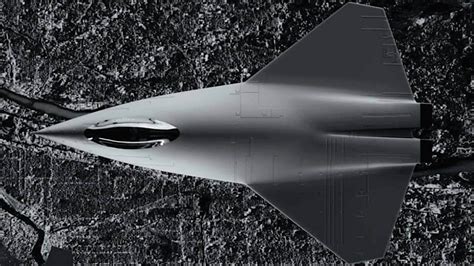
The future of fighter production may be defined by sixth-generation aircraft. The US Air Force’s Next Generation Air Dominance (NGAD) program aims to deliver a stealthy, modular, networked system-of-systems that integrates manned fighters, unmanned wingmen, and distributed sensors.
Boeing’s selection to build the F-47, part of this future ecosystem, marks a significant strategic victory. If NGAD production scales similarly to the F-35, Boeing could regain industrial dominance in high-end fighter manufacturing in the 2030s.
Lockheed Martin, however, remains deeply involved in NGAD research, stealth materials, and avionics. The competition for sixth-generation production supremacy is already underway, even if mass production remains years away.
Global Geopolitics and Fighter Jet Manufacturing Dominance
Fighter jet production volume reflects geopolitical alliances. The F-35 program includes NATO countries, Indo-Pacific partners, and Middle Eastern allies, creating a global supply network aligned with US strategic interests. Each delivery reinforces military interoperability and political alignment.
Boeing’s fighters, while exported, do not command the same coalition-wide replacement mandate. This geopolitical dimension amplifies Lockheed Martin’s production dominance and secures long-term demand.
Production Numbers Snapshot
Lockheed Martin:
- F-35 Lightning II: ~150–190 aircraft annually
- F-16 Block 70/72: ~12–24 aircraft annually
Boeing:
- F/A-18E/F Super Hornet: ~12–24 aircraft annually
- EA-18G Growler: ~6–12 aircraft annually
- F-15EX Eagle II: ~18–24 aircraft annually
These figures demonstrate why Lockheed Martin’s output surpasses Boeing’s by a wide margin.
The Psychological and Strategic Weight of the F-35
Beyond numbers, the F-35 represents a doctrinal shift. It functions as a sensor node, data fusion platform, and command asset, not just a shooter. Its production scale ensures allied forces share a common digital battlefield architecture, creating a networked coalition force.
This transformation explains why governments prioritized F-35 procurement despite early program challenges. Fighter production today is as much about software ecosystems as airframes.
Boeing’s Strategic Pivot: Beyond Fighter Volume
Boeing remains deeply embedded in defense aviation through bombers, tankers, trainers, drones, and space systems. The company’s defense portfolio diversification reduces reliance on a single platform, unlike Lockheed’s concentration on the F-35. This diversification provides financial stability but limits fighter production scale.
Boeing’s future fighter influence may emerge through autonomous systems, collaborative combat aircraft, and NGAD platforms rather than traditional high-volume fighters.
Lockheed Martin’s Platform-Centric Dominance Strategy
Lockheed Martin pursued a platform-centric strategy, focusing on a single dominant fighter architecture with global adoption. This strategy maximized production volume, lifecycle sustainment revenue, and political buy-in. It also centralized risk within one program.
The company’s success with the F-35 demonstrates how winning a flagship procurement program can reshape an entire industry for decades.
The Long-Term Outlook for Fighter Jet Production Leadership
The balance of power could shift again. Sixth-generation fighters, unmanned combat aircraft, and AI-driven swarming systems may redefine what “fighter production” means. Boeing’s strengths in autonomous systems and digital engineering could position it strongly in future conflicts.
However, Lockheed Martin’s entrenched production ecosystem and global F-35 user base provide a durable industrial moat that will persist for decades.
Final Verdict: Who Produces More Fighter Jets Today
Lockheed Martin undeniably produces more fighter jets than Boeing in the modern era. The F-35 Lightning II’s unprecedented production scale, multinational adoption, and central role in allied airpower give Lockheed Martin a commanding lead in fighter manufacturing output.
Boeing’s fighters remain essential, technologically advanced, and strategically critical, but their production volumes reflect targeted mission roles rather than global replacement mandates. The rivalry is far from settled, and the next generation of fighters could reshape the hierarchy once again.
For now, in the industrial chessboard of modern combat aviation, Lockheed Martin dominates fighter jet production by scale, while Boeing competes by specialization and future innovation.