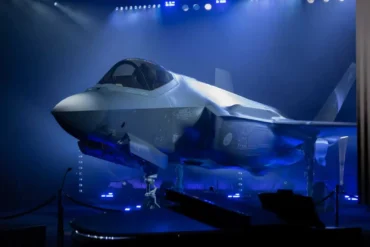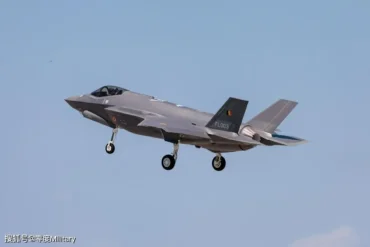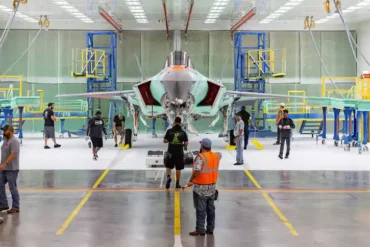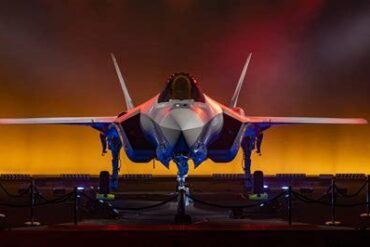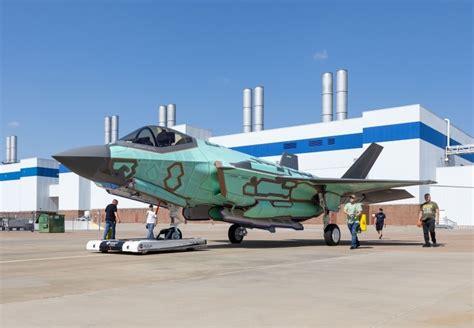
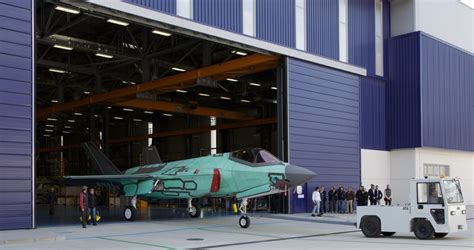
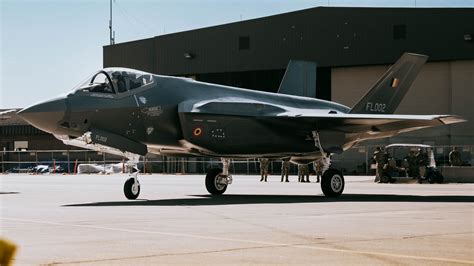
Lockheed Martin has marked a significant milestone in its partnership with Belgium by completing the final assembly of the ninth F-35A Lightning II multirole combat aircraft. Assembled at the defense giant’s Fort Worth facility in Texas, this aircraft represents a pivotal step in Belgium’s modernization of its air combat capabilities. Unlike previous deliveries, this specific F-35A will be the first directly delivered to Belgium, rather than being assigned to a U.S. training base. It underscores both nations’ confidence in the maturing F-35 program and Belgium’s increasing autonomy within the NATO defense framework.
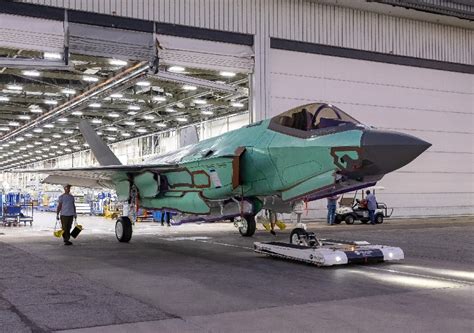
Belgium’s Direct F-35A Delivery Marks Strategic Shift
The delivery of this ninth aircraft is not just a logistical update—it is a strategic shift in operational readiness. While the earlier eight Belgian F-35As were stationed at Luke Air Force Base in Arizona to train aircrews and technicians, this latest addition is earmarked for deployment to Florennes Air Base in Belgium later in 2025. The shift reflects Belgium’s transition from the training phase of the F-35 integration to actual operational deployment.
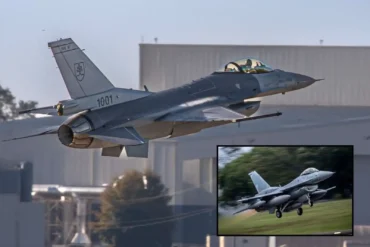
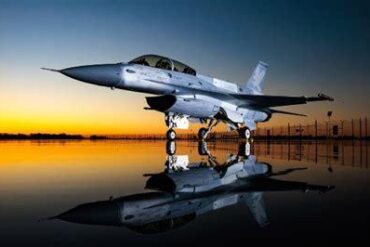
Belgium has committed to purchasing 34 F-35A aircraft via the U.S. Foreign Military Sales (FMS) program, a decision aimed at replacing the aging fleet of F-16s. The current batch stationed in Arizona is performing critical groundwork by preparing Belgian personnel—both pilots and maintenance crews—to transition smoothly to the fifth-generation fighter platform. According to Lockheed Martin, nearly 3,000 pilots and over 18,000 maintenance personnel have been trained on the F-35 globally, reinforcing the program’s maturity and breadth.
Florennes Air Base: Reawakening a Strategic Hub
Florennes Air Base, located in the southern part of Belgium near the French border, has long been a cornerstone of NATO’s air defense posture. With the imminent arrival of its first operational F-35A, Florennes is poised to become a central hub for Belgium’s tactical air power. This base will be responsible for both housing and sustaining the aircraft, initiating a new era of national air sovereignty and rapid-response capability.
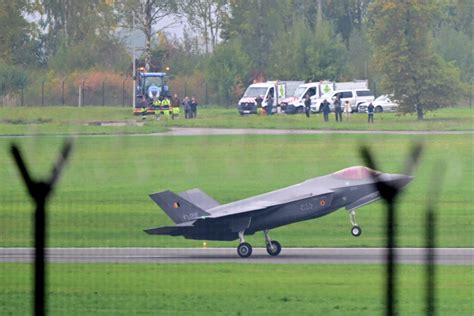
The deployment is more than symbolic—it has tactical and geopolitical significance. By hosting its own F-35A fleet, Belgium strengthens its role in collective European defense, especially given the aircraft’s interoperability across NATO forces. The F-35’s ability to network seamlessly with other NATO systems gives Belgium a considerable advantage in multinational operations.
Advanced Capabilities of the F-35A for Belgium’s Defense
The F-35A Lightning II offers Belgium a transformational leap in multirole combat capability. Unlike fourth-generation fighters, the F-35 is stealthy, sensor-rich, and fully networked, able to penetrate contested airspace, perform deep-strike missions, and offer battlefield situational awareness in ways traditional platforms cannot.
Key features of the F-35A include:
- Low observable stealth design for survivability in contested environments
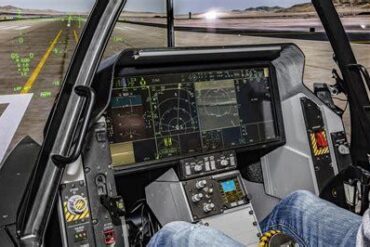
- Advanced radar (AN/APG-81 AESA) for targeting and electronic warfare
- Electro-optical Distributed Aperture System (DAS) for 360-degree situational awareness
- Integrated logistics support through the ODIN (Operational Data Integrated Network)
- Weapons versatility, capable of carrying both conventional and precision-guided munitions
For Belgium, these capabilities translate into enhanced deterrence, rapid threat engagement, and interoperability with NATO allies.
Lockheed Martin’s Expanding Global F-35 Footprint
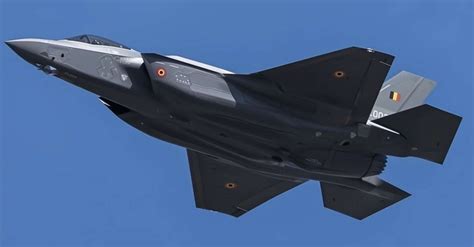
Lockheed Martin has delivered over 1,185 F-35 aircraft globally as of 2025, utilizing three final assembly lines: Fort Worth (USA), Cameri (Italy), and Nagoya (Japan). Belgium’s F-35s are initially being produced in Fort Worth, but the possibility of assembling future aircraft in Cameri, Italy, has been discussed by the Belgian government, reflecting a potential shift toward greater European defense industrial cooperation.
This growing international footprint supports Lockheed Martin’s strategy to localize production, reduce logistical burdens, and integrate regional defense supply chains. Italy’s Cameri line, already producing F-35s for several European customers, stands as a likely candidate for future Belgian aircraft—especially if Belgium proceeds with an expansion of its F-35A fleet beyond the current 34 units.
Global Training and Flight Hours Underpin Platform Maturity
The F-35 program is no longer experimental—it is a matured, combat-proven system. To date, the F-35 fleet has accumulated over one million flight hours, and its presence is expanding across 17 nations. These hours include training, surveillance, deterrence patrols, and operational deployments, including combat.
Belgian pilots and technicians are already benefiting from this vast operational pool. Training at Luke AFB has given them access to joint instruction with U.S. and allied personnel, providing familiarity with both the aircraft and its tactical integration within combined air operations centers (CAOCs). This will be essential as Belgium begins to fly and maintain its own F-35A units domestically.
The Strategic Logic Behind Belgium’s Procurement
Belgium’s decision to invest in the F-35A stems from a comprehensive assessment of future air defense needs. The aircraft’s fifth-generation capabilities—stealth, data fusion, advanced sensors—make it a platform that can remain operationally relevant for decades amid shifting threats.
With increased emphasis on hybrid warfare, long-range precision strikes, and contested airspaces, Belgium needed a platform that could operate under both peacetime and high-intensity conditions. The F-35A’s role in nuclear deterrence missions, its potential to carry the B61-12 guided nuclear bomb, and its ability to function as a data node in broader command and control (C2) structures, make it uniquely suited for Belgium’s dual defense commitments to NATO and the EU.
Looking Forward: Additional Orders on the Horizon?
As Belgium continues to integrate the F-35A into its air force, discussions have emerged within the Belgian Ministry of Defence regarding the procurement of additional units. Though nothing is finalized, the debate centers on whether 34 aircraft will be sufficient given emerging threats in Europe and the need to maintain continuous readiness during maintenance cycles.
Should Belgium move forward with more orders, these aircraft may be assembled at Leonardo’s FACO (Final Assembly and Check-Out) facility in Cameri, Italy, where production capacity and NATO-standard quality control are already established. This would further embed Belgium within a pan-European defense manufacturing framework, boosting industrial synergies and potentially reducing long-term operating costs.
Conclusion: A New Era for Belgian Air Power
The final assembly and upcoming delivery of Belgium’s ninth F-35A fighter mark a definitive turning point in the nation’s defense strategy. With its direct delivery and operational deployment at Florennes Air Base, Belgium moves from a phase of training and preparation into real-world integration of fifth-generation capabilities.
Backed by a global support ecosystem, proven flight performance, and deep NATO interoperability, the F-35A promises to reshape Belgium’s air combat doctrines for years to come. Whether this initial fleet will grow remains to be seen, but what is clear is that Belgium is now firmly among the ranks of modern air forces ready to meet the challenges of 21st-century aerial warfare.