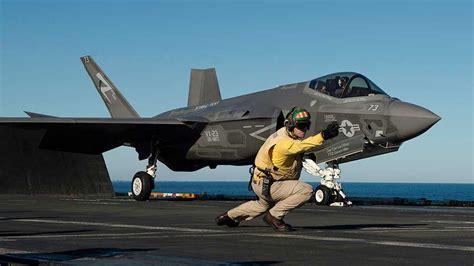
Lockheed Martin, the United States’ largest defense contractor, faced a sharp drop in its share value on June 11, 2025, after news broke that the Pentagon had halved its F-35 fighter jet procurement request to Congress. The anticipated purchase, which was forecast at 48 F-35s for the upcoming fiscal year, is now reportedly being cut to just 24. This dramatic shift in military acquisition strategy sent shockwaves through financial markets and the aerospace industry.
Pentagon’s Procurement Shift Sends Clear Signal
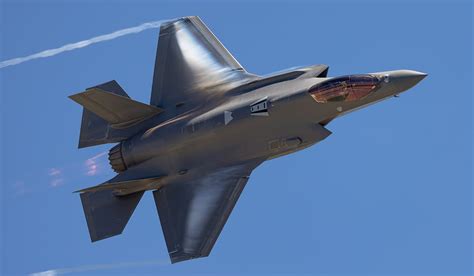
According to reports first published by Reuters, the U.S. Department of Defense is now requesting $3.5 billion from Congress for the procurement of the F-35 Lightning II stealth fighters, along with an additional $531 million for advanced materials related to the aircraft. These figures reflect a stark decrease from earlier forecasts and indicate a more cautious, perhaps budget-conscious, stance by defense planners.
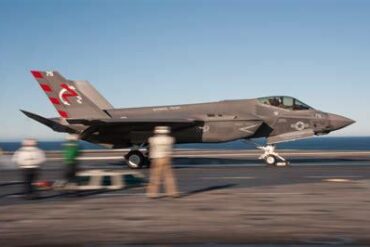
The cutbacks are not limited to the Air Force. The Navy’s request for the carrier-based F-35C variant has dropped to 12 jets, down from the 17 previously approved by Congress. The U.S. Marine Corps will also see a reduction of two units in its F-35 acquisition. These reductions suggest a coordinated and multi-branch adjustment rather than a single-service decision.
Lockheed Martin, in response to the reports, issued a carefully worded statement:
“The F-35 is the cornerstone of the battlespace for the U.S. military…We will continue to work closely with the Administration, Congress, and our customers to deliver this game-changing capability as the budget process continues in the months ahead.”
This response underlines the company’s recognition of the fighter jet’s strategic role, while also conceding to the reality of a challenging fiscal environment.
F-35 Program: A Cornerstone Under Pressure
The F-35 Lightning II is more than just a product line for Lockheed Martin—it is a central pillar of its business. The program accounts for approximately 30% of the company’s total annual revenue. Any fluctuation in its procurement or funding directly affects investor sentiment and long-term profitability.
The F-35’s development has been riddled with technical challenges, software upgrades, and budget overruns since its inception. Despite delivering 110 jets in 2024, delays and performance concerns have often cast shadows over its reputation. Lockheed Martin has said it expects a finalized contract for the next production phase in the coming months, but this latest development may complicate those negotiations.
Market Reaction: A Sharp Selloff
The stock market reacted swiftly and decisively. On Wednesday, Lockheed Martin’s share price fell 4.26%, marking one of the most severe single-day losses for any major defense contractor this year. This occurred on a day when the S&P 500 experienced only marginal losses and the Dow Jones Industrial Average remained flat, highlighting the specificity and severity of investor concern over this development.
The selloff was more than just a knee-jerk reaction—it reflected deeper apprehensions about the long-term health of the F-35 program and the growing unpredictability of U.S. defense budgets. Since the U.S. presidential election on November 5, Lockheed Martin’s stock has declined by approximately 13%, even as the broader market, as measured by the S&P 500, has gained around 4%.
Industry-Wide Ripples and Interconnected Losses
The aerospace and defense sector, being highly interlinked, saw other companies impacted as well. General Dynamics and Northrop Grumman, which are also involved in various components of the F-35 platform, registered modest declines. However, RTX Corporation (formerly Raytheon Technologies), the parent company of Pratt & Whitney, which manufactures the F135 engine that powers the F-35, saw its stock rise by 2.38%, continuing a year-to-date gain of 22.55%.
This divergence is notable. Investors appear to be differentiating between direct program contractors like Lockheed Martin and component suppliers whose contracts may remain more stable or be diversified across other programs. Still, the defense sector at large remains cautious, as shifts in procurement policy can have cascading effects across the supply chain.

Strategic and Political Undertones Behind the Cut
Behind the Pentagon’s budgetary realignment lies a broader debate about the future of U.S. air superiority and defense contracting. The F-35 has become increasingly politicized, with critics arguing that it embodies the pitfalls of traditional defense procurement—lengthy development, cost overruns, and overreliance on legacy contractors. Alternative voices within the defense ecosystem, including proponents of non-traditional tech firms like Palantir, are gaining influence in Pentagon circles.
This shifting ideological landscape is shaping procurement strategies. Cost-effectiveness, modularity, and rapid deployment are becoming more prized than traditional measures of combat readiness. In this context, the F-35—despite its stealth, sensors, and multirole capabilities—may be perceived as too complex and expensive for the evolving vision of modern warfare.
Global Implications: Allies Take Notice
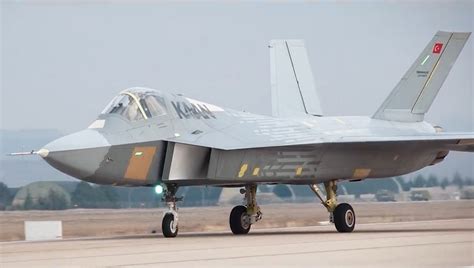
As the U.S. Defense Department tempers its enthusiasm for the F-35, allied nations may begin reassessing their own procurement timelines. The aircraft has been ordered by a wide array of NATO members and strategic partners, including the UK, Japan, Australia, and Israel. Some, like Türkiye, have already pivoted due to geopolitical tensions and program exclusions. Türkiye’s development of its own 5th generation fighter jet, the KAAN, and Indonesia’s subsequent order of 48 units, underscore a growing trend toward defense autonomy.
These geopolitical consequences are not mere speculation. As U.S. policies become increasingly unpredictable or isolationist, countries are hedging their bets, accelerating their domestic aerospace programs, and questioning the long-term reliability of American arms procurement.
A Fragile Future for the F-35 Program
While Lockheed Martin continues to champion the F-35 as “the cornerstone of the battlespace,” its long-term outlook is fraught with uncertainties. With continued delays in developmental milestones, such as the long-anticipated Technology Refresh 3 (TR-3) and Block 4 upgrades, and rising skepticism over cost-to-benefit ratios, the once-glittering crown jewel of American air dominance faces an inflection point.
The Pentagon’s revised procurement signals a potential turning point—not just for Lockheed Martin, but for how the U.S. plans and invests in air power. The current cuts may be financially motivated, but they also reflect a strategic reevaluation of the fighter jet’s utility in future conflict scenarios, where drones, hypersonic weapons, and AI-enhanced systems could render traditional manned aircraft less dominant.
Investor Outlook and Closing Thoughts
The near-term consequences for Lockheed Martin are plain to see: a declining stock, increased investor scrutiny, and mounting pressure to deliver on both performance and cost efficiency. The company’s upcoming contract finalization for the next F-35 production batch will be critical not only for its balance sheet but also for market confidence.
Yet, the larger question looms—Is the F-35 still the future of air dominance, or a costly relic of past doctrines? As defense strategy pivots toward leaner, faster, and more adaptable systems, the fate of the F-35 program could determine the trajectory of American military power for decades to come.
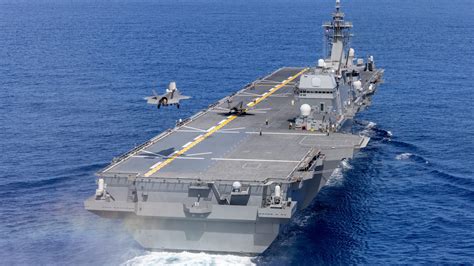
What is clear for now is that a single morning’s policy leak was enough to erase billions in market value, shake investor confidence, and spark urgent discussions in boardrooms and defense ministries around the world. And with U.S. defense budgets under increasing scrutiny, the road ahead for Lockheed Martin may be more turbulent than ever.