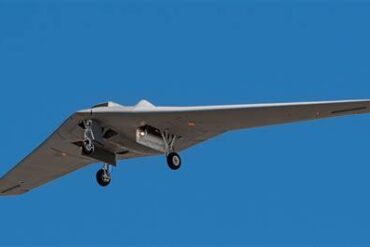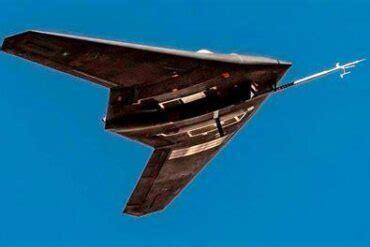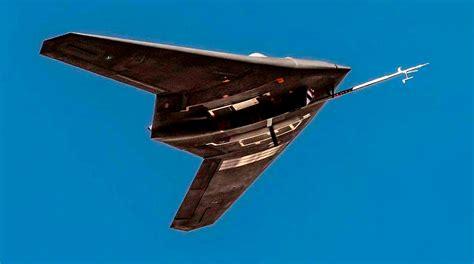
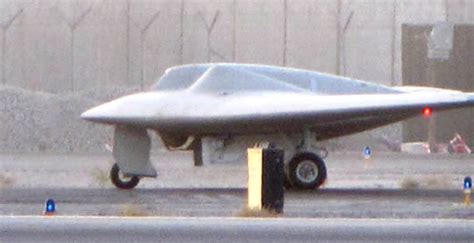
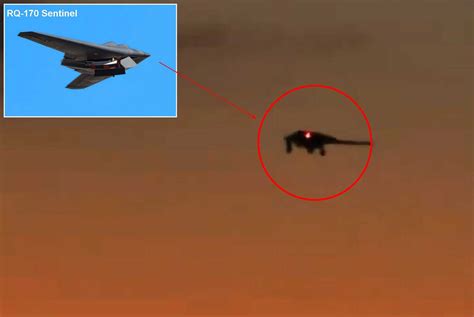
The Lockheed Martin RQ-170 Sentinel, a stealth reconnaissance unmanned aerial vehicle (UAV) known by its nickname “Wraith”, represents one of the most elusive and secretive aircraft in the modern surveillance arsenal of the United States. Developed by Lockheed Martin’s Skunk Works and operated by the U.S. Air Force (USAF) for the Central Intelligence Agency (CIA), the Sentinel was unveiled not through official fanfare but via grainy photographs from Afghanistan—leading to its eerie title, the “Beast of Kandahar.”
The aircraft first emerged publicly in 2007, with confirmed deployment to Afghanistan occurring later that same year. Its first notable international deployment was in South Korea in September 2009. However, the broader world became aware of the RQ-170’s existence and design only after a 2011 incident where one was captured by Iran, throwing a bright spotlight on an aircraft engineered for the shadows.
A Classified Birth: The Development of the RQ-170 Sentinel
Designed under the umbrella of black-budget operations, the Sentinel draws clear design lineage from earlier stealth UAV programs, particularly the RQ-3 DarkStar and P-175 Polecat. Engineers at Skunk Works pursued a tailless flying wing configuration, echoing the foundational stealth concepts used in other Lockheed platforms. Described internally as a larger and more robust successor to the DarkStar, the RQ-170’s shape minimizes radar cross-section while housing advanced surveillance technology.
The aircraft has a wingspan of approximately 65 feet 7 inches, with a length of 14 feet 9 inches, placing it among the larger tactical UAVs. Though exact production figures remain speculative, estimates suggest between 20 to 30 units were built, serving primarily under the 30th and 44th Reconnaissance Squadrons.
Unlike the more heavily armed MQ-series drones, the “RQ” designation underscores its exclusive role as a reconnaissance platform. It was never meant to replace the Predator or Reaper; instead, it operates as a specialized sensor platform with highly restricted visibility in both physical and digital domains.
Stealth in Form: Design and Technological Features
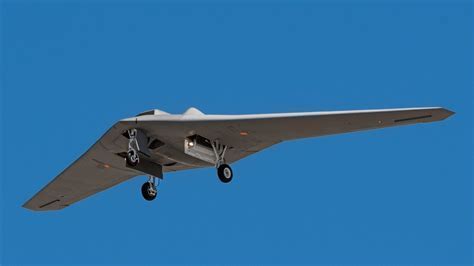
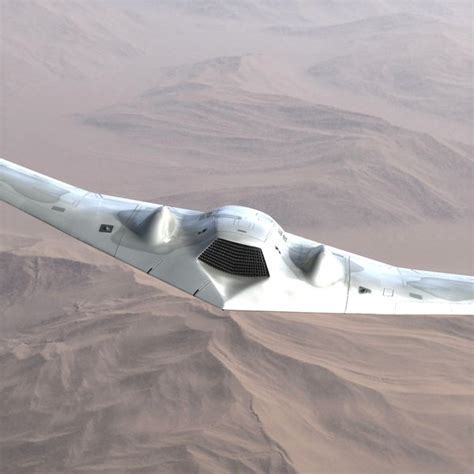
The RQ-170’s flying wing configuration is emblematic of stealth optimization, with every surface contributing to the minimization of radar visibility. The upper surface includes discrete sensor pods, likely housing electro-optical/infrared (EO/IR) equipment, and potentially an Active Electronically Scanned Array (AESA) radar. Key datalink systems are believed to reside in undercarriage fairings, with a belly-mounted fairing offering modular payload capabilities.
Its estimated takeoff weight exceeds 8,500 lbs, and the aircraft is believed to cruise at altitudes below 50,000 feet, as implied by its medium-gray paint scheme—a choice that balances camouflage at high altitudes without inviting suspicion of true low-visibility operations. The engine remains classified, though analysts suggest a Garrett TFE731 or General Electric TF34 turbofan provides propulsion.
To preserve the integrity of the technology, certain stealth features like zigzag landing gear doors and fully shielded exhaust systems are omitted, reducing the chance of compromising sensitive design elements if an aircraft is downed.
Eyes Where No Man Should Go: Operational History
The RQ-170’s operational history reveals its critical role in high-stakes reconnaissance, often flying where manned aircraft or traditional drones would be too vulnerable. The 30th Reconnaissance Squadron was activated in 2005 at Tonopah Test Range, the same area synonymous with stealth development since the F-117 Nighthawk. By late 2007, RQ-170s were operational in Afghanistan, where their presence near Kandahar Airfield sparked early speculation.
Deployed to Kunsan Air Base, South Korea in September 2009, the RQ-170 likely surveilled North Korean military developments and regional air defense networks. Its crowning operational moment, however, was its support of Operation Neptune Spear, the raid that killed Osama bin Laden on 2 May 2011. During this mission, the Sentinel provided real-time full-motion video, communications intercepts, and critical surveillance data—integral to mission planning and execution.
In October 2012, it performed bomb damage assessment after a Massive Ordnance Penetrator (MOP) strike, showcasing its role in post-strike intelligence validation. Additional deployments, including a Large Force Test Event at Nellis AFB in August 2020, emphasized its integration into multi-platform operations involving both stealth and conventional assets.
The Iranian Incident: Capture and Consequence
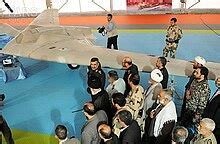
One of the most dramatic episodes in the Sentinel’s history came on 4 December 2011, when Iranian electronic warfare (EW) forces intercepted and commandeered an RQ-170. Displayed publicly on 8 December, the captured drone stunned defense observers with its nearly intact frame, challenging assumptions about self-destruct and data protection mechanisms.
The U.S. government confirmed the aircraft was conducting a CIA mission and formally requested its return. Iran, however, exploited the incident for propaganda and technical study. By April 2012, the Islamic Revolutionary Guard Corps (IRGC) claimed it had successfully reverse-engineered the drone and extracted sensitive intelligence.
In September 2016, Iran unveiled the Saegheh-2, a combat derivative reportedly capable of carrying four precision-guided bombs. The Shahed 171 Simorgh, another RQ-170-inspired platform, followed as a long-range ISR drone. In February 2018, a Saegheh-style drone was shot down over Israeli airspace, with the Israel Defense Forces confirming its RQ-170 lineage.
Strategic Role in U.S. Airpower Doctrine
The RQ-170 Sentinel serves as a critical node in America’s intelligence-surveillance-reconnaissance (ISR) architecture. With its high-altitude, long-endurance stealth profile, it fills an operational gap between satellite reconnaissance and traditional UAVs, offering persistence without the vulnerability of manned overflights or the limited capability of lower-tier drones.
Its mission portfolio includes:
- Pre-raid target acquisition and surveillance
- Post-strike bomb damage assessment (BDA)
- Electronic signal and communication interception
- Sensor fusion operations in joint force exercises
The aircraft operates in radio silence modes, likely utilizing satellite datalinks to relay encrypted feeds, and can be dynamically re-tasked mid-mission—a capability essential for evolving battlefields.
Current Status and Operators
Today, the RQ-170 Sentinel remains in limited but strategic service with two primary USAF squadrons:
- 30th Reconnaissance Squadron, Creech AFB, Nevada
- 44th Reconnaissance Squadron, Creech AFB, Nevada
Although the Air Force has never confirmed full operational details, 2021 disclosures noted the successful deployment and redeployment of RQ-170 forces—affirming that it continues to conduct critical ISR missions in undisclosed global theaters.
Technical Specifications of the RQ-170 Sentinel
| Parameter | Specification |
|---|---|
| Crew | 3 (ground-based) |
| Length | 14 ft 9 in (4.5 m) |
| Wingspan | 38 ft 7 in (11.58 m) |
| Height | 6 ft (1.8 m) |
| Powerplant | 1× TFE731 or GE TF34 turbofan |
| Endurance | 5–6 hours |
| Service Ceiling | 50,000 ft |
Conclusion: Wraith in the Winds
The Lockheed Martin RQ-170 Sentinel embodies the fusion of covert engineering and strategic reconnaissance capability. From Operation Neptune Spear to the skies over Iran, Korea, and beyond, it has proven itself as a critical asset for the United States’ most sensitive intelligence missions. Despite its limited numbers, the Sentinel operates with an outsized influence, hovering at the silent edge of international airspace, unseen but ever-present.
Its legacy will not be measured by battles won, but by secrets uncovered and missions enabled, many of which may never see the light of day. As air warfare evolves toward greater autonomy and stealth, the RQ-170 remains a harbinger of aerial espionage in the 21st century.