An extraordinary revelation has emerged in the wake of high-stakes operations in South America. The U.S. Air Force RQ-170 Sentinel, one of the most elusive assets in America’s intelligence arsenal, was reportedly sighted in Puerto Rico on January 4, 2026—just hours after precision strikes and a covert mission allegedly led to the capture of Venezuelan President Nicolás Maduro. Though the Pentagon remains silent, the implications are profound.
RQ-170 Sentinel: America’s Ghost in the Sky
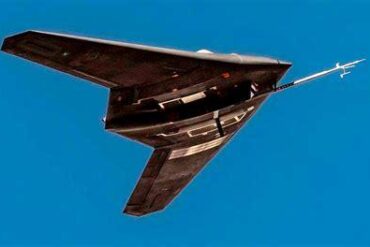
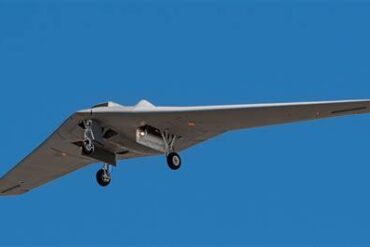
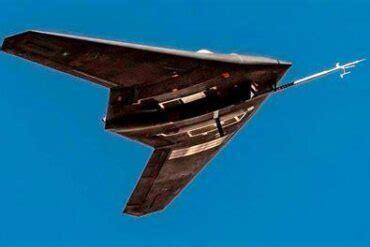
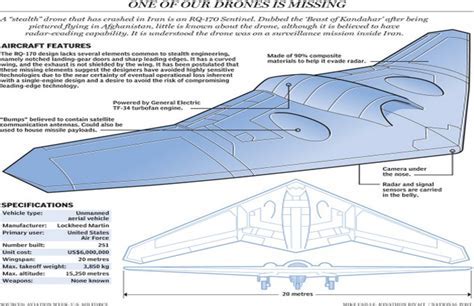
The RQ-170 Sentinel, often dubbed the “Beast of Kandahar,” is a stealth, jet-powered unmanned aircraft built for high-altitude, deep-penetration ISR (Intelligence, Surveillance, and Reconnaissance) missions. With a wingspan estimated at 20 meters and a smooth, flying-wing profile reminiscent of the B-2 bomber, it vanishes from both radar and visual detection—designed to thrive in denied airspace.
This aircraft does not just observe. It listens, maps, and feeds real-time data to warfighters and commanders. Its electronic silence is its power. Operating under EMCON (emission control), the drone uses passive sensors, likely including ELINT, SIGINT, EO/IR optics, and synthetic aperture radar (SAR) to detect and process enemy activity without ever revealing its presence.
Puerto Rico Landing and Operation Timing
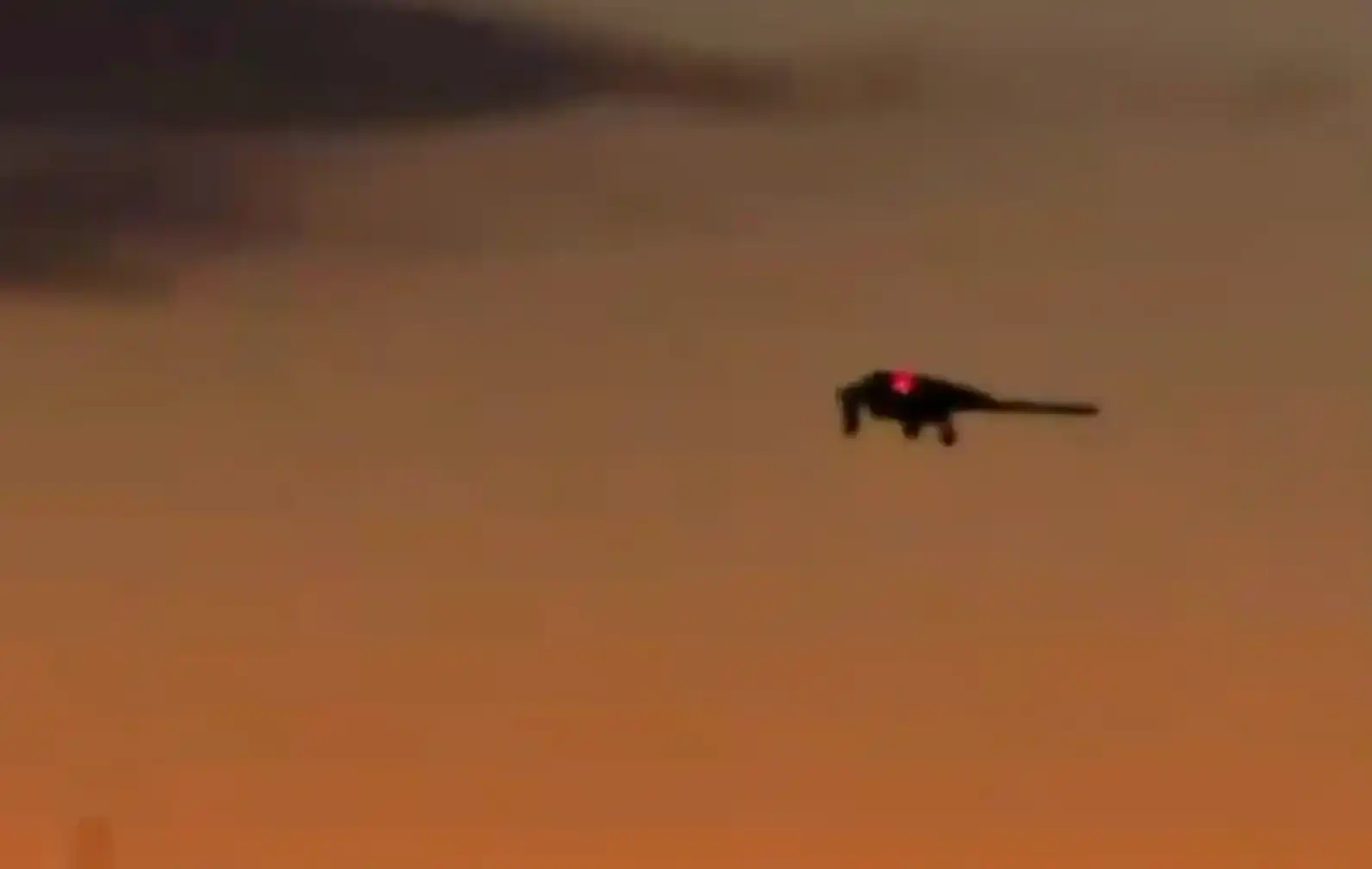
Open-source video footage published on January 3 showed a low-observable aircraft landing at a U.S. military facility in Puerto Rico. Analysts quickly identified the distinct airframe as that of the RQ-170 Sentinel. Its arrival came shortly after U.S. special operations and airstrikes unfolded in Venezuela, fueling credible speculation that the drone was deployed for pre-raid ISR.
While official confirmation remains absent, defense observers cite the aircraft’s timing and profile as “highly suggestive” of its operational role. The absence of acoustic signature, flight behavior, and design features left little doubt among experts monitoring drone activity worldwide.
Venezuelan Airspace: A Denied Environment
Maduro’s regime maintains a layered air defense network, including S-125 Pechora (SA-3 Goa) systems and locally upgraded Pechora-2M launchers. These systems are optimized for mid-altitude threats and suffer from significant radar resolution gaps at extreme altitudes.
Operating at altitudes above 15,000 meters, the RQ-170 easily skirted detection. Its stealth materials, edge-aligned panels, and shielded intakes suppress radar and IR returns, making it virtually invisible to Venezuelan sensors. For hours, it likely loitered above hostile territory, mapping SAM sites, electronic emitters, troop positions, and strategic nodes with surgical precision.
Direct Support to Kinetic Operations
The real-time intelligence gathered by the RQ-170 fed directly into the joint U.S. command structure. Analysts believe the drone provided:
- Pre-strike mapping of critical targets.
- Target validation for cruise missile platforms.
- Real-time overwatch for Special Operations Forces (SOF) during the insertion and exfiltration phases.
Its EO/IR sensors likely streamed full-motion video back to mission controllers via encrypted SATCOM uplinks, enabling on-the-ground operators to navigate complex urban terrain in Caracas with enhanced situational awareness.
The Capture of Nicolás Maduro
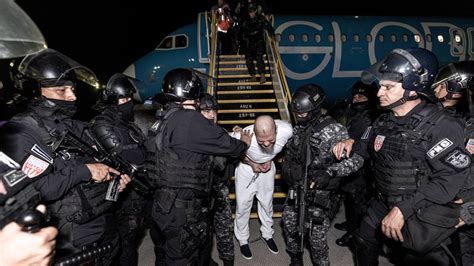
January 3, 2026, marked a dramatic turning point. Covert operations executed by U.S. Special Forces, likely including Delta Force, concluded with the capture of President Nicolás Maduro—a bold maneuver that shocked the geopolitical world. Though official briefings are scant, all signs point to the RQ-170 as a tactical enabler rather than a passive observer.
Its sensors would have monitored Venezuelan QRF (Quick Reaction Forces), sniffed out SIGINT intercepts indicating enemy response plans, and provided laser focus on exfiltration corridors. In a city dense with buildings and electronic interference, this level of aerial command is nothing short of game-changing.
Doctrinal Shift: From Strategic Spy to Tactical Vanguard
Historically, the RQ-170 was seen as a strategic ISR tool, deployed over Iran, Pakistan, and North Korea. Its involvement in the Venezuela operation underscores a significant doctrinal shift. No longer is it merely collecting data for strategic policymakers—it is now directly enabling real-time battlefield operations.
This aligns with broader Pentagon moves to integrate high-end ISR into multi-domain operations (MDO), where data superiority directly influences mission outcomes. In this case, the drone:
- Mapped battlespace in near-real-time.
- Provided electronic situational dominance.
- Acted as a quiet bridge between frontline operators and command echelons.
Communications Hub and Battlefield Mesh
One of the Sentinel’s most potent capabilities is its role as a data relay node. Interfacing with aircraft such as the E-11 BACN (Battlefield Airborne Communications Node), it can extend line-of-sight communications and ensure robust networking even in contested EM environments.
This becomes vital in denied GPS conditions or when traditional SATCOM is jammed. With the RQ-170 in the sky, airborne C2 (command and control) links remain unbroken, providing tactical commanders with a bird’s-eye view and real-time decision-making tools.
An Aircraft Cloaked in Secrecy
Since its existence was thrust into public view in 2011—after one was downed in Iran—the RQ-170 has remained shrouded in secrecy. Budget references are hidden in black projects, official photos are virtually non-existent, and technical specifications are classified.
Yet, its strategic utility continues to grow. The Venezuelan mission may mark the drone’s most overt role in real-world military success, suggesting a more permanent shift in U.S. Air Force doctrine to embrace stealth ISR assets as frontline tools rather than behind-the-scenes players.
Implications for Future Conflict
In a world where near-peer adversaries field advanced integrated air defense systems, and where electronic warfare is increasingly weaponized, the RQ-170 stands as a harbinger of modern combat. It offers the U.S. an unparalleled toolset:
- Stealth for survivability.
- Passive sensors for deniability.
- High altitude for persistence.
- Secure dataflow for joint integration.
In many ways, the RQ-170 reflects the evolution of warfare itself—silent, networked, unblinking, and ever present. Where once nations relied on brute force, today’s operations hinge on precision, information, and the invisible hand above the clouds.
As Venezuela processes the shock of Maduro’s removal and the world digests the scale of the mission, the presence of this stealth sentinel reaffirms one sobering truth: before the boots land, the shadows fly.