On January 2, 2026, a significant step in Israel’s evolving drone defense doctrine emerged as ParaZero Technologies confirmed receipt of its first official order from a major Israeli defense entity for its DefendAir system. This strategic move underscores Israel’s urgent need for non-electronic countermeasures capable of neutralizing short-range hostile drones during the critical final moments of attack—where conventional jamming or missile interception may falter.
DefendAir: A Net-Based Solution for the Modern Battlefield
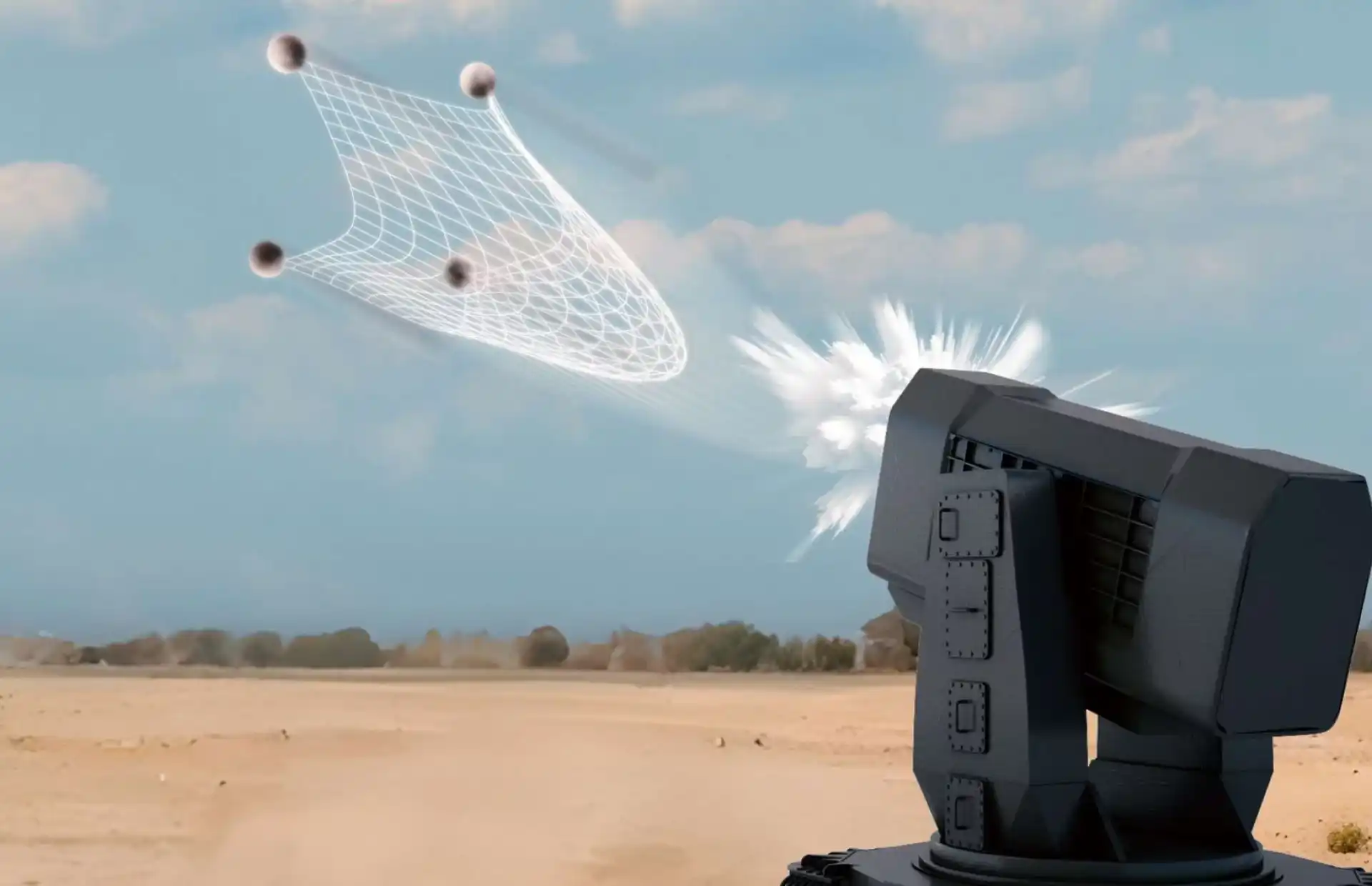
Unlike traditional kinetic or electronic warfare systems, DefendAir uses a patented net-launching mechanism to physically entrap enemy drones mid-flight. The net, deployed from either a handheld launcher, a fixed turret, or an autonomous interceptor drone, is designed to disrupt rotor function and neutralize control surfaces, rendering the drone inoperable without the use of explosives.
This method not only reduces collateral damage but positions the system in a new and increasingly vital category of “capture and disable” solutions—a hybrid approach combining physical engagement with a non-lethal footprint.

Adaptable Engagement Envelopes: From Squad-Level to Perimeter Defense
DefendAir’s strength lies in its modularity and scalable range configurations:
- Interceptor Drone: Up to 2 kilometers in range, allowing interception well before threats reach critical infrastructure.
- Fixed Turret: Effective up to 100 meters, optimized for perimeter defense at high-value sites.
- Handheld Net Gun: Functional up to 35 meters, ideal for squad-level protection during mobile operations or last-line defense scenarios.
Each configuration uses size-specific nets, ensuring precision and reliability based on the engagement context. The turret and drone variants are also capable of autonomous engagement, integrating with radar and optical tracking systems for smart threat acquisition. Meanwhile, the handheld launcher benefits from a manual sighting system, potentially supported by smart optics for leading fast-moving targets.
The RF-Denied Edge: Combatting Jamming-Resistant Drones
What makes DefendAir particularly relevant is its independence from RF (radio frequency) interference. The system is explicitly marketed for use in RF-denied environments, addressing an increasingly common challenge: fiber-optic guided drones and jamming-resistant FPV (first-person view) attack drones. These drones—often seen in high-intensity zones like Ukraine—are immune to traditional electronic countermeasures and can operate undeterred deep into defensive perimeters.
In such environments, the DefendAir system provides a guaranteed physical response that is not dependent on electronic superiority. It enables defenders to engage silent, fast, and manually piloted UAVs that would otherwise evade detection or action until it’s too late.
Strategic Use Cases in Israeli Defense Doctrine
The Israeli military doctrine, with its emphasis on layered defense and rapid adaptation, finds a strategic fit in DefendAir’s capabilities. Analysts suggest its most immediate applications include:
- Border outposts under persistent drone reconnaissance or grenade-drop threats.
- Ammunition storage sites and field command posts vulnerable to low-altitude attacks.
- Urban infrastructure protection, especially where kinetic responses could harm civilians.
- Mobile units requiring compact, deployable last-line defenses.
The ability to capture enemy drones intact adds another dimension. Beyond neutralizing threats, this enables forensic exploitation—retrieving payloads, guidance modules, and telemetry components. This capability directly supports Israel’s well-documented emphasis on intelligence-led counterinsurgency, providing insights into adversary supply chains, targeting logic, and operational adaptations.
100% Interception Rate in Trials: Performance Meets Urgency
ParaZero reports a 100% success rate in field trials involving the DefendAir system. While such figures are usually approached with cautious optimism, multiple live demonstrations to senior NATO officers in Europe have added credibility, particularly as they showcased engagements under realistic base-defense conditions.
The trials emphasized:
- Rapid deployment under field conditions.
- High accuracy against fast, low-flying FPV drones.
- The system’s low collateral footprint, especially important for use in densely populated or friendly force-dense environments.
This performance, combined with the multi-system package ordered—including integration, training, and deployment support—signals that Israeli forces aim to move swiftly from procurement to operational deployment.
Targeting the Most Prevalent Drone Threats
DefendAir is designed to neutralize the most common and disruptive drone classes encountered in both military and paramilitary contexts:
- Commercial quadcopters and multi-rotors repurposed for ISR (intelligence, surveillance, reconnaissance).
- FPV attack drones used for kamikaze strikes or grenade drops.
- Short-range loitering drones targeting stationary or slow-moving assets.
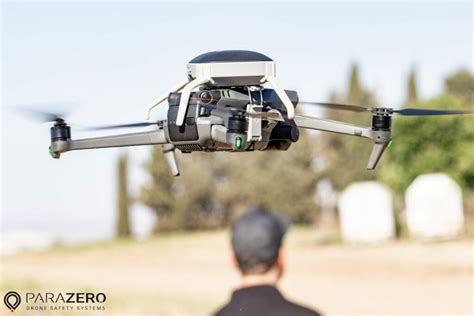
Its ability to intercept even heavy-lift drones like the DJI FlyCart—demonstrated in live trials—suggests potential utility in defending against larger payload platforms, which may be used to deliver IEDs or smuggle contraband across sensitive borders.
Plugging the Tactical Gap: Why Missiles Aren’t Enough
Israel’s Iron Dome, David’s Sling, and Arrow systems dominate headlines for their roles in defending against rocket and missile threats. However, these systems are overkill against low, slow, and small UAVs, especially in urban or close-quarters scenarios. Traditional interceptors face several issues:
- High cost per shot compared to the drone threat.
- Overreliance on radar-based detection, which is limited in cluttered environments.
- Collateral damage risks when using explosive projectiles near civilian areas.
This is where DefendAir’s philosophy becomes critical: a low-cost-per-shot, rapid-deploy, non-lethal interceptor capable of functioning independently or in tandem with existing surveillance and command layers.
Potential Integration with National Defense Architecture
If the unnamed Israeli defense agency opts for full integration of turret-based and drone-based DefendAir variants into the broader sensor ecosystem, the implications could be profound. Linking DefendAir units to:
- Electro-optical towers,
- Tactical radars, and
- Command and control (C2) nodes
…would create an autonomous last-mile shield, closing the vulnerability gap between detection and action.
This would significantly enhance base protection protocols, urban security deployments, and event-based defensive operations such as political summits or critical infrastructure site visits.
A Template for Future Urban Warfare
Urban warfare in the 21st century is increasingly being shaped not just by infantry and armor, but by low-cost aerial threats with high disruption potential. From Gaza to Donbas to the streets of Aleppo, FPV drones are rewriting the rules of close-range lethality.
In this emerging environment, DefendAir isn’t just a new gadget—it represents a paradigm shift. It reflects a recognition that physical interception at non-strategic levels is not a luxury but a battlefield imperative.
It also reinforces the direction modern militaries are heading:
- Hybrid defense layers that blend electronic and kinetic tools.
- Soft-kill capabilities that avoid escalation or civilian harm.
- Adaptive systems ready for plug-and-play deployment under evolving threat patterns.
Conclusion: From Tactical Innovation to Strategic Necessity
The Israeli order of ParaZero’s DefendAir is more than a procurement—it is a clear statement of strategic intent. In a world where drone warfare is democratized, where adversaries adapt faster than ever, and where the urban battlespace is cluttered, contested, and complex, tools like DefendAir are no longer secondary. They are frontline systems, designed not just to defend but to preserve operational tempo, intelligence superiority, and civilian protection.
Israel’s decision may well set the tone for NATO allies and other modern militaries facing the same threat evolution: the drone war is here, and net-based defense just became essential.