The U.S. Army‘s effort to close the battlefield technology gap has taken a new turn, as it commits to the Low Altitude Stalking and Strike Ordnance (LASSO) program—a $170,000-per-unit attack drone solution that competes directly against the flood of $500 First-Person View (FPV) drones dominating the Ukraine conflict. The disparity in cost has triggered intense debate about military spending priorities, battlefield effectiveness, and procurement philosophy in modern warfare.
LASSO: The Army’s Answer to a New Kind of Warfare
When the U.S. Army unveiled its LASSO initiative in July 2023, it was clear the design was heavily influenced by Ukraine’s revolutionary use of FPV drones to neutralize Russian tanks and armored vehicles. These small, maneuverable quadcopters, often assembled with off-the-shelf components, changed the combat landscape almost overnight. The Army, recognizing the urgency, designated LASSO as an “urgent capability acquisition” to equip Infantry Brigade Combat Teams (IBCTs) with immediate, lethal, and portable drone strike capacity.
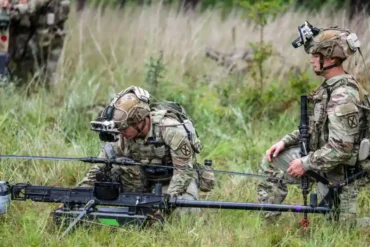
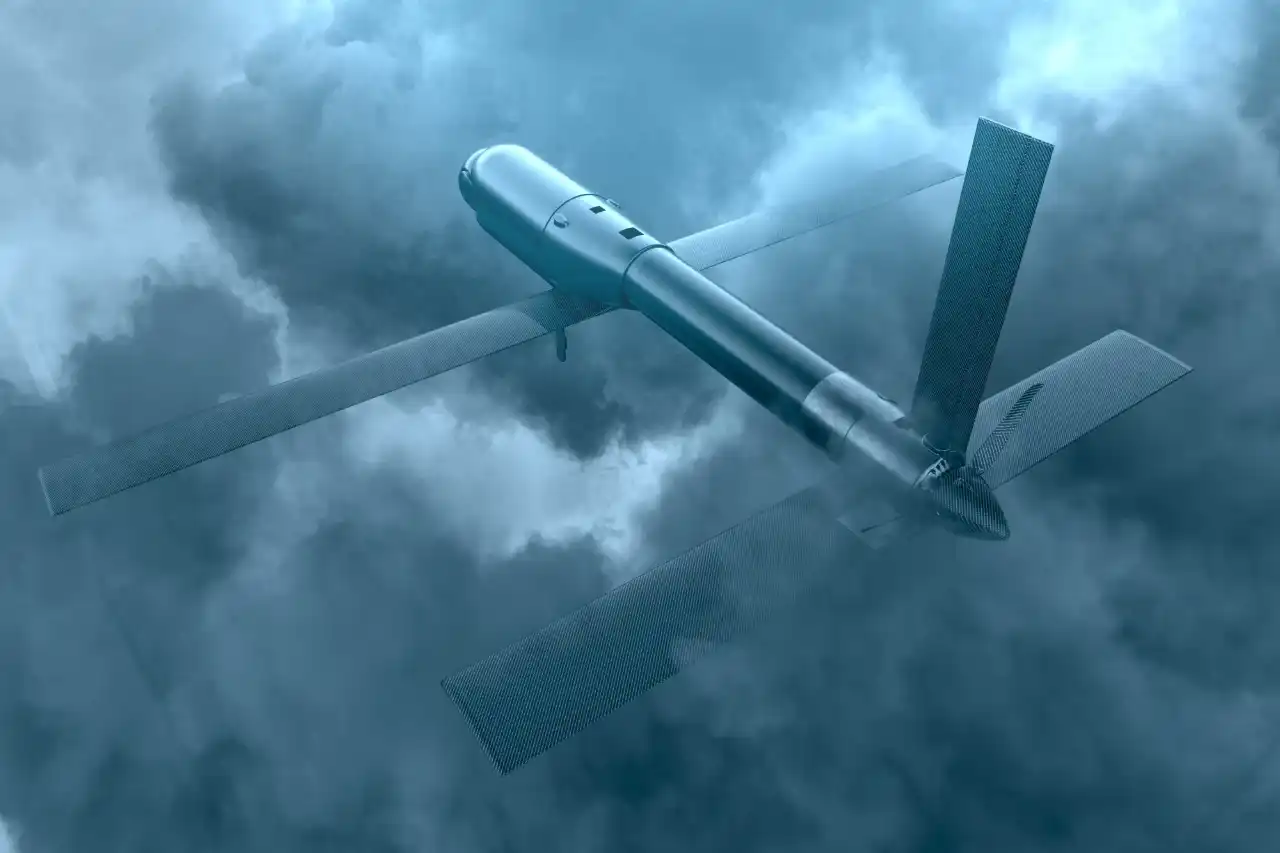
LASSO is a tube-launched, man-portable unmanned aerial system (UAS), featuring a modular design comprised of a launch tube, a fire control station, and the Switchblade 600 drone itself. This drone is engineered for precision targeting, boasting an electro-optical/infrared sensor, non-line-of-sight engagement, and a lethal payload specifically designed to destroy armored vehicles, even in complex terrain and extreme conditions.
Why the Switchblade 600?
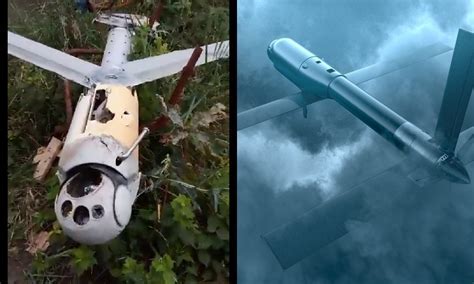
The LASSO program chose AeroVironment’s Switchblade 600, a battle-proven successor to the Switchblade 300, widely used in Iraq and Afghanistan. The 600 variant is larger, with a heavier warhead, and a reported 20-kilometer operational range, placing it on par with, or exceeding, the effective engagement distance of many FPVs.
The Army’s FY2026 procurement documents reveal that 294 Switchblade 600 units are being purchased, each priced at $170,000. That doesn’t include the cost of 54 ground control stations, each coming in at $69,204—a far cry from the commercial FPV drone setups, which typically use hobby-grade controllers and goggles costing a few hundred dollars.
Critically, the infrared thermal imaging capability of the Switchblade 600 provides a significant tactical edge in low-light or obscured conditions, where most low-cost FPVs fail. However, the cost of incorporating such technology also underlines the stark contrast in pricing models.
The Rise of $500 FPVs on the Ukrainian Frontlines
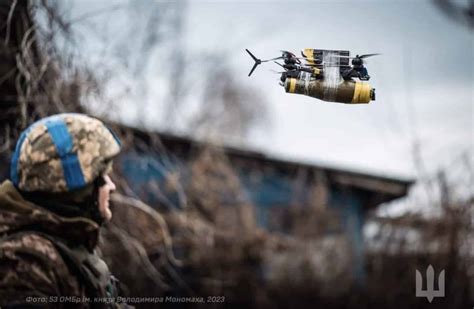
In Ukraine, the battlefield success of low-cost FPVs is not just a tactical innovation—it’s a wartime necessity. Drone fundraiser Serhii Sternenko, a key figure in Ukraine’s drone supply chain, has facilitated the deployment of over 200,000 FPV drones, with unit costs ranging from $300 to $460 depending on size and payload capacity. Russian drone manufacturers like Frobotics are also producing FPVs at competitive prices, including heavy-lift variants capable of carrying 20-pound warheads for under $800.
Ukraine’s drone production capability is nothing short of staggering. Recent figures indicate a manufacturing rate of 200,000 drones per month, or roughly 6,000 per day. These FPVs have proven so effective that 60–70% of Russian battlefield casualties are now attributed to small drones, according to the Royal United Services Institute (RUSI).
Cost vs. Capability: Is the $170,000 Switchblade Justified?
Critics of the Switchblade’s price tag are quick to point out the vast discrepancy in scale and cost. Yet, in context, $170,000 per drone is not unprecedented. The Javelin anti-tank missile, by comparison, costs $221,000 per round, with an additional $208,000 for its reusable launch unit. Meanwhile, the Army’s upcoming Long-Range Hypersonic Weapon (LRHW) will cost upwards of $36 million per missile.
The Army’s justification for the high cost centers on the need for precision, low collateral damage, and operational reliability under diverse battlefield conditions. The LASSO drone isn’t meant to saturate the battlefield like Ukraine’s FPVs; instead, it’s a high-end strike platform for eliminating hardened, high-value targets with minimal exposure risk for troops.
Still, budget constraints and the slow pace of acquisition limit the number of LASSO drones that can be deployed. This raises real concerns about training opportunities for operators and the practicality of relying on such a limited arsenal.
FPVs Enter the U.S. Arsenal Under a New Banner
While LASSO represents the top-shelf solution, the Army isn’t ignoring the FPV trend entirely. The FY2026 Aircraft budget includes funding for the Purpose Built Attritable System (PBAS)—a program explicitly designed to deliver low-cost, expendable drones carrying lethal and non-lethal payloads.
Each PBAS system includes:
- FPV goggles and controller
- One leader display
- Two 10-inch attack drones
- Four 5-inch attack drones
The entire system is priced at $34,826, suggesting per-drone costs around $5,000. This is significantly higher than the Ukrainian equivalents, but justified by the Army’s stringent domestic manufacturing standards, security vetting, and compliance requirements.
Key suppliers like Neros, a U.S. drone manufacturer that has already provided thousands of FPVs to Ukraine, are heavily involved. CEO Soren Monroe-Anderson has stated Neros aims to ramp up to 10,000 drones per month by January 2026, with a long-term goal of building 1 million drones annually to supply the U.S. Defense Department.
Bureaucracy vs. Battlefield: The Real War Within
The sharp contrast between LASSO and FPV/PBAS procurement strategies reveals a deep philosophical rift in U.S. defense planning. One side favors high-tech, battle-hardened solutions tailored for elite performance in specialized scenarios. The other side pushes for mass, adaptability, and low cost, arguing that the future of warfare demands overwhelming drone numbers to mirror the successes seen in Ukraine.
In Ukraine and Russia, soldiers were often forced to buy FPVs with personal funds in the early days of the war, emphasizing how immediate availability often trumps perfection. Ukrainian volunteer networks like Sternenko’s filled that gap long before government pipelines caught up.
There’s growing momentum in the Pentagon to change this paradigm. A new Army solicitation surfaced this week aiming to source thousands of drones for under $2,000 each, with delivery timelines measured in months, not years. It’s a potential turning point in U.S. drone strategy, shifting emphasis from expensive boutique systems to agile, scalable solutions for the infantry.
Conclusion: Future Warfare in the Balance
The Switchblade 600 offers exceptional performance and targeting precision—qualities unmatched by most FPVs. But at $170,000 per drone, the value proposition becomes murky when measured against battlefield needs that emphasize volume and adaptability. While the PBAS program and other solicitations suggest the Army is starting to embrace mass production and attritable drone warfare, institutional inertia and high-cost legacy systems remain formidable obstacles.
Ultimately, the decision to favor few elite drones or many cheap ones may determine the Army’s ability to dominate in future peer-to-peer conflicts. The clock is ticking, and as battlefield drones continue to shape modern combat, the side that builds faster, cheaper, and smarter will gain the decisive edge.