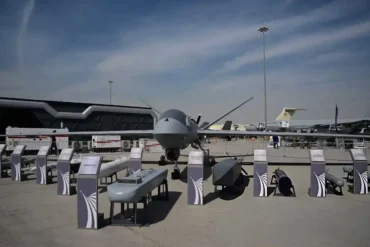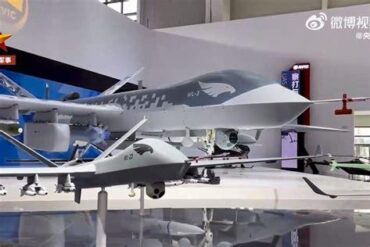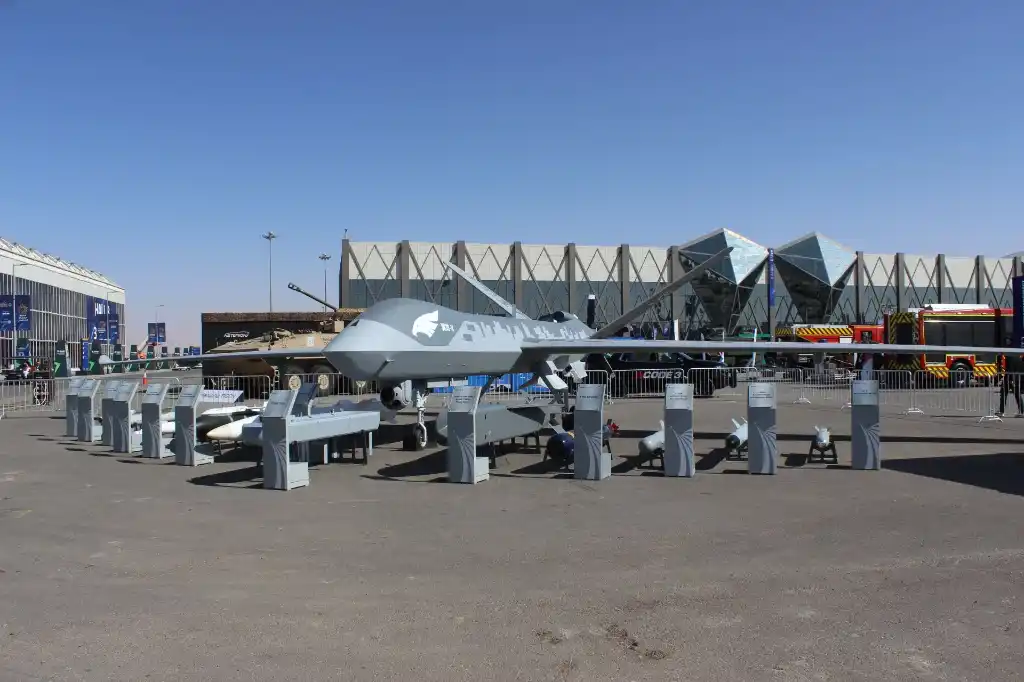
China is accelerating its push into next-generation naval aviation by positioning the Wing Loong X unmanned aerial vehicle as a potential autonomous anti-submarine warfare (ASW) platform, signaling a strategic shift toward expanding unmanned systems into roles traditionally dominated by crewed maritime patrol aircraft. The unveiling at World Defense Show 2026 underscores Beijing’s intent to redefine maritime surveillance and undersea combat detection through artificial intelligence-driven airborne systems designed for persistent ocean monitoring and potential strike operations against submerged threats.
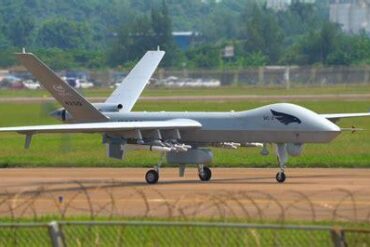
Developed by the Aviation Industry Corporation of China (AVIC), the Wing Loong X represents the most ambitious evolution within the Wing Loong drone family. Earlier variants built China’s reputation as a global supplier of cost-effective armed reconnaissance drones, but this new platform signals a pivot toward high-complexity naval missions. Its design philosophy reflects a broader military trend where autonomy, long endurance, and multi-domain sensor integration are becoming central to modern naval warfare concepts.
The aircraft’s physical scale reinforces its intended operational role. With a wingspan exceeding 20 meters, the drone becomes China’s largest armed reconnaissance UAV, optimized for long-duration maritime patrols. Designed for high-altitude operations, the platform reportedly reaches a service ceiling of 10,000 meters and can remain airborne for up to 40 hours, allowing extended surveillance across vast oceanic regions where submarine detection windows are often limited and fleeting.
Wing Loong X Design Focuses on Persistent Maritime Domain Awareness
The Wing Loong X is engineered specifically for ocean surveillance and undersea threat detection. Its mission architecture centers around deploying sonobuoys, which are expendable acoustic sensors used to detect submarine noise signatures beneath the ocean surface. By combining sonobuoy deployment capability with onboard maritime surveillance radar and electro-optical sensors, the drone is designed to create a layered detection system capable of tracking submarines over extended distances.
Unlike many existing unmanned maritime aircraft that primarily support reconnaissance missions, the Wing Loong X is being marketed as capable of carrying lightweight anti-submarine torpedoes. This theoretical capability would allow the drone not only to locate submarines but potentially engage them directly, marking a major doctrinal step toward unmanned lethal maritime strike operations. The concept remains technically ambitious, given the complexity of underwater target classification and engagement timing requirements.
Artificial Intelligence Integration Enables Semi-Autonomous Combat Decision Support
AVIC emphasizes that the platform is designed to operate either under human supervision or with varying degrees of autonomy. Artificial intelligence reportedly plays a central role in processing radar data, acoustic signatures, and environmental information to generate faster targeting solutions. In practice, this could reduce response time when tracking fast-moving submarines attempting to evade detection through thermal layers and ocean noise masking.
The drone is also built around a modular payload architecture, allowing operators to swap mission equipment depending on operational requirements. Beyond ASW, the aircraft can potentially carry precision-guided weapons, air-to-air missiles, or additional intelligence payloads. This multi-mission flexibility positions the Wing Loong X as part of a broader shift toward networked combat systems where unmanned aircraft coordinate with warships, satellites, and crewed aircraft in real time.
Strategic Implications for Indo-Pacific Naval Competition
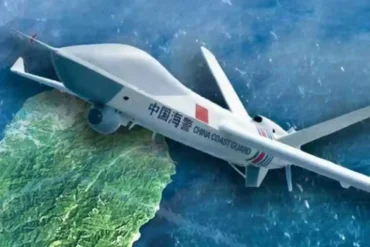
The emergence of an autonomous ASW-capable drone carries potential implications for regional maritime balance. Submarine forces have traditionally provided stealth deterrence and strategic strike capabilities. A persistent airborne system capable of monitoring large ocean sectors could complicate submarine deployment strategies, particularly in contested zones such as the South China Sea, the Taiwan Strait, and the broader Western Pacific.
China’s investment in unmanned maritime systems reflects a wider doctrinal shift toward distributed sensing networks. Instead of relying solely on large, expensive crewed patrol aircraft, future naval forces may deploy swarms of autonomous platforms capable of maintaining continuous ocean surveillance coverage. This approach reduces operational cost per flight hour while increasing surveillance density across strategic sea lanes.
Technical and Operational Challenges Remain Significant
Despite the ambitious concept, autonomous ASW remains one of the most technically demanding missions in modern warfare. Ocean environments introduce acoustic distortion, temperature gradients, and background noise from shipping traffic, marine life, and weather conditions. Successfully identifying a submarine requires sophisticated signal processing and high-confidence classification to avoid false positives.
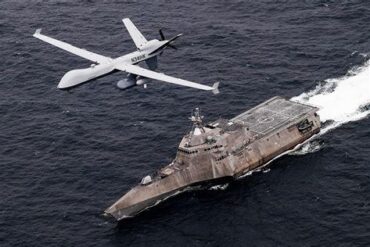
Another critical issue involves rules of engagement and human control. Autonomous weapons raise questions about how much authority should be delegated to algorithms in lethal decision-making. Western militaries have generally taken a cautious approach, limiting autonomous systems primarily to sensing and targeting support rather than fully autonomous weapon release in complex combat environments.
Export Potential and Global UAV Market Influence
The Wing Loong family already has a strong export record across parts of the Middle East, Africa, and Asia. If the Wing Loong X reaches operational maturity and enters export markets, it could reshape regional maritime surveillance capabilities. Smaller naval powers lacking expensive maritime patrol aircraft could potentially adopt unmanned ASW systems as force multipliers.
For AVIC, the platform demonstrates an industrial strategy focused on moving up the value chain from cost-efficient drone manufacturing toward high-end autonomous combat systems. This shift reflects China’s broader goal of becoming a dominant player in advanced military unmanned technologies across air, land, and maritime domains.
Future Outlook for Autonomous Undersea Detection Warfare
The Wing Loong X highlights how rapidly unmanned systems are evolving from surveillance tools into multi-role combat assets capable of participating directly in naval warfare. Whether fully autonomous submarine engagement becomes operational reality will depend on continued advances in artificial intelligence reliability, sensor fusion, and command oversight frameworks.
What is clear is that the introduction of platforms like the Wing Loong X signals a transition toward persistent, networked maritime battlespaces where detection speed, data fusion accuracy, and endurance may matter as much as raw firepower. As naval warfare continues shifting toward multi-domain integration, unmanned aircraft designed for undersea detection could become one of the defining technologies shaping future ocean security dynamics.