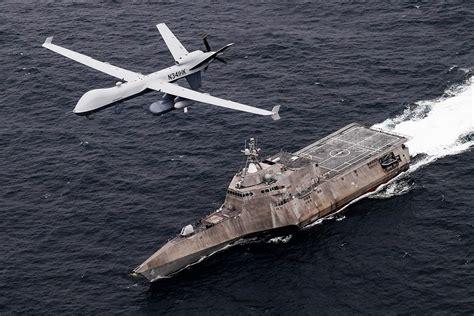
The U.S. Navy has taken a decisive step toward reshaping maritime undersea surveillance by expanding the sonobuoy payload capacity of the MQ-9B SeaGuardian, marking a meaningful advance in unmanned anti-submarine warfare. The latest flight test confirms that uncrewed aircraft are no longer limited to passive observation roles but are moving steadily into the demanding realm of persistent, networked acoustic sensing across vast ocean areas.
This development reflects a broader shift in naval thinking, where endurance, distribution, and connectivity are becoming as important as speed and payload. Submarines remain among the most potent and elusive threats in modern naval warfare, and the ability to detect, track, and share information about undersea activity without committing scarce crewed assets has become a strategic priority. The SeaGuardian’s expanded sonobuoy load directly addresses this requirement by increasing the density and flexibility of acoustic coverage available to commanders.
At its core, the program represents an effort to stretch the Navy’s surveillance reach while easing pressure on traditional maritime patrol aircraft. Rather than replacing platforms such as the P-8A Poseidon, the SeaGuardian is designed to complement them, maintaining an undersea picture over time while crewed aircraft and surface forces focus on prosecution, deterrence, and rapid response. This layered approach reflects lessons learned from decades of anti-submarine warfare, where persistence and information flow often determine success.
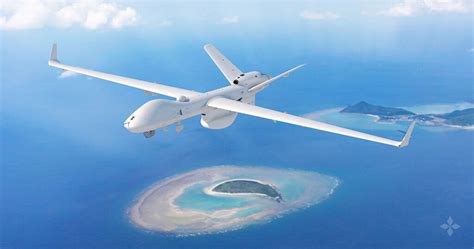
A Milestone Flight Test Signals Operational Momentum
In December 2025, a U.S. Navy flight test of the MQ-9B SeaGuardian demonstrated a doubling of sonobuoy carriage compared with earlier trials, a milestone confirmed by General Atomics Aeronautical Systems in January 2026. The test also marked the first successful deployment of MAC sonobuoys from an uncrewed aircraft, underscoring both mechanical reliability and system integration maturity. This was not a laboratory demonstration but a realistic operational profile intended to validate the aircraft’s growing role in undersea warfare.
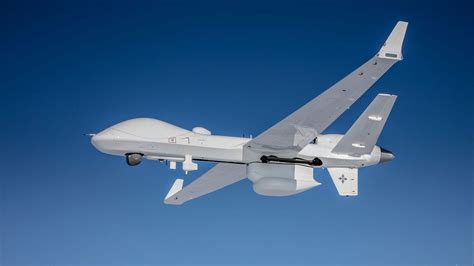
The increased payload was achieved through the use of additional Sonobuoy Dispensing System (SDS) pods, each capable of carrying up to ten A-size or twenty G-size sonobuoys. By expanding the number of pods carried, the SeaGuardian can now seed a wider or denser acoustic field during a single sortie. This matters because anti-submarine warfare is rarely static; contact uncertainty, environmental factors, and adversary maneuvering all demand the ability to refresh and reposition sensors dynamically.
Beyond sheer numbers, the test highlighted the Navy’s focus on reliability and repeatability. Sonobuoy deployment from a crewed aircraft is a mature art, but doing so from an unmanned platform requires precise control, predictable separation, and robust command logic. The successful drops indicate that these challenges are being addressed systematically, clearing a path toward more routine operational use.
Integrated Acoustic Processing Changes the Equation
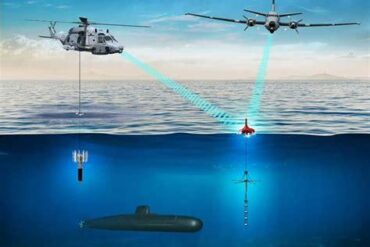
What distinguishes the SeaGuardian’s approach is not only how many sonobuoys it can carry, but how it uses the data they collect. The aircraft’s Sonobuoy Monitoring and Control System (SMCS) receives acoustic signals transmitted by deployed buoys and processes them onboard to generate usable target information. According to General Atomics, this processing can produce target tracks with calculated speed, course, and depth, transforming raw acoustic data into actionable intelligence.
Crucially, the SeaGuardian does not keep this information to itself. Through tactical data links, processed acoustic products can be distributed to other maritime users in near real time. This networked model aligns with modern naval doctrine, where sensors and shooters are increasingly decoupled. An unmanned aircraft can detect and classify a contact, while a crewed aircraft, surface ship, or even another unmanned system moves to investigate or engage.
This shift from isolated collection to shared awareness is central to the Navy’s vision of distributed operations. Undersea threats often exploit gaps in coverage and delays in response. By maintaining a continuous, shared acoustic picture, unmanned platforms like SeaGuardian can reduce those gaps, making it harder for submarines to operate undetected for extended periods.
Persistence as a Strategic Advantage
Anti-submarine warfare has always been a contest of patience and endurance. Submarines rely on stealth and time, while defenders rely on sustained surveillance and coordination. The MQ-9B SeaGuardian’s long endurance offers a powerful counter to this dynamic. Unlike crewed patrol aircraft, which are constrained by crew fatigue and operating costs, an unmanned system can remain on station for extended periods, quietly maintaining an acoustic watch.
This persistence is particularly valuable in regions where geography and scale challenge traditional patrol models. Wide ocean spaces, complex littoral environments, and critical transit routes all demand continuous monitoring that is difficult to achieve with limited numbers of crewed aircraft. By holding a patrol area for hours at a time, the SeaGuardian can act as a force multiplier, ensuring that no single gap becomes an exploitable weakness.
Operationally, this endurance also provides commanders with flexibility. A buoy field can be laid early, monitored continuously, and adjusted as the situation evolves. If a contact emerges, other assets can be vectored efficiently, reducing response times and increasing the likelihood of successful localization.
Exercises and Validation in Fleet Operations
The U.S. Navy has already integrated the MQ-9B SeaGuardian into major exercises such as Northern Edge, Integrated Battle Problem, RIMPAC, and Group Sail. These events are designed not only to test individual platforms but to stress the entire kill chain, from detection to decision-making. SeaGuardian’s participation indicates a deliberate effort to validate how unmanned ASW contributions fit into real-world fleet procedures.
Such exercises expose systems to the friction of operational environments, including communications challenges, coordination complexity, and competing priorities. Demonstrating that an unmanned aircraft can deploy sonobuoys, process data, and share results effectively in these conditions is a critical step toward operational acceptance. It also helps refine tactics, techniques, and procedures that will govern how unmanned and crewed assets work together.
Allied Interest Underscores Broader Relevance
The SeaGuardian’s ASW potential is not limited to U.S. forces. In January 2026, Germany announced an order for eight MQ-9B aircraft configured for over-water missions, including maritime reconnaissance and ASW support using underwing sonobuoy canisters. Berlin’s decision highlights a growing recognition among allies that unmanned systems can help monitor large sea areas and protect critical infrastructure.
Germany has framed the MQ-9B as a complement to its P-8A Poseidon fleet, pairing the speed and payload of a crewed aircraft with the endurance of an unmanned layer. Operations are planned from Naval Air Wing 3 Graf Zeppelin in Nordholz, with initial deliveries expected from 2028. Notably, German officials have emphasized coalition data sharing, signaling an intent to integrate collected information into allied maritime awareness networks when required.
This allied uptake reinforces the idea that unmanned ASW is becoming a shared solution to common challenges, from protecting sea lines of communication to safeguarding undersea cables and energy infrastructure.
Strategic Context and Distributed Maritime Operations
For the U.S. Navy, the SeaGuardian’s expanded sonobuoy capability fits squarely within the framework of Distributed Maritime Operations (DMO). This concept seeks to complicate adversary targeting by dispersing forces and sensors while maintaining cohesion through robust networking. In an environment where high-end assets are both valuable and vulnerable, spreading the sensing burden across numerous platforms reduces risk and increases resilience.
Undersea threats are a particular concern in contested regions such as the Indo-Pacific and the North Atlantic. Long distances, chokepoints, and the proliferation of capable submarines make continuous surveillance essential. An unmanned aircraft that can quietly maintain an acoustic picture contributes directly to deterrence by denying adversaries the freedom to maneuver unseen.
The SeaGuardian’s role is therefore not that of a solitary hunter but of a persistent sentinel, feeding information into a broader system designed to detect, track, and, if necessary, neutralize undersea threats.
Networking, JADC2, and the Path Ahead
The ultimate value of unmanned sonobuoy operations depends on connectivity. Efforts such as Project Overmatch and the broader Joint All-Domain Command and Control (JADC2) initiative aim to ensure that sensor data flows rapidly and securely to decision-makers and shooters across domains. The SeaGuardian’s ability to distribute acoustic products aligns directly with these goals.
Challenges remain, particularly in ensuring resilience under contested electromagnetic conditions. Data links must withstand jamming, cyber threats, and degradation while still delivering timely information. Continued testing and operational experimentation will determine how well unmanned ASW platforms perform in these scenarios.
If deployment flight clearance follows the successful December 2025 test, attention will shift from payload metrics to operational impact. The real measure of success will be whether unmanned systems can sustain a meaningful undersea picture over time and demonstrably improve how the Navy allocates its most capable ASW assets.
In that sense, the expanded sonobuoy capacity of the MQ-9B SeaGuardian represents more than a technical upgrade. It signals a maturation of unmanned anti-submarine warfare from concept to credible capability, one that could quietly but profoundly influence how maritime forces watch the depths in an increasingly contested world.