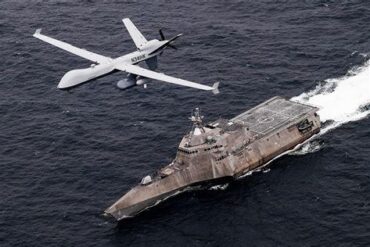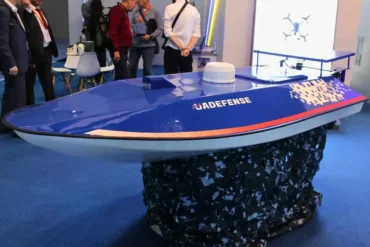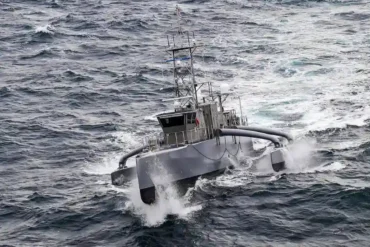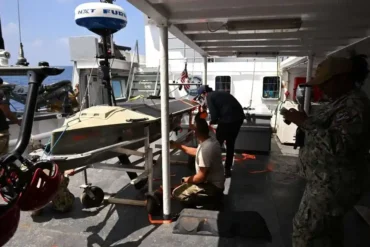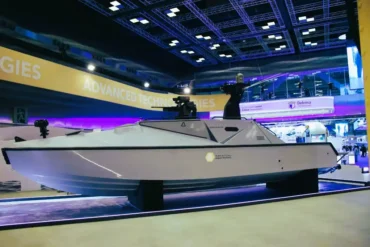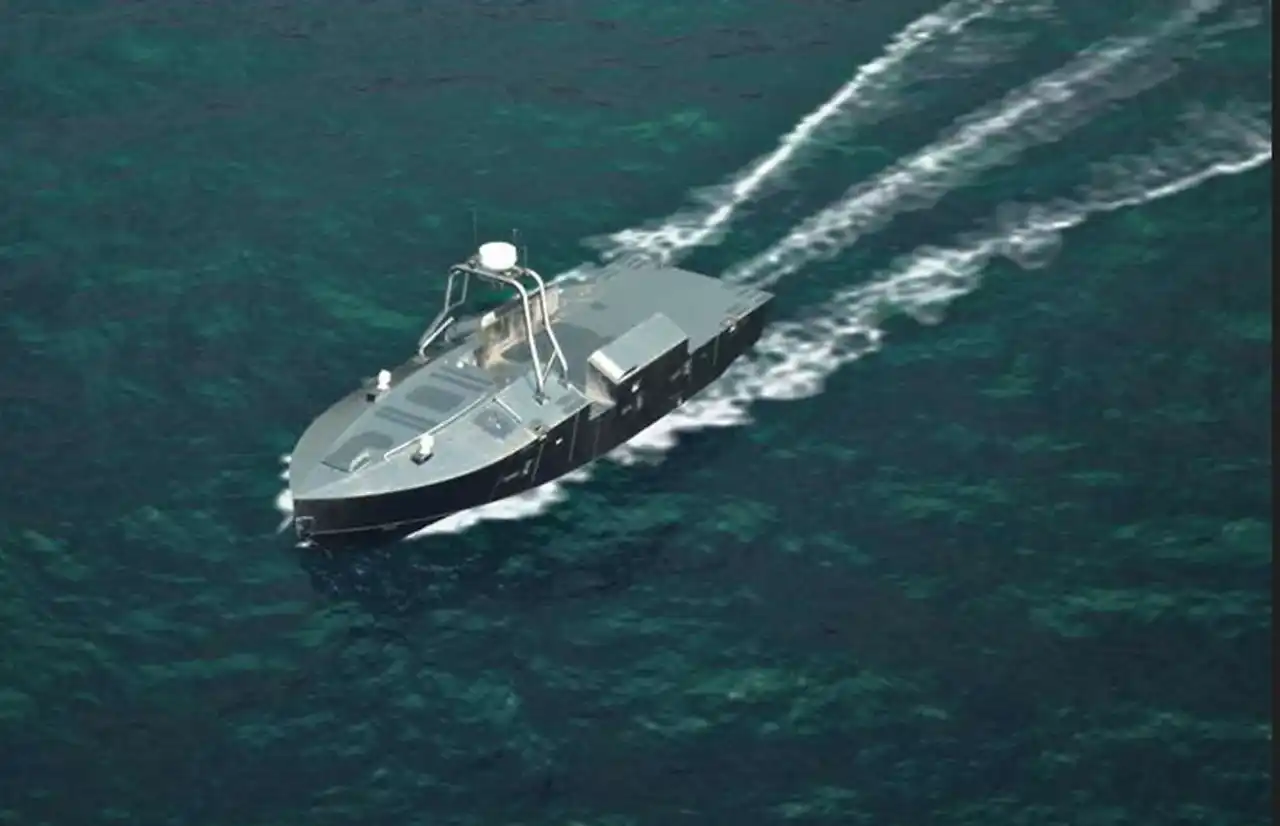
The U.S. Navy is accelerating its shift toward affordable, attritable, and autonomous maritime combat power, and Textron’s newly unveiled Multi-Mission Uncrewed Surface Vessel (MMUSV) sits squarely at the center of that transformation. Introduced in January 2026 by Textron Systems, the MMUSV represents a fifth-generation evolution of the company’s proven Common Uncrewed Surface Vessel line, engineered to meet growing naval demand for scalable unmanned platforms capable of operating in contested waters without exposing crews to risk.
This initiative aligns with a broader Pentagon push to rebalance naval force structure away from a small number of exquisite, high-cost ships and toward distributed fleets of low-cost autonomous systems. As peer competitors expand anti-access and area-denial capabilities, the Navy is seeking platforms that can persist inside hostile environments, absorb losses if necessary, and still deliver meaningful operational effects. MMUSV is being positioned not as an experimental concept, but as a rapidly producible, mission-ready asset designed for real-world fleet integration.
Textron’s approach reflects hard lessons learned from recent conflicts, where unmanned surface and aerial systems have proven capable of imposing disproportionate costs on adversaries. By combining mature hull design, modular payloads, and advanced autonomy, the MMUSV aims to extend U.S. naval reach while reshaping how maritime power is generated and sustained.
Fifth-Generation Evolution Built for Operational Reality
The MMUSV is not a clean-sheet design but a deliberate refinement of an already operationally relevant platform. Textron describes it as a step-change in capacity, endurance, and survivability, doubling both fuel and payload capability compared to earlier CUSV variants. The vessel can carry up to 13,000 pounds of combined fuel and mission payload, a figure that significantly expands the range of systems it can deploy without sacrificing endurance.
Equally important is its towing performance. With a towing rating exceeding 4,000 pounds of force at 20 knots, MMUSV is optimized for influence sweeps and other towed payloads essential to modern mine countermeasures. This capability allows unmanned systems to operate at tactically relevant speeds, maintaining tempo while keeping crewed ships at a safer distance from mined waters.
Sea-keeping performance has also been carefully engineered. The platform is rated for full operations in Sea State 4 with survivability up to Sea State 5, enabling it to remain on station in weather conditions that often degrade small craft effectiveness. This threshold is particularly relevant in regions like the Western Pacific and North Atlantic, where environmental conditions can be as challenging as the threat environment itself.
Autonomy, Swarm Behavior, and Networked Warfare
One of the MMUSV’s most consequential features lies in its autonomous navigation and mission behaviors. Textron highlights collision and hazard avoidance systems paired with modular autonomy packages that support coordinated operations, including advanced swarm behaviors. This enables multiple vessels to operate collaboratively, distributing sensors, sharing data, and dynamically adapting to evolving tactical situations.
Such capabilities directly support the Navy’s Distributed Maritime Operations (DMO) concept, which emphasizes dispersing forces to complicate adversary targeting while maintaining coordinated combat power. In practice, MMUSVs could act as forward sensors, decoys, or electronic surveillance nodes, feeding real-time data back to manned ships and command centers without presenting a single high-value target.
The company also claims a 50 percent cost reduction compared to fourth-generation CUSV designs, paired with a doubling of operational range. These metrics underscore a strategic emphasis on mass and persistence over exquisite survivability, accepting that individual units may be lost while the overall network continues to function.
Expanding Beyond Mine Countermeasures
Mine warfare remains the MMUSV’s foundational mission, rooted in Textron’s role as the originator of the CUSV used in the Navy’s Unmanned Influence Sweep System tied to the Littoral Combat Ship mine countermeasures package. With MMUSV’s increased payload capacity and endurance, the Navy can push unmanned sweeping operations farther from host vessels, reducing risk while sustaining operational tempo in contested chokepoints.
However, the platform’s true strategic value lies in its expansion into intelligence, surveillance, reconnaissance (ISR) and signals intelligence (SIGINT) roles. In an era where situational awareness is contested and fleeting, unmanned surface vessels equipped with modular sensor payloads offer a persistent presence that can monitor maritime approaches, track adversary movements, and cue follow-on forces.
The modular architecture also leaves room for future payloads, including electronic warfare systems or containerized effects. While Textron does not market MMUSV as an armed platform, its capacity places it firmly within the class of vessels that could host off-board weapons or non-kinetic effects should Navy requirements evolve.
Strategic Context: Attritable Systems and Maritime Deterrence
MMUSV’s emergence reflects a broader doctrinal shift across the U.S. military toward attritable autonomous systems. Initiatives like the Pentagon’s Replicator effort aim to field large numbers of low-cost platforms capable of offsetting adversary mass and imposing unfavorable cost exchanges. At sea, where capital ships represent immense investments, this logic becomes even more compelling.
Recent conflicts have demonstrated how relatively inexpensive unmanned systems can force adversaries to expend costly interceptors or reveal high-value assets. In the maritime domain, networks of unmanned surface vessels complicate targeting, stretch defensive resources, and enable persistent pressure inside weapons engagement zones without escalating risk to personnel.
For commanders, MMUSV offers a flexible tool to maintain presence, gather intelligence, and conduct shaping operations during competition, while also providing scalable options in crisis or conflict. Its design reflects a recognition that future naval warfare will be as much about information dominance and endurance as it is about firepower.
A Pragmatic Bridge to the Future Fleet
If Textron can translate its performance claims into fleet-ready reliability, the MMUSV stands to become a critical enabler of the Navy’s evolving force design. It bridges the gap between today’s mission-specific unmanned platforms and tomorrow’s larger autonomous combatants, offering a near-term, affordable solution that aligns with emerging operational concepts.
Rather than chasing revolutionary leaps, MMUSV embodies an incremental but strategically significant advance—one that prioritizes cost, scalability, and adaptability. In doing so, it reflects a sober assessment of modern naval competition, where the ability to deploy many capable systems quickly may matter more than the perfection of any single platform.
As the U.S. Navy looks to maintain maritime advantage in an increasingly contested world, platforms like Textron’s MMUSV signal a future where unmanned vessels are no longer niche enablers, but core elements of naval power projection and deterrence.