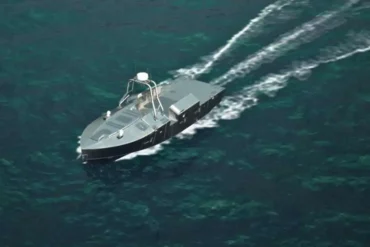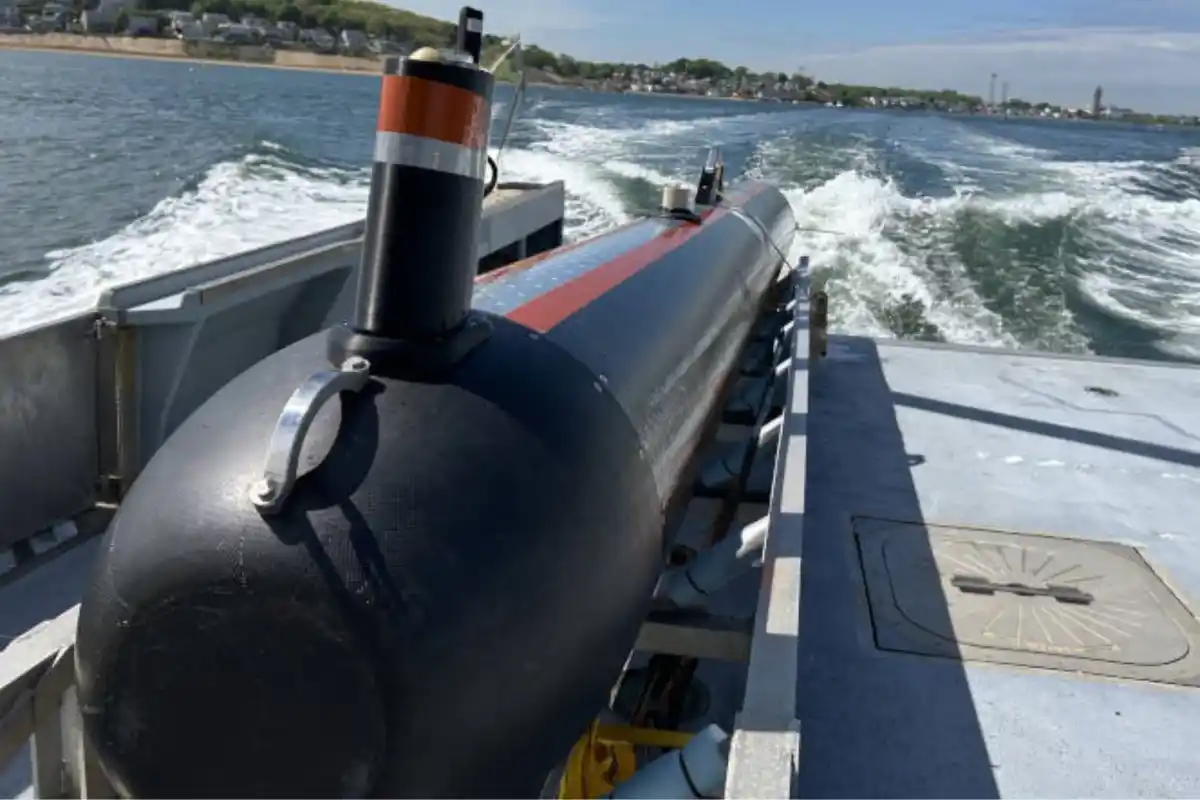
The U.S. Navy’s push to modernize undersea warfare has taken a concrete step forward as General Dynamics Mission Systems completes early sea trials of its MEDUSA unmanned submarine, a system designed to deliver naval mines quickly, covertly, and without placing crewed submarines at unnecessary risk. Conducted off the coast of Massachusetts, these trials represent more than a routine technology demonstration. They signal a deliberate shift toward expendable, mission-focused unmanned underwater vehicles that emphasize reliability, speed, and operational relevance over recovery and reuse.
MEDUSA, short for Mining Expendable Delivery Unmanned Submarine Asset, is being developed under a fast-track Navy program aimed at restoring and enhancing maritime mining capabilities. Early testing has been carried out entirely by General Dynamics’ own marine operations team, with the system still under contractor control while technical risks are reduced. This approach allows engineers and operators to iterate rapidly, tightening the feedback loop between real-world performance and design refinement before U.S. Navy Sailors are formally introduced to hands-on evaluation.
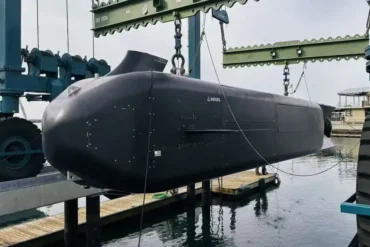
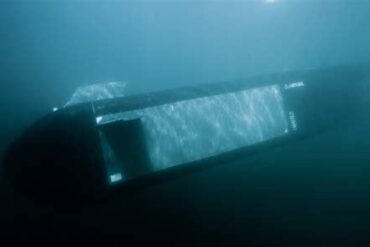
The January 2026 sea trials demonstrated that MEDUSA is already moving beyond paper concepts. A full-scale rapid prototype was placed in operational conditions, validating core assumptions about how an expendable unmanned submarine can be deployed, navigated, and controlled in complex coastal waters. Rather than waiting for a finalized design, the Navy and General Dynamics opted to test early and often, using data instead of projections to guide development decisions.
At the heart of MEDUSA’s design philosophy is a recognition of a fundamental operational constraint: submarine mine warfare must protect the host platform above all else. Traditional mining missions can expose submarines to detection or limit their freedom of maneuver. MEDUSA addresses this by shifting the delivery task to an expendable vehicle, allowing a crewed submarine to release the UUV and withdraw while the unmanned system completes the mission independently. This logic reframes the engineering priorities, focusing on dependable mission execution rather than survivability or recovery.
General Dynamics has emphasized that MEDUSA is being built to meet the Navy’s most demanding standards for advanced maritime mining. These requirements reflect the sensitivity of undersea operations, where navigation errors, propulsion failures, or energy shortfalls can compromise an entire mission. As a result, the current testing campaign concentrates on propulsion performance, navigation accuracy, specialized autonomous behaviors, and energy management. Each of these elements directly determines whether the vehicle can reach its intended deployment area and execute its task without external intervention.
Propulsion testing during the Massachusetts trials examined controllability and stability across varying conditions, critical for a vehicle expected to operate close to the seabed or within constrained littoral environments. Navigation testing focused on precision, ensuring MEDUSA can follow complex routes and arrive at exact coordinates. Autonomy behaviors were evaluated to confirm that the UUV can make limited decisions independently, an essential feature when communication with operators is restricted or unavailable. Energy management, often an unsung constraint, was treated as a mission-defining factor, governing endurance, safety margins, and overall feasibility.
An important but less visible aspect of the program has been the role of General Dynamics’ marine operations team. By acting as both operators at sea and user representatives in the design environment, they provide immediate, experience-based feedback to engineers. This dual role helps bridge the gap that often exists between designers and end users. According to Chris Clapp, senior program manager for MEDUSA, the rapid prototype has proven “immensely helpful” in feeding real data into the design process ahead of key milestone events.
The Navy’s Unmanned Maritime Systems program office (PMS 406) is overseeing the effort, with plans to involve U.S. Navy Sailors once the system reaches a level of maturity suitable for operational evaluation. That transition will mark a critical phase, shifting MEDUSA from a contractor-operated test asset to a Navy-assessed capability. The groundwork being laid now is intended to ensure that Sailor feedback focuses on tactics and integration rather than basic technical reliability.
Operationally, MEDUSA promises to restore flexibility to submarine-based mining missions. By delivering an advanced mining capability through an expendable UUV, the system aligns with modern concepts of distributed and unmanned warfare. It allows commanders to shape the maritime battlespace discreetly, placing obstacles where they are most disruptive while minimizing exposure of high-value platforms. The emphasis on autonomy and precision suggests a system designed for contested environments, where predictability and resilience matter as much as raw performance.
Strategically, the program reflects a broader reassessment of maritime mining as a tool of sea denial and deterrence. While often overshadowed by more visible naval capabilities, mines remain one of the most cost-effective ways to influence adversary behavior. A modern, submarine-deployable unmanned mining system complicates planning for any opponent, forcing them to account for hidden threats in key waterways. Even without publicly disclosed specifications, MEDUSA’s direction underscores a renewed commitment to undersea dominance through technology that blends stealth, automation, and operational pragmatism.
As testing continues and the design matures, MEDUSA stands as a clear example of how rapid prototyping and unmanned systems are reshaping naval warfare. It is not a futuristic concept held at arm’s length, but a working asset already being pushed into realistic conditions. For the U.S. Navy, that pragmatism may prove just as valuable as the mines MEDUSA is ultimately built to deliver.