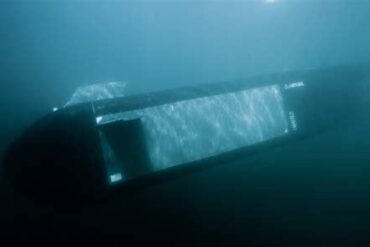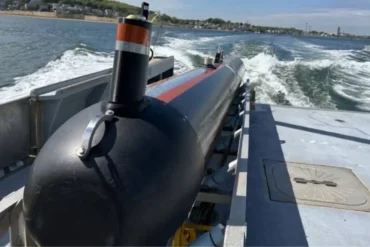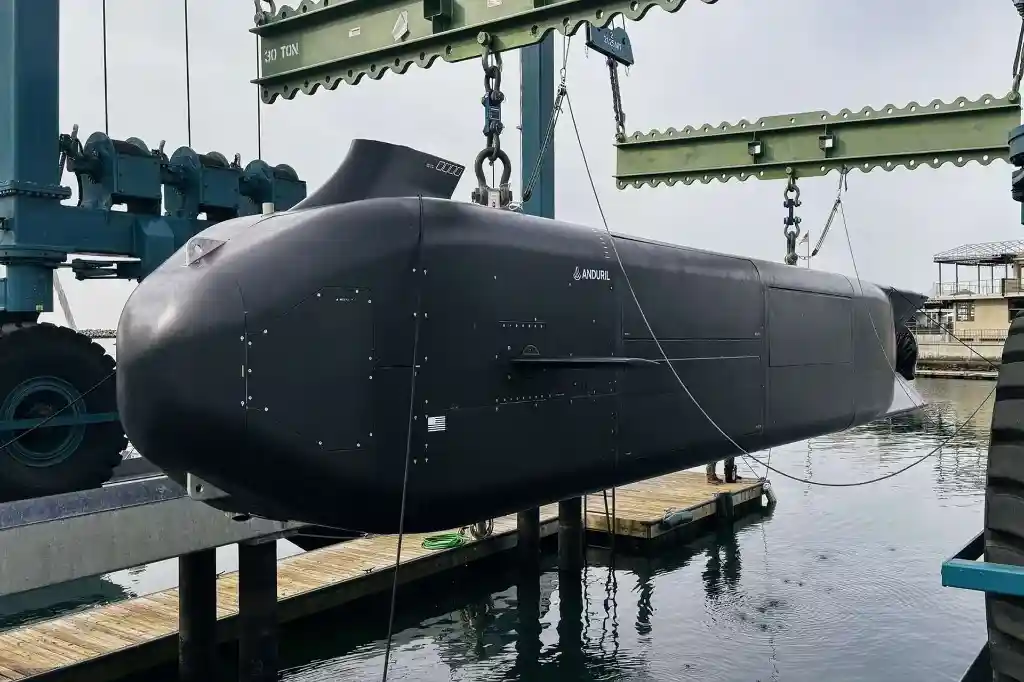
The United States Navy is accelerating its shift toward unmanned maritime warfare with the selection of Anduril Industries’ Dive-XL autonomous submarine, an extra-large autonomous undersea vehicle (XL-AUV) designed to conduct long-range missions exceeding 1,000 nautical miles. The program, developed in cooperation with the Defense Innovation Unit (DIU), reflects a broader transformation in naval strategy as the U.S. military integrates robotic platforms into complex undersea operations traditionally dominated by crewed submarines.
The decision represents more than a procurement milestone. It signals the Navy’s growing reliance on autonomous systems capable of surveillance, seabed warfare, and potential strike missions in contested maritime environments. These vehicles can operate independently for extended periods, enabling the Navy to expand its presence across vast ocean spaces without risking human crews.
Anduril’s selection comes amid rising strategic competition in the Indo-Pacific region, where underwater dominance is a critical factor in maintaining maritime security and deterrence. Autonomous underwater systems like the Dive-XL promise to deliver persistent sensing, flexible payload deployment, and distributed combat capabilities, all while reducing operational costs compared with traditional submarines.
The Strategic Role of Extra-Large Autonomous Undersea Vehicles
The concept of extra-large autonomous underwater vehicles (XL-AUVs) represents one of the most significant developments in modern naval warfare. Unlike smaller unmanned vehicles used primarily for mine detection or short-range reconnaissance, XL-AUVs are designed for extended missions deep beneath the ocean surface, often traveling hundreds or even thousands of miles without human intervention.
For the U.S. Navy, these vehicles provide a practical solution to a growing operational challenge: crewed submarines are limited, expensive, and strategically valuable assets that cannot be deployed everywhere at once. Each nuclear-powered submarine represents billions of dollars in investment and a highly trained crew. Sending such platforms into every surveillance or seabed mission would be inefficient and risky.
Autonomous platforms fill this gap by acting as force multipliers. They can quietly patrol remote areas, deploy sensors along the ocean floor, monitor shipping routes, or even carry weapons systems—all without the logistical burden associated with traditional submarines.
The Navy’s requirement set for the Dive-XL reflects these operational ambitions. The vehicle must be capable of traveling beyond 1,000 nautical miles, operating at depths exceeding 200 meters, navigating effectively in GPS-denied underwater environments, and maintaining communication links across the air-water boundary to relay information to surface forces or command centers.
Dive-XL: A Long-Range Autonomous Submarine Designed for Modular Warfare
The Dive-XL autonomous submarine is engineered from the ground up as a flexible undersea platform capable of supporting a wide range of mission types. Its architecture emphasizes modularity, allowing operators to configure the vehicle with different payloads depending on operational needs.
Unlike traditional submarines built through complex and expensive shipbuilding programs, Dive-XL is designed to be logistically agile. One of its defining features is the ability to fit inside a standard 40-foot shipping container, enabling rapid transportation by cargo aircraft, trucks, or naval vessels. This capability dramatically improves deployment flexibility and allows the Navy to forward-stage autonomous vehicles across global theaters.
The modular payload design enables the submarine to carry systems as large as 21 feet long and 21 inches in diameter, accommodating various mission packages. These payloads could include:
- Seabed sensor arrays for persistent underwater surveillance
- Communications relay nodes to connect underwater networks
- Mine warfare modules for detection or emplacement
- Autonomous weapons systems or strike payloads
This adaptability transforms the Dive-XL into a multi-role platform, capable of evolving alongside emerging naval doctrines and technological advancements.
From Ghost Shark to Dive-XL: The Technology Lineage
The development of the Dive-XL is closely linked to Anduril’s Ghost Shark program, a collaborative project with the Royal Australian Navy and defense scientists in Australia. Initiated in 2022, Ghost Shark aimed to create a stealthy, long-range autonomous submarine capable of intelligence gathering and strike missions.
Australia unveiled the first prototype in April 2024, demonstrating a functional autonomous underwater platform developed at remarkable speed compared with traditional naval acquisition timelines. By September 2025, the Australian government committed A$1.7 billion to procure and support a fleet of Ghost Shark vehicles over a five-year period.
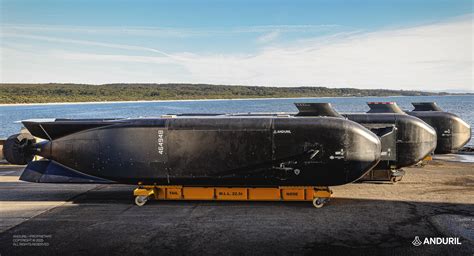
The success of Ghost Shark provided valuable proof that rapid development cycles are possible in undersea robotics. It also demonstrated Anduril’s ability to deliver prototypes ahead of schedule and within budget—an achievement that stands out in a sector often associated with lengthy development programs.
For the United States Navy, this track record offered confidence that the Dive-XL platform could transition from demonstration to operational capability more quickly than conventional submarine programs.
Autonomous Strike Potential and the Copperhead Weapon System
While the Navy’s current selection focuses on the vehicle itself, the Dive-XL’s design points toward a broader vision of autonomous undersea combat systems. Central to that vision is Anduril’s Copperhead family of underwater munitions, which could potentially integrate with the platform.
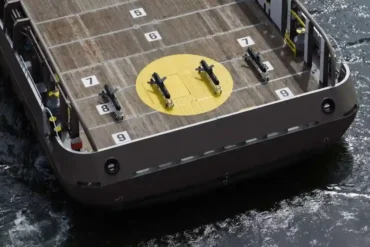
Copperhead weapons come in two primary classes—100-pound and 500-pound variants—with dimensions similar to established torpedo systems such as the Mk 54 and Mk 48. These munitions are designed to travel at speeds exceeding 30 knots, providing substantial striking capability.
The most distinctive aspect of the Copperhead concept is its recoverable and reusable design philosophy, which aims to reduce costs compared with traditional single-use torpedoes.
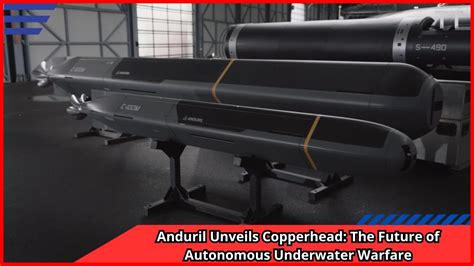
In operational terms, a single Dive-XL could carry dozens of smaller Copperhead-100 munitions or multiple larger Copperhead-500 systems. This transforms the autonomous submarine into a mobile underwater arsenal, capable of deploying distributed strike effects rather than relying on a single large torpedo for each engagement.
The concept resembles a mothership model, where the autonomous vehicle infiltrates hostile waters, gathers intelligence, deploys sensors, and launches precision underwater weapons when necessary.
Competing Platforms in the XL-AUV Race
The selection of Dive-XL does not occur in isolation. Several major defense companies are developing competing large autonomous undersea vehicles, each offering different capabilities and design philosophies.
Boeing’s Orca XLUUV remains the largest and most ambitious system currently under development. With a publicly reported range of up to 6,500 nautical miles, the Orca is designed for months-long missions and can carry a massive 34-foot modular payload section. However, the program has experienced development delays and schedule adjustments, highlighting the technical challenges involved in building ultra-large autonomous submarines.
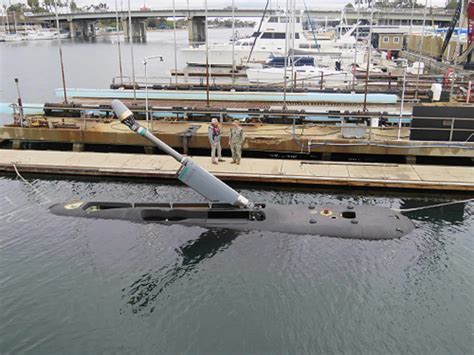
Another major competitor is the Kongsberg HUGIN Endurance, a system recognized for its deep-water capabilities and navigation precision. The vehicle can operate at depths up to 6,000 meters, travel roughly 1,200 nautical miles, and remain deployed for up to 15 days.
Meanwhile, Oceaneering’s Freedom AUV brings strong commercial heritage and proven autonomy technologies derived from offshore energy operations.
Despite these alternatives, Anduril’s Dive-XL stands out due to its combination of modular logistics, rapid development timelines, and a clear pathway toward integrated autonomous weapons.
Transforming Undersea Warfare Strategy
The broader significance of the Dive-XL program lies in how it fits into the Navy’s emerging hybrid fleet strategy, which blends traditional crewed platforms with autonomous systems operating across the air, surface, and underwater domains.
Undersea warfare has historically relied on stealthy submarines armed with torpedoes and cruise missiles. While these vessels remain indispensable, their limited numbers make it difficult to maintain constant presence across the vast expanses of the world’s oceans.
Autonomous systems address this gap by creating distributed networks of sensors and strike platforms. Instead of relying on a small number of highly capable submarines, the Navy can deploy larger numbers of robotic vehicles, each contributing to a shared intelligence and combat architecture.
These systems could quietly map seabeds, monitor underwater infrastructure, track adversary submarines, and deploy sensor arrays that remain active for months or years. In wartime scenarios, autonomous submarines could lay mines, launch underwater munitions, or act as decoys, complicating enemy planning.
A New Era of Robotic Submarines
The selection of Anduril’s Dive-XL marks a decisive step toward a future where autonomous submarines operate alongside traditional naval forces. By combining long-range endurance, modular payload capacity, and scalable logistics, the system represents a practical blueprint for how robotic undersea platforms might reshape maritime strategy.
For the U.S. Navy, the upcoming demonstration phase will be critical. If Dive-XL successfully proves its ability to conduct long-duration, fully submerged missions exceeding 1,000 nautical miles, it could accelerate the adoption of autonomous undersea vehicles across the fleet.
Such a shift would not replace crewed submarines but rather extend their reach and effectiveness, creating a layered undersea force capable of sensing, striking, and maneuvering across vast ocean territories.
In the evolving landscape of naval warfare, the ocean’s depths are becoming a domain where algorithms, sensors, and robotic platforms operate quietly alongside human crews. The Dive-XL is poised to become one of the earliest operational embodiments of that transformation.