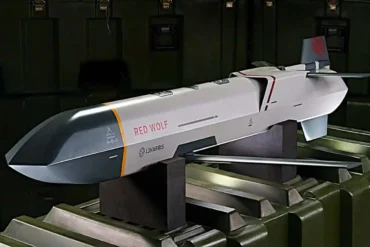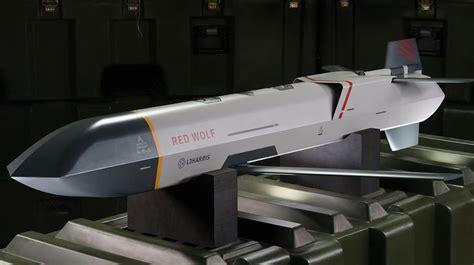
The U.S. Navy’s decision to select L3Harris Technologies’ Red Wolf loitering munition for the U.S. Marine Corps Precision Attack Strike Munition (PASM) program marks a quiet but consequential shift in how Marine aviation will deliver firepower in future conflicts. This is not merely another weapons contract. It is a clear endorsement of a new operational logic: affordable range, networked lethality, and survivability in environments where airspace, spectrum, and time are all contested simultaneously.
For the Marine Corps, whose doctrine increasingly revolves around expeditionary operations, distributed forces, and littoral combat, Red Wolf answers a problem that has lingered for years. Rotary-wing aircraft like the AH-1Z Viper are invaluable close-support assets, yet their traditional weapons demand proximity to threats that are growing deadlier and more layered. Red Wolf is designed to stretch that distance dramatically, allowing helicopters to strike deep while remaining masked, mobile, and alive.
The selection by Naval Air Systems Command (NAVAIR) confirms that the Pentagon’s appetite for modular, network-enabled, attritable munitions is no longer theoretical. It is becoming procurement reality, driven by lessons from modern conflicts where quantity, responsiveness, and adaptability matter as much as exquisite performance.
From Concept to Contract: Why Red Wolf Won
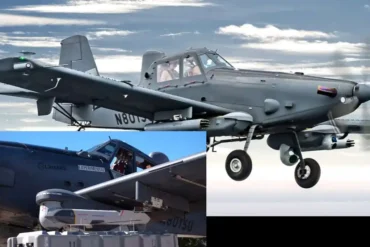
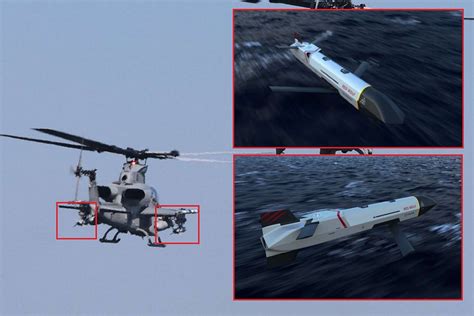
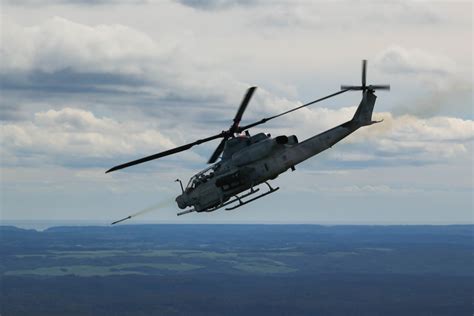
Red Wolf’s selection was not sudden. The system arrives with a substantial test pedigree that distinguishes it from many experimental loitering munitions still searching for operational relevance. Fifty-two launched effects vehicle flights have already been completed, providing confidence in propulsion, guidance, communications, and recovery concepts. Critically, L3Harris has demonstrated low-altitude launch from a Marine Corps AH-1Z Viper, a milestone that directly aligns with real-world Marine aviation profiles rather than idealized test conditions.
This matters because permissive airspace is no longer the norm. Modern battlefields are saturated with sensors, electronic warfare, and layered air defenses. A weapon that requires altitude or predictable launch geometry is a liability. Red Wolf’s ability to launch from low altitude and immediately transition into a long-range, beyond-line-of-sight mission fits the Marine Corps’ emphasis on fighting while hidden, dispersed, and constantly repositioning.
Equally important is cost discipline. The PASM program is explicitly aimed at low-cost, long-range precision strike, acknowledging that the Marine Corps cannot afford to expend premium missiles for every target. Red Wolf is positioned as an affordable solution that still delivers meaningful effects at operationally relevant ranges, preserving high-end weapons for scenarios that truly demand them.
The Wolf Pack Concept: Kinetic Strike Meets Electronic Warfare
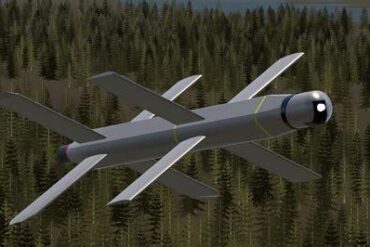
Red Wolf does not stand alone. It is the kinetic member of L3Harris’ broader “Wolf Pack” launched effects family, which also includes Green Wolf, designed for electronic warfare (EW) missions such as electronic attack (EA) and Detect, Identify, Locate and Report (DILR) functions. This family-based approach reflects a deeper shift in weapons design philosophy.
Instead of single-purpose munitions, the Wolf Pack emphasizes configurable payloads and networked employment. The same basic vehicle architecture can support precision strike, sensing, decoying, or communications relay depending on mission needs. In practice, this means commanders can tailor effects packages dynamically rather than relying on rigid weapon categories decided long before deployment.
Flight testing that began in 2020 has demonstrated launches from crewed and uncrewed fixed-wing aircraft, rotorcraft, and ground-based platforms, with options for rocket-assisted launch from land or sea. This platform-agnostic design expands future integration possibilities well beyond the AH-1Z, quietly increasing Red Wolf’s long-term relevance across joint and allied forces.
Performance That Matches the Mission
L3Harris reports endurance exceeding 60 minutes, high subsonic speeds, and a range beyond 200 nautical miles at low altitude. These numbers are not marketing fluff; they define how Red Wolf changes the geometry of helicopter warfare. A Viper no longer needs to approach within traditional rocket or missile envelopes. It can act as a distributed launch node, contributing to deep fires while remaining behind terrain masking or outside the most dangerous threat rings.
The system’s open architecture and modular payload interfaces are equally significant. Software designed for real-time decision-making, in-flight retargeting, and networked coordination allows Red Wolf to adapt after launch. Targets can be updated, prioritized, or even changed entirely as the tactical picture evolves, a necessity in environments where static targets are increasingly rare.
An often-overlooked feature is the optional parachute recovery system, intended to allow in-theater refurbishment and rapid reuse. This blurs the line between munition and reusable platform, reducing per-mission costs and supporting sustained operations where logistics are constrained. It is a pragmatic nod to the realities of expeditionary warfare, where resupply is never guaranteed.
Why the AH-1Z Viper Is the Right Partner
The AH-1Z Viper remains one of the Marine Corps’ most critical aviation assets, prized for its survivability, sensor suite, and ability to operate alongside ground forces in complex terrain. Yet its limitations are well understood. Compared to fixed-wing aircraft, it is slower, more vulnerable when exposed, and constrained by the need to get close to targets.
Red Wolf fundamentally alters that equation. By extending the Viper’s effective reach to hundreds of nautical miles, the helicopter transitions from a close-in shooter to a stand-off strike enabler. It can launch from concealed positions, use external ISR feeds, and reposition immediately after firing. This reduces exposure while increasing operational tempo.
L3Harris has emphasized that Red Wolf is the only effects system successfully launched from a Marine Corps AH-1Z to date and that it exceeds PASM objectives. That distinction carries weight. Integration with rotary-wing platforms is notoriously difficult, and proven compatibility is often what separates promising concepts from fielded capability.
Implications for Littoral and Expeditionary Warfare
In the contested littorals where the Marine Corps expects to fight, range equals survivability. A 200-nautical-mile reach allows Marine aviation to contribute to sea denial, coastal defense suppression, and time-sensitive strikes without triggering the same risk thresholds associated with legacy weapons. In scenarios involving layered air defenses and persistent surveillance, Red Wolf enables attacks from unexpected azimuths, complicating adversary planning.
Beyond strike, the networked nature of the system supports cooperative engagements. Unmanned aircraft, surface units, or other sensors can provide targeting updates, turning Red Wolf into part of a broader kill web rather than a standalone munition. This aligns closely with evolving U.S. and Marine Corps concepts for distributed maritime operations and stand-in forces.
Constraints remain, of course. Communications will be contested, weather will interfere, and helicopters can only carry so many weapons. Yet the overall direction is clear. Red Wolf shifts Marine aviation toward a distributed, resilient strike architecture designed to function even when traditional assumptions about air superiority no longer apply.
A Signal Beyond the Marine Corps
Red Wolf’s selection also carries strategic weight beyond its immediate user. It reflects a broader U.S. acknowledgment that attritable, mass-capable systems are essential for sustaining combat power over time. Recent conflicts have shown how quickly high-end inventories can be depleted and how costly it is to replace them. Affordable loitering munitions offer a way to maintain pressure without exhausting premium stocks.
For allies and partners, particularly within NATO and the Indo-Pacific, this decision signals that rotary-wing platforms are being elevated as credible contributors to long-range precision strike. That widens the set of potential launch platforms and complicates adversary defenses, strengthening deterrence through unpredictability rather than sheer platform count.
Red Wolf’s journey through the Long-Range Advanced Missile program under the Defense Innovation Acceleration framework further underscores a shift in acquisition philosophy. Systems that demonstrate capability early, integrate cleanly, and address real operational gaps are increasingly favored over prolonged, high-risk development cycles.
A Quiet but Meaningful Transformation
The selection of L3Harris’ Red Wolf will not grab headlines like a new fighter jet or warship. Yet its impact on how the Marine Corps fights could be profound. It represents a move toward affordable depth, networked flexibility, and survivable reach at a time when those qualities define success more than raw platform performance.
Red Wolf is not just a new munition. It is a statement about the future of Marine aviation, one where helicopters are no longer confined by proximity, and where precision strike is distributed, adaptable, and persistent. In a world of contested skies and crowded spectra, that may be exactly the edge the Marine Corps needs.