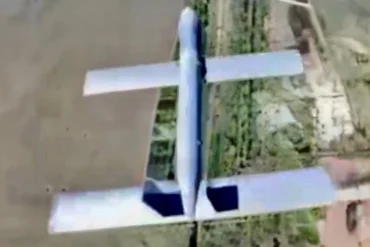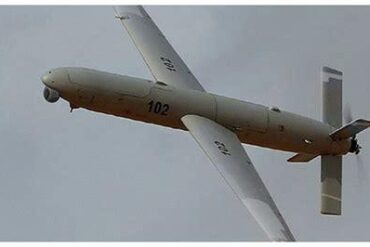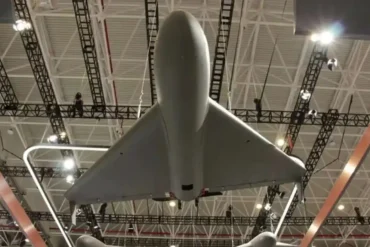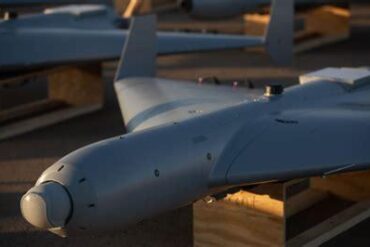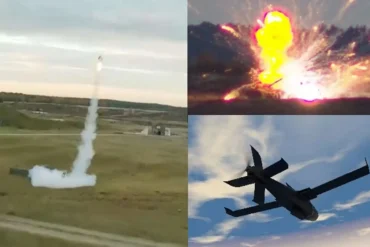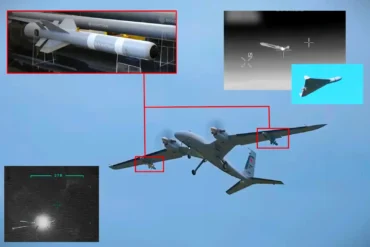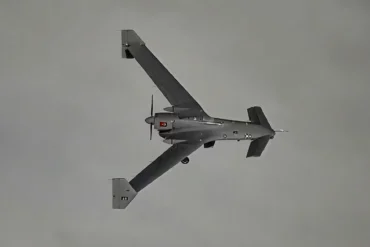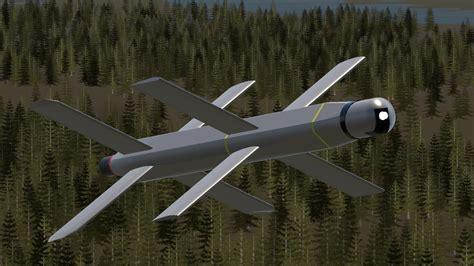
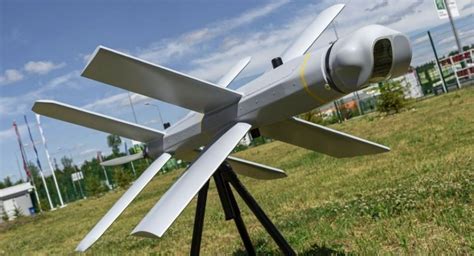
The ZALA Lancet, a loitering munition developed by ZALA Aero Group, a subsidiary of the Kalashnikov Concern, has rapidly evolved from an experimental drone into a potent symbol of Russian aerial strike capability. Introduced at the ARMY-2019 expo as a next-generation follow-up to the ZALA Kub-BLA, this UAV reflects a clear shift toward low-cost, high-impact aerial weaponry with broad operational utility.
Designed to serve both reconnaissance and strike missions, the Lancet’s combat footprint has expanded swiftly from early testing in the Syrian Civil War to large-scale deployment in Ukraine, where its utility against high-value targets has garnered international attention.
Technical Capabilities of the ZALA Lancet
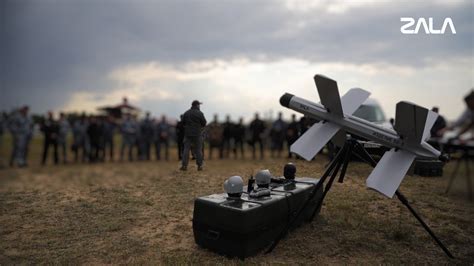
What sets the Lancet apart from previous loitering munitions is its dual-mode capability, blending surveillance and precision strike functions in one system. There are multiple versions of the Lancet, each tailored for specific operational roles:
- Lancet-3: The standard variant features a 40-minute flight endurance, a 3 kg warhead, and operates at a cruise speed of 110 km/h with a maximum terminal dive speed of 300 km/h.
- Lancet-1: A lighter version, it delivers a 1 kg warhead with a 30-minute flight time.
- Izdeliye-51 and Izdeliye-52: Enhanced versions featuring 3–5 kg warheads and improved electro-optical guidance systems, introduced in 2023.
- Izdeliye-53: A breakthrough autonomous variant with inter-drone communication, quad-launcher system, and autonomous target selection, designed for saturation attacks.
The UAV operates using optical-electronic and TV-guided terminal control, integrating intelligence, navigation, and communications modules. It communicates over dual frequency bands (868–870 MHz and 902–928 MHz) and can link with a relay drone, enabling operations in contested electronic environments.
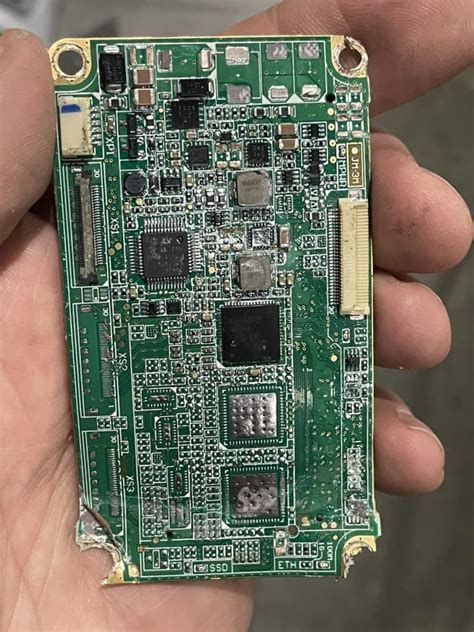
Its catapult launch system allows deployment from land or naval platforms, and the aircraft runs on an electric motor, minimizing its acoustic and thermal signature. Internally, it uses Western components like NVIDIA Jetson TX2 and Xilinx Zynq SoCs, despite ongoing sanctions, illustrating its hybridized supply chain.
Cost-Efficient Precision: A Strategic Asset
At an estimated 3 million rubles (~$35,000) per unit, the Lancet offers a remarkable cost-to-impact ratio, making it ideal for mass production and scalable deployment. This affordability enables Russian forces to deploy it extensively against both static and mobile high-value targets.
Unlike cruise missiles or tactical airstrikes that require complex coordination and high cost, the Lancet represents a low-risk, disposable platform that has democratized precision targeting within Russia’s tactical units.
Operational Record in Syria and Ukraine
The Lancet’s first confirmed combat usage occurred in November 2020 in Syria, striking Tahrir al-Sham positions in Idlib. However, its strategic value became evident in the Russian invasion of Ukraine, where its deployment in June 2022 marked a new phase in drone warfare.
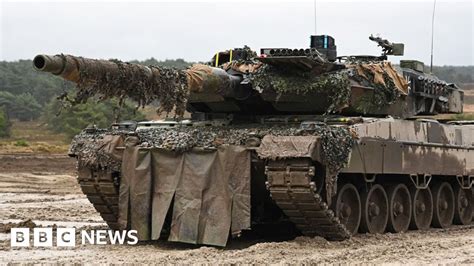
By July 2022, videos emerged of Lancets striking NATO-supplied equipment such as M777 howitzers, FH70s, and Krab systems. Through late 2022, they expanded their target range, attacking S-300 launchers, Buk-M1 systems, and even a Gyurza-M patrol boat on November 4.
Despite sanctions restricting component availability, video footage from July 2023 indicated a tripling in output, underscoring Moscow’s commitment to scale production.
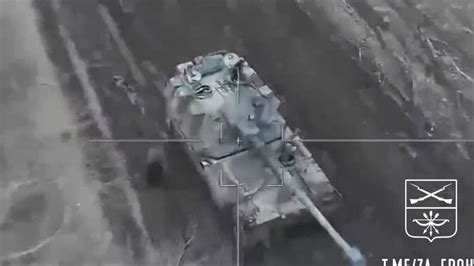
Key engagements include:
- February 2023: A strike on a Ukrainian T-84 main battle tank.
- March 2023: The first known hit on a Stormer HVM air defense vehicle.
- April 2023: Confirmed destruction of a Ukrainian patrol boat and strikes on Tor and S-300 launchers.
- September 19, 2023: First documented MiG-29 hit at a 70 km range.
- October 11, 2023: Strike on a Su-25 at the same airfield.
By February 28, 2024, 1,163 strikes had been documented, according to LostArmour, with an outcome distribution of 31.2% destroyed, 52.9% damaged, and 7% misses. The vast majority of targets were artillery (≈ 45%), followed by armored vehicles (25%), air defense/radar systems (14%), and soft-skinned vehicles (10%).
Doctrinal Evolution: From Kamikaze to Interceptor
One of the Lancet’s most notable features is its “air mining” mode, wherein it is programmed to intercept enemy drones mid-flight. By diving at maximum speed, the Lancet becomes a counter-UAV weapon, effectively turning it into a loitering interceptor capable of disrupting Ukrainian FPV drone operations.
This evolution illustrates Russia’s flexible UAV doctrine—repurposing strike drones as tactical air denial tools, thus mitigating Ukraine’s growing UAV dominance on the front line.
Defensive Countermeasures and Ukrainian Adaptation
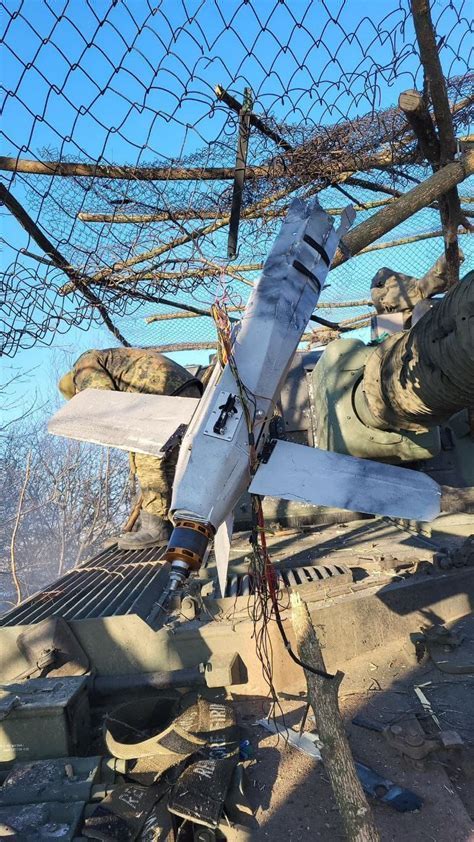
The Lancet’s effectiveness has spurred Ukrainian countermeasures, including:
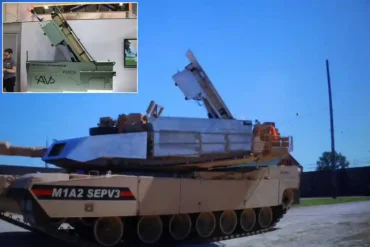
- “Cope cages”: Metal fencing and mesh structures added to tanks and artillery to disrupt detonation timing.
- Decoys: Inflatable and wooden replicas of systems like HIMARS, designed to absorb Lancet strikes without operational loss.
- FPV intercepts: From early 2024, Ukraine began using FPV drones to destroy Lancets during flight, particularly at low to mid-altitudes.
Despite these efforts, the Lancet remains a persistent threat due to its low radar signature, high maneuverability, and increasing AI-supported autonomy in its latest versions.
Production Scaling and Future Trajectory
A significant turning point came with the launch of a new production facility in mid-2023, reportedly tripling output. This surge was validated by May 2024, when Lancet strikes peaked at 285 within the month, the highest on record.
Reports suggest the ZALA Aero Group is pursuing even more autonomous models under the Izdeliye-53 project, capable of networked operations, autonomous target selection, and coordinated multi-drone swarms—a clear response to NATO’s increasing integration of combat swarm AI systems.
International Perception and Strategic Assessment
According to the UK Ministry of Defence in a November 2023 briefing, the Lancet ranks among Russia’s most effective recent battlefield innovations, while Ukrainian Commander-in-Chief Valerii Zaluzhnyi has acknowledged its widespread and effective use.
This loitering munition has reshaped how Russia conducts tactical interdiction, replacing costly guided artillery shells or manned reconnaissance missions with disposable drones delivering precision at a fraction of the cost.
The Lancet’s modular architecture, compact size, and versatility allow deployment across a range of conflict theaters—from urban skirmishes to strategic interdiction in rear logistics zones. Its growing usage statistics further solidify its role as an integral part of the Russian kill chain.
Conclusion: A Template for Modern Drone Warfare
The ZALA Lancet represents more than a mere tactical innovation; it is a doctrinal leap—where affordable, intelligent munitions achieve effects once reserved for complex, high-value assets. Its development and deployment reveal a shift in how nations may fight future wars: not just with firepower, but with persistent, adaptive, and expendable aerial systems.
As loitering munitions like the Lancet proliferate, they are set to become foundational tools in the 21st-century battlefield, redefining asymmetry, attrition, and autonomy in military operations.