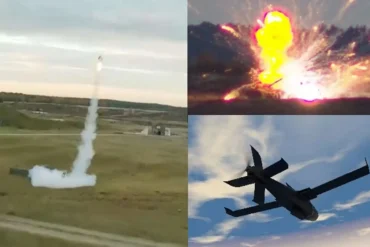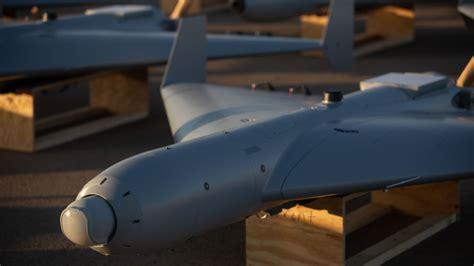
The United States has quietly taken a significant step in reshaping its operational posture in the Middle East with the deployment of a new low-cost, one-way attack drone known as LUCAS. Officially designated the Low-Cost Unmanned Combat Attack System, the platform is now in active operational use with both the U.S. Air Force and U.S. Navy, marking a notable shift in how Washington approaches strike warfare in a region increasingly defined by drone proliferation and escalation risks.
The acknowledgment, first reported in late January, comes amid heightened friction involving Iran, Israel, and several Gulf states. Pentagon officials describe the deployment as limited but deliberate, aimed at filling a long-recognized gap in U.S. force structure. For years, American planners observed adversaries leveraging inexpensive loitering munitions to achieve outsized battlefield effects. LUCAS represents a pragmatic response, embracing scale, attrition, and persistence rather than relying solely on exquisite, high-cost platforms.
At its core, the LUCAS program reflects an unusually candid admission by the U.S. defense establishment: adversaries, particularly Iran, identified a winning formula first. Iranian-designed Shahed-series loitering munitions, most notably the Shahed-136, demonstrated how mass-produced, expendable drones could saturate air defenses, impose psychological pressure, and drain interceptor inventories. Observing their extensive use by Russian forces in Ukraine throughout 2024 and 2025, U.S. analysts concluded that the absence of a comparable American capability represented a strategic vulnerability.
Strategic Rationale Behind the LUCAS Deployment
The decision to field LUCAS in the Middle East is rooted in realism rather than technological bravado. Modern air defense systems are optimized to counter high-end threats such as cruise missiles and stealth aircraft, but they are often ill-suited to handle large numbers of slow, low-cost drones. Each interception, while tactically successful, imposes a disproportionate financial burden. LUCAS is designed to exploit precisely this imbalance.
By introducing an expendable attack drone into forward-deployed units, U.S. commanders gain a tool that complicates enemy decision-making. A single LUCAS may be unsophisticated, but a coordinated launch forces defenders to choose between expending costly interceptors or allowing a strike asset to penetrate. In regions where Iranian-backed militias and state forces rely on layered but finite air defenses, this calculus matters.
Design Lineage and Technical Characteristics
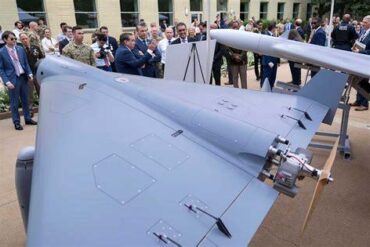
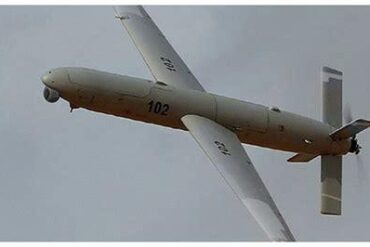
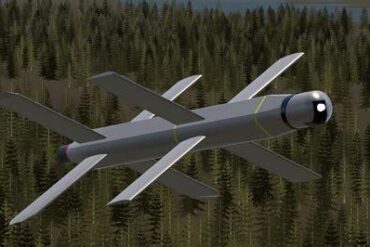
LUCAS does not disguise its origins. Developed by SpektreWorks and also marketed as FLM-136, the system closely mirrors the aerodynamic and operational characteristics of Iran’s Shahed family. It features a flying-wing configuration, a rear-mounted piston engine, and a one-way mission profile that treats the drone as airborne ammunition rather than a recoverable aircraft.
Available assessments indicate a range exceeding 1,500 kilometers, depending on payload and flight profile. This reach allows launches from well outside defended airspace, a critical factor in contested regions. Cruising speeds remain modest, generally below 200 kilometers per hour, but endurance compensates for vulnerability. Navigation blends Global Positioning System inputs with inertial guidance, offering sufficient accuracy against fixed or semi-fixed targets despite limited resistance to advanced electronic warfare.
The warhead is believed to fall within the 30 to 50 kilogram class, optimized for blast and fragmentation against infrastructure, logistics sites, and lightly protected facilities. Precision is not the primary selling point. Instead, LUCAS emphasizes persistence, availability, and the ability to impose cumulative damage over time.
Western Manufacturing and Naval Integration
Where LUCAS diverges sharply from its Iranian inspiration is in its component ecosystem. The U.S. variant integrates Western propulsion systems, flight control computers, and secure interfaces sourced from domestic suppliers. This reduces reliance on improvised commercial electronics and improves reliability under operational stress, even if it marginally increases unit cost.
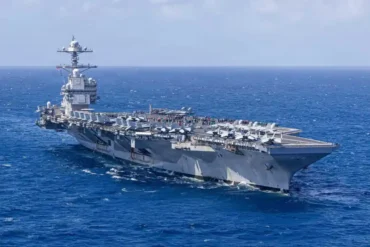
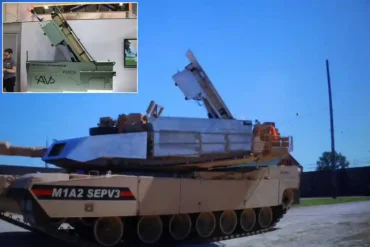
Naval integration stands out as a defining feature. The U.S. Navy has confirmed compatibility with ship-based launch rails, enabling deployment from surface combatants without dedicated aviation facilities. A successful test launch from a U.S. warship in December underscores the intent to embed LUCAS across carrier strike groups and independent task forces operating in contested littoral zones.
This capability aligns with evolving naval doctrine that emphasizes distributed lethality and flexible strike options. Surface combatants armed with loitering munitions can project power without exposing high-value aircraft or exhausting missile inventories, a particularly attractive proposition in narrow waterways and congested theaters.
Early Operational Use and Tactical Value
While the Pentagon remains guarded about combat employment, open-source analysts suggest that LUCAS may already have been used operationally. Footage from a recent U.S.-led operation in Venezuela captured the distinctive acoustic signature associated with Shahed-type drones, characterized by a high-pitched engine note audible long before impact. The timing, flight profile, and sound characteristics align closely with one-way attack loitering munitions rather than conventional unmanned aerial vehicles or cruise missiles.
From a tactical standpoint, the appeal is obvious. LUCAS allows commanders to conduct shaping operations that degrade enemy sensors, strain air defenses, and create windows of opportunity for follow-on strikes. Even when intercepted, the drones serve a purpose by forcing defenders to reveal radar positions and expend valuable munitions.
Their limitations are equally clear. LUCAS remains vulnerable to modern electronic attack and layered air defense systems. Survivability is not its strength. Yet survivability is not the point. Value lies in numbers, persistence, and the ability to impose decision fatigue on defenders.
Implications for Iran and Regional Allies
The deployment carries symbolic weight as well as military significance. For Iran, it represents an uncomfortable inversion of its own strategy. A design philosophy long dismissed by Western analysts as crude has been validated and adopted by the world’s most technologically advanced military. The prospect of U.S. forces employing a Shahed-inspired system against Iranian proxies, or potentially Iranian assets themselves, alters regional calculations.
For U.S. allies such as Saudi Arabia, Türkiye, and Israel, the move underscores how rapidly lessons from Ukraine translate into operational doctrine elsewhere. Drone warfare is no longer a peripheral concern or the domain of non-state actors. It is a central feature of modern conflict, shaping procurement priorities and defensive planning across the region.
A Broader Shift in U.S. Airpower Thinking
Perhaps the most consequential aspect of LUCAS is what it reveals about U.S. military thinking. For decades, American airpower emphasized precision, stealth, and technological overmatch. LUCAS signals a recognition that industrial scale and cost efficiency now matter just as much. Saturation and psychological pressure are being normalized as tools of state-level military planning, not just improvised tactics of sanctioned regimes.
As U.S. naval and air units continue to flow into the Middle East amid uncertainty over Iran’s internal dynamics and regional posture, LUCAS adds another layer to an already dense security environment. Cheap, expendable drones are no longer a curiosity or an anomaly. They are becoming a standard instrument of power, reshaping how wars are deterred, fought, and perceived far beyond any single theater.