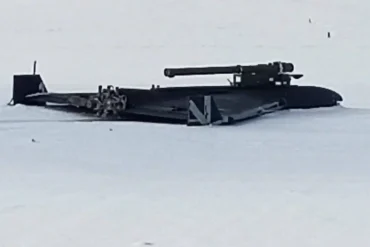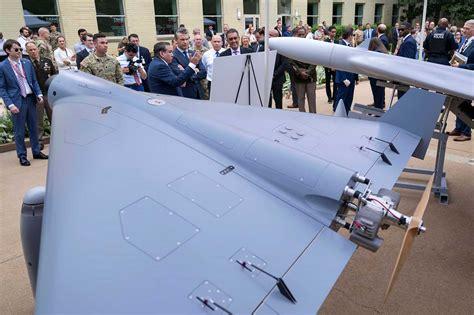
We examine the latest shift in America’s evolving drone strategy, where the deployment of the Low-cost Unmanned Combat Attack System (LUCAS) marks a decisive moment in Washington’s confrontation with Tehran’s expanding unmanned arsenal. The introduction of these aircraft, unmistakably inspired by Iran’s Shahed-136, reflects a calculated move: Washington has embraced the very design it seeks to counter, transforming an adversary’s weapon into a scalable tool of deterrence and rapid response in the Middle East. This development is more than hardware. It is a strategic message, a demonstration that the United States is prepared to adopt, adapt, and operationalize the technologies driving modern asymmetric warfare.
We analyze the context in which U.S. Central Command (CENTCOM) announced the creation of Task Force Scorpion Strike (TFSS)—the military’s debut operational squadron dedicated to one-way attack drones. Established on the directive of Secretary of War Pete Hegseth, TFSS is configured to acquire and field affordable drones at a pace reflecting the urgency of today’s contested airspace. While CENTCOM has not revealed the exact basing location, the squadron’s placement somewhere within the Middle Eastern theater suggests strategic proximity to Iranian influence zones.
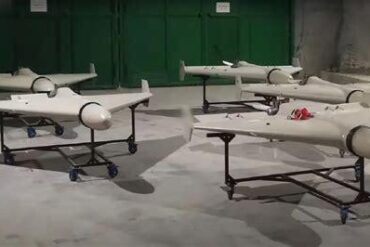
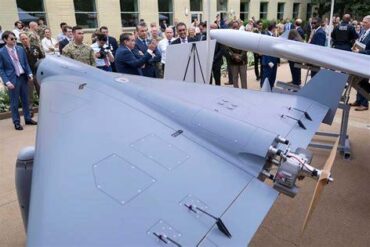
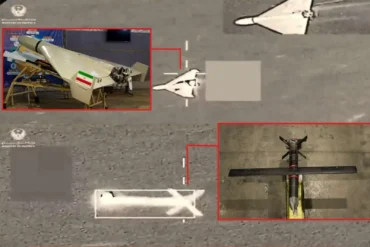
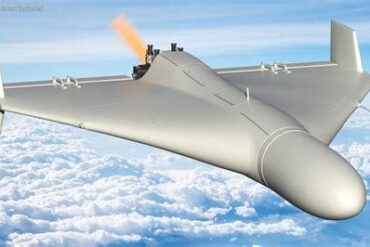
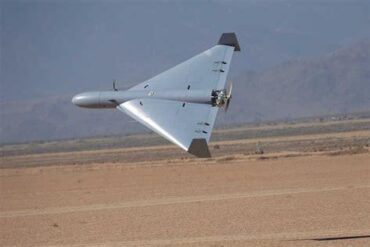
The LUCAS system is unmistakably derivative of the Iranian Shahed-136, the delta-wing loitering munition that has dominated headlines from Ukraine to Syria to the Red Sea. We outline how U.S. defense engineers reverse-engineered a captured Shahed unit several years ago, producing an American system retaining the aerodynamic advantages of the original while introducing a suite of engineering upgrades suited to U.S. military needs.
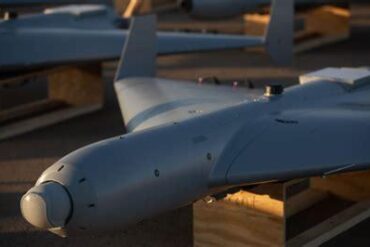
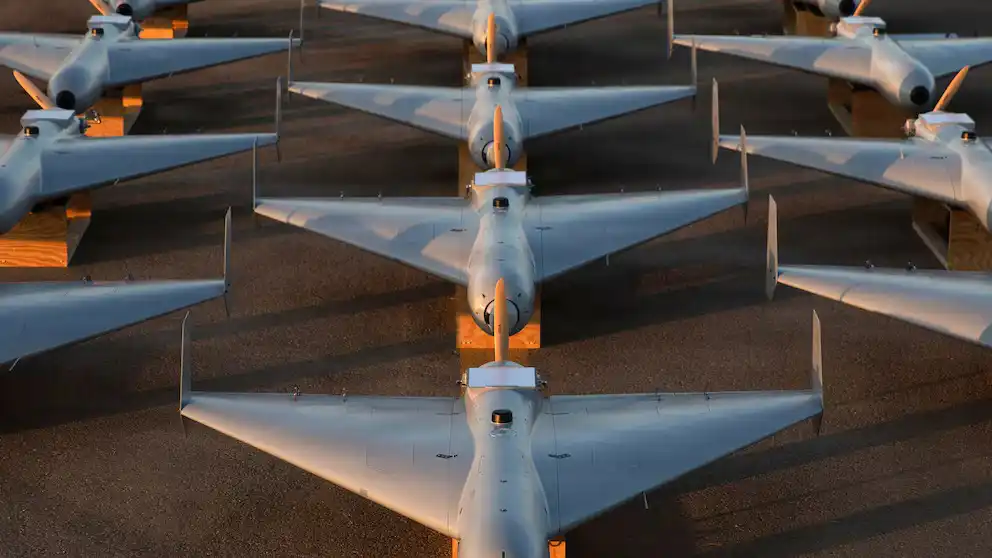
The drone measures roughly 10 feet in length with an 8-foot wingspan, mirroring the compact, long-range geometry of its Iranian counterpart. The triangular delta-wing configuration favors endurance, stability, and minimal radar visibility, enabling deep targeting profiles. Yet LUCAS diverges where it matters: propulsion, modularity, communications, and reusability.
Powered by a two-cylinder DA-215 engine (215 cm³), LUCAS differs from the Shahed’s Limbach L550E clone, delivering improved fuel efficiency, lower acoustic signature, and sufficient thrust for extended loitering operations. These upgrades enable quieter ingress routes and greater mission survivability, especially across low-altitude or coastal environments where Iran’s proxies traditionally operate.
Modularity, Payload Adaptability, And A New Tier Of U.S. Drone Flexibility
We highlight the most significant innovation: LUCAS is built around modular, open architecture. Its payload bay accommodates reconnaissance sensors, electronic-warfare suites, communication relays, and various explosive packages. Such modularity creates a multi-role system capable of operating as a one-way attack munition, a persistent ISR platform, or a node within a larger drone swarm.
This flexibility marks a departure from the Shahed-136’s single-use design. With selectable mission profiles and the ability to recover specific configurations, LUCAS offers improved cost efficiency. For commanders in contested zones, the option to deploy the same airframe for reconnaissance before converting later units into attack platforms offers tactical agility rarely matched in its weight class.

Launch Versatility And Rapid Fielding Across Domains
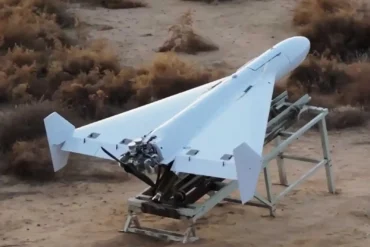
The system’s varied launch options—Rocket-Assisted Take-Off (RATO), vehicle-mounted launch frames, catapult systems, and naval platforms—ensure rapid forward deployment. This adaptability supports TFSS’s mission to provide units with limited specialization the ability to field lethal drones under tight timelines.
Its dual-voltage (28V and 12V) architecture supports a wide spread of payloads, while its relatively light logistical footprint allows dispersed deployment across the CENTCOM region. By enabling U.S. forces to stage LUCAS units aboard ships or light tactical vehicles, Washington is crafting a mobile strike ecosystem optimized for fluid regional tensions.
Autonomous Swarming Through MUSIC Mesh Networking
We examine the Multi-domain Unmanned Systems Communications (MUSIC) mesh network—a defining feature that positions LUCAS at the intersection of autonomy and coordinated strike capability. MUSIC enables drones to share positional, targeting, and environmental data in real time, allowing autonomous swarming and complex attack geometries. It also permits individual drones to function as temporary communication relays, bridging gaps where EW interference or terrain disrupt conventional channels.
Iran’s Shahed network is largely linear and radio-dependent. LUCAS, by contrast, participates in a distributed, self-healing communications mesh. In dense EW environments—where Iran, Russia, and even non-state actors have demonstrated capability—this networking architecture ensures mission continuity.
Strategic Cost Efficiency And The Shift Toward Economical U.S. Strike Assets
Priced at approximately USD 35,000, LUCAS reflects a dramatic departure from the cost structure of traditional U.S. long-range strike systems. While legacy cruise missiles often exceed the million-dollar threshold, LUCAS creates a sustainable path for scalable deployments and saturation attacks. This price point also positions the drone as a practical tool for training, target simulation, and counter-UAS experimentation.
In August, the U.S. Air Force issued a request for industry to produce 1:1 Shahed-136 replicas for testing next-generation anti-drone systems. LUCAS fills this role naturally, serving not only as an operational weapon but as a testable surrogate for adversarial threats. This dual-utility underlines Washington’s recognition that Iran’s loitering munitions are shaping battlefield dynamics from Ukraine to the Levant.
Shahed-136: The Blueprint For Modern Asymmetric Aerial Warfare
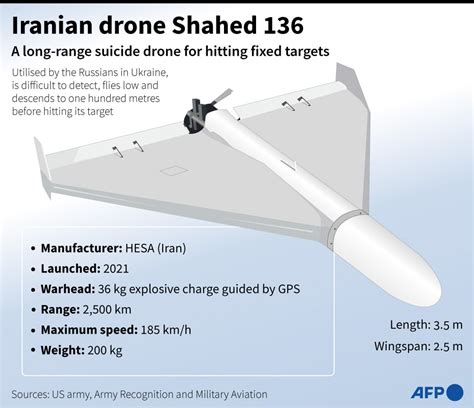
The Iranian Shahed-136 has transformed the global drone landscape due to its simplicity, endurance, and destructive efficiency. Its carbon-fiber shell, low flight altitude, and distinctive glide profile make detection and interception difficult. Russia’s Geran-2 variant has become a constant presence in the Ukraine war, overwhelming air defenses, striking energy grids, and forcing Kyiv to expend expensive munitions to counter cheap drones.
Iran’s proxies have used Shaheds to attack U.S. positions in Iraq, Syria, and Jordan—where an attack last year killed three American soldiers and wounded dozens. Meanwhile, Chinese firms such as LOONG UAV and North Korean design bureaus have adopted the Shahed blueprint for their own one-way attack drones, confirming the widespread proliferation of the design.
Iran’s Expanding Drone Industry And Russia’s Growing Assembly Lines
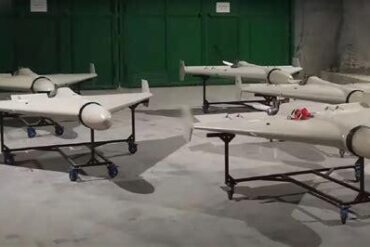
Russia’s assembly of Geran-2 drones at the Alabuga Special Economic Zone demonstrates how quickly Shahed-based systems can scale. Moscow has built extensive lines of black-painted Geran-2 units, enabling nightly saturation attacks on Ukrainian cities. These production lines offer a cautionary model for how adversarial powers can replicate, adapt, and multiply low-cost systems at speed.
The U.S. adoption of LUCAS signals an acknowledgment that countering such threats requires not only defensive measures but also the ability to retaliate or deter using similar mass-production tactics.
Operational Implications Of LUCAS Deployment In The Middle East
The deployment of LUCAS in the Middle East communicates a pointed message: the United States is no longer content to watch Iran shape the drone battlefield. Instead, Washington has operationalized a drone class that mirrors Iranian methodology while incorporating superior engineering, autonomy, and modularity.
This development allows U.S. forces to:
- Saturate enemy defenses using affordable platforms.
- Conduct persistent ISR and precision strikes with minimal risk.
- Test new anti-drone and swarm-countering technologies.
- Replicate adversary flight profiles in realistic training contexts.
Iran’s Shahed-driven strategy—marked by deniable attacks, proxy warfare, and low-altitude saturation—has prompted an American response crafted to meet and exceed its capabilities.
A Tactical Reversal With Strategic Consequences
By adopting a design inspired by Iran’s most recognizable drone, the United States has turned Tehran’s hallmark asymmetric weapon against it. LUCAS offers the affordability to engage in mass deployment, the sophistication to operate autonomously in contested airspace, and the modularity to serve multi-domain missions.
As tensions continue across the Middle East and proxy groups field increasingly advanced unmanned systems, LUCAS provides Washington with a flexible, scalable, and rapidly deployable capability. The script has indeed been flipped: the very technology Iran exported to expand its regional influence has now returned in an evolved, operational U.S. form. The long-term implications are significant, signaling a future where drone warfare is defined less by who invented a platform and more by who can mass-produce, adapt, network, and field it fastest.