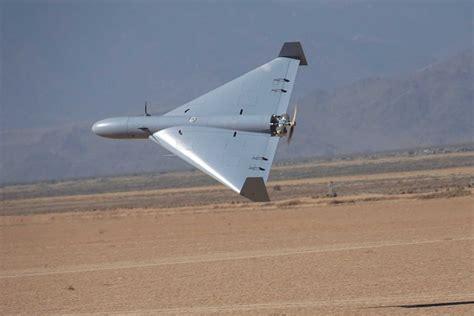
The modern battlefield is increasingly defined by autonomy, affordability, and scale. In recent years, the proliferation of low-cost kamikaze drones has reshaped how militaries approach both offense and defense. Iran’s Shahed-136 loitering munition became one of the most visible symbols of this shift, proving that inexpensive, mass-produced drones could threaten sophisticated air defenses and strategic infrastructure. Now, the United States has answered with an unexpected twist: a weapon system derived from the very design it once condemned.
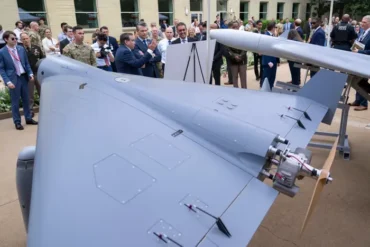
The result is LUCAS — the Low-cost Unmanned Combat Attack System — a drone developed by American defense firm SpektreWorks and deployed by U.S. Central Command during Operation Epic Fury. Modeled after Iran’s Shahed-136 but enhanced with American networking technology and modular architecture, the system represents a dramatic reversal in the technological narrative of drone warfare. What began as an Iranian asymmetric weapon has now been re-engineered into a tool of U.S. military strategy.
At a recent press briefing, CENTCOM commander Admiral Brad Cooper openly acknowledged the unusual origin of the drone. His description captured the moment perfectly: the United States had captured the Iranian system, reverse-engineered it, rebuilt it domestically, and then deployed it back into the Middle East battlefield against its original creator.
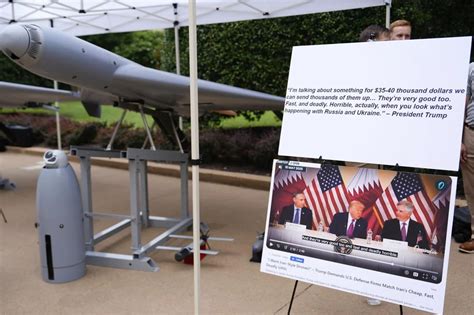
This development marks a fascinating chapter in modern military innovation, where reverse engineering and rapid adaptation can reshape the balance of power almost overnight.
The Rise of the LUCAS Drone in Operation Epic Fury
The operational debut of the LUCAS drone occurred during Operation Epic Fury, a large-scale joint military effort involving the United States and Israel against Iranian military infrastructure. Launched on February 28, 2026, the operation combined a wide range of assets—from stealth bombers and carrier strike groups to advanced fighter aircraft.
Among these high-end systems were two U.S. aircraft carriers, USS Gerald R. Ford and USS Abraham Lincoln, supported by destroyers firing Tomahawk cruise missiles, as well as B-2, B-1, and B-52 strategic bombers. Advanced fighters such as the F-22 Raptor, F-35 Lightning II, and F/A-18 Super Hornets provided air superiority and strike capabilities.
Yet amid this impressive array of sophisticated weaponry, one of the most strategically intriguing tools was the humble but lethal LUCAS drone.
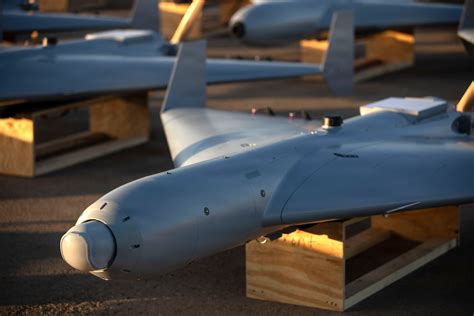
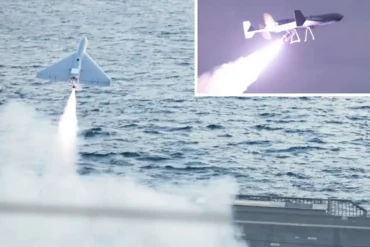
Launched from ground-based platforms operated by Task Force Scorpion Strike, these drones performed one-way attack missions against Iranian targets. While the Pentagon has not publicly confirmed specific targets, officials hinted that the strikes were highly effective.
The significance lies not only in the damage inflicted but in how the damage was delivered. Instead of relying exclusively on multimillion-dollar cruise missiles or high-end aircraft, the U.S. deployed swarms of inexpensive autonomous drones.
In essence, the United States adopted the same strategy Iran had used for years: overwhelm defenses through numbers rather than technological sophistication alone.
From Iranian Shahed-136 to American LUCAS
The Shahed-136 drone gained global notoriety during the Russia-Ukraine war. Russia deployed the Iranian-designed system—renamed Geran-2—in large quantities against Ukrainian infrastructure, demonstrating how low-cost drones could inflict significant strategic pressure.
The Shahed’s key advantage was its economics. An interceptor missile from a modern air defense system can cost hundreds of thousands or even millions of dollars, while a Shahed-136 costs only tens of thousands. This creates a powerful cost asymmetry, forcing defenders to spend far more than attackers.
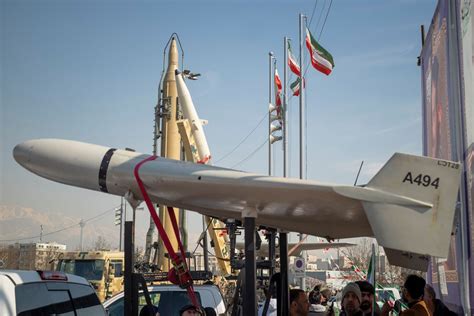
The United States carefully observed this dynamic. Over time, American military planners realized that their arsenal—dominated by expensive precision weapons like Tomahawk cruise missiles or MQ-9 Reaper drones—lacked an equivalent low-cost strike option.
The solution came through reverse engineering.
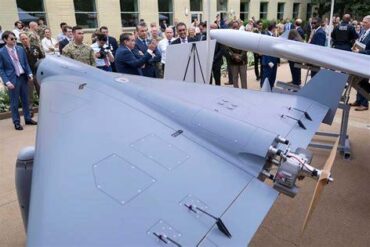
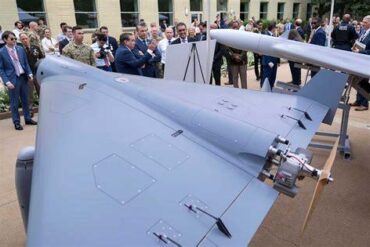
Captured examples of the Shahed-136 were analyzed in detail, allowing engineers to replicate the core design philosophy while improving integration with U.S. command networks. The resulting platform, LUCAS, retained the fundamental strengths of the Iranian drone while incorporating new capabilities suited to American operational doctrine.
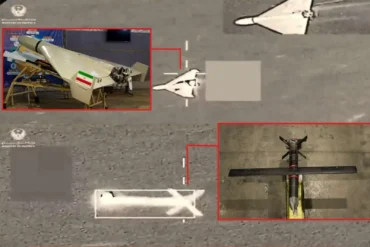
Ironically, this mirrors an earlier episode in drone history. In 2011, Iran captured the U.S. stealth drone RQ-170 Sentinel and later produced its own derivative versions, including the Saeghe and Simorgh drones. At the time, Washington strongly criticized such reverse-engineering efforts.
Now the technological cycle has come full circle.
Technical Design and Capabilities of LUCAS
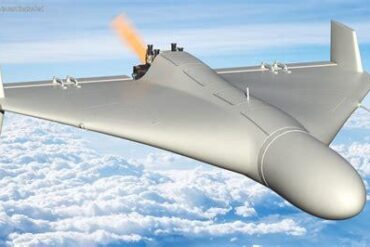
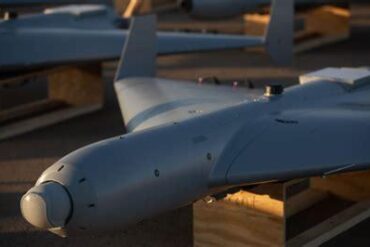
Physically, LUCAS resembles the Shahed-136, featuring a delta-wing configuration optimized for stability and long-range flight. However, several key design changes distinguish the American version.
The drone measures roughly 10 feet in length with a wingspan of about 8 feet and a takeoff weight of approximately 82 kilograms. Despite its compact form, the aircraft can carry an 18-kilogram payload, enabling it to perform both reconnaissance and strike missions.
Powered by a gasoline piston engine, LUCAS prioritizes endurance and reliability rather than high speed. The drone can loiter for up to six hours, providing extended surveillance before diving onto its target.
Navigation relies primarily on GPS and inertial guidance systems, allowing the drone to operate beyond line of sight. In environments where GPS signals may be jammed, the drone can switch to visual navigation techniques, enabling continued operation even under electronic warfare conditions.
Another key feature is its modular architecture. The system supports multiple payload types, including:
- Explosive warheads for one-way attack missions
- Electronic warfare modules for signal disruption
- Reconnaissance sensors for battlefield intelligence
This flexibility allows the same platform to perform a wide variety of missions, significantly improving operational efficiency.
The Power of Swarm Warfare
Perhaps the most transformative element of LUCAS is not the airframe itself but the network architecture supporting it.
The drone integrates with the Multi-domain Unmanned Systems Communications (MUSIC) mesh network, a digital framework that enables autonomous coordination among multiple unmanned platforms. Through this network, drones can communicate with each other and with command nodes, sharing data and adjusting flight paths in real time.
This capability allows LUCAS to operate in swarms, a tactic designed to overwhelm enemy defenses. Instead of a single drone attempting to evade interception, dozens—or potentially hundreds—can approach a target simultaneously from multiple directions.
In such scenarios, defenders face a daunting dilemma. Air defense systems must decide which drones to intercept first, while each interceptor missile costs dramatically more than the drone it destroys.
This economic warfare becomes a powerful strategic tool.
If an interceptor missile costs $500,000 and a drone costs $35,000, the defender loses financially even when successfully stopping the attack.
Cost Advantage and Strategic Implications
The financial logic behind LUCAS is straightforward. Each drone costs roughly $30,000 to $35,000, compared with approximately $2 million for a Tomahawk cruise missile.
This enormous cost difference allows the U.S. military to conduct sustained drone campaigns without exhausting expensive precision weapons. In prolonged conflicts, this advantage becomes critical.
Mass production is another strength. The drone’s relatively simple construction enables rapid manufacturing, making it suitable for protracted conflicts where attrition plays a major role.
Moreover, the platform’s truck-mounted launch systems provide exceptional mobility. Units can deploy drones from forward bases or allied territory, launch them quickly, and relocate before enemy forces can respond.
This mobility makes the system particularly valuable in regions where missile threats and drone attacks are common, such as the Middle East.
Drone Warfare’s New Strategic Reality
The emergence of LUCAS reflects a broader transformation in military strategy. Traditional Western doctrines emphasized high-precision, high-cost platforms capable of striking targets with extraordinary accuracy. While these systems remain essential, recent conflicts—from Ukraine to the Middle East—have demonstrated that quantity can sometimes rival quality.
Cheap drones have proven capable of saturating defenses, harassing infrastructure, and imposing economic strain on technologically superior militaries.
For the United States, the LUCAS program represents an acknowledgment of this reality. Instead of relying solely on expensive systems, the Pentagon is embracing scalable, affordable unmanned warfare.
At the same time, the symbolism of LUCAS is impossible to ignore. A weapon originally designed by Iran has been transformed into a tool used against Iran itself.
In the language of modern conflict, it is a perfect strategic reversal—a case where technological adaptation becomes a form of battlefield retribution.
As drone warfare continues to evolve, systems like LUCAS will likely play an increasingly central role in future conflicts. Their combination of affordability, autonomy, and swarm capability represents a powerful shift in military thinking.
And in this new era of unmanned warfare, the most decisive advantage may no longer belong to the side with the most advanced technology—but to the side that can deploy the most effective technology at scale.