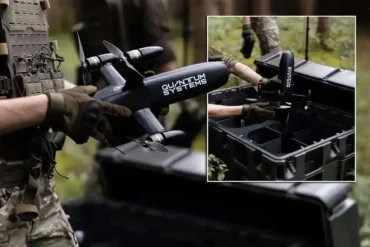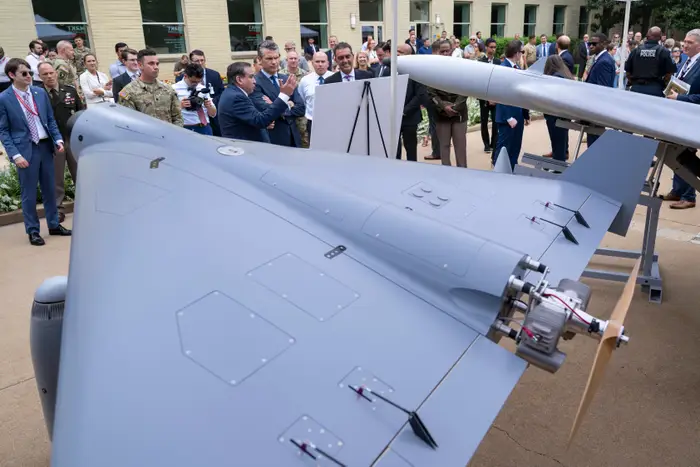
A mysterious new drone displayed at the Pentagon this week has drawn intense scrutiny for its resemblance to Iran’s infamous Shahed-series one-way attack drones—a design heavily used by Russia in its war on Ukraine. The new American drone, dubbed LUCAS (Low-Cost Uncrewed Combat Attack System) and manufactured by SpektreWorks, was showcased among 18 domestic drone prototypes in the Pentagon courtyard on July 16, 2025. The model—specifically the FLM 131—appears to be part of a rapidly accelerating effort by the United States to catch up in the mass-production of expendable, autonomous aerial weapons.
A New Era of Low-Cost Lethality
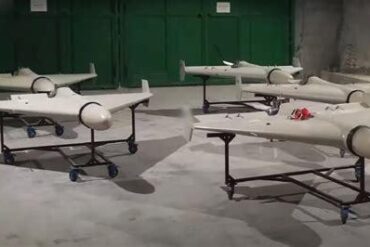
The unveiling of the FLM 131 marks a significant shift in U.S. defense strategy, driven by the realization that future warfare is becoming more robotic, autonomous, and low-cost. Traditional munitions and manned platforms are increasingly seen as too expensive and too slow to deploy. In contrast, systems like Shahed drones—produced by Iran for around $35,000–$40,000—have proven effective, deadly, and scalable in ongoing global conflicts.
According to a fact sheet spotted at the Pentagon, the LUCAS drone is intended not only for offensive one-way attack missions but also as a “viable threat emulator” to support training within Indo-Pacific Command. It emphasizes low operational and maintenance costs and adaptability for various mission profiles: strike, reconnaissance, and communications. These factors make it appealing to Joint Forces, particularly for simulations and real-world deployments where attritable assets—those that can be lost without major consequence—are essential.
Striking Similarity to the Shahed
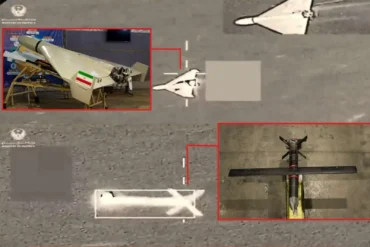
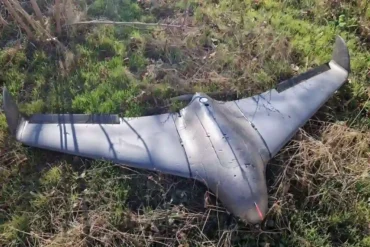
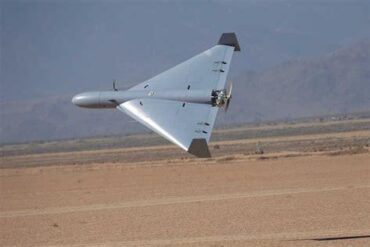
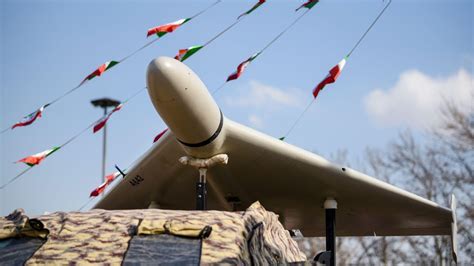
Visually, the FLM 131 bears a striking resemblance to the Iranian Shahed-136, also known as the Geran-2 in Russian service. It features a delta-wing shape, flat wingtips, and a blunt nose, all reminiscent of the Shahed’s design profile. Moreover, the numbering convention (FLM 131/136) echoes the Shahed series, suggesting intentional reverse engineering or homage.
SpektreWorks has previously listed the FLM 136 in its catalog, measuring nearly 10 feet in length, with a wingspan of just over 8 feet. It reportedly cruises at 55 knots and can sprint at 100 knots, carrying a 40-pound payload. The company claims the design is “reverse-engineered for authentic threat emulation,” a telling indication of the drone’s likely development inspiration.
Strategic Pivot Under Trump Administration
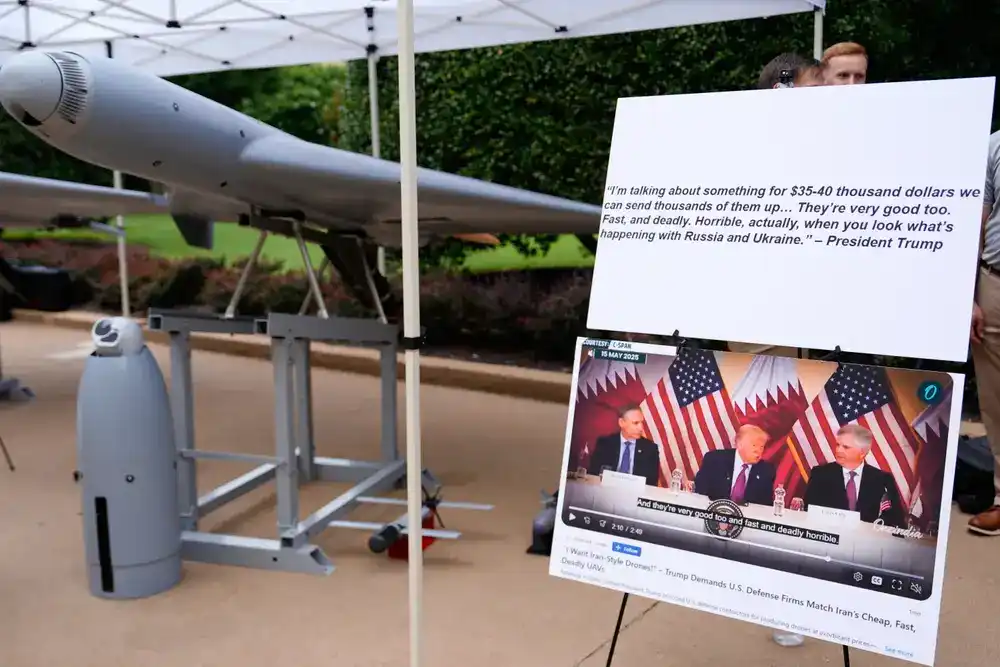
This unveiling comes in the context of an aggressive policy shift under President Donald Trump, who has made ramping up drone production a national defense priority. In June 2025, Trump signed an executive order fast-tracking drone development, while Defense Secretary Pete Hegseth eliminated what he described as “restrictive policies” that had previously throttled production efforts.
“Drones are the biggest battlefield innovation in a generation, accounting for most of this year’s casualties in Ukraine,” Hegseth stated in a recent memo. He emphasized that U.S. adversaries now produce millions of drones annually, and that the U.S. must drastically expand its output of small, lethal, affordable UAVs to remain competitive.
Trump echoed these sentiments during a roundtable in Qatar: “Iran makes a good drone. Fast, deadly, and cheap. Horrible, actually, when you look at what’s happening in Ukraine.”
Lessons from the Shahed’s Combat Legacy
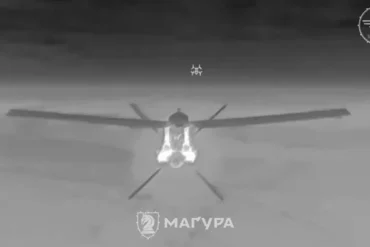
The Shahed-136, first deployed by Russia in 2022 against Ukrainian targets, has since become a mainstay of Russia’s long-range strike capability. Though slower than cruise or ballistic missiles, Shaheds are cheap and numerous, often launched in saturation waves that overwhelm air defenses. Ukrainian forces have reported that Russia modified these drones for greater destructiveness, including the use of thermobaric warheads that produce more severe blast effects.
Their success on the battlefield has transformed the Shahed into a symbol of 21st-century drone warfare—an expendable, semi-autonomous munition that can hover and loiter over targets before striking. U.S. defense planners are increasingly concerned that unless America develops its own mass-produced equivalents, it will fall behind in asymmetric drone warfare.
Modular and Multi-Mission: FLM 131’s Tactical Edge
One notable feature of the FLM 131 is its modular architecture. The drone can be quickly reconfigured to serve multiple battlefield roles, including attack missions, ISR (intelligence, surveillance, reconnaissance), and even communications relays. This modularity offers unparalleled flexibility, especially in forward operating environments where logistics and repair options are limited.
While detailed specs for the FLM 131 remain limited, its sibling model—the FLM 136—provides a useful proxy. Its modest payload capacity of 40 pounds can accommodate explosive warheads, sensors, or electronic warfare packages, making it a Swiss-army knife for theater commanders. Unlike traditional aircraft, these drones can be disposable and swarmable, launching in numbers large enough to alter the outcome of a skirmish or raid.
The Race for Drone Supremacy: A Pentagon Imperative
The Pentagon’s unveiling of the FLM 131 drone is part of a broader effort to transform American drone warfare doctrine. Across all branches of the U.S. military, investment is accelerating:
- The Army is developing drone-centric strategies under its Future Vertical Lift and Transformation initiatives.
- The Marine Corps has formed dedicated teams to study and deploy loitering munitions based on Ukrainian lessons.
- The Air Force is pioneering the use of Collaborative Combat Aircraft (CCA)—drones that operate alongside manned fighter jets.
- The Navy is field-testing both aerial drones and autonomous surface vessels to expand strike and recon reach across the Pacific.
This systemic shift marks the largest military doctrinal update since the Global War on Terror, with an emphasis on AI integration, swarm tactics, and attritable assets that can support or replace manned platforms in contested areas.
The Geopolitical Fallout of Imitation
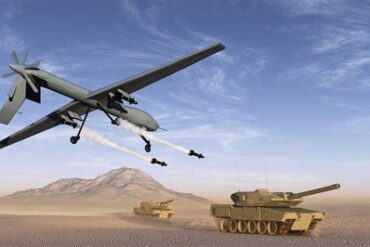
The emergence of an American-made drone so closely modeled after an Iranian design raises geopolitical eyebrows. Historically, the U.S. has invested in high-end UAVs like the MQ-9 Reaper or RQ-4 Global Hawk—platforms costing millions per unit. The LUCAS program flips that logic, favoring mass production over sophistication, and cost-effectiveness over prestige.
While the Pentagon emphasizes that the FLM 131 is a “threat emulator,” its potential for frontline deployment is obvious. The resemblance to the Shahed isn’t accidental—it’s deliberate reverse engineering driven by battlefield necessity. The move is tacit acknowledgment that Iran’s cheap and deadly design has set a new standard for asymmetric airpower.
U.S. policymakers must now wrestle with the implications: Are they copying adversaries to catch up, or leading from behind in the next wave of military technology? Either way, the lines between emulation and innovation are blurring, and the battlefield no longer rewards patience.
Conclusion: The Drone Future Has Arrived
The LUCAS FLM 131 is not just another prototype. It is a turning point in U.S. drone warfare philosophy—a shift from elite, expensive assets to mass-produced, modular killing machines tailored for the attritional combat of tomorrow. The drone’s similarity to the Shahed is not a flaw; it is a strategic feature.
With global drone production now central to national security, the United States has signaled its intent to build smarter, cheaper, and faster. As the Pentagon ramps up its efforts, the battlefield of the future is taking shape—not with the roar of jets, but with the hum of thousands of autonomous wings overhead.