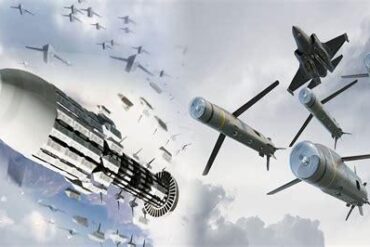
The rapid spread of low-cost unmanned aerial attack systems has forced militaries around the world to rethink air defense strategy. Among the most disruptive threats is the Iranian-designed Shahed loitering munition, a drone built for mass deployment, long-range strikes, and cost-efficient warfare. As these drones proliferate across modern battlefields—from Eastern Europe to the Middle East—the United States and several Gulf states are now exploring an unconventional solution: Ukrainian-built interceptor drones designed specifically to hunt and destroy Shaheds in flight.
This emerging defense concept reflects a shift in thinking. Instead of relying exclusively on expensive missile systems such as Patriot PAC-3 interceptors, defense planners are examining how swarms of inexpensive counter-drones could form a new defensive layer capable of neutralizing large waves of incoming attack UAVs. The model was developed under battlefield pressure in Ukraine and is now attracting serious attention from Western defense planners.
The strategic implications are significant. If adopted widely, Ukrainian interceptor drones could redefine air defense economics, replacing high-cost missile engagements with agile robotic interceptors costing only a few thousand dollars.
The Growing Threat of Iranian Shahed Drone Swarms
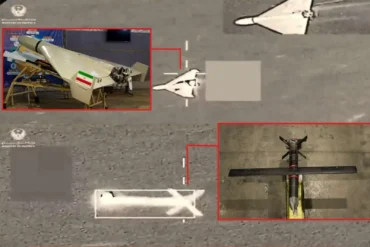
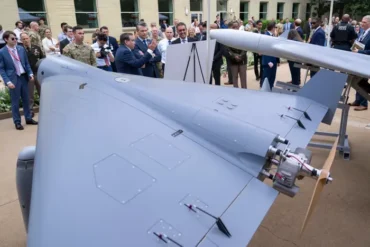
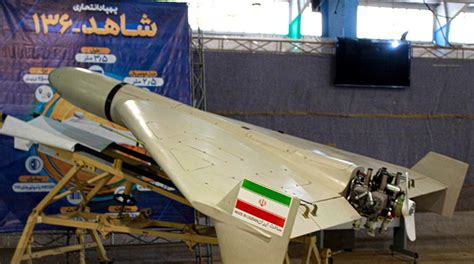
The Shahed family of loitering munitions—particularly the Shahed-136 and its derivatives—has become one of the most recognizable weapons of modern drone warfare. These aircraft are relatively simple machines: propeller-driven drones with delta wings, a modest guidance system, and a payload of roughly 40 kilograms of explosives. Yet their simplicity is precisely what makes them dangerous.
Operating at speeds of around 180 kilometers per hour and capable of traveling distances approaching 2,000 kilometers, Shahed drones can strike targets deep behind front lines. They fly low to the ground, often following terrain or infrastructure corridors that complicate radar detection. When launched in groups, they become even more difficult to stop.
Defenders face a frustrating tactical dilemma. A single Patriot interceptor missile can cost several million dollars, while the attacking drone may cost tens of thousands or less. When attackers launch dozens of drones simultaneously, the cost imbalance becomes dramatic. In military strategy this is known as a “cost-per-kill asymmetry”, where defenders spend vastly more resources than attackers.
The Middle East presents particularly vulnerable targets for such attacks. Energy infrastructure, ports, desalination plants, and military bases are concentrated around coastal regions and urban centers. Even one successful drone penetration could disrupt oil production, damage logistics hubs, or create political shockwaves across the region.
As a result, defense planners are searching for ways to intercept cheap drones with equally cheap solutions.
Ukraine’s Battlefield Innovation: Industrializing Counter-Drone Warfare
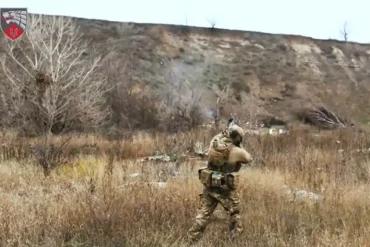
Ukraine’s experience fighting Russia since 2022 has effectively turned the country into a laboratory for drone warfare innovation. Facing repeated Russian attacks using Shahed drones supplied by Iran, Ukrainian engineers rapidly developed a new category of weapon: attritable interceptor drones.
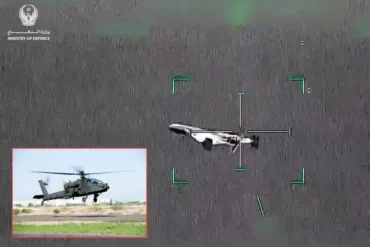
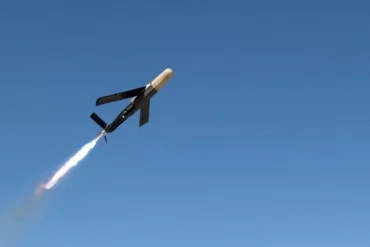
The concept is elegantly simple. Instead of firing missiles at incoming drones, operators launch small, fast interceptor UAVs that physically collide with or detonate near the target. These interceptors are inexpensive enough to be used in large numbers, and their speed allows them to overtake the relatively slow Shahed drones.
The innovation lies not only in the technology but in industrial scalability. Ukrainian companies have moved beyond experimental prototypes and are now producing interceptors in meaningful quantities. Reports indicate that dozens of domestic firms are now building variants of kinetic counter-drone systems, creating a competitive ecosystem that rapidly improves designs and lowers costs.
For American and Gulf defense planners, the appeal is obvious: a battle-tested system proven under real combat conditions.
Wild Hornets’ Sting: The High-Speed Drone Hunter
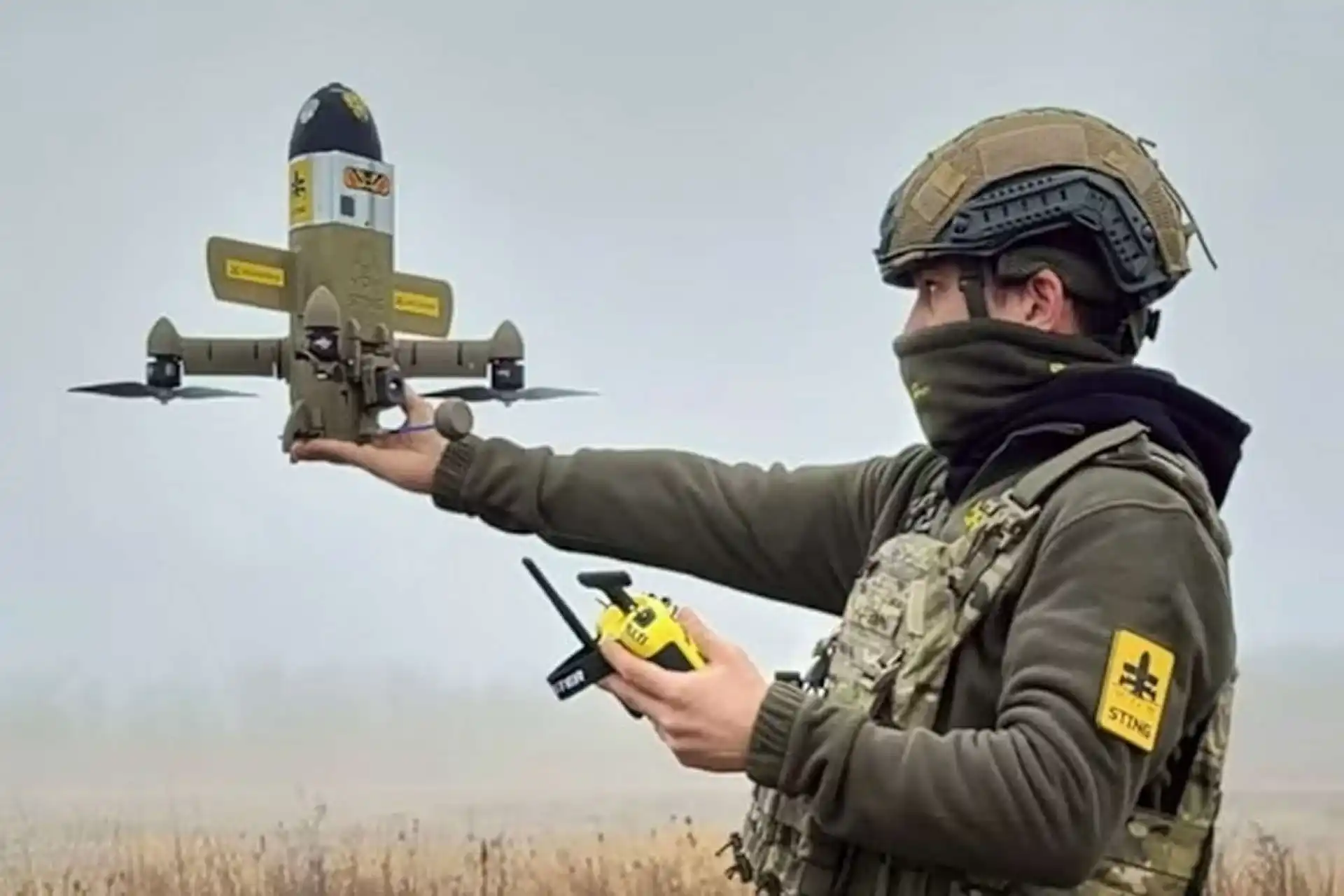
Among the interceptor drones drawing international interest is the Sting, developed by the Ukrainian company Wild Hornets. The aircraft resembles a streamlined quadcopter with a bullet-like body designed to maximize speed during pursuit.
Sting operates using a first-person-view (FPV) control system, similar to high-performance racing drones. An operator pilots the interceptor through a video feed transmitted from onboard cameras, guiding it directly toward the target drone.
What makes Sting remarkable is its kinematic performance. Reports suggest it can reach speeds of approximately 315 kilometers per hour, allowing it to overtake and intercept Shahed drones with ease. At these speeds, even a small explosive payload or direct impact can destroy the target.
Equally important is the price. Each Sting interceptor reportedly costs around $2,500, a fraction of the cost of traditional missile interceptors. This affordability allows defenders to deploy them in large numbers, maintaining defensive coverage even during prolonged attacks.
Speed, maneuverability, and low cost combine to create a new type of aerial interceptor optimized for drone-on-drone combat.
General Cherry’s Bullet Interceptor and the Rise of Purpose-Built Designs
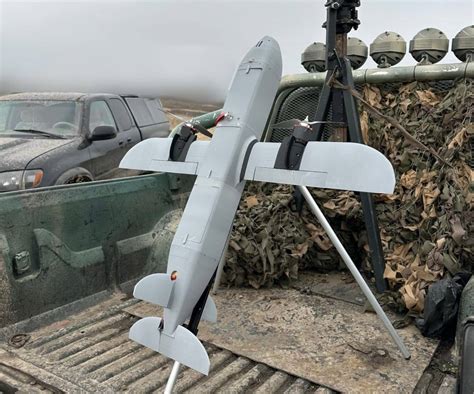
Another promising system attracting attention from defense analysts is the Bullet interceptor drone, developed by Ukrainian firm General Cherry. Unlike modified commercial drones adapted for combat, Bullet represents a purpose-built interceptor platform designed specifically for anti-UAV missions.
The drone reaches speeds of approximately 310 kilometers per hour, with an operational endurance of around 25 minutes. Its effective engagement range is estimated at 17 to 20 kilometers, enabling operators to intercept threats before they approach critical infrastructure.
The Bullet drone also incorporates a dedicated 0.4 to 0.8 kilogram warhead, optimized to destroy small UAVs through explosive fragmentation combined with high closing speeds. This increases reliability compared to improvised payloads.
Technically, the aircraft features a distinctive X-shaped configuration with four electric motors that enhance maneuverability during high-speed pursuits. Optical sensors mounted in the nose allow the drone to track targets visually, while multi-band communication links maintain control even in contested electromagnetic environments.
Such engineering refinements demonstrate how Ukraine’s drone industry has evolved from improvisation into structured, repeatable production of specialized combat UAVs.
AIR Speed and the Evolution of Fast-Response Interceptors
General Cherry has also developed a smaller interceptor known as AIR Speed, designed for situations where reaction time is extremely limited. Built around a compact 8-inch drone frame, the system prioritizes rapid maneuverability and low inertia.
AIR Speed can reach speeds of around 236 kilometers per hour, enabling it to intercept smaller UAV threats in close proximity to defended locations. While it carries a smaller payload than larger interceptors, its agility allows operators to engage targets quickly within short warning windows.
This type of interceptor plays an important role in layered air defense, where multiple defensive systems operate at different ranges and altitudes. Long-range sensors detect incoming drones, while fast-response interceptors protect critical sites during the final phase of an attack.
Together, these technologies illustrate how drone defense is becoming a multi-tier ecosystem, rather than a single missile-based solution.
Merops Interceptors and Networked Drone Defense
Beyond individual interceptor models, another emerging concept focuses on integrated sensor-to-shooter networks. One system attracting attention is the Merops interceptor ecosystem, reportedly supported by technology companies linked to former Google CEO Eric Schmidt.
Merops drones reportedly exceed speeds of 280 kilometers per hour, but the real innovation lies in their integration with external sensors. Instead of relying solely on onboard detection, Merops systems can receive targeting data from acoustic sensors, mobile radars, and electro-optical tracking stations.
This approach transforms counter-drone warfare into a distributed network of sensors and interceptors. When a Shahed drone is detected, the system calculates an interception path and assigns the nearest interceptor drone to pursue the target.
The concept allows defenders to protect large geographic areas without relying on expensive missile systems. In effect, the battlefield becomes a dynamic web of autonomous aerial hunters guided by data from multiple sensor sources.
Octopus-100 and the Industrialization of Counter-UAS Production
Another important development is the Octopus-100 interceptor, part of a joint United Kingdom–Ukraine initiative known as Build with Ukraine. This project aims to transform drone defense production from small workshops into large-scale industrial manufacturing.
Octopus-100 uses a bullet-shaped quadcopter design with reinforced stabilizers that maintain stability during high-speed flight. The system is specifically optimized to intercept low-altitude strike drones and FPV attack platforms, both of which are increasingly common in modern warfare.
One of its most notable features is a modular architecture that allows different sensors or artificial intelligence guidance packages to be installed. In the future, this could enable interceptors capable of autonomous target tracking and collision, reducing reliance on human operators.
For defense planners, such capabilities hint at a future where thousands of interceptor drones could patrol the skies automatically, forming a persistent defensive barrier.
Strategic Implications for the United States and Gulf States
For the United States and its Gulf partners, the attraction of Ukrainian interceptor drones goes beyond technological novelty. The real value lies in their ability to preserve high-end missile inventories.
Patriot systems remain essential for defending against ballistic missiles and advanced cruise missiles, threats that require sophisticated interceptors. Using these missiles against low-cost drones risks exhausting limited stockpiles during prolonged conflicts.
By introducing a dedicated counter-drone layer, militaries can reserve premium missile defenses for strategic threats, while interceptor drones handle the bulk of low-altitude UAV attacks.
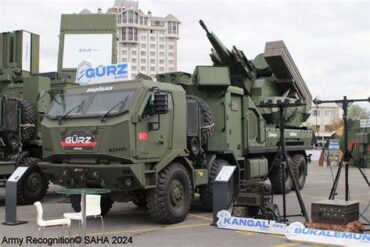
The concept is particularly relevant for Gulf nations, where energy infrastructure and shipping routes represent high-value targets. Drone interceptors could be deployed around ports, oil terminals, and naval bases, forming protective rings against incoming swarms.
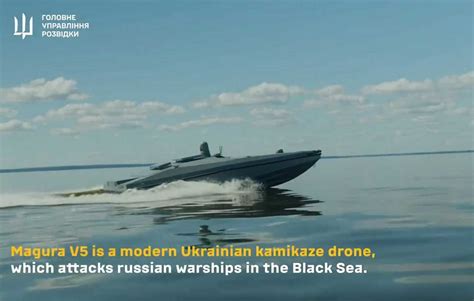
In some cases, the interceptors may even operate from maritime platforms, such as patrol vessels or autonomous drone boats. Ukraine has already experimented with launching interceptors from Magura unmanned surface vessels in the Black Sea.
Political and Production Challenges
Despite the enthusiasm surrounding these systems, several challenges remain. Ukraine itself continues to face frequent drone attacks, meaning any export of interceptor drones must be carefully balanced against domestic defense requirements.
President Volodymyr Zelenskyy has emphasized that international cooperation should not weaken Ukraine’s own air defense capabilities. As a result, future deals may involve licensed production or joint manufacturing agreements in partner countries.
Another factor is the need for training, logistics, and sensor integration. Interceptor drones are most effective when connected to radar networks, command systems, and early warning infrastructure. Deploying them successfully requires more than simply purchasing the aircraft.
Even with these challenges, the concept is gaining traction among defense planners searching for scalable solutions to drone swarm warfare.
The Future of Air Defense in the Age of Drone Swarms
The rise of inexpensive attack drones is reshaping military strategy. Systems like the Shahed demonstrate how mass-produced UAVs can overwhelm traditional defenses, forcing militaries to rethink how they protect critical assets.
Ukrainian interceptor drones represent one of the first serious attempts to rebalance the economics of air defense. By replacing million-dollar missile engagements with inexpensive robotic interceptors, defenders regain the ability to respond to large-scale attacks without exhausting resources.
If the United States and Gulf states move forward with procurement or joint production, it would signal a significant shift in global defense architecture. Ukraine, once primarily a consumer of Western military aid, would emerge as a key exporter of next-generation counter-drone technology.
In the unfolding era of drone warfare, the skies may soon be filled not only with attack drones—but with swarms of autonomous interceptors designed to hunt them down.