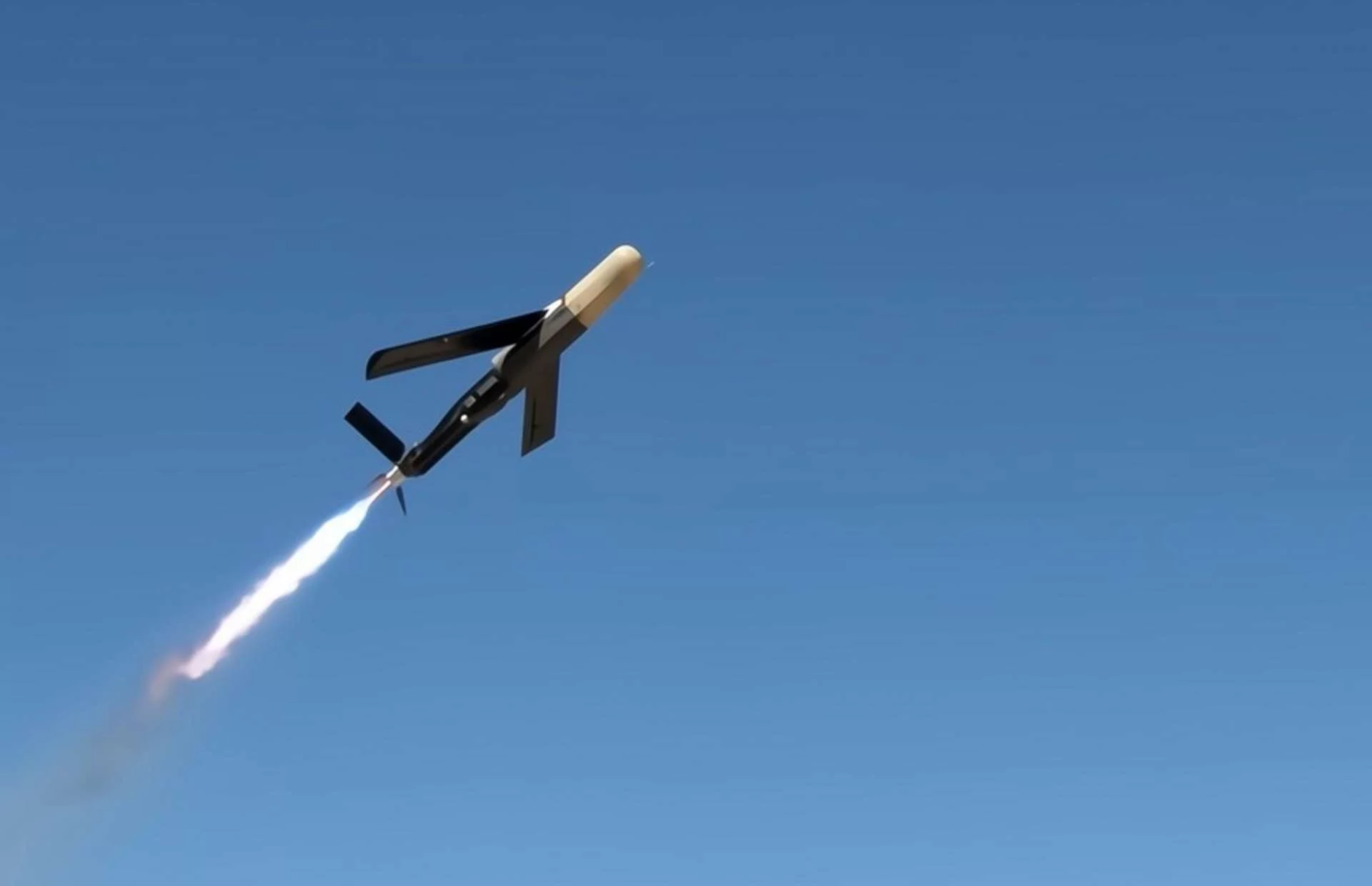
The U.S. Army has taken a decisive step toward redefining short-range air defense by successfully testing Raytheon’s Coyote Block 3 Non-Kinetic (3NK) interceptor, a reusable system designed to defeat drone swarms without relying on traditional missile warheads. During a February 2026 demonstration, the interceptor reportedly neutralized multiple small unmanned aerial systems (UAS) and was subsequently recovered for reuse—marking a critical shift in both battlefield economics and operational doctrine.
For years, air defenders have faced an uncomfortable arithmetic problem: inexpensive drones costing hundreds or thousands of dollars have forced the expenditure of interceptors priced in the tens or hundreds of thousands. In large-scale swarm scenarios, the imbalance becomes unsustainable. The Coyote 3NK directly addresses this cost-exchange dilemma by replacing explosive force with a non-kinetic defeat mechanism, allowing the system to engage multiple targets in a single sortie and return for rapid redeployment.
This demonstration signals more than incremental improvement. It suggests the emergence of a new category of air defense asset—one that functions less like a disposable missile and more like a reusable airborne patrol platform designed to thin out mass attacks before they overwhelm traditional defenses.
Coyote 3NK and the Evolution of Counter-Swarm Warfare
The Coyote family of interceptors has long been part of the Army’s Low, Slow, Small Unmanned Aircraft Integrated Defeat System (LIDS) architecture, a layered network combining radar sensors, command-and-control systems, and multiple effectors to protect forward bases and maneuver forces. Earlier variants such as the Block 2 relied on kinetic engagement, meaning they physically destroyed targets through explosive force.
Block 3NK represents a conceptual leap. Instead of detonating near a drone, it employs an undisclosed non-kinetic payload believed to rely on electronic or electromagnetic disruption. Publicly released footage from testing shows hostile drones tumbling from the sky without visible explosion or fragmentation—strongly suggesting electronic defeat rather than physical collision.
This approach dramatically reduces the risk of collateral damage. In urban environments or near friendly troops, explosive debris can pose nearly as much danger as the incoming drone. By neutralizing targets without fragmentation, 3NK offers a safer defensive option for densely populated or infrastructure-sensitive areas.
A Recoverable Airborne Effector, Not a Disposable Missile
Perhaps the most transformative feature of the Coyote 3NK is its recoverability. After engaging targets, the interceptor can be recalled and captured in a recovery net, enabling rapid refurbishment and return to service. Raytheon has indicated that recent improvements have cut recovery-to-flight turnaround time by approximately 50 percent.
This fundamentally changes the engagement model. Traditional air defense operates on a “one shot, one kill” paradigm. Each missile expended reduces available inventory. In swarm scenarios involving dozens of incoming drones, launchers can be emptied within minutes.
By contrast, 3NK functions as a loitering airborne magazine. It can patrol likely approach corridors, respond to radar cues, disrupt multiple drones, and return for redeployment. Instead of exhausting munitions, commanders maintain persistent defensive coverage.
That shift transforms air defense from a static reaction into a dynamic patrol concept. It resembles a combat air patrol for counter-drone missions—except without pilots and without explosive payloads.
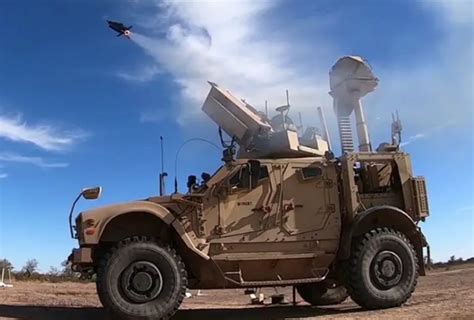
Integration with KuRFS Radar and LIDS Architecture
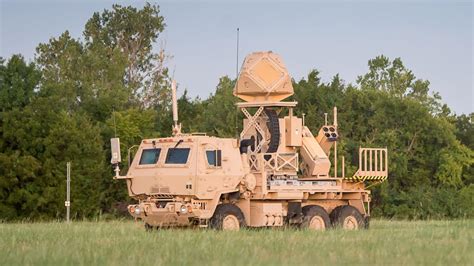
The effectiveness of any interceptor depends on its sensor backbone. Within the LIDS framework, Coyote integrates with Raytheon’s Ku-band Radio Frequency Sensor (KuRFS) radar, engineered to detect and discriminate small, low-altitude aerial targets amid ground clutter.
Small drones present unique detection challenges. Their radar cross-sections are minimal, their flight paths erratic, and their speeds variable. KuRFS addresses these factors by operating in a frequency band optimized for tracking compact airborne objects, cueing the interceptor with precise targeting data.
This sensor-effector pairing creates a tightly integrated kill chain: detection, identification, tracking, engagement, and recovery. In swarm conditions, the speed of this chain determines survival. Delays of even seconds can allow multiple drones to slip through.
By embedding 3NK within LIDS, the Army ensures it operates as part of a layered system rather than as a standalone gadget. Higher-end threats such as cruise missiles or larger unmanned systems can still be engaged by more traditional interceptors, while 3NK focuses on mass, low-cost swarms.
Operational Testing and Realistic Threat Environments
The February 2026 demonstration follows earlier stress-testing during exercises such as Operation Clear Horizon, where counter-UAS systems were evaluated against realistic threat profiles. Reports indicate that during October 2025 trials, the Coyote 3NK engaged at least ten drones in a single event before being recovered.
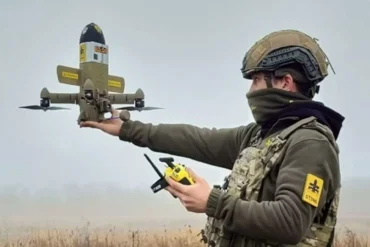
Such numbers matter. Swarms are not theoretical constructs; they have become a defining feature of contemporary warfare. In Ukraine, small first-person-view (FPV) drones are deployed in quantities measured in the millions. Their low cost allows them to function as expendable precision munitions.
No military can sustainably counter millions of cheap drones with million-dollar interceptors. Systems like 3NK aim to rebalance the equation by lowering per-engagement cost while maintaining high sortie rates.
Industrial Scale and Long-Term Procurement Signals
Procurement data suggests institutional commitment. Raytheon has reported receiving its largest counter-drone contract to date under the LIDS program. The Army has incrementally expanded orders, including a $75 million purchase covering hundreds of Coyote interceptors and subsequent awards totaling nearly $200 million.
More significantly, a multibillion-dollar ordering vehicle extending into the early 2030s indicates sustained demand rather than short-term experimentation. A ceiling value exceeding $5 billion for Coyote effectors, launchers, and associated radars underscores expectations of prolonged operational reliance.
International interest reinforces this trajectory. Export packages tied to FS-LIDS systems have been approved for partners such as Qatar, while local production initiatives in the United Arab Emirates suggest that allied militaries view counter-swarm capability as an urgent priority.
Strategic Implications for Modern Air Defense
The broader implication of the Coyote 3NK test is doctrinal rather than technological. Swarm warfare compresses decision timelines and magnifies cost disparities. Defenders must manage not only lethality but sustainability. Air defense units that exhaust missiles in the first wave risk vulnerability in subsequent attacks.
Reusable non-kinetic interceptors introduce elasticity into the defense architecture. They allow commanders to absorb initial swarm pressure, conserve high-value missiles, and maintain layered coverage over extended engagements.
If field performance matches demonstration results, the Coyote 3NK could become a cornerstone of future counter-UAS doctrine. It embodies a pragmatic response to a battlefield reality defined by cheap, numerous, and expendable aerial threats.
The shift from explosive interception to reusable electronic disruption represents a quiet but profound transformation. In an era where drones can be mass-produced faster than missiles can be replenished, adaptability—not raw firepower—may determine which side maintains control of the sky.