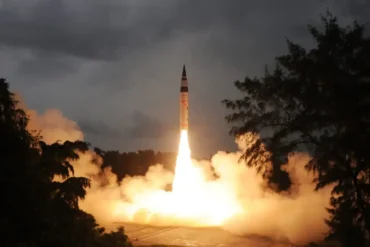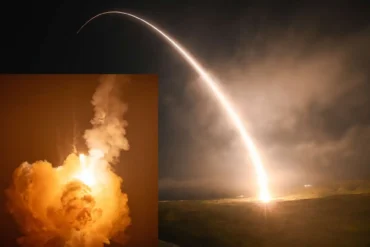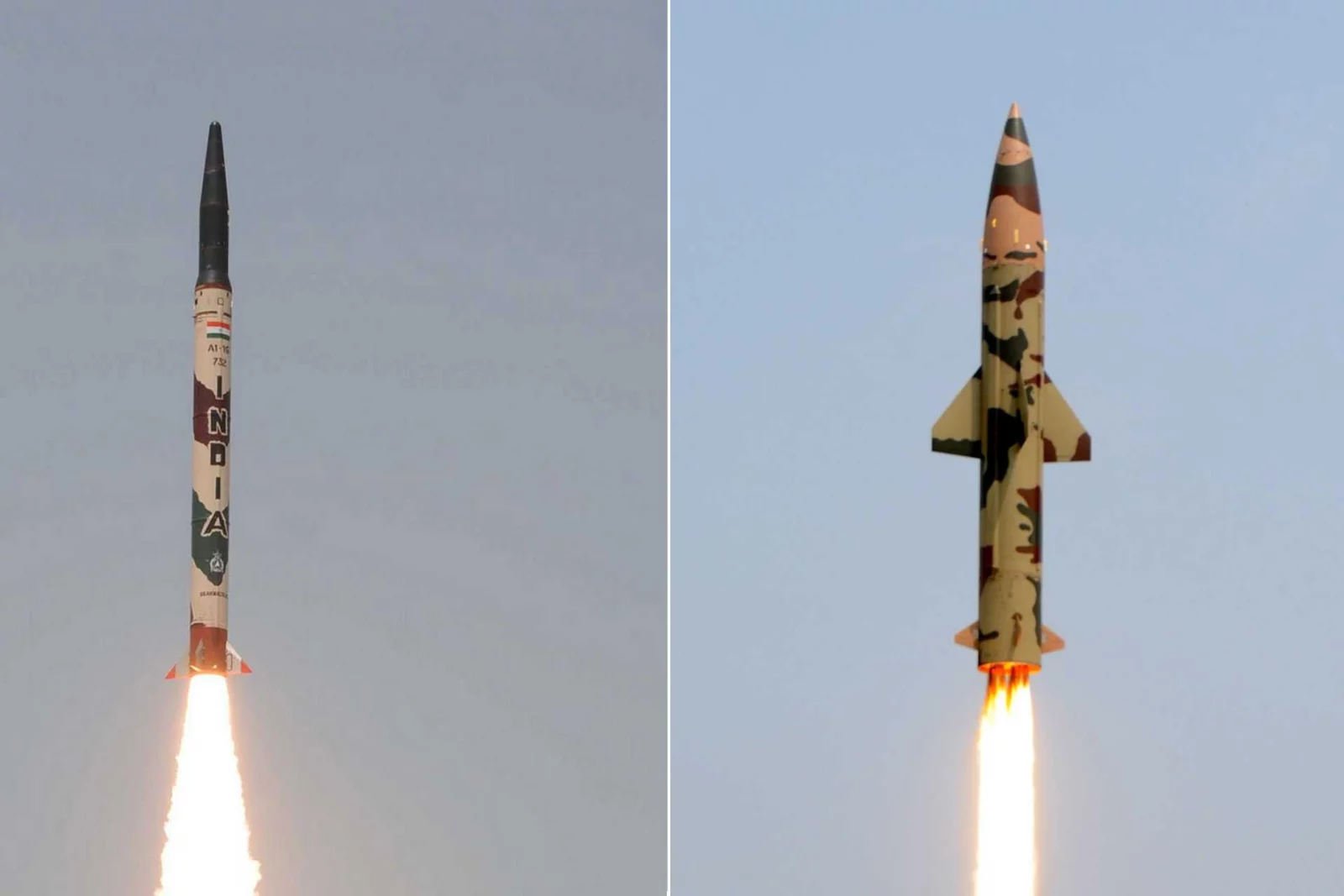
On July 17, 2025, India reinforced its commitment to strategic deterrence and defense readiness by conducting successful test launches of its indigenously developed Prithvi-II and Agni-I ballistic missiles. The trials, executed under the Strategic Forces Command (SFC) from the Integrated Test Range (ITR) in Chandipur, Odisha, were part of a scheduled operational training program designed to validate combat readiness in realistic wartime scenarios. According to the Indian Ministry of Defense, both systems met all technical and operational objectives, showcasing the combat viability, precision, and reliability of India’s nuclear-capable delivery platforms.
Strengthening India’s Strategic Missile Forces
The latest test firings are emblematic of India’s broader strategic vision to fortify its nuclear deterrent posture amid regional uncertainties. By testing two different classes of ballistic missile systems under nighttime conditions, the Indian Armed Forces have demonstrated a heightened level of operational readiness and an enhanced ability to function under realistic combat and low-visibility scenarios. The Prithvi-II and Agni-I serve distinctly different roles within India’s nuclear triad, yet both are pivotal to ensuring a credible minimum deterrence against adversaries.
The Prithvi-II Missile: Tactical Flexibility and Rapid Response
The Prithvi-II is a short-range, surface-to-surface ballistic missile developed by the Defence Research and Development Organisation (DRDO) under the landmark Integrated Guided Missile Development Program. With a maximum range of 350 kilometers, the missile is designed for rapid tactical deployment on the battlefield.
Its two-stage liquid propulsion system provides not only the thrust necessary for achieving the designated range but also allows for variable trajectory adjustment, enhancing penetration capabilities against enemy air defenses. The missile’s advanced inertial navigation system (INS) and thrust vector control technology ensure remarkable accuracy, crucial for both conventional and nuclear strikes.
Capable of carrying payloads between 500 to 1,000 kilograms, the Prithvi-II can be outfitted with either high-explosive warheads or low-yield tactical nuclear weapons, typically estimated at 12 to 20 kilotons. This versatility makes the missile an ideal tool for flexible deterrence, providing Indian strategic planners with a quick-response option against immediate threats posed by neighboring adversaries.
The Agni-I Missile: Bridging Tactical and Strategic Ranges
Alongside Prithvi-II, the Agni-I ballistic missile was also tested during this high-profile exercise. As the first missile in India’s famed Agni series, Agni-I fills the range gap between the Prithvi-class and the longer-range Agni-II missiles. With a range of 700 to 900 kilometers, it provides significant coverage across critical strategic zones.
The missile employs a single-stage solid-fuel propulsion system, enabling rapid deployment, ease of maintenance, and quicker launch sequences compared to liquid-fuel systems. Its road-mobile transporter erector launcher (TEL) platform ensures high mobility, survivability, and launch-on-demand capability, even from dispersed and unpredictable locations.
Agni-I is capable of delivering a 1,000-kilogram warhead, which can be either conventional or nuclear in nature. Its nuclear configuration is believed to incorporate boosted fission or thermonuclear warheads in the 20 to 40 kiloton yield range, enabling deep penetration and strategic targeting within hostile territories.
Operational Precision and Safety Protocols
According to the Ministry of Defense, both missile systems were tested under stringent safety measures and rigorous oversight. The launch operations were tracked via an integrated network of telemetry stations, radar systems, and electro-optical tracking systems. These tools not only validated the flight trajectories and terminal impact precision but also confirmed system performance under conditions simulating real-world stressors.
Such trials serve to ensure the reliability of India’s nuclear command and control infrastructure, a critical aspect of maintaining second-strike capability and upholding the No First Use (NFU) nuclear doctrine. The success of these tests represents a substantial milestone in maintaining the strategic credibility of India’s nuclear deterrence capabilities.
Indigenous Development and Technological Evolution
India’s ballistic missile program has seen tremendous evolution over the past two decades. Spearheaded by DRDO and reinforced through strong institutional coordination with the Strategic Forces Command, the missile arsenal now includes a diverse array of short, medium, and intermediate-range ballistic missiles, as well as submarine-launched variants.
Among the significant milestones in recent years are:
- The induction of Agni-IV and Agni-V, offering extended ranges and superior guidance systems.
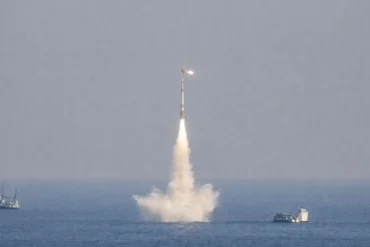
- The operational deployment of the K-15 SLBM (Submarine-Launched Ballistic Missile) from INS Arihant, India’s indigenously built nuclear-powered ballistic missile submarine.
- Continued work on the Agni-P (Agni Prime), a next-generation medium-range missile offering greater mobility and accuracy.
These developments collectively enable India to maintain a robust and survivable nuclear deterrent, while also promoting strategic autonomy in defense manufacturing and technology.
Deterrence Amid a Complex Regional Security Architecture
India’s sustained focus on enhancing its ballistic missile capabilities is rooted in its unique geopolitical context. Sandwiched between two nuclear-armed neighbors—China and Pakistan—India faces multi-domain challenges requiring a combination of deterrence and defense readiness. The dual requirement of countering long-range threats from China and managing tactical stability with Pakistan places ballistic missiles like Prithvi-II and Agni-I at the forefront of national security strategy.
Unlike doctrines of preemptive use, India’s No First Use policy aims to avoid destabilizing first strikes, while maintaining assured second-strike capabilities. The commitment to credible minimum deterrence ensures that the country retains the power to respond decisively to any nuclear aggression, thereby preserving strategic balance in South Asia.
Moreover, these missile systems serve a political signaling role as well. Their successful demonstration sends a clear and deliberate message to adversaries and allies alike: that India possesses the technical sophistication, command structure, and political will to defend its sovereignty through measured, responsible, and capable nuclear force projection.
Strategic Forces Command: Backbone of India’s Nuclear Posture
The Strategic Forces Command, established in 2003, plays an integral role in the custodianship and operational readiness of India’s nuclear arsenal. It acts as the conduit between political decision-makers and military capabilities, ensuring that the nation’s deterrent remains both effective and under tight civilian oversight.
Through regular training exercises, test launches, and strategic evaluations, the SFC ensures that the delivery platforms, launch protocols, and command systems remain coherent and synchronized. The July 17 night-time missile tests are a direct testament to this institutional readiness and the continuous modernization of strategic command infrastructure.
Conclusion: Sustaining Deterrence Through Capability and Credibility
India’s recent test-firing of Prithvi-II and Agni-I ballistic missiles marks more than just a technological or tactical achievement—it is a strategic affirmation of the country’s defense posture. These tests highlight the robustness of India’s deterrence framework, the efficacy of its indigenous defense research, and the vigilance of its military institutions in securing national interests.
As threats evolve and regional dynamics shift, India’s ability to demonstrate credible deterrence, without succumbing to destabilizing doctrines or arms race pressures, remains pivotal. Through measured advancements, transparent doctrines, and consistent operational validation, India continues to project itself as a responsible nuclear power in a volatile global environment, committed to peace through strength, and prepared for any exigency with calm confidence.