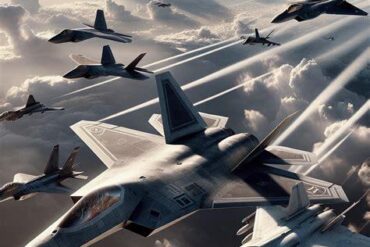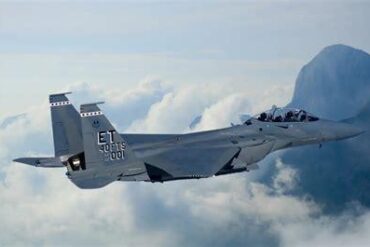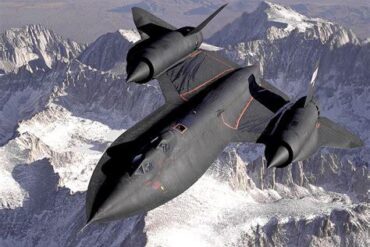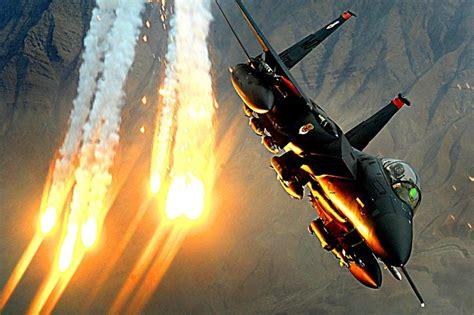
Success in military aviation is rarely measured by aesthetics or speed alone. The true icons of fighter jet history are those that have shown exceptional combat versatility, global adoption, and operational longevity. These jets have not only dominated dogfights but have also outlasted generations of aircraft by evolving with time. Among thousands built over the decades, five fighter jets stand out as the most used and successful: the F-16 Fighting Falcon, MiG-29 Fulcrum, F-15 Eagle, F/A-18 Hornet, and Su-27 Flanker. Together, these aircraft have shaped the very essence of air warfare and continue to serve as the backbone of several global air forces.
The Multirole Workhorse: F-16 Fighting Falcon
Launched in 1974, the F-16 Fighting Falcon quickly became the global benchmark for multirole fighters. What started as a lightweight, highly maneuverable jet evolved into a symbol of combat adaptability. Its success lies not only in its design but also in the way it revolutionized air force doctrines across more than 25 nations.
Boasting a fly-by-wire flight control system, the F-16 provided unmatched agility in air-to-air and air-to-ground operations. With over 4,600 units built, countries like Israel, Greece, South Korea, and the United States integrated it deeply into their defense strategy. Its affordability and ease of maintenance were key to its widespread export success.
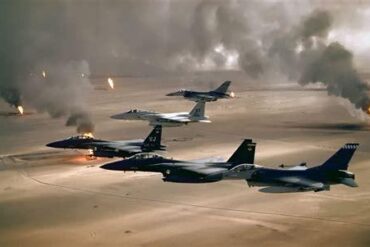
From Operation Desert Storm to counterterror operations in Afghanistan, the F-16 has repeatedly demonstrated its strategic value. The introduction of the F-16V variant, featuring AESA radar, advanced cockpit systems, and improved electronic warfare capabilities, ensures that this aircraft remains relevant despite being over four decades old.
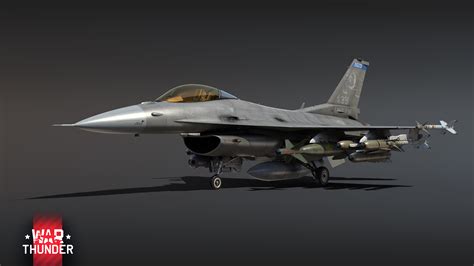
Despite its stellar record, recent conflicts like the 2025 Indo-Pakistani skirmish exposed the platform’s dependency on pilot skill and tactical integration. Pakistan’s use of F-16s was met with equal, if not superior, performance by India’s Su-30MKIs, proving that technology alone doesn’t guarantee dominance.
Soviet Precision and Rugged Design: MiG-29 Fulcrum
The MiG-29 Fulcrum was introduced in the early 1980s as the Soviet Union’s answer to NATO’s emerging fourth-generation fighters. It was purpose-built for short-field operations, allowing deployment from unprepared or semi-prepared runways, and featured twin Klimov RD-33 engines for better survivability.
What truly set the MiG-29 apart was its exceptional turn rate and agility, making it a formidable dogfighter in close-range aerial engagements. The aircraft’s helmet-mounted targeting system and infrared search-and-track sensor gave it technological edges that even Western jets lacked during its early years.
Today, more than 30 air forces, including India, Algeria, Poland, and Serbia, operate MiG-29s or their upgraded variants. The MiG-29SMT modernisation includes glass cockpit avionics, aerial refueling capability, and enhanced weapons integration, ensuring the aircraft remains combat-effective in the 21st century.
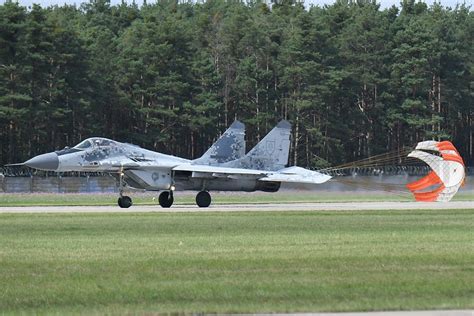
Although its production numbers lag behind the F-16, the Fulcrum’s combat ruggedness and adaptability make it one of the most enduring symbols of Soviet and post-Soviet aerospace engineering.
The Uncontested Air Superiority Titan: F-15 Eagle
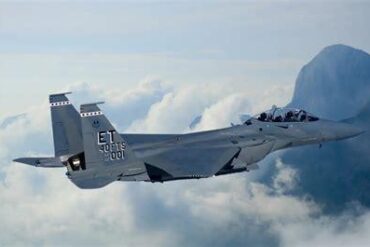
Few jets carry a legacy as fierce as the F-15 Eagle. First flown in 1972, this aircraft was designed for one purpose: absolute air dominance. Its combination of powerful twin Pratt & Whitney F100 engines, advanced radar systems, and aerodynamic superiority gave it a platform unlike anything else at the time.
With over 100 confirmed aerial victories and zero air-to-air combat losses, the F-15 carved its name into history as a dogfighting legend. Nations like Japan, Israel, Saudi Arabia, and the United States have integrated it as a primary tool for both deterrence and active conflict.
The aircraft evolved into the F-15E Strike Eagle, expanding its mission to include deep-strike capabilities with precision-guided munitions. Today’s F-15EX variant redefines 4.5-generation capabilities with fly-by-wire controls, digital cockpits, modern AESA radar, and the ability to carry more weapons than any previous version.
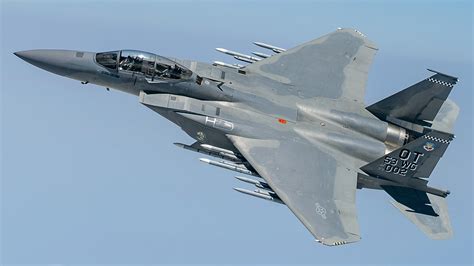
Its remarkable lifespan of over 50 years in service, combined with unmatched aerial victory records, places the F-15 in a league few can challenge.
Naval Precision and Combat Longevity: F/A-18 Hornet
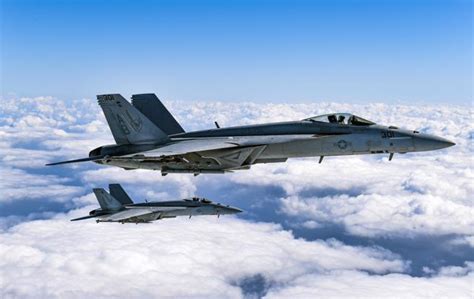
Built for the U.S. Navy and Marine Corps, the F/A-18 Hornet proved that a naval aircraft could be more than just a fleet defender. Designed for carrier operations, it had to endure brutal stress tests—catapult launches, arrested landings, and corrosive maritime environments.
First introduced in the 1980s, the Hornet blended air-to-air and air-to-ground capabilities, giving U.S. forces unmatched tactical flexibility. The aircraft’s ease of maintenance, compact size, and multi-mission capability made it indispensable.
Beyond the U.S., nations like Australia, Finland, and Canada trusted the Hornet as a frontline fighter. The F/A-18E/F Super Hornet, a larger and more advanced derivative, continues to serve with upgraded radar, avionics, and reduced radar cross-section, enhancing survivability in modern theaters.
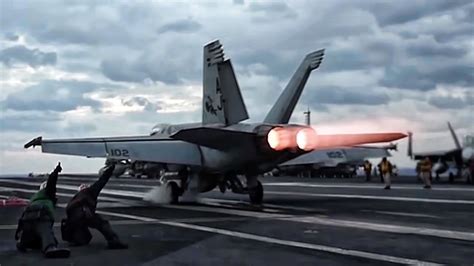
The F/A-18’s record in the Gulf War, Iraq, and Afghanistan further reinforces its combat effectiveness, especially when air superiority and precision strikes were required simultaneously.
Soviet Elegance Meets Brutal Power: Su-27 Flanker
The Su-27 Flanker was the Soviet Union’s high-stakes counter to the F-15. Its maiden flight in 1977 led to operational status in the 1980s, marking a new era of supermaneuverable, long-range interceptors. With sleek lines, massive internal fuel tanks, and a 30mm GSh-30-1 cannon, it was as elegant as it was brutal.
Western observers were astonished by the Cobra maneuver, where the aircraft could pitch its nose up 120 degrees in a heartbeat—demonstrating superior aerodynamic control and thrust vectoring. The Su-27 formed the basis for future Russian air dominance fighters, including the Su-30, Su-33, Su-34, and Su-35.
Countries like China, India, Vietnam, and Angola now operate Flanker variants, most of which have received significant avionics and radar upgrades. These include PESA and AESA radars, expanded weapon compatibility, and digital glass cockpits.
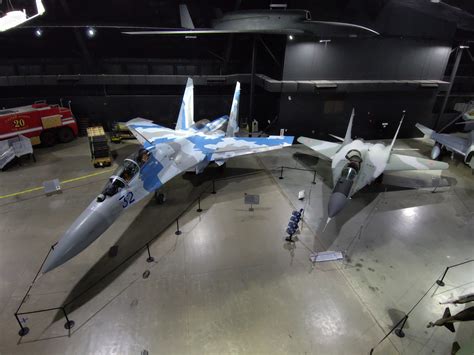
The Flanker’s dominance continues through the Su-35S, often considered a near-fifth-generation fighter due to its radar-absorbing materials and multirole capabilities. Despite economic and political upheavals in Russia, the Su-27’s legacy endures globally.
Beyond Machines: The Legacy of Air Dominance
These five fighter jets did more than just fill hangars and arm airstrips. They defined decades of air combat doctrine, served across continents, and set benchmarks for what makes an aircraft truly great. Their success is rooted in:
- Proven Combat Performance across multiple warzones.
- Continuous Upgradability, keeping them relevant.
- Export Success, creating global interoperability.
- Technological Innovation, pushing aviation boundaries.
While fifth-generation stealth fighters like the F-35 and Su-57 now lead the pack in cutting-edge warfare, the continued use and evolution of the F-16, MiG-29, F-15, F/A-18, and Su-27 reflect one undeniable truth: true success in fighter aviation lies in adaptability, dependability, and the will to dominate airspace for generations.
These machines are not just metal and electronics; they are national pride, strategic deterrents, and engineering marvels that have shaped world history—one dogfight at a time.