Air superiority has never been a polite contest. It is a brutal equation of thrust, radar signature, weapons integration, pilot training, and industrial depth. While American platforms like the F-22 and F-15E often dominate headlines, the global stage tells a far more complex story. Russia and China, in particular, field aircraft that are not merely symbolic challengers but serious technological statements. Power in this context is not just about raw speed; it is about thrust output, survivability, payload capacity, and multi-role lethality.
Outside the United States, three aircraft stand out for their blend of muscle and mission flexibility: the Russian Sukhoi Su-34 Fullback, the Chinese Chengdu J-20 Mighty Dragon, and the Russian Sukhoi Su-57 Felon. Each reflects a different philosophy of air warfare. One is a heavyweight strike bruiser, one is a stealthy missile predator, and one aims to fuse both agility and low observability into a fifth-generation spearhead.
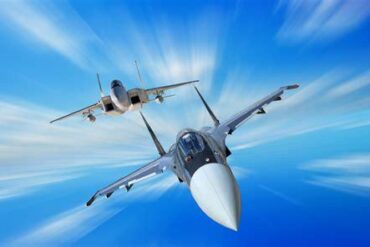
Sukhoi Su-34 Fullback: Heavyweight Strike Power
The Sukhoi Su-34 Fullback is not subtle. At over 81 feet in length and with a maximum takeoff weight exceeding 97,000 pounds, it dwarfs many Western tactical fighters. This aircraft evolved from the Su-27 lineage, but it grew into something more specialized: a long-range, high-payload fighter-bomber designed to penetrate defended airspace and deliver punishing strikes.
Its twin Saturn turbofan engines generate just under 62,000 pounds of combined thrust. That raw output propels the Fullback to approximately 1,180 miles per hour. Speed, however, is only part of the story. The Su-34’s wide side-by-side cockpit layout improves crew coordination for deep strike missions, while its reinforced landing gear and robust airframe allow it to carry an enormous weapons load, including guided bombs and anti-ship missiles.
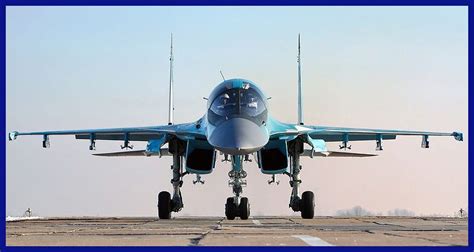
Although optimized for ground attack, the Su-34 is no defenseless bomber. A 30mm autocannon remains onboard for close-range encounters, and it can deploy air-to-air missiles if required. Its power lies in its ability to operate as a strategic battering ram, combining endurance, payload, and respectable speed in a single, imposing frame.
Chengdu J-20 Mighty Dragon: Stealth and Missile Dominance
If the Su-34 is a hammer, the Chengdu J-20 Mighty Dragon is a scalpel. Developed by China’s aerospace industry to rival top-tier Western stealth fighters, the J-20 features a delta wing configuration, internal weapons bays, and radar-evading shaping. Powered by two WS-10B turbofan engines producing roughly 66,000 pounds of thrust with afterburners, it reaches speeds near Mach 2.
The defining characteristic of the J-20 is not brute size, but low observability and long-range missile engagement capability. Unlike many traditional fighters, reports suggest it does not prominently feature a main internal gun, prioritizing weight savings and stealth preservation. Instead, it is designed primarily as a missile platform, carrying advanced air-to-air munitions within its internal bays to minimize radar signature.
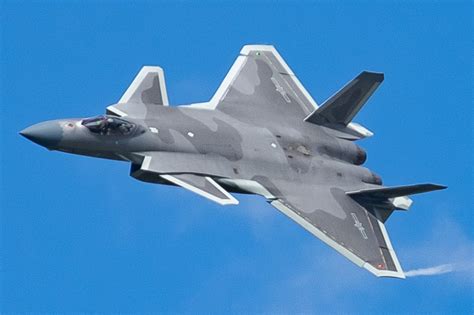
This design philosophy signals a modern reality: future air combat may be decided long before pilots see one another. By focusing on sensor fusion, radar evasion, and beyond-visual-range engagements, the J-20 positions itself as a first-strike interceptor rather than a traditional dogfighter. Its operational history remains relatively limited in direct air-to-air combat, but its presence alone reshapes strategic calculations across the Indo-Pacific.
Sukhoi Su-57 Felon: Russia’s Fifth-Generation Contender
The Sukhoi Su-57 Felon represents Russia’s attempt to merge stealth, agility, and multi-role adaptability into a single airframe. Visually, it blends features reminiscent of earlier Sukhoi fighters with angular shaping intended to reduce radar cross-section. Beneath its skin lie twin Saturn engines generating approximately 62,600 pounds of thrust combined, pushing it to speeds around Mach 2.
Unlike the J-20’s missile-centric philosophy, the Su-57 retains a more conventional combat toolkit. A 30mm autocannon supports close-range engagements, while internal and external hardpoints allow carriage of air-to-air missiles, anti-ship weapons, and precision-guided bombs. Reports indicate it can perform advanced maneuvers such as the “Cobra,” a dramatic high-angle-of-attack display that underscores its aerodynamic agility.
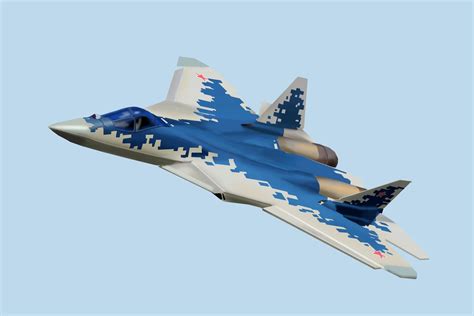
Operational realities have complicated its rollout. Limited production numbers and strategic caution have constrained widespread deployment. Even so, the Su-57 stands as a statement of intent: a platform designed not only to evade radar but also to outmaneuver opponents in close quarters while delivering versatile strike capability.
Power Beyond Borders
The Su-34, J-20, and Su-57 illustrate three distinct interpretations of modern air power. One emphasizes payload and strike endurance, another prioritizes stealth and long-range missile engagement, and the third attempts to integrate agility, stealth, and multirole flexibility into a single system. Power, in contemporary fighter aviation, is no longer measured solely in Mach numbers or thrust ratings. It is defined by how effectively an aircraft integrates speed, sensors, weapons, and survivability into a coherent combat doctrine.
Non-American fighter jets today are not secondary actors. They are central pieces in a rapidly evolving strategic puzzle, where technological leaps and geopolitical tensions intersect at supersonic speeds.