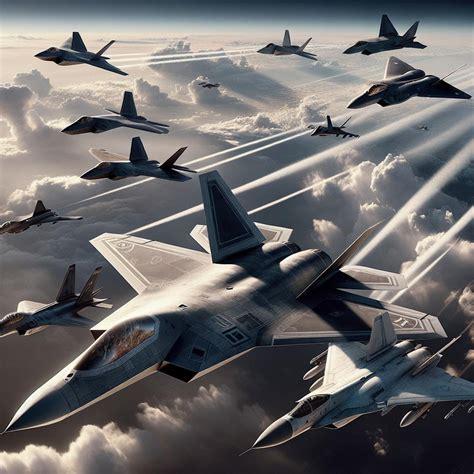
In the ever-evolving theater of modern warfare, air superiority remains the cornerstone of national defense and global power projection. Today’s military aircraft are not just tools of destruction; they are complex, multi-role systems that represent the pinnacle of aerospace engineering, electronic warfare, and combat strategy. From stealth bombers to heavy-lift helicopters, the top aircraft flying today are masterpieces of innovation and tactical versatility.
1. Airbus A330 MRTT: The Strategic Lifeline in the Skies
When dominance in the air hinges on range and persistence, aerial refueling platforms like the Airbus A330 Multi Role Tanker Transport (MRTT) become the silent force-multipliers of global air operations. Based on the commercial A330 airframe, the MRTT is reconfigured to serve both as a tanker and a cargo/passenger transporter, combining civil efficiency with military robustness.
With the capability to refuel both probe-and-drogue and boom-equipped aircraft, the MRTT bridges operational gaps in joint-force environments. It carries up to 111 tons of fuel, supports strategic troop deployments, and has proven itself in theaters of operation across 14 air forces.
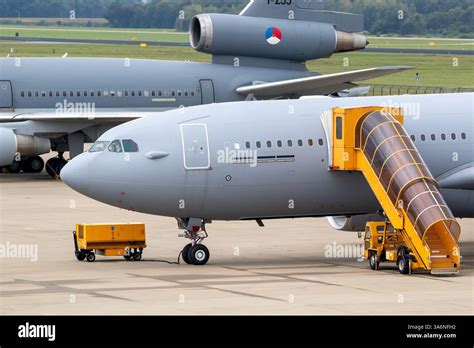
Its primary advantage lies in its unmatched fuel-to-range efficiency, passenger/cargo capacity, and interoperability with NATO and allied forces. Unlike its American counterpart, the KC-46 Pegasus, which continues to face technical issues, the MRTT is already combat-proven and widely adopted, making it the go-to choice for extended missions from Europe to the Indo-Pacific.
2. Boeing C-17 Globemaster III: The Global Mobility Powerhouse
When ground forces require immediate logistics support in the world’s most remote, contested, or austere environments, the Boeing C-17 Globemaster III is often the aircraft tasked with delivering the mission. With its ability to carry 77.5 tons of cargo, execute tactical landings on short and unprepared runways, and conduct airdrop and medevac operations, the C-17 represents unmatched strategic mobility.
This heavy transport aircraft has carved its legacy across dozens of combat zones and humanitarian missions. Its four turbofan engines, combined with advanced avionics and a rugged airframe, allow it to deliver battle tanks, helicopters, and troops across oceans without refueling.
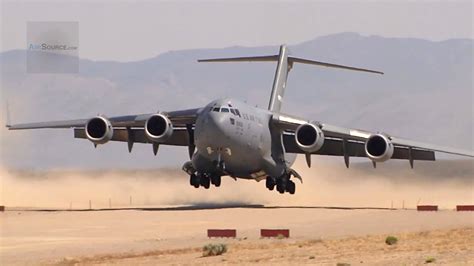
While newer transport aircraft like the Airbus A400M Atlas boast modern features and faster cruise speeds, the C-17 remains the gold standard for global rapid deployment, particularly for the US Air Force and allies like the UK, India, and Australia.
3. Sikorsky CH-53K King Stallion: The Heavy-Lift Champion
As vertical lift operations become more demanding in mountainous terrain, amphibious assault, and expeditionary warfare, the Sikorsky CH-53K King Stallion rises as the world’s most powerful western-built heavy-lift helicopter. Designed specifically for the US Marine Corps, the CH-53K is capable of lifting 27,000 pounds over 110 nautical miles, effectively tripling the capacity of its predecessor, the CH-53E Super Stallion.
Its advanced fly-by-wire controls, composite rotor blades, and digital cockpit enable precision maneuvering even in degraded visual environments. With a massive internal cabin and external cargo hook system, it can transport armored vehicles, artillery systems, or large pallets—all in a single mission.
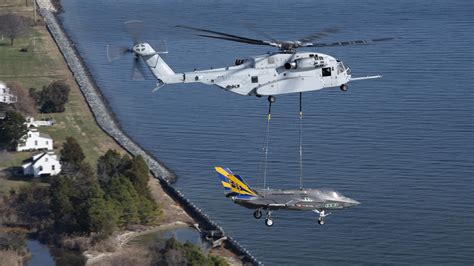
Although the Mil Mi-26 still holds the title of the world’s heaviest-lifting helicopter, the CH-53K balances raw power with modern technology, enhanced survivability, and mission-specific modularity. Nations like Israel are exploring procurement, underscoring its growing strategic footprint.
4. Boeing AH-64E Apache: The Apex Predator of Attack Helicopters
Few aircraft are as iconic and feared as the AH-64E Apache, the deadliest attack helicopter in active service. This updated variant builds upon a decades-long legacy of hard-hitting firepower, combat survivability, and tactical lethality. Equipped with Hellfire missiles, 30mm cannons, and advanced sensors, the Apache is a formidable hunter-killer platform capable of neutralizing both armor formations and high-value targets.
Its low-altitude, terrain-following flight profile allows the Apache to approach stealthily, executing attacks with minimal warning. The AH-64E introduces enhanced networked warfare capabilities, improved target acquisition, and manned-unmanned teaming, where it can control UAVs mid-flight.
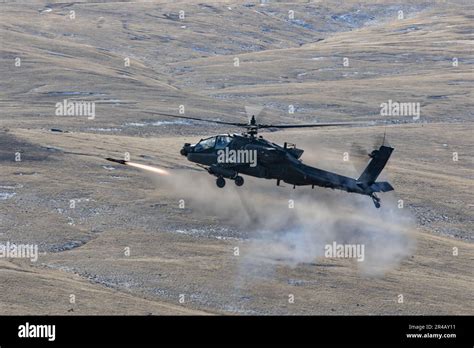
Recent deals, like Poland’s $4.7 billion agreement for 96 Apache helicopters, highlight global confidence in its battlefield supremacy. Though competitors such as the Mil Mi-28NM or the Eurocopter Tiger present capable alternatives, none match the Apache’s blend of sensor fusion, survivability, and precision strike capabilities.
5. Northrop Grumman B-2 Spirit: The Shadow Bomber of Strategic Warfare
Cloaked in angular invisibility and black radar-absorbing paint, the Northrop Grumman B-2 Spirit remains a stealth icon over 30 years after its first flight. As a strategic bomber with the unique ability to penetrate densely defended airspace, the B-2 is the ultimate nuclear and conventional strike platform.
Operating deep inside enemy territory, it is capable of delivering 16 B61 or B83 nuclear bombs, or 80 JDAMs, with satellite-guided precision. Its batwing design minimizes radar cross-section, while its long-range endurance ensures it can complete intercontinental missions without refueling.
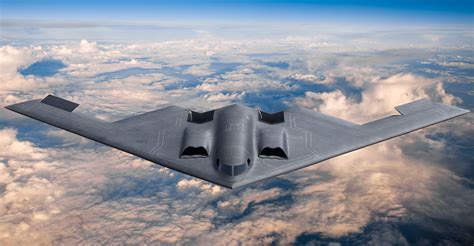
Though its unit cost exceeds $737 million—rising to nearly $2 billion with R&D—the B-2’s value lies in its unique ability to strike heavily defended command, control, and strategic infrastructure. Its successor, the B-21 Raider, will inherit this legacy with improved stealth and reduced cost, but until then, the B-2 reigns as the most formidable bomber ever built.
6. Lockheed Martin F-22 Raptor: The Unrivaled Fifth-Generation Air Superiority Fighter
At the zenith of air combat capability stands the Lockheed Martin F-22 Raptor—a fifth-generation fighter that has yet to be matched in stealth, speed, agility, and situational awareness. Exclusively operated by the United States Air Force, the F-22 combines supercruise capabilities, vector thrust, and low observability, allowing it to dictate air engagements on its terms.
Armed with AIM-120D AMRAAMs, AIM-9X Sidewinders, and a 20mm Vulcan cannon, the Raptor achieves both beyond-visual-range dominance and close-range superiority. Its sensor fusion provides pilots with unparalleled battlespace awareness, allowing for first-look, first-shot, first-kill capabilities.
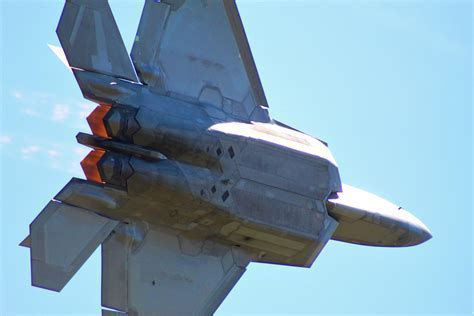
While competitors like the Sukhoi Su-57 Felon and Chengdu J-20 Mighty Dragon claim fifth-generation status, both lag in radar cross-section reduction, sensor integration, and supermaneuverability. The F-35 Lightning II, though stealthy, lacks the air dominance pedigree of the Raptor, being optimized for multirole versatility.
With 187 aircraft in service and an upgrade program underway, the F-22 will remain America’s air superiority spearhead until the sixth-generation Boeing F-47 becomes operational in the next decade.
Conclusion: Unseen Wings, Unmatched Might
As the demands of modern warfare evolve, the aircraft flying today reflect more than raw engineering prowess—they represent the future of multi-domain operations, coalition warfare, and deterrence by capability. Whether it’s the strategic reach of the MRTT, the rugged lift of the C-17, the rotor-borne power of the CH-53K, the lethal edge of the Apache, the invisible fury of the B-2, or the dominance of the F-22, these aircraft define superiority in the sky. And in an age of digital combat, hypersonics, and AI, they stand as testaments to the enduring relevance of air power in securing peace—and preparing for war.