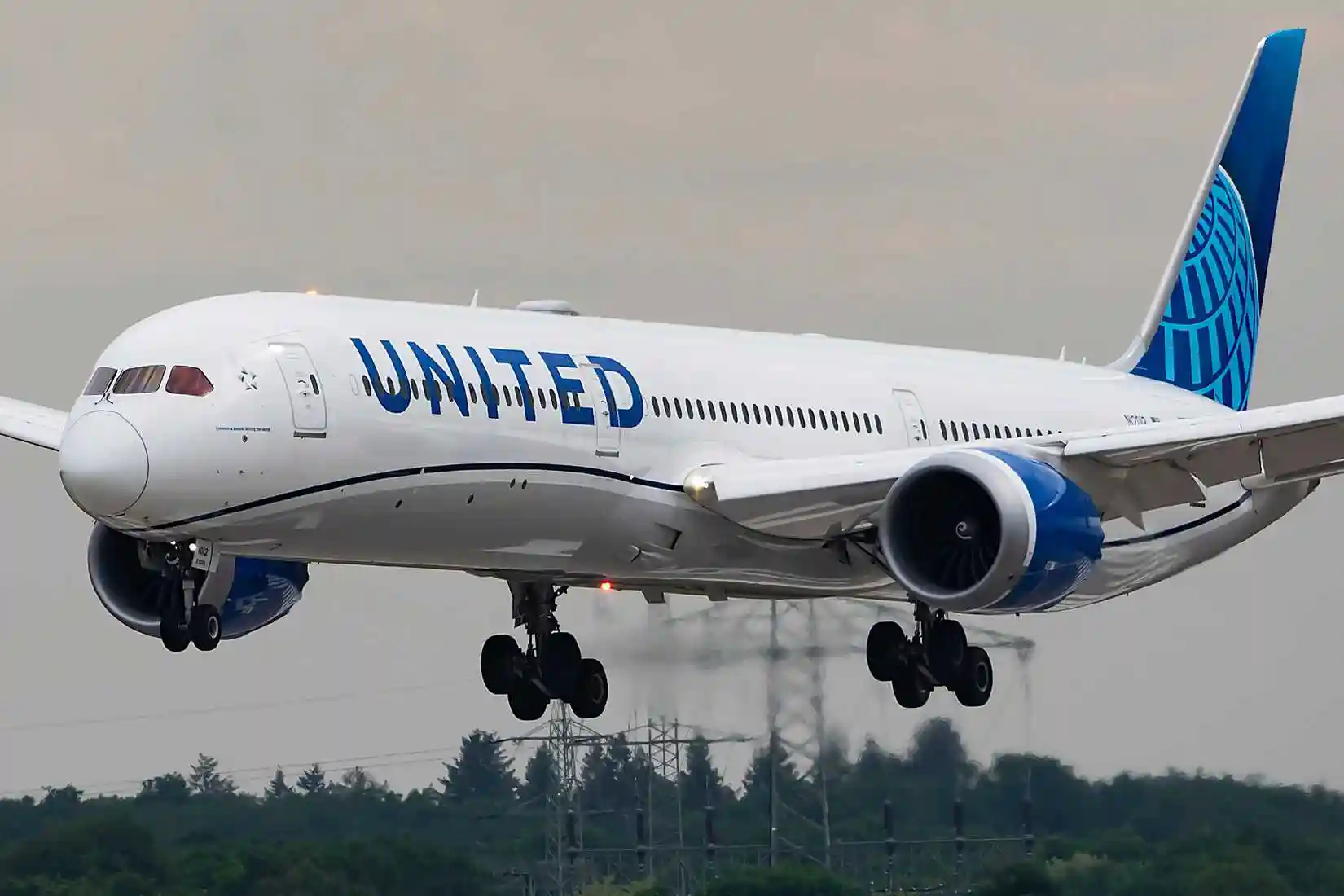
The Boeing 787-10 Dreamliner looks like an aircraft that should be expensive to operate. At 224 feet (68 meters) long, it is the largest member of Boeing’s 787 family and carries hundreds of passengers inside a stretched composite fuselage. Yet the economics of the aircraft tell a very different story. According to US airline operating-cost data submitted to the Department of Transportation (DOT), the 787-10 has emerged as one of the most cost-efficient widebody aircraft operating in America, particularly when measured on a per-seat basis.
That result is significant because airlines do not make fleet decisions based simply on how much fuel an aircraft burns during a flight. The real calculation involves fuel, flight crews, maintenance, insurance, aircraft utilization, seating capacity and the amount of revenue that can be generated from each departure. A large aircraft can therefore be cheaper to operate per passenger than a smaller aircraft if its additional seats come with only a modest increase in operating expense.
The 787-10 was designed around precisely that principle. Rather than giving the Dreamliner family another ultra-long-range variant, Boeing stretched the existing 787-9 and concentrated on high passenger capacity, lower structural weight and excellent fuel efficiency. The result is an aircraft particularly well suited to busy domestic and transatlantic routes where airlines need to move large numbers of passengers without adding additional flights.
Boeing 787-10 Operating Cost Reveals a Remarkable Advantage
US Department of Transportation Form 41 filings provide an unusually detailed window into airline operating economics. These financial reports contain information on expenditures associated with aircraft operations, making them useful for examining how different widebody types perform in actual airline service rather than relying solely on manufacturer claims.
Analysis of this data by AirInsight placed the Boeing 787-10 at approximately $19.54 per seat-hour in direct operating costs. The figure incorporates major expenses such as fuel, crew compensation, airframe maintenance and hull insurance, expressed against the aircraft’s available seating capacity.
That number becomes more meaningful when the 787-10 is placed alongside older widebody aircraft. The Airbus A330-300 comes in at approximately $21.43 per seat-hour, while the Boeing 767-400ER reaches around $22.91 per seat-hour. On that basis, the 787-10 enjoys a substantial unit-cost advantage despite being considerably larger than the 767-400ER.
The difference is about $1.89 per seat-hour against the A330-300 and approximately $3.37 against the 767-400ER. Those figures might appear relatively small when viewed in isolation, but airline economics are built around thousands of flight hours and millions of seats. A few dollars of savings multiplied across a large fleet can quickly become a multimillion-dollar advantage.
Consider a 10-hour flight using a 318-seat configuration. If the 787-10 has a $3.37 per-seat-hour advantage over a 767-400ER, the direct operating-cost difference can exceed $10,700 for a single departure. Multiply that by 300 annual rotations and the theoretical direct-cost difference rises above $3.2 million per aircraft per year. Actual airline results will vary because utilization, cabin configuration, fuel prices, maintenance programs and route characteristics are different, but the underlying principle remains powerful.
Why the Largest 787 Is So Efficient
The secret behind the 787-10’s economics is not simply that Boeing built a bigger aircraft. Its efficiency comes from the way the manufacturer increased capacity while retaining much of the architecture already developed for the 787 family.
The 787-10 is approximately 18 feet (5.5 meters) longer than the 787-9, producing a total length of 224 feet. Crucially, Boeing did not create an entirely new wing, propulsion system or fuselage architecture to achieve that additional capacity. The extensive commonality between the 787-9 and 787-10 helped limit development complexity and allows airlines to benefit from an aircraft that shares much of the family’s established maintenance and operational ecosystem.
This is where the aircraft’s engineering philosophy becomes especially interesting. The 787-10 does not attempt to be the longest-legged member of the Dreamliner family. Instead, it gives up some range in exchange for a more favorable payload-to-weight relationship.
The 787-9 can fly approximately 7,565 nautical miles, whereas the 787-10 is rated for around 6,430 nautical miles. That difference is considerable on paper, but it does not automatically make the larger aircraft less useful. Most airlines do not operate every widebody on the longest route imaginable. They select aircraft according to the specific demands of individual markets.
Carrying thousands of pounds of additional fuel requires structure, tank capacity and aircraft weight. If an airline rarely needs that additional range, transporting the capability around the world can effectively mean carrying unnecessary weight. The 787-10 takes the opposite approach: use the aircraft’s weight capacity to carry passengers and cargo rather than excessive fuel for missions it is unlikely to fly.
That decision gives the aircraft a highly specialized role. It is not the ultimate Dreamliner for range. It is the Dreamliner designed to make dense routes economically attractive.
787-10 Seating Capacity Changes the Economics
Capacity is arguably the most important part of the 787-10’s financial story.
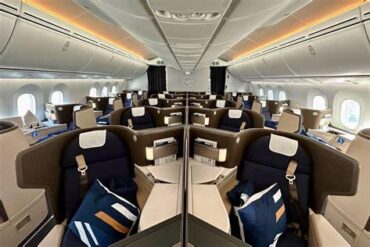
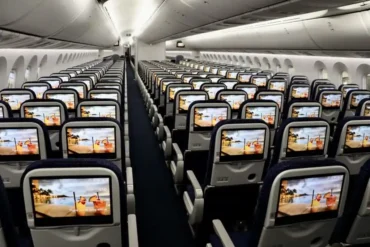
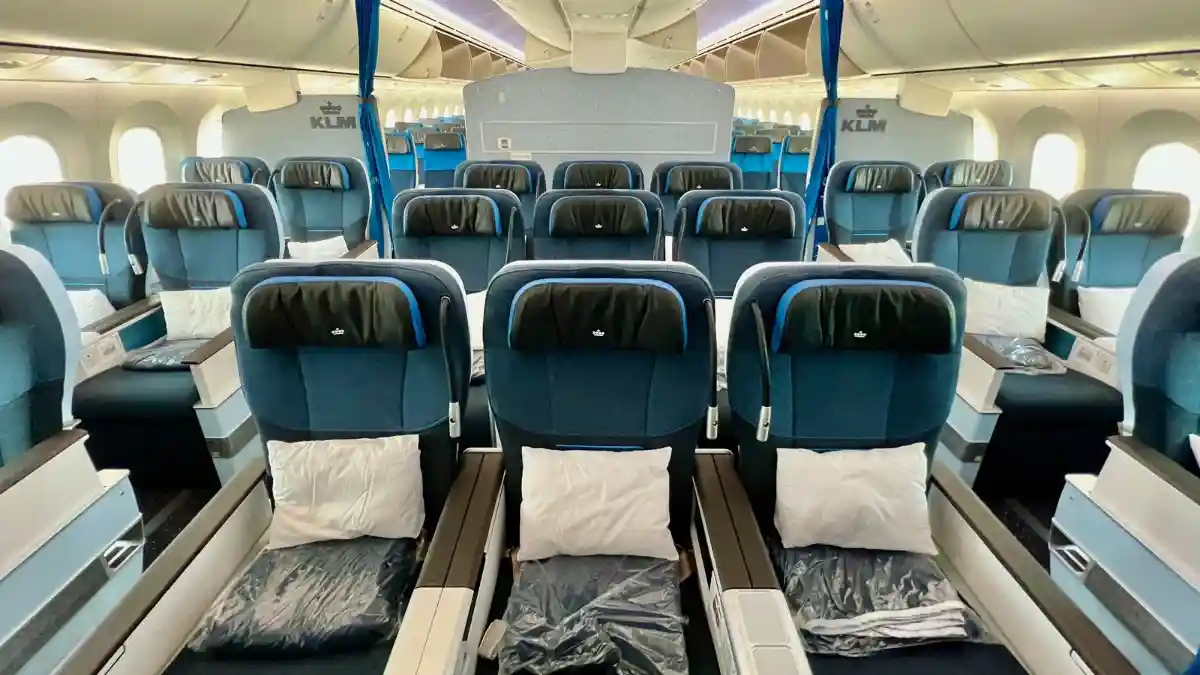
The aircraft can accommodate around 336 passengers in a typical two-class configuration, although individual airline layouts vary substantially. By comparison, the 787-9 typically carries around 296 passengers in a two-class configuration.
That extra capacity matters because many aircraft operating costs do not increase in direct proportion to passenger numbers. One flight still requires a cockpit crew, cabin crew, landing fees and a substantial amount of fuel whether an airline sells 290 seats or 330 seats. Increasing the number of revenue-generating seats can therefore lower the cost assigned to each passenger.
The concept is particularly valuable on routes where demand is already strong. An airline flying between major international hubs does not necessarily need an aircraft capable of flying halfway around the world. It needs an aircraft that can carry a large number of passengers efficiently over the distance actually required.
The 787-10’s lower range therefore becomes less of a weakness and more of a deliberate design trade-off. A carrier can deploy it on a seven-to-nine-hour transatlantic sector, fill more seats, carry substantial belly cargo and avoid paying the operating penalty associated with a larger fuel capacity.
United Airlines Shows Where the 787-10 Works Best
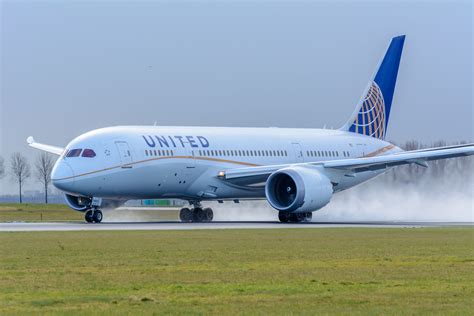
The economics become easier to understand by looking at United Airlines, currently the only US airline operating the 787-10 in passenger service, according to the supplied reference data. The carrier has used the aircraft on routes where its combination of capacity and range makes sense.
United’s network provides an excellent environment for the 787-10. Its major hubs include Newark and Chicago, both of which generate significant international demand. The 787-10 can serve numerous European destinations from these gateways without requiring the extreme range capability of the 787-9.
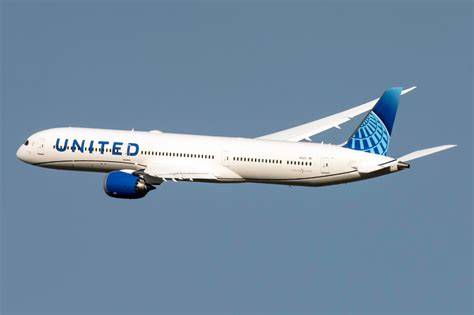
That is an important distinction. A route such as Newark to Frankfurt does not require an aircraft optimized for an ultra-long-haul mission. What matters is carrying enough passengers and cargo efficiently while providing the premium cabin capacity demanded by the market.
The 787-10 can also be useful on major domestic trunk routes. Services such as New York–Los Angeles or San Francisco–New York can generate enough demand to justify a widebody, particularly during peak periods. Deploying a high-capacity Dreamliner gives an airline another way to increase available seats without simply adding more departures.
This matters at airports where slots are scarce. An airline with one available departure slot can generate more passenger capacity by using a larger aircraft. If that aircraft is also efficient on a per-seat basis, the economic case becomes considerably stronger.
Belly Cargo Adds Another Revenue Stream
Passenger capacity is only part of the 787-10 equation. The aircraft also offers significant lower-deck cargo capability.
With space for numerous LD3 containers, the 787-10 can generate additional revenue from freight while transporting passengers. Cargo is particularly valuable on transatlantic routes because airlines can combine strong passenger demand with high-value shipments moving between major economic centers.
This gives the aircraft a second source of revenue that helps offset the cost of each flight. An airline is not simply filling seats; it is effectively trying to monetize as much of the aircraft’s available volume and weight as possible.
The long fuselage helps here because the aircraft can provide substantial cabin capacity while maintaining useful belly volume. That combination is difficult for older aircraft to replicate economically. A 767-400ER, for example, may still have a useful role within an airline’s network, but its older airframe and smaller capacity make its cost per available seat increasingly difficult to defend on high-density routes.
Why the 787-10 Can Beat Smaller Widebodies
It may seem counterintuitive that the largest 787 can be cheaper to operate per seat than smaller widebodies. The explanation lies in unit economics rather than absolute trip cost.
A 787-10 flight can still cost more in total than operating a smaller aircraft. It is a larger machine carrying more passengers and cargo. But airlines ultimately care about how much it costs to transport each passenger and how much revenue can be generated from the available capacity.
The distinction is critical. A larger aircraft with only slightly higher trip costs can be dramatically more efficient if it carries dozens of additional passengers.
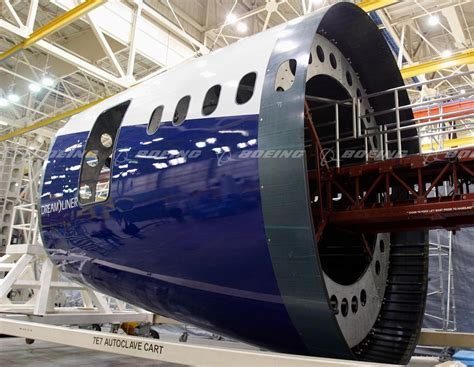
The aircraft’s composite construction also contributes to its long-term efficiency. The 787 family was designed with extensive use of composite materials, advanced aerodynamics and modern engines. These technologies reduce structural weight and improve fuel efficiency compared with many older widebody designs.
The GEnx-1B and Rolls-Royce Trent 1000 engine families provide the propulsion architecture used across the Dreamliner family. Combined with the 787’s advanced wing design, the result is an aircraft that can move a very large passenger load without requiring a corresponding increase in fuel consumption.
The 787-10 Versus Airbus A330-300 and 767-400ER
The cost figures also explain why the 787-10 is becoming an attractive replacement for older widebodies.
The A330-300 remains a capable aircraft, and the 767-400ER has long served as a useful bridge between narrowbody and larger widebody capacity. However, both designs originated in an earlier era of commercial aviation. Their structures, systems and engines were not optimized around the same combination of composite construction and modern turbofan technology found on the Dreamliner.
The 787-10 therefore benefits from an unusual combination: large capacity without the extreme size and weight of a much larger aircraft.
The Airbus A330neo family offers an important counterpoint. The A330-900neo incorporates newer engines and aerodynamic improvements, giving the aircraft impressive fuel economics. Yet on very dense routes, the 787-10’s seating capacity can help spread fixed operating costs across more passengers.
For airlines, the choice is consequently not simply about which aircraft burns less fuel. Network planners have to consider the entire mission profile. An aircraft that is slightly more expensive per trip can still produce better economics if it carries more revenue-generating passengers and cargo.
Why Range Is Not Always the Priority
The aviation industry’s fascination with range can sometimes obscure what airlines actually need.
Ultra-long-range capability is valuable when airlines operate nonstop flights of 15 or 16 hours. But additional range requires additional fuel, and additional fuel increases weight. That creates a cycle in which the aircraft must carry more fuel partly because it is carrying the fuel needed to carry more fuel.
The 787-10 avoids much of this burden by targeting a more practical mission profile. Its 6,430-nautical-mile range is sufficient for a large portion of transatlantic operations while also making the aircraft extremely attractive for high-frequency regional international routes.
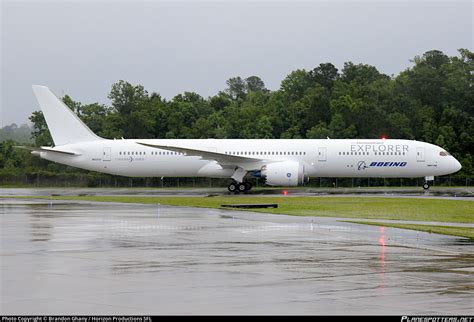
This is why the aircraft can be so economical despite being the largest 787. Boeing did not simply stretch the aircraft and retain every capability of the 787-9. It accepted a reduction in range to create a more efficient payload carrier.
For airlines, that can be a very smart compromise. An aircraft does not need to fly the world’s longest route to be profitable. It needs to match its capabilities with the routes where passengers and cargo generate the greatest returns.
Global Airlines Are Taking Notice
The economics demonstrated in the United States are also influencing international fleet strategies.
At the 2026 Farnborough International Airshow, the 787-10 attracted additional attention as airlines looked for ways to expand capacity without dramatically increasing operating costs. Riyadh Air, for example, converted 20 existing 787 options to the larger 787-10 variant, signaling confidence in the aircraft’s ability to support a growing international network.
Philippine Airlines also signed a memorandum of understanding covering 15 firm 787-10 aircraft plus five options, with the type positioned as part of its long-term widebody renewal strategy. For airlines replacing A330-300s and other older twin-engine widebodies, the Dreamliner offers a way to increase capacity while lowering fuel and maintenance costs.
These orders highlight a broader trend. Airlines increasingly want aircraft that can carry more passengers through constrained airports without requiring a proportional increase in fuel consumption.
The Future of High-Capacity Widebody Operations
The 787-10’s economics could become even more important as airports become increasingly constrained by capacity.
At major international hubs, adding another flight is not always possible. Airport slots, gate availability, air traffic control restrictions and local operating limits can all prevent airlines from expanding frequencies indefinitely. In those circumstances, increasing the size and efficiency of each departure becomes an attractive alternative.
A high-capacity aircraft such as the 787-10 can effectively turn one slot into hundreds of passenger opportunities. When combined with modern flight-planning software, electronic flight bags and increasingly sophisticated engine-health monitoring, airlines can continuously optimize the aircraft’s operating profile.
The result is a powerful business proposition: more passengers per flight, more cargo beneath the cabin and lower direct operating cost per seat.
The 787-10’s Real Advantage Is Its Mission
Calling the Boeing 787-10 the cheapest widebody in America requires an important qualification. The aircraft’s reported $19.54 per seat-hour figure is a direct operating-cost measure, not a universal guarantee that every 787-10 flight will cost less than every competing aircraft under every circumstance. Airline configurations, fuel prices, labor costs, utilization and route lengths can all change the economics.
Nevertheless, the underlying result is compelling. The 787-10 demonstrates how a large aircraft can achieve outstanding unit economics by focusing on the right mission rather than trying to do everything.
Its shorter range compared with the 787-9 is not an engineering failure. It is the foundation of the aircraft’s strategy. By avoiding unnecessary weight, stretching a proven platform and adding substantial seating capacity, Boeing created a widebody that is particularly well suited to dense routes where airlines need capacity, efficiency and revenue potential at the same time.
That is ultimately why the largest Dreamliner can also be one of the cheapest widebodies to fly in America. The 787-10 does not win by being the aircraft that can fly the farthest. It wins by carrying a lot of people, a lot of cargo and doing it over the routes where that capability can generate the strongest economics.