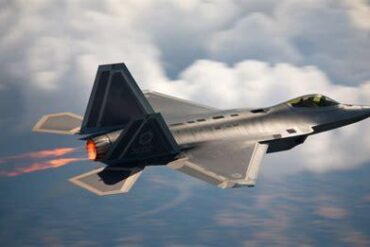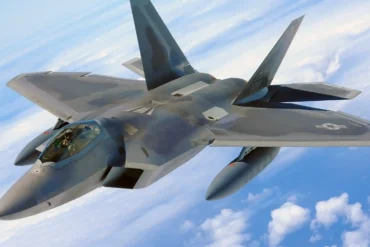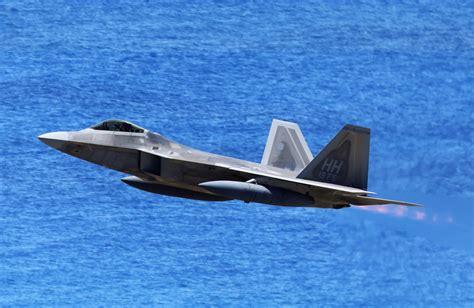
The Lockheed Martin F-22 Raptor remains one of the most advanced fighter aircraft ever built, a symbol of unmatched air superiority and technological dominance. Designed to defeat the most capable enemy fighters and operate deep inside contested airspace, the aircraft combines stealth technology, supercruise capability, advanced avionics, and extreme maneuverability into a single platform. However, such extraordinary performance comes at a steep operational cost.
In 2026, the F-22 Raptor cost per flight hour is estimated to fall between $70,000 and $90,000, with many defense analyses placing the realistic average at around $80,000 to $85,000 per hour when the full scope of operational expenses is considered. These expenses include not only fuel but also maintenance labor, stealth coating upkeep, spare parts logistics, workforce costs, and long-term sustainment programs.
For defense planners and aviation analysts, this figure highlights an important reality: the F-22 is not merely expensive to fly—it is expensive to sustain throughout its entire operational lifecycle. Despite this, the aircraft continues to play a critical role in the United States Air Force’s air superiority strategy, providing capabilities that remain difficult for other fighters to match.
Understanding why the F-22 operating cost is so high requires a deeper look into what the cost per flight hour actually represents, the factors driving those expenses, and how the Raptor compares with other modern fighter aircraft currently in service.
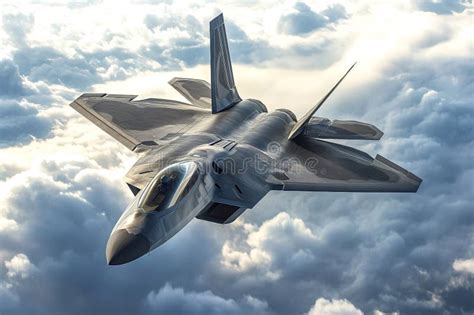
What Is the Real F-22 Raptor Cost Per Flight Hour in 2026?
The most widely accepted estimate for the F-22 Raptor cost per flight hour in 2026 sits at roughly $80,000 per hour, though the broader range typically falls between $70,000 and $90,000 depending on how the calculation is performed.
This figure is derived using a metric known as Cost Per Flying Hour (CPFH). The U.S. Department of Defense and aviation analysts use CPFH to measure the total cost of operating an aircraft during a single hour of flight. The calculation goes far beyond fuel usage. It includes:
- Fuel consumption
- Scheduled and unscheduled maintenance
- Replacement parts
- Maintenance labor
- Logistics and supply chain support
- Engine overhaul reserves
- Long-term sustainment costs
When all these factors are included, the F-22 becomes one of the most expensive fighter jets in the world to operate.
Earlier estimates from the 2010s placed the cost closer to $60,000–$65,000 per hour, but as the fleet has aged and maintenance demands increased, operating costs have steadily risen. Aircraft structures require deeper inspections, avionics components need periodic upgrades, and the stealth coating must be constantly repaired or reapplied.
Another major contributor to the high operating cost is the relatively small fleet size. Only 187 operational F-22 Raptors were produced, far fewer than aircraft like the F-16 Fighting Falcon or F-35 Lightning II. Because logistics infrastructure, training programs, and spare parts production must support a limited number of aircraft, the cost per jet inevitably rises.
This lack of economies of scale means that even routine operations become more expensive compared to aircraft produced in much larger numbers.
Why the F-22 Raptor Is So Expensive to Operate
The F-22’s operational cost is driven by several technical and logistical factors that make it fundamentally different from conventional fighter aircraft. The aircraft’s advanced design provides unparalleled combat capability, but every element of that design requires careful and often costly maintenance.
High-Performance Twin Engines
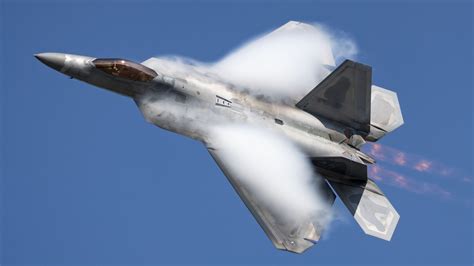
At the heart of the F-22 are two Pratt & Whitney F119-PW-100 turbofan engines, each capable of producing more than 35,000 pounds of thrust. These engines enable the Raptor’s famous supercruise capability, allowing it to sustain supersonic flight without afterburners.
While supercruise improves fuel efficiency during certain missions, high-performance fighter maneuvers still consume significant amounts of fuel. Training sorties that involve aggressive acceleration, rapid climbs, and supersonic intercept profiles can drive fuel consumption far beyond that of typical patrol flights.
Fuel itself typically accounts for around 15–20% of the total flight hour cost, meaning that while it is significant, it is not the primary driver of expenses.
Stealth Coating Maintenance
One of the largest contributors to the F-22’s operating cost is the maintenance of its radar-absorbent material (RAM).
Stealth technology works by using special coatings and structural shaping to minimize radar reflections. However, these coatings are extremely sensitive to environmental conditions, including:
- Heat generated during high-speed flight
- Rain and moisture exposure
- Aerodynamic stress on the aircraft surface
- Physical wear during maintenance operations
Even small imperfections in the coating can affect the aircraft’s radar cross-section, meaning technicians must perform detailed inspections after many flights. Repairs often require specialized facilities and carefully controlled environments.
The process of maintaining stealth surfaces can take many hours of technician labor, significantly increasing operational costs.
Maintenance Hours Per Flight Hour
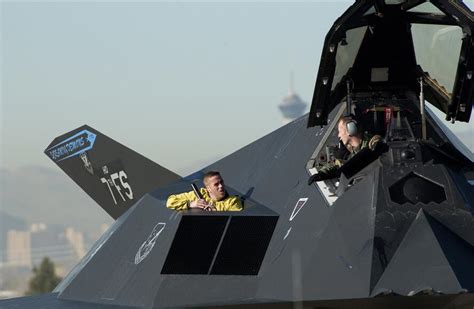
In the early years of F-22 service, the aircraft required over 30 maintenance hours for every flight hour. Although reliability improvements have reduced that ratio over time, the Raptor still requires substantial maintenance compared to conventional fighters.
Maintenance tasks include:
- Structural inspections
- Avionics diagnostics
- Hydraulic and flight control system checks
- Engine inspections
- Stealth surface repair
Every hour the aircraft spends in the air typically requires several hours of work on the ground. This creates a labor-intensive sustainment model that increases both cost and logistical complexity.
Specialized Spare Parts
Because the F-22 production line closed in 2012, spare parts are produced in relatively small quantities. Many components must be manufactured specifically for the aircraft or refurbished from existing stockpiles.
This limited supply chain increases:
- Manufacturing cost per component
- Lead time for replacement parts
- Inventory management expenses
Certain avionics modules and stealth-related structures are particularly expensive to produce because they involve specialized materials and manufacturing processes.
Highly Specialized Workforce
Maintaining a fifth-generation stealth fighter requires technicians with specialized training in:
- Low observable materials
- Advanced radar systems
- Sensor fusion technologies
- Digital avionics architecture
These technicians must undergo extensive certification programs before working on the aircraft. As a result, labor costs are significantly higher than those associated with maintaining older fighter platforms.
Aging Airframe Challenges
The F-22 entered service in 2005, meaning the fleet is now approaching two decades of operational use. As aircraft age, structural fatigue becomes an increasingly important concern.
Maintenance crews must conduct detailed inspections of:
- Wing structures
- Fuselage stress points
- Landing gear components
- Engine mounts
Older aircraft often require replacement of structural components or upgrades to avionics systems, both of which contribute to rising operating costs.
Expert Insights: Understanding the $80,000 Flight Hour Figure
The often-quoted $80,000 per flight hour figure should not be interpreted as the literal cost of a single training sortie. Instead, it represents a long-term accounting average.
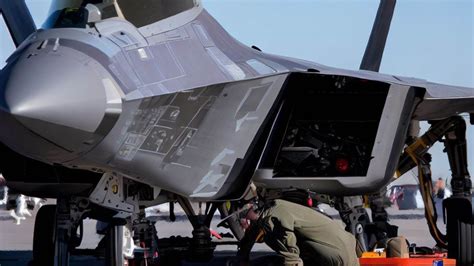
Defense analysts calculate this average by spreading expensive maintenance events across the aircraft’s total flight hours. For example:
- Engine overhauls occur only after hundreds of flight hours
- Structural inspections happen periodically
- Stealth coating refurbishment may be required after extensive operations
Although these events do not happen every flight, they are extremely expensive when they occur. By averaging these costs across the aircraft’s lifetime, analysts produce a more accurate estimate of the true cost of operating the aircraft over decades of service.
This explains why different reports sometimes present different figures. Some analyses include only immediate operating expenses like fuel and routine maintenance, while others incorporate deeper lifecycle costs.
The distinction between marginal cost and full lifecycle cost is critical when evaluating fighter aircraft economics.
How the F-22 Compares to Other Fighter Jets
When compared with other modern fighters, the F-22 consistently ranks among the most expensive aircraft to operate per flight hour.
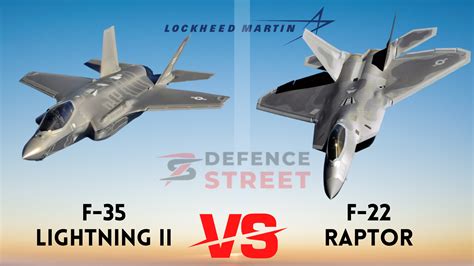
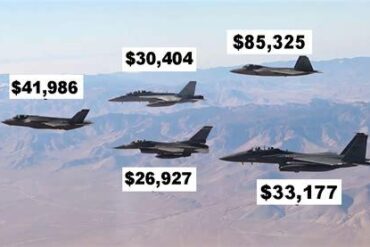
Based on defense cost estimates and aviation analyses, approximate operating costs for several major fighters include:
- F-22 Raptor: about $80,000–$85,000 per hour
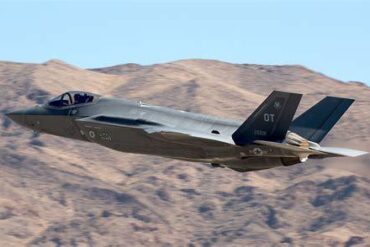
- F-35A Lightning II: roughly $42,000 per hour
- F-15 Eagle / F-15EX: about $30,000–$40,000 per hour
- F-16 Fighting Falcon: roughly $22,000–$27,000 per hour
- Dassault Rafale: approximately $15,000–$22,000 per hour
These numbers highlight a major trend in modern military aviation: stealth capability significantly increases operating costs.
The F-22 represents an early generation of stealth fighters developed during the 1990s, when stealth maintenance processes were less optimized. Later aircraft such as the F-35 Lightning II were designed with improved maintainability and lower lifecycle costs in mind.
Even so, the Raptor’s unmatched air-to-air combat capability means it continues to serve a specialized role within the U.S. Air Force.
Why Cost Estimates Differ Between Reports
Different sources often report varying numbers for the F-22 cost per flight hour, sometimes creating confusion among readers.
Several factors explain these discrepancies.
First, organizations use different accounting methods. Some focus on direct operating costs, which include fuel and routine maintenance. Others include full lifecycle sustainment expenses, which incorporate spare parts inventories, modernization programs, and long-term overhaul costs.
Second, mission profiles vary widely. A short training flight with limited afterburner use consumes less fuel and places less stress on the aircraft compared to a high-intensity combat training exercise.
Third, the age of the fleet continues to influence maintenance requirements. As aircraft accumulate more flight hours, inspection intervals become more frequent and component replacement rates increase.
Finally, the limited production run of the F-22 means that certain spare parts must be manufactured in small quantities. Low production volume inevitably raises costs.
These variables explain why some reports may cite figures closer to $70,000 per hour, while others exceed $85,000 per hour.
Why the United States Still Operates the F-22 Despite the Cost
Despite its high operating cost, the F-22 Raptor remains indispensable to the United States Air Force.
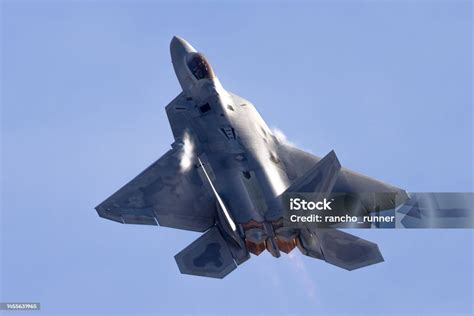
The aircraft was designed with a singular mission in mind: complete air superiority against the most advanced enemy fighters. Its combination of stealth, speed, sensor fusion, and maneuverability allows it to detect and engage threats long before those threats can respond.
Key advantages include:
- Supercruise capability, enabling sustained supersonic flight
- Advanced radar and sensor fusion for superior situational awareness
- Extremely low radar signature
- Exceptional agility through thrust-vectoring engines
These capabilities allow the aircraft to dominate air combat scenarios where conventional fighters might struggle.
For this reason, the F-22 is typically reserved for high-value missions, such as:
- Establishing air dominance in contested airspace
- Escorting strike packages
- Deterring advanced enemy fighter aircraft
Routine patrol duties are often assigned to more cost-efficient aircraft like the F-16 or F-35, allowing the Raptor to focus on missions where its capabilities provide the greatest strategic advantage.
The Future of Fighter Operating Costs
The experience gained from operating the F-22 has strongly influenced the design philosophy behind newer fighter programs.
Future aircraft concepts—such as the Next Generation Air Dominance (NGAD) program—are being designed with a greater emphasis on sustainability and operational efficiency. Engineers are attempting to balance extreme performance with lower maintenance requirements and improved logistics support.
Lessons learned from the F-22 include the importance of:
- Modular avionics systems
- More durable stealth materials
- Simplified maintenance procedures
- Scalable production programs
The goal is to ensure that the next generation of fighter aircraft can deliver cutting-edge performance without the same level of operational expense.
The Real Cost of Dominating the Skies
The F-22 Raptor cost per flight hour in 2026, estimated at $70,000 to $90,000, reflects the reality of maintaining one of the most sophisticated fighter aircraft ever created. While the price tag is undeniably high, it represents the cost of sustaining unmatched capabilities in stealth, speed, and air combat dominance.
Operating the Raptor requires an enormous support infrastructure: specialized technicians, advanced maintenance facilities, expensive spare parts, and constant attention to stealth surfaces and avionics systems. When these elements are combined, they produce the $80,000-per-hour operational benchmark frequently cited in defense reports.
Yet the aircraft’s continued service proves that performance still matters more than cost in certain strategic contexts. The F-22 remains the United States Air Force’s premier air superiority fighter, capable of defeating advanced threats and controlling contested airspace.
For military planners, the aircraft represents both a technological triumph and an economic lesson. Building the most advanced fighter in the world is only half the challenge—the real test lies in keeping that fighter operational for decades while managing the enormous costs required to sustain it.