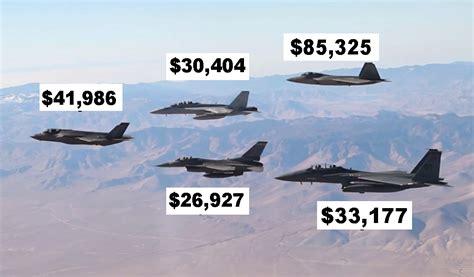
The question of how much a fighter jet costs to fly per hour cuts straight to the heart of modern military power. It’s not just a number—it’s a reflection of technology, strategy, engineering philosophy, and geopolitical priorities. From rugged Cold War workhorses to cutting-edge stealth platforms, the cost spectrum reveals a fascinating truth: air superiority is as much about economics as it is about performance.
Understanding these costs requires more than a glance at a price table. Each hourly figure represents fuel burn, maintenance cycles, spare parts logistics, pilot training, and the invisible but enormous infrastructure behind every sortie. What emerges is a layered ecosystem where every minute in the air translates into thousands of dollars—and strategic value.
What Determines Fighter Jet Cost Per Hour?
At first glance, the difference between a $20,000-per-hour aircraft and an $80,000-per-hour platform might seem purely technological. But the reality is far more nuanced. The operating cost per flight hour is driven by a combination of factors that go far beyond fuel alone.
Fuel consumption is an obvious contributor. High-performance engines—especially afterburning turbofans—consume staggering amounts of fuel. But fuel is just the beginning. Maintenance is where costs truly explode. Advanced aircraft require extensive inspections, specialized tooling, and highly trained technicians after nearly every flight.
Then there’s the issue of parts. Older aircraft may use simpler systems, but sourcing aging components can become expensive. Meanwhile, newer jets rely on proprietary, high-tech components that are costly to manufacture and replace. Add in software updates, stealth coating repairs, and sensor calibration, and the hourly cost climbs rapidly.
Even pilot training factors in. Every hour flown contributes to pilot proficiency, but also adds wear and tear to the airframe. In essence, every flight is both an operational mission and a maintenance event waiting to happen.
The Most Expensive Fighter Jets to Operate
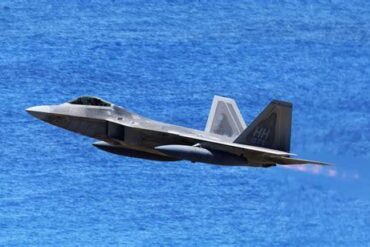
At the very top of the cost pyramid sits the formidable Lockheed Martin F-22 Raptor. With operating costs exceeding $80,000 per flight hour, it represents the pinnacle of air dominance—and the financial burden that comes with it.
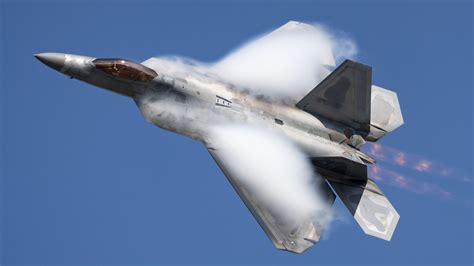
The F-22’s cost is largely driven by its stealth capabilities. Its radar-absorbing coating requires meticulous inspection and frequent repair, often by hand. Unlike conventional aircraft, where wear and tear is visible and manageable, the F-22’s low-observable design demands constant attention to maintain its invisibility.
Its twin engines add another layer of expense. High thrust equals high fuel burn, and the F-22 was designed for performance first, efficiency second. Add in the fact that the aircraft is no longer in production, and you get a shrinking supply chain with rising costs for spare parts.
Interestingly, the F-22 also holds the distinction of being one of the most expensive fighter jets ever built, with procurement costs exceeding $150 million per aircraft. That initial investment echoes throughout its lifecycle, reinforcing its status as a “silver bullet” platform—exceptional, but costly to sustain.
Close behind are aircraft like the Eurofighter Typhoon, with hourly costs around $60,000. These jets combine advanced avionics and high performance, but lack the extreme maintenance demands of full stealth platforms.
Mid-Tier Powerhouses: Balancing Cost and Capability
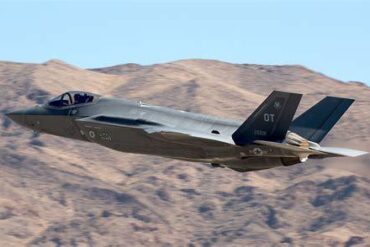
Moving down the cost spectrum, the F-35 Lightning II occupies a unique and controversial position. With operating costs ranging between $34,000 and $42,000 per hour, it sits firmly in the middle—yet represents the future of Western air power.
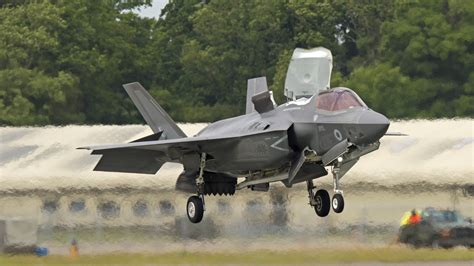
The F-35 was designed as a multi-role, multi-service, multinational platform, aiming to replace a wide array of older aircraft. Its cost structure reflects this ambition. While cheaper to acquire than some legacy fighters, it remains expensive to operate due to its complexity.
However, the F-35 introduces efficiencies that older jets cannot match. Its stealth coatings are more durable than those of the F-22, reducing maintenance overhead. Its sensor fusion capabilities allow it to act as a battlefield coordinator, directing other aircraft and maximizing overall efficiency.
The U.S. Air Force has set an ambitious target of reducing F-35 operating costs to $25,000 per hour. Achieving this would position it only slightly above legacy platforms while retaining vastly superior capabilities—a goal that, while challenging, underscores the importance of economies of scale and global sustainment networks.
Another notable aircraft in this category is the F-15EX Eagle II, with operating costs around $29,000 per hour. Unlike stealth fighters, the F-15EX focuses on payload and reliability, carrying up to 22 air-to-air missiles and serving as a “missile truck” in modern combat scenarios.
Low-Cost Legends: Efficiency Meets Durability
At the lower end of the spectrum, aircraft like the General Dynamics F-16 Fighting Falcon and the Fairchild Republic A-10 Thunderbolt II demonstrate that affordable air power is still highly effective.
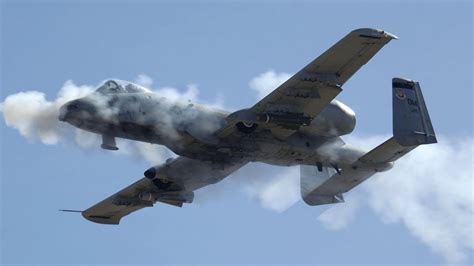
With operating costs around $22,000 to $25,000 per hour, these jets are among the most economical in the world. But their value goes far beyond cost savings.
The A-10, affectionately known as the “Warthog,” was built for close air support. Its rugged design allows it to absorb significant damage and still return home. Its simplicity translates directly into lower maintenance requirements and higher readiness rates.
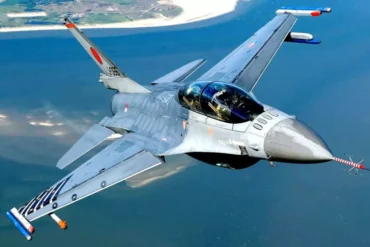
The F-16, on the other hand, evolved from a lightweight dogfighter into one of the most versatile multirole aircraft ever built. Its relatively low operating cost, combined with high performance, makes it a cornerstone of many air forces worldwide.
These aircraft highlight a critical insight: cost efficiency does not necessarily mean reduced effectiveness. In many scenarios, they outperform more advanced jets simply by being available, reliable, and affordable to operate in large numbers.
The Strategic Logic Behind High Operating Costs
Why would any military invest in aircraft that cost over $80,000 per hour to operate? The answer lies in mission requirements and survivability.
Modern warfare increasingly involves contested airspace filled with advanced radar systems and surface-to-air missiles. In such environments, stealth aircraft like the F-22 and F-35 are not luxuries—they are necessities.
These jets act as force multipliers. Instead of sending dozens of non-stealth aircraft into danger, a smaller number of stealth fighters can penetrate defenses, gather intelligence, and coordinate attacks. This reduces overall risk and increases mission success rates.
At the same time, legacy aircraft remain essential for less demanding missions. Air policing, patrols, and low-intensity conflicts do not require stealth capabilities. Using high-end fighters for these tasks would be financially unsustainable and strategically inefficient.
This is why modern air forces adopt a high-low mix strategy, combining expensive stealth platforms with more affordable legacy aircraft.
The High-Low Mix: A Cost-Effective Combat Strategy
The concept of the high-low mix is one of the most important principles in modern air force planning. It acknowledges a simple reality: not every mission requires the most advanced aircraft.
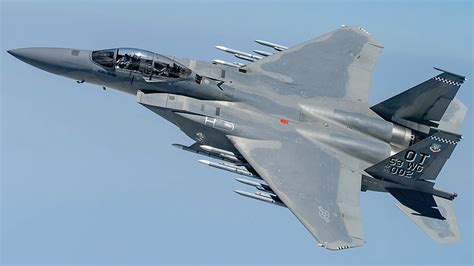
Stealth fighters operate as the “quarterbacks” of the battlefield. They gather data, identify targets, and coordinate attacks. Meanwhile, legacy aircraft like the F-15EX carry large payloads of missiles and remain outside high-threat zones.
This division of labor maximizes efficiency. Instead of risking expensive stealth jets in every mission, they are reserved for scenarios where their capabilities are indispensable.
The result is a layered airpower system, where each aircraft type contributes to overall effectiveness while keeping costs under control.
Why Some Expensive Jets Are Cheap to Fly
One of the most surprising insights in fighter jet economics is that purchase price does not always correlate with operating cost. A prime example is the Dassault Rafale.
Despite a procurement cost approaching that of the F-22, the Rafale’s operating cost is remarkably low—around $22,000 per hour, comparable to the A-10.
This efficiency stems from design philosophy. The Rafale was built with maintainability and operational flexibility in mind, reducing the need for extensive ground support and minimizing downtime.
In contrast, the F-35 emphasizes technological integration and stealth, resulting in higher operational complexity. These differing approaches highlight a fundamental trade-off in aircraft design: cutting-edge capability versus long-term affordability.
The Future: Sixth-Generation Fighters and Rising Costs
Looking ahead, the next frontier in air combat is already taking shape. Programs like the Next Generation Air Dominance (NGAD) initiative aim to develop sixth-generation fighters that will surpass current capabilities in every dimension.
While details remain limited, one thing is certain: these aircraft will be even more expensive to operate.
Advanced features such as artificial intelligence integration, autonomous teaming, and next-generation propulsion systems will drive costs higher. However, they may also introduce new efficiencies, particularly in maintenance and mission effectiveness.
The challenge for future air forces will be balancing these innovations with budget constraints. As costs rise, the importance of strategic fleet composition and operational efficiency will only increase.
The True Cost of Air Power
Ultimately, the cost per flight hour is more than just a financial metric—it is a reflection of technological ambition, strategic necessity, and operational philosophy.
From the rugged affordability of the A-10 to the unmatched sophistication of the F-22, each aircraft represents a different approach to achieving air superiority. Some prioritize cost efficiency and reliability, while others push the boundaries of what is technologically possible.
What becomes clear is that there is no single “best” aircraft. Instead, success lies in combining different platforms to create a balanced, flexible, and sustainable air force.
In the end, every hour a fighter jet spends in the sky is an investment—not just in defense, but in the complex system that keeps modern air power alive.