For most travelers, private jet charter pricing remains one of the least transparent areas of aviation. Unlike commercial airline tickets, where fares can be compared instantly across dozens of booking platforms, private aviation quotes often vary dramatically even for flights covering the same route. It is not unusual for one charter company to quote $12,000 while another offers $18,000 for what appears to be an identical journey.
The reason is simple: there is no universal price for renting a private jet. Every charter is customized based on aircraft availability, flight distance, airport selection, repositioning requirements, operating costs, seasonal demand, and several mandatory fees. While advertisements frequently promote attractive hourly rates, those figures rarely represent the final amount appearing on the invoice.
Understanding how private jet pricing actually works in 2026 allows travelers to determine whether chartering an aircraft is simply a luxury indulgence or, in certain situations, an economically sensible alternative to commercial premium cabins.
Private aviation continues to evolve rapidly as more operators expand their fleets and digital charter platforms make booking easier than ever before. Yet despite improved accessibility, pricing remains highly variable because every flight is essentially built from scratch rather than sold as a standardized seat.
Why Private Jet Hourly Rates Vary So Much
The single largest factor affecting charter costs is the type of aircraft selected.
Just as commercial airline fares differ between a regional commuter flight and an international first-class suite, private aircraft range from economical turboprops to ultra-long-range business jets capable of crossing oceans without refueling.
Every aircraft category brings different operating costs, fuel consumption, maintenance expenses, crew requirements, passenger capacity, cruise speed, and flight range. These differences directly influence hourly charter pricing.
Smaller aircraft naturally cost less to operate because they burn less fuel, require fewer maintenance resources, and often utilize smaller airports with lower handling fees. Larger aircraft offer substantially greater comfort and performance but come with significantly higher operating expenses.
Choosing an aircraft that exceeds the mission’s actual requirements is one of the most common reasons travelers overpay for private aviation.
Typical Private Jet Charter Rates in 2026
The following table illustrates average hourly charter pricing across the primary aircraft categories operating in today’s private aviation market.
| Aircraft Category | Typical Aircraft | Passenger Capacity | Typical Range | Average Hourly Cost |
|---|---|---|---|---|
| Turboprop | King Air 350i, Pilatus PC-12 | 6–9 | Up to 1,500 miles | $2,000–$3,000 |
| Very Light Jet | Citation Mustang, Phenom 100 | 4–5 | Up to 1,200 miles | $2,500–$3,500 |
| Light Jet | Citation CJ3+, Learjet 75 | 6–8 | Up to 2,000 miles | $3,000–$4,500 |
| Midsize Jet | Citation XLS+, Hawker 800XP | 7–9 | Up to 2,500 miles | $4,000–$6,000 |
| Super-Midsize Jet | Challenger 350, Citation Latitude | 8–10 | Up to 3,500 miles | $6,000–$8,000 |
| Heavy Jet | Falcon 900EX, Gulfstream G450 | 10–14 | Up to 5,000 miles | $8,000–$15,000 |
| Ultra-Long-Range Jet | Gulfstream G650ER, Global 7500 | 12–19 | Intercontinental | $18,000–$20,000+ |
Although these figures provide a useful benchmark, they represent only the aircraft rental portion of the trip rather than the total charter expense.
Turboprops Deliver the Lowest Cost of Private Flying
For short regional routes, turboprops remain the most economical option.
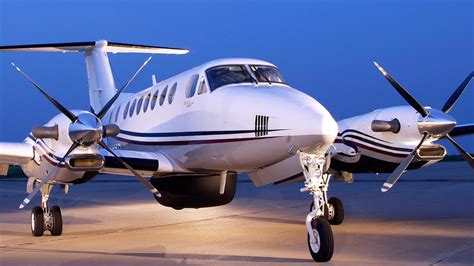
Aircraft such as the Beechcraft King Air 350i and Pilatus PC-12 combine excellent reliability with relatively low fuel consumption. They comfortably transport small business groups while accessing airports that larger jets cannot easily use.
Because operating costs remain comparatively modest, hourly charter prices generally begin around $2,000 and rarely exceed $3,000 under normal operating conditions.
These aircraft are especially popular for trips lasting one to three hours where jet speed offers little practical advantage.
Light Jets Balance Speed and Affordability
Many first-time charter customers eventually choose the light jet category.
Aircraft including the HondaJet, Citation CJ3+, and Learjet 75 cruise considerably faster than turboprops while maintaining manageable hourly costs.
They typically accommodate between four and eight passengers, making them ideal for executive travel between major metropolitan areas.
Hourly charter prices usually fall between $2,500 and $4,500, depending on aircraft model, route complexity, and operator.
For flights lasting two to four hours, light jets frequently represent the best balance between performance, comfort, and affordability.
Midsize and Super-Midsize Jets Dominate Business Aviation
Corporate travelers often gravitate toward midsize and super-midsize business jets because they provide stand-up cabins, greater baggage capacity, faster cruise speeds, and significantly longer range.
Popular aircraft include:
- Bombardier Challenger 350
- Cessna Citation Latitude
- Citation XLS+
- Hawker 800XP
These aircraft comfortably transport executive teams across continents while offering enclosed lavatories, refreshment centers, Wi-Fi connectivity, and spacious seating arrangements suitable for working during flight.
Hourly charter costs generally range from $4,000 to $8,000, with premium super-midsize aircraft averaging approximately $6,500 per hour.
Ultra-Long-Range Jets Represent the Peak of Private Aviation
At the highest end of the charter market sit aircraft like the Gulfstream G650ER and Bombardier Global 7500.
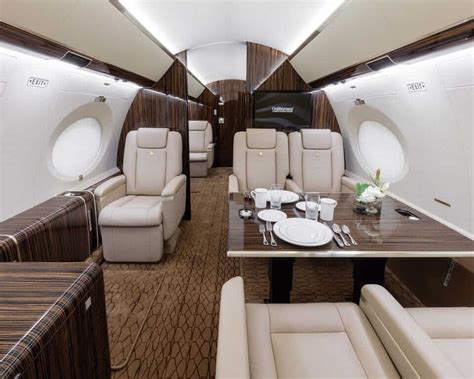
These aircraft can fly nonstop between continents while providing luxury comparable to boutique hotels.
Cabins often include:
- Full sleeping accommodations
- Conference areas
- High-speed internet
- Gourmet catering
- Large baggage compartments
- Multiple cabin zones
Their remarkable capabilities naturally command premium pricing.
Hourly charter rates commonly begin around $18,000 and frequently exceed $20,000 per flight hour, particularly during busy travel periods.
Why the Hourly Charter Rate Is Only the Beginning
One of the biggest misconceptions surrounding private aviation is believing that multiplying flight hours by the advertised hourly rate produces the final cost.
In reality, numerous additional charges are routinely added.
Common expenses include:
- Federal Excise Tax (FET) for U.S. domestic charters
- Airport landing fees
- Passenger facility charges
- Ramp handling fees
- Fuel surcharges
- Crew overnight accommodations
- Catering requests
- International permits
- Customs processing
- Winter de-icing
- Ground transportation coordination
Depending on the itinerary, these costs can increase the total invoice by several thousand dollars.
Consequently, two flights lasting exactly three hours may differ substantially in total price.
Positioning Flights Can Significantly Increase Costs
Private aircraft rarely begin each mission at the passenger’s departure airport.
Instead, many aircraft spend considerable time repositioning between assignments.
If the selected aircraft is located hundreds of miles away, the operator must fly it empty to the pickup location before passengers board.
These flights generate fuel expenses, crew salaries, maintenance costs, and airport charges despite carrying no paying customers.
Many operators therefore include positioning fees within charter quotations.
This explains why identical itineraries may receive completely different prices depending on aircraft availability.
For experienced charter brokers, locating an aircraft already positioned near the departure airport can reduce costs dramatically.
Peak Travel Seasons Push Charter Prices Higher
Private aviation experiences demand cycles similar to commercial airlines.
Holiday periods consistently create shortages of available aircraft.
Among the busiest travel periods are:
- Christmas
- New Year’s
- Thanksgiving
- Summer vacation season
Demand also spikes during major global events including international sporting tournaments, Formula 1 race weekends, the Super Bowl, large music festivals, and high-profile business conferences.
When aircraft availability becomes limited, operators commonly increase charter prices by 10% to 30%.
Unlike airlines, private operators cannot simply schedule additional aircraft overnight.
Every business jet already has a limited operational schedule, meaning availability tightens quickly during popular travel dates.
Empty Leg Flights Offer the Biggest Savings
Despite generally rising charter prices, one opportunity consistently delivers exceptional value: empty-leg flights.
An empty leg occurs when an aircraft must reposition for its next scheduled customer.
Rather than flying without passengers, operators often sell these flights at heavily discounted rates.
Savings commonly range between 40% and 75% compared with normal charter pricing.
For example, a charter ordinarily costing $20,000 could become available for under $10,000, simply because the aircraft already needs to travel that route.
Occasionally, discounts become even larger when departure time approaches.
The trade-off is flexibility.
Passengers must accept predetermined departure airports, schedules, and destinations. Because the underlying charter customer controls the aircraft, itinerary changes or cancellations remain possible if the original booking changes.
Nevertheless, flexible travelers can occasionally experience private aviation for prices approaching commercial business-class fares.
Passenger Count Determines the Real Value
Evaluating private aviation against the cost of a single airline ticket often creates misleading conclusions.
A charter customer rents the entire aircraft, not individual seats.
Consequently, dividing total charter costs among multiple passengers completely changes the economics.
Consider an eight-passenger turboprop costing $2,800 per hour.
When fully occupied, each traveler effectively pays only a fraction of the total aircraft rental while enjoying:
- Private terminal access
- Minimal security waiting
- Flexible departure times
- Direct routing
- Personalized onboard service
- Reduced travel time
The same principle applies to larger aircraft.
Whether a super-midsize jet carries four executives or ten, most operating costs remain largely unchanged.
Maximizing passenger occupancy therefore produces the lowest per-person travel cost.
When Private Jets Can Compete with Business Class
For solo travelers, chartering an aircraft almost always costs considerably more than purchasing a commercial first-class or business-class ticket.
However, group travel creates a very different financial picture.
Suppose eight executives require last-minute travel between cities with limited nonstop airline service.
Commercial premium tickets may already cost several thousand dollars per passenger.
When the total airline expenditure is combined with overnight hotels, airport transfers, productivity losses from connecting flights, and schedule limitations, a charter aircraft can become surprisingly competitive.
Private aviation also delivers substantial intangible value.
Passengers avoid crowded terminals, lengthy security lines, boarding delays, baggage claim, and multiple connections.
Business teams can depart according to their own schedule, conduct confidential meetings onboard, and arrive much closer to final destinations using smaller regional airports unavailable to commercial airlines.
For companies where executive time carries measurable financial value, these operational advantages may justify higher transportation costs.
The Real Cost of Flying Private in 2026
Private jet charter pricing cannot be summarized by a single hourly figure.
The advertised hourly rate merely serves as the starting point for calculating total trip expenses.
Aircraft category, flight distance, airport selection, repositioning requirements, taxes, fuel prices, seasonal demand, passenger count, and optional services all influence the final invoice.
For travelers seeking the absolute lowest transportation cost, commercial airlines remain the obvious choice.
However, for corporate groups, families traveling together, sports teams, entertainers, or high-net-worth individuals who prioritize flexibility, privacy, and time savings, private aviation can occasionally deliver far greater value than its reputation suggests.
The smartest charter customers understand that cost is measured not only in dollars per flight hour but also in convenience, productivity, schedule control, and overall travel efficiency. Once all these factors are considered, the true economics of private aviation in 2026 become far more nuanced than the advertised hourly rates alone suggest.