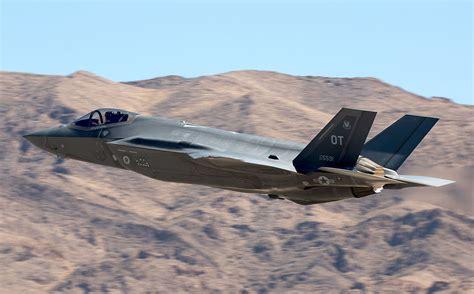
The cost of operating a modern stealth fighter is no longer just a budget line—it is a strategic decision that shapes airpower doctrine, readiness, and long-term military sustainability. In 2026, the F-35A Lightning II, developed by Lockheed Martin, sits at the center of that conversation. Every sortie flown by this fifth-generation fighter carries not just tactical value, but a measurable financial weight that continues to spark debate across defense circles worldwide.
At its core, the question is simple: how much does it cost to fly the F-35A for one hour in 2026? The answer, however, is anything but simple.
The most credible estimates, drawn from institutions like the Congressional Budget Office and the Government Accountability Office, place the F-35A’s cost per flight hour (CPFH) between $34,000 and $42,000. This range reflects not just operational realities but also differing accounting methods—some include full lifecycle sustainment costs, while others focus on marginal flying expenses.
To put that into perspective, a single 90-minute training mission can cost upwards of $50,000 to $60,000. In other words, every time an F-35A lifts off the runway, it consumes the equivalent of a household’s annual income in under two hours. That stark reality underscores why understanding these costs is critical—not just for policymakers, but for anyone analyzing the future of air combat.
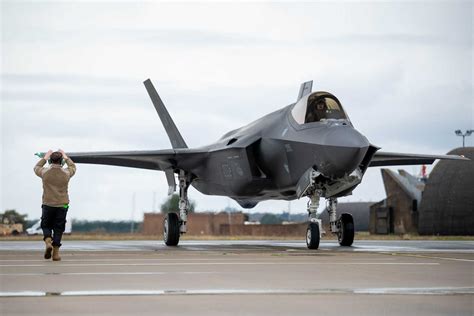
Breaking Down the 2026 F-35A Cost Per Flight Hour
The headline figure of $34,000–$42,000 per hour is not arbitrary. It represents a comprehensive aggregation of multiple cost components, each influenced by technical complexity, global economics, and operational demands.
At the lower end, around $34,000–$36,000, the figures reflect recent improvements in maintenance efficiency and supply chain stability. This marks a significant reduction from earlier years, when costs peaked near $44,000 in 2018. At the higher end, approximately $42,000, the estimate includes broader overheads such as contractor logistics, infrastructure, and long-term sustainment.
Despite progress, the aircraft still exceeds the U.S. Department of Defense’s target of $25,000 per flight hour, a goal that remains elusive due to persistent structural challenges.
Fuel Costs: Power Comes at a Price
The F-35A is powered by the formidable Pratt & Whitney F135 engine—the most powerful fighter engine ever built. Producing approximately 43,000 pounds of thrust, it enables unmatched performance, but at a steep operational cost.
On average, the aircraft consumes around 1,479 gallons (5,600 liters) of fuel per hour under standard conditions. At 2026 fuel prices, this translates to roughly:
- $4,800 to $7,500 per hour in fuel alone
Fuel accounts for approximately 11–13% of total CPFH, but its volatility makes it one of the most unpredictable cost drivers. Geopolitical tensions—especially around critical oil transit routes—can rapidly inflate fuel prices, pushing total flight hour costs even higher without any change in aircraft usage.
In afterburner, fuel consumption can exceed 3,900 gallons per hour, although such usage is typically limited to combat scenarios or brief high-performance maneuvers.
Maintenance Burden: The True Cost Driver
If fuel is the visible expense, maintenance is the silent budget killer.
The F-35A requires approximately 13 maintenance hours for every flight hour, a figure that highlights its extraordinary complexity. By comparison:
- F-16 Fighting Falcon: ~5 maintenance hours per flight hour
- F-15 Eagle: ~6–8 maintenance hours per flight hour
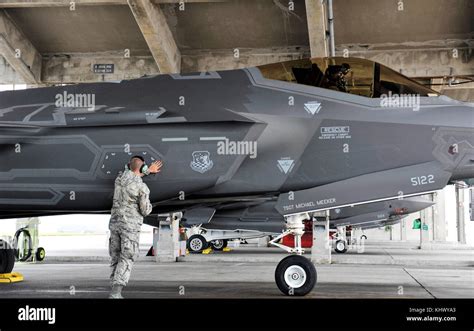
This maintenance intensity stems from the aircraft’s advanced systems, including the AN/APG-81 AESA radar, distributed sensor arrays, and stealth coatings—all of which require specialized handling and diagnostics.
Maintenance alone accounts for approximately:
- $15,000–$18,000 per flight hour
- Roughly 40–45% of total operating cost
This is where the F-35A’s cutting-edge capability directly translates into financial pressure. Highly trained technicians, proprietary tools, and constant system checks all contribute to the rising cost curve.
Spare Parts and Contractor Dependency
Another major contributor to CPFH is the cost of spare parts and contractor support. Unlike older aircraft with broader supplier networks, the F-35 program relies heavily on centralized, proprietary supply chains controlled by Lockheed Martin and its partners.
This creates a situation where:
- Competition is limited
- Prices are less flexible
- Availability can become a bottleneck
Spare parts typically add:
- $3,000–$5,000 per hour
Meanwhile, contractor logistics support (CLS)—where contractors provide on-site maintenance and technical expertise—adds another:
- $5,000–$7,000 per hour
Combined, these elements form a significant portion of the aircraft’s operating cost and are frequently cited in oversight reports as key areas needing reform.
Personnel and Hidden Costs
Beyond hardware and fuel lies a less visible but equally important expense: human capital.
Operating an F-35A requires an entire ecosystem of personnel, including:
- Pilots
- Maintenance crews
- Intelligence analysts
- Mission planners
- Base support staff
These costs are often embedded within broader defense budgets, making them less obvious but no less significant. On average, personnel-related expenses contribute:
- $4,000–$6,000 per flight hour
Additionally, factors like training pipelines, simulation systems, and base infrastructure further inflate the real cost of operations.
Why Cost Estimates Vary So Widely
One of the most confusing aspects of F-35A cost analysis is the variation in reported figures. The reason is straightforward: not all costs are calculated the same way.
For example:
- A “marginal cost” might exclude fixed expenses like infrastructure and long-term maintenance
- A “full O&S cost” includes everything—from fuel to depreciation
This explains why some figures appear significantly lower, sometimes around $17,000 per hour, while comprehensive estimates reach over $40,000.
Understanding these distinctions is critical when comparing data across sources or evaluating program efficiency.
How the F-35A Compares to Other Fighters
Context matters. While the F-35A is expensive, its cost becomes more nuanced when compared to other aircraft.
Against fourth-generation fighters:
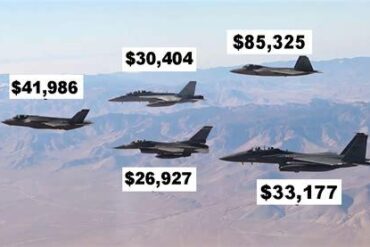
- F-16 Fighting Falcon: ~$25,000–$27,000 per hour
- F/A-18E/F Super Hornet: ~$30,000 per hour
Against fifth-generation peers:
- F-22 Raptor: ~$85,000 per hour
This comparison reveals an important insight:
the F-35A is expensive—but not excessively so within its category.
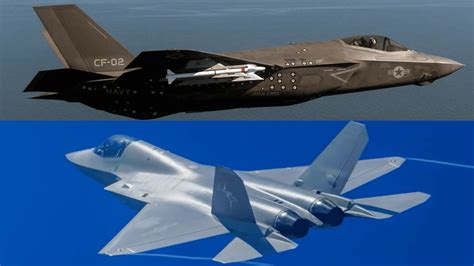
It delivers stealth, sensor fusion, and network-centric warfare capabilities at a cost significantly lower than the F-22, while remaining higher than legacy platforms.
The Strategic Trade-Off: Capability vs Cost
The real question is not whether the F-35A is expensive—it clearly is. The question is whether its capabilities justify the cost.
What sets the F-35A apart is not speed or maneuverability alone, but its ability to:
- Operate undetected in contested airspace
- Fuse data from multiple sensors into a single tactical picture
- Share real-time intelligence across platforms
These capabilities fundamentally change how modern air wars are fought. In this context, the aircraft’s cost becomes a strategic investment rather than a simple expense.
Aircraft like the Dassault Rafale may offer lower operating costs—often half that of the F-35A—but lack the same level of stealth and integrated systems. Choosing between them is less about affordability and more about mission requirements.
Risks and Future Cost Trends
Despite progress, several risks could push F-35A costs higher in the coming years:
- Aging fleet dynamics reducing availability
- Supply chain bottlenecks affecting spare parts
- Software and upgrade complexity, especially with Block 4 enhancements
- Global inflation impacting fuel and labor
At the same time, there are reasons for cautious optimism. As the global fleet expands and more nations adopt the platform, economies of scale could help reduce costs. Improvements in maintenance systems and logistics—particularly digital platforms—may also streamline operations.
Where Costs Are Headed Beyond 2026
Looking ahead, analysts suggest two possible trajectories:
- Optimistic scenario: Costs decline to $28,000–$30,000 per hour by the late 2020s
- Conservative scenario: Costs remain above $35,000 per hour due to persistent sustainment challenges
The outcome will depend on how effectively the program addresses its core issues—particularly maintenance efficiency and supply chain resilience.
Final Assessment: The Real Cost of Air Dominance
In 2026, the F-35A’s cost per flight hour—ranging between $34,000 and $42,000—reflects more than just operational expense. It represents the price of maintaining technological superiority in an era where air dominance is increasingly contested.
For air forces, the implications are profound. A single squadron flying 3,000 hours annually can incur over $100 million in operating costs. Yet for many nations, that price is justified by the unmatched capabilities the aircraft brings to the battlefield.
The F-35A is not just a fighter jet—it is a system of systems, a flying node in a larger combat network. And like any advanced system, it demands a premium.
The debate over its cost will continue, but one fact remains clear: in the calculus of modern warfare, capability often outweighs cost—and the F-35A sits firmly at that intersection.