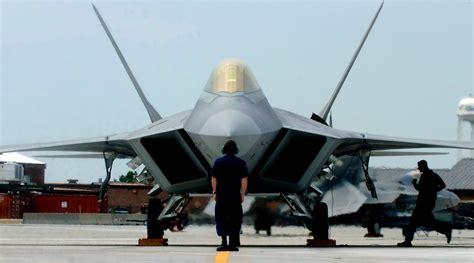
The modern battlefield is built on speed, information dominance, stealth, and the ability to strike before an enemy even realizes danger is near. Few aircraft in history embody those principles more completely than the Lockheed Martin F-22 Raptor. Since entering service in the early 2000s, the Raptor has stood as the apex predator of air superiority warfare, blending stealth, supercruise, advanced avionics, and unmatched maneuverability into a single combat platform capable of overwhelming nearly any opponent in the sky.
Yet behind the sleek lines and fearsome reputation lies a difficult operational truth that continues to define the aircraft’s future. For every hour the F-22 spends in the air, it requires roughly 30 hours of maintenance on the ground. That staggering ratio has become one of the most discussed sustainment challenges in modern military aviation and reveals the immense hidden cost of maintaining technological supremacy.
The issue is not simply mechanical reliability. The F-22’s maintenance burden is deeply connected to the aircraft’s revolutionary stealth design, specialized materials, aging airframes, shrinking supply chains, and relentless global deployment cycle. Every mission flown by the Raptor slowly chips away at a highly sensitive machine that must be painstakingly restored by teams of skilled technicians operating inside tightly controlled environments.
For the United States Air Force, the F-22 remains too valuable to retire and too expensive to operate casually. It is both a masterpiece and a maintenance nightmare, a symbol of American aerospace dominance that demands constant care merely to remain combat-ready.
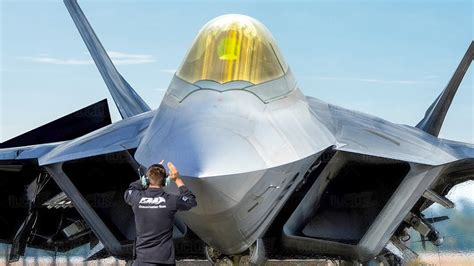
The F-22 Raptor Was Built To Dominate Every Air Threat
When the Cold War neared its conclusion, American defense planners recognized that future conflicts would demand a fighter aircraft capable of surviving against increasingly sophisticated enemy air defenses and advanced fourth-generation fighters. The result was the Advanced Tactical Fighter program, which ultimately produced the F-22 Raptor.
Developed by Lockheed Martin in partnership with Boeing and Pratt & Whitney, the aircraft was engineered around one primary mission: absolute air superiority. Unlike multirole fighters designed to perform a broad variety of missions, the F-22 was purpose-built to eliminate enemy aircraft before they could threaten friendly forces.
The Raptor introduced capabilities that were years ahead of global competitors. Its stealth profile dramatically reduced radar detection ranges. Its powerful Pratt & Whitney F119 engines allowed the aircraft to sustain supersonic flight without using afterburners, a capability known as supercruise. Its thrust-vectoring nozzles enabled extraordinary maneuverability in close combat, while advanced onboard sensors fused battlefield data into a highly efficient combat picture for the pilot.
The aircraft became so technologically sensitive that the United States prohibited export sales entirely. Even close allies were denied access to the jet because Washington feared the leakage of critical stealth and sensor technologies.
That exclusivity only increased the F-22’s mystique. For more than two decades, it has remained one of the most respected and feared fighters ever produced.
But achieving such extreme capability came at a price.
Stealth Technology Is The Main Source Of The F-22’s Maintenance Burden
The single greatest factor behind the F-22’s massive maintenance requirements is its stealth architecture. Unlike conventional fighter jets, stealth aircraft rely on highly specialized materials and precisely engineered surfaces to reduce radar reflections.
The F-22’s low observable system is not simply a layer of paint sprayed onto the aircraft. It is an integrated combination of radar-absorbent materials, composite structures, microscopic conductive coatings, carefully aligned panel edges, and specialized surface treatments designed to scatter or absorb enemy radar signals.
Even small imperfections can degrade the aircraft’s stealth performance.
This creates a major challenge because the Raptor routinely operates in harsh real-world environments. Deployments to humid tropical bases, desert regions filled with abrasive sand, and coastal areas saturated with corrosive sea salt steadily wear down the aircraft’s stealth coating. High-speed flight generates intense thermal stress across the airframe, particularly during supercruise operations where sustained supersonic speeds push temperatures significantly higher than standard flight conditions.
Each mission slowly damages the aircraft’s delicate outer skin.
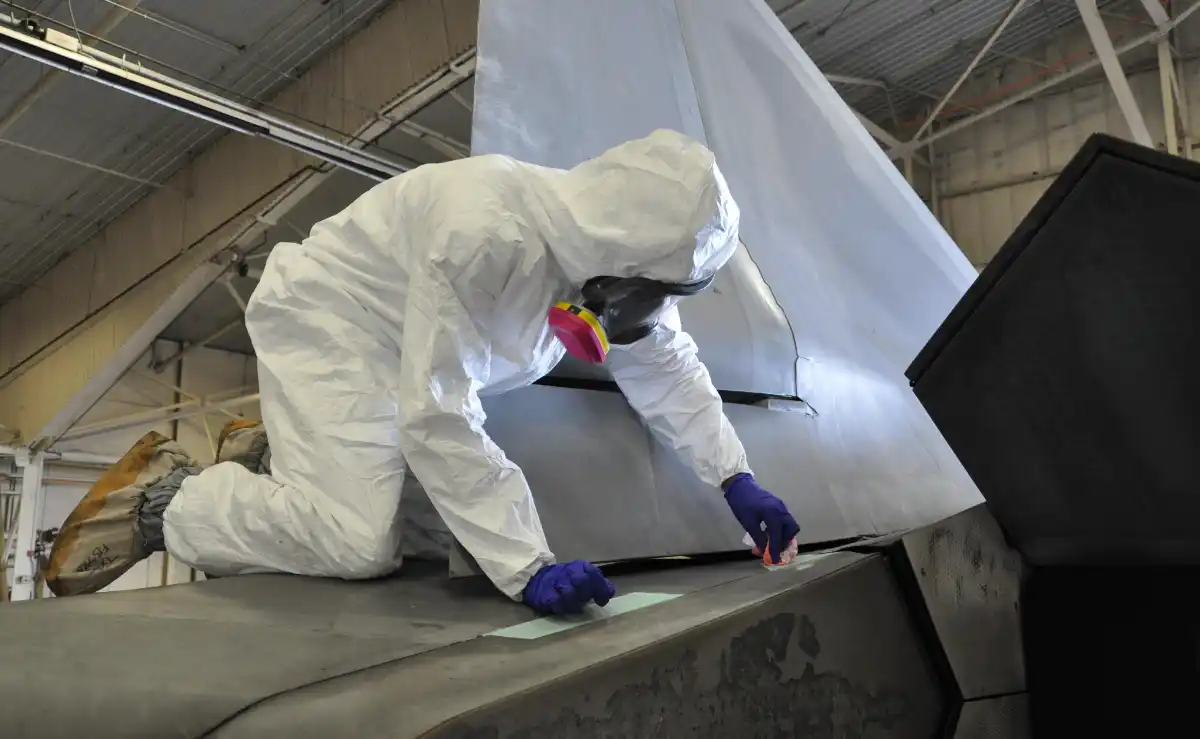
Maintainers must therefore inspect the jet after nearly every sortie, searching for tiny cracks, chipped coatings, warped panel alignments, or surface contamination that could compromise radar invisibility. Many repairs must occur inside climate-controlled facilities resembling laboratory clean rooms, where temperature, humidity, and airborne particles are carefully regulated.
Technicians often wear specialized protective suits to prevent contamination while applying or repairing stealth materials. Dust particles, oils, or improper curing conditions can ruin an entire repair section and force maintainers to restart the process.
According to Lockheed Martin, approximately half of all F-22 repairs are connected directly to maintaining its stealth characteristics. That statistic alone illustrates how deeply low observability defines the aircraft’s operational reality.
Global Deployments Constantly Accelerate Wear On The Raptor Fleet
The F-22 was never intended to sit quietly inside hangars waiting for conflict. It serves as a forward-deployed strategic deterrent, meaning the aircraft is constantly rotated into geopolitically sensitive regions where tensions remain high.
Raptors routinely deploy across Europe, the Middle East, and the Indo-Pacific. These missions include combat air patrols, strategic deterrence flights, escort operations, intelligence support, joint exercises with allied nations, and rapid-response interception duties.
The aircraft’s operational tempo has only intensified as strategic competition between the United States, China, and Russia continues to grow.
Recent deployments to Kadena Air Base demonstrate the importance of the aircraft within Indo-Pacific strategy. Positioned near potential flashpoints in East Asia, Kadena serves as a critical hub for projecting American airpower throughout the region.
However, constant overseas rotations place enormous stress on both aircraft and crews.
Unlike peacetime training flights conducted under ideal conditions, forward deployments expose the F-22 to unpredictable climates, limited maintenance infrastructure, and accelerated operational demands. Aircraft may fly more frequently while operating far from specialized depot facilities capable of performing deep repairs.
The result is a nonstop cycle of use, inspection, repair, redeployment, and refurbishment.
Every hour in the sky increases the likelihood that maintainers will discover another surface imperfection, structural concern, or component issue requiring immediate attention before the jet can return to operational status.
The F-22’s Small Fleet Size Created Long-Term Sustainment Problems
One of the least appreciated aspects of the F-22 program is how dramatically the aircraft’s production numbers were reduced.
Originally, the United States envisioned a fleet of roughly 750 Raptors to replace large numbers of aging Cold War fighters. But after the collapse of the Soviet Union, defense priorities shifted. Policymakers questioned the need for such a large and expensive air-superiority fleet in an era where no near-peer rival appeared capable of challenging American dominance.
Budget pressures eventually reduced the program to just 187 operational aircraft.
That decision continues to haunt sustainment planners today.
A small fleet creates serious logistical challenges because manufacturers have less financial incentive to continue producing niche replacement components in large quantities. Many specialized F-22 parts were built for limited production runs years ago, and maintaining those supply chains has become increasingly difficult as the aircraft ages.
Some suppliers have exited the market entirely. Others only manufacture components in small batches when sufficient funding becomes available.
As a result, replacement parts can take months or even years to acquire.
The Air Force has occasionally resorted to cannibalizing components from inactive or damaged aircraft simply to keep frontline Raptors operational. While this practice is common across aging military fleets, it highlights the growing strain involved in sustaining such an advanced aircraft with limited production infrastructure.
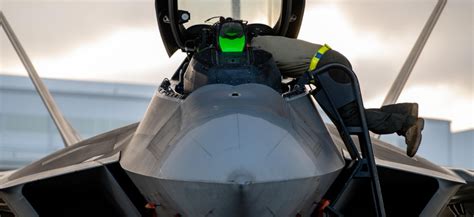
The F-22 Maintenance Network Functions Like A Military Ecosystem
Keeping the F-22 operational requires an enormous support structure spread across multiple layers of the Air Force maintenance system.
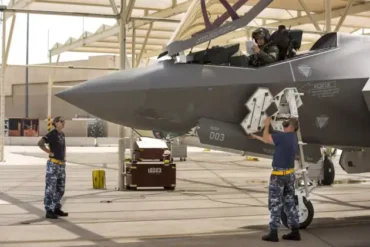
At the most immediate level are flight-line maintainers stationed directly alongside operational squadrons. These crews handle rapid inspections, software diagnostics, hydraulic servicing, wiring repairs, sensor checks, and replacement of critical avionics modules between missions. Their goal is speed. Aircraft must return to readiness as quickly as possible.
Behind them are specialized base-level maintenance facilities that perform deeper inspections and repairs. These facilities recalibrate radar systems, troubleshoot electronic warfare components, repair structural damage, and service environmental or pneumatic systems.
Engine maintenance adds another layer of complexity. The F119 engines powering the Raptor are among the most advanced fighter engines ever built, requiring specialized technicians capable of replacing modules, servicing accessory gearboxes, and performing limited engine teardowns.
Stealth restoration shops represent perhaps the most sensitive area within the sustainment ecosystem. These facilities repair radar-absorbent materials, restore damaged coatings, realign panels, and ensure that the aircraft’s low observable profile remains within operational standards.
Farther back in the chain are regional logistics hubs responsible for tracking and distributing high-priority components throughout operational theaters. These supply nodes coordinate the transportation of expensive and difficult-to-source parts to ensure grounded aircraft can return to service rapidly.
At the deepest level sits the depot maintenance system led by the Ogden Air Logistics Complex in Utah. Here, F-22s undergo massive structural overhauls involving complete airframe disassembly, fatigue repair, stealth restoration, software modernization, and life-extension work designed to return the aircraft to near-new condition.
Without this enormous sustainment infrastructure, the F-22 fleet would rapidly lose combat readiness.
Aging Airframes Are Increasing The Pressure On Maintainers
Despite its futuristic image, the F-22 is no longer a young aircraft. Many airframes are now approaching the midpoint of their operational lives, and aging inevitably introduces new maintenance concerns.
Metal fatigue accumulates over thousands of flight hours. Structural components experience microscopic stress fractures. Wiring systems degrade. Avionics become increasingly difficult to modernize as technology evolves faster than legacy hardware architectures.
Unlike civilian aircraft, fighter jets endure violent operational stresses. High-G maneuvers, rapid altitude changes, supersonic flight, and extreme combat training environments steadily wear down structural integrity.
The F-22’s role within modern deterrence strategy only intensifies this problem. As geopolitical competition expands, Raptors spend more time deployed, more time training, and more time conducting readiness operations designed to signal American military capability to potential adversaries.
This strategic pressure leaves little room for rest.
The Air Force continues upgrading the Raptor with improved sensors, networking capabilities, and electronic warfare enhancements to ensure the aircraft remains relevant against evolving threats. Yet every modernization effort introduces additional integration complexity into an already maintenance-heavy platform.
The paradox of the F-22 is increasingly clear: the aircraft remains one of the most dominant fighters ever built precisely because it was engineered to extraordinary standards, but those same standards demand immense resources to preserve.
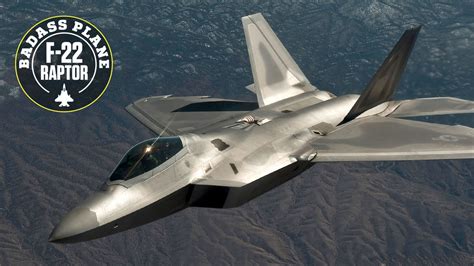
The F-22 Remains Essential Despite Its Extraordinary Operating Costs
Critics frequently point to the F-22’s maintenance demands as evidence that the aircraft is too expensive for long-term sustainability. Operational costs remain extraordinarily high, and availability rates have historically struggled to meet Air Force targets.
Yet despite those concerns, the Raptor continues to occupy a critical role within American military strategy because no direct replacement currently replicates its exact combination of stealth, speed, altitude performance, and air-superiority dominance.
The Lockheed Martin F-35 Lightning II provides broader multirole flexibility and has become the backbone of allied fifth-generation aviation, but it was never designed to replace the F-22 directly in pure air dominance missions.
That distinction matters deeply in an era where advanced Chinese and Russian fighters continue evolving alongside sophisticated integrated air defense systems.
The F-22 still represents a strategic advantage capable of shaping enemy calculations before conflict even begins. Its presence alone alters operational planning for rival militaries because few aircraft can realistically challenge it in uncontested air combat.
For that reason, the United States continues investing heavily in sustainment despite the burden.
The aircraft’s future replacement will likely emerge through the Next Generation Air Dominance program, but until that platform reaches operational maturity, the F-22 remains indispensable.
Its 30-hour maintenance requirement is therefore not merely a statistic. It is the operational price of maintaining one of the most advanced combat aircraft ever constructed.
The F-22 Raptor was never designed to be cheap, simple, or easy to maintain. It was designed to dominate the skies at any cost. More than two decades after its introduction, that philosophy still defines every hour it spends in the air — and every hour spent restoring it on the ground.